
If you woke up with itchy welts and you are scanning the bed for proof, start by ignoring the bites. People react to bed bugs wildly differently, and a large share of people never react at all, so a bite tells you almost nothing about whether bugs are in the room. The only reliable confirmation is physical evidence you can find and point to: rust-brown fecal spots that smear when you wipe them, pale shed skins, tiny pearly eggs, and live bugs tucked into the seams. When you look hard and still find nothing, that is not an all-clear; it is the cue to set interceptors under the bed legs, the cheap and definitive way to confirm a low-level case.
Bites are not proof of bed bugs, because reactions vary and many people do not react at all. Confirm with physical evidence: rust-brown smearing fecal spots, pale shed skins, 1mm pearly eggs, and live bugs in mattress seams and headboard crevices.
- Look here first: Mattress piping, box spring seams, headboard crevices, and the bed frame joints, where the evidence concentrates.
- The four real signs: Smearing fecal spots, shed skins, pearly eggs, and live bugs, not the bites on your skin.
- If you find nothing: Put interceptors under every bed and sofa leg and check them for a couple of weeks; do not declare it clear off bites alone.
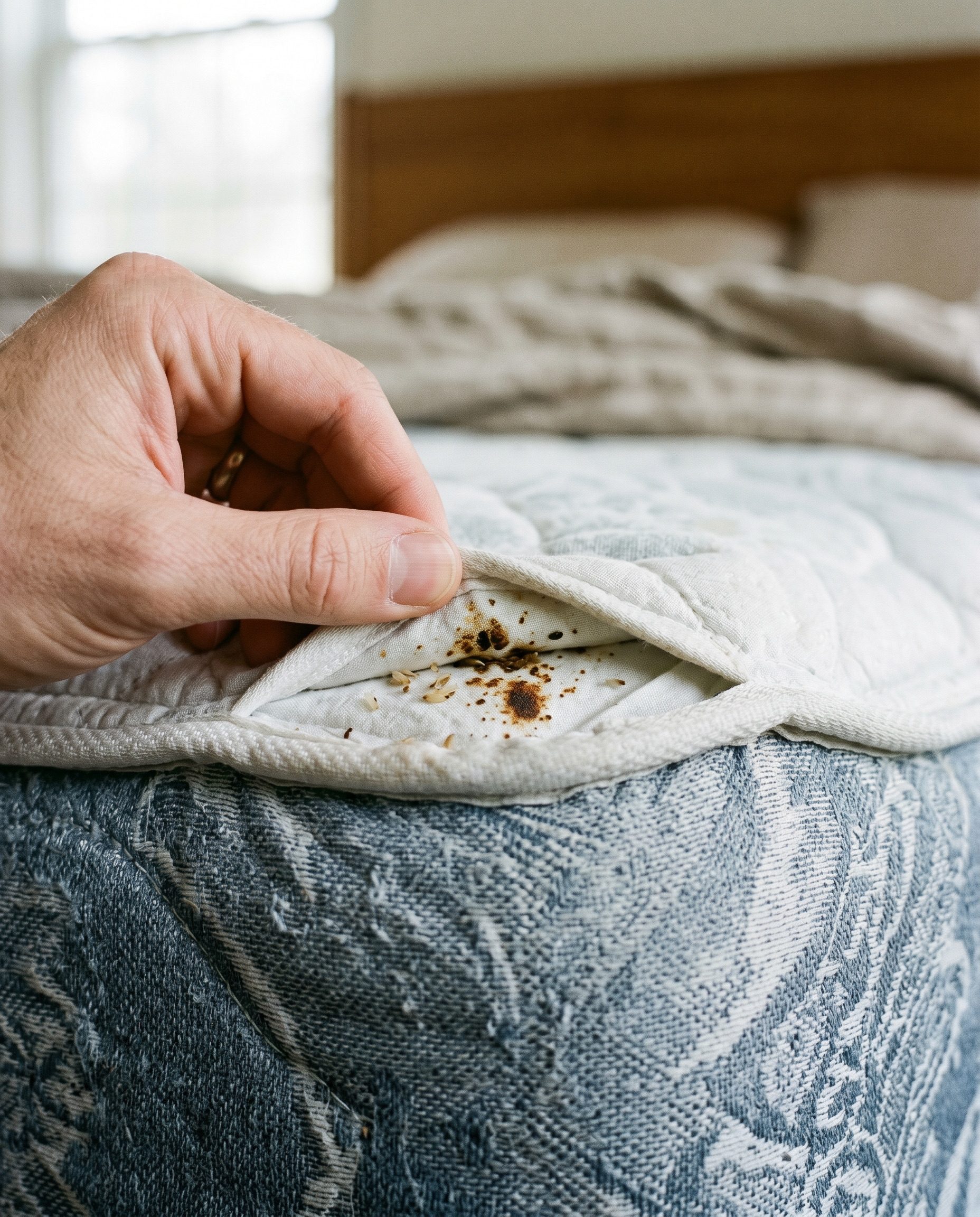
Why bites are not proof
This is the trap almost everyone falls into, so it goes first. A bed bug bite is just your immune system reacting to the bug’s saliva, and that reaction is all over the map. Some people break out in itchy red welts in a neat row; others get nothing visible for days; and a meaningful share of people show no reaction whatsoever even while being fed on nightly. The CDC’s public-health summary on bed bugs notes that reactions range from no mark at all to a small bite mark to, rarely, a serious allergic response, which is exactly why you cannot read the bug situation off your skin.
Bites also lie about the source. Welts can come from mosquitoes, fleas, mites, an allergic skin reaction, or hives, and a doctor looking at marks alone usually cannot tell you it was bed bugs. A bite is a reason to inspect, never a diagnosis. If your main question is about the marks themselves, that belongs in our guide to bed bug bites and how to treat them; the rest of this article is about finding the bugs.
The four signs that actually confirm it
Forget the skin and read the bed. There are four pieces of physical evidence, and any one of them is worth more than a hundred bites. The University of Minnesota Extension on bed bug detection and the EPA’s guide to finding bed bugs both build their inspection around the same short list.
Fecal spots are the most reliable sign. They look like someone touched a felt-tip pen to the fabric: dark rust-brown to near-black dots, often in clusters along a seam. The tell is that they smear. Because the spots are mostly digested blood, a damp cotton swab or paper towel drags them into a reddish-brown smudge, while a fleck of dirt or pepper stays a fleck. If it smears reddish-brown, treat it as a confirmed sign.
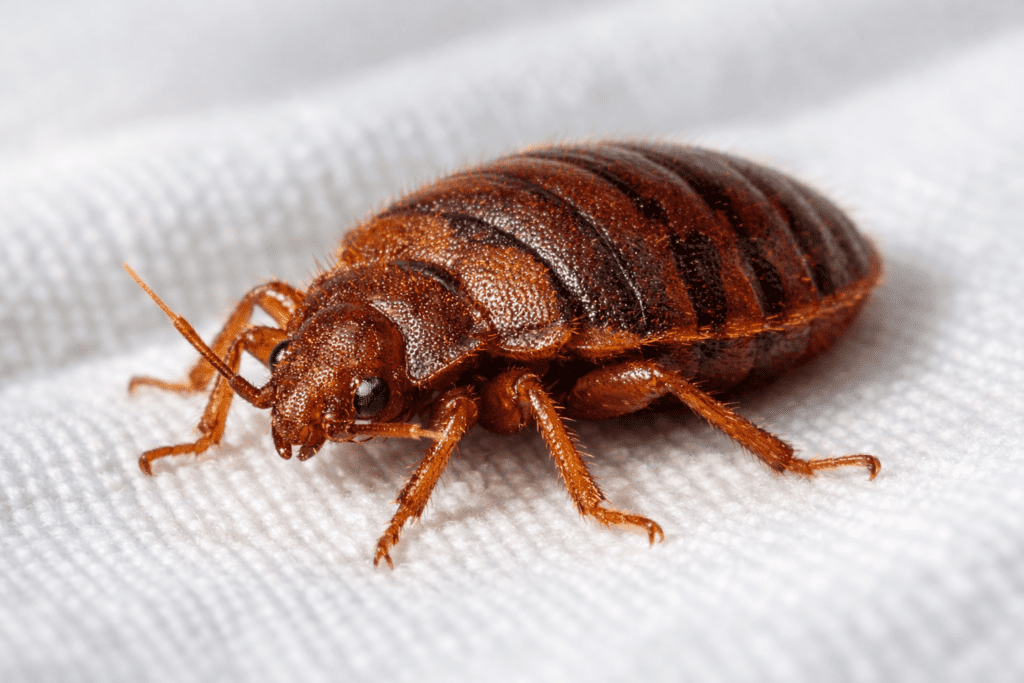
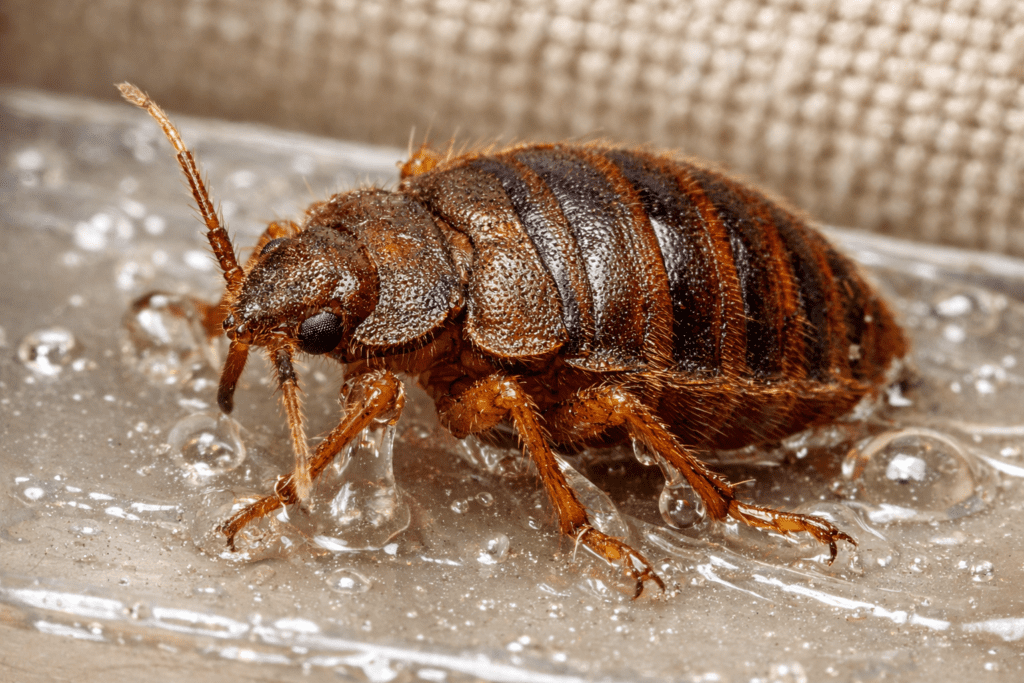
The other three back it up. Shed skins are pale, translucent, hollow casts of the bug, left behind five times as a nymph grows, and they pile up where bugs hide. Eggs are about a millimeter long, pearly white, and glued in cracks and along seams, often near the fecal staining. And the live bugs themselves are flat, reddish-brown, apple-seed sized adults, with smaller paler nymphs after a fresh feed. Spot any of those and you are done guessing.
Where to look, in order
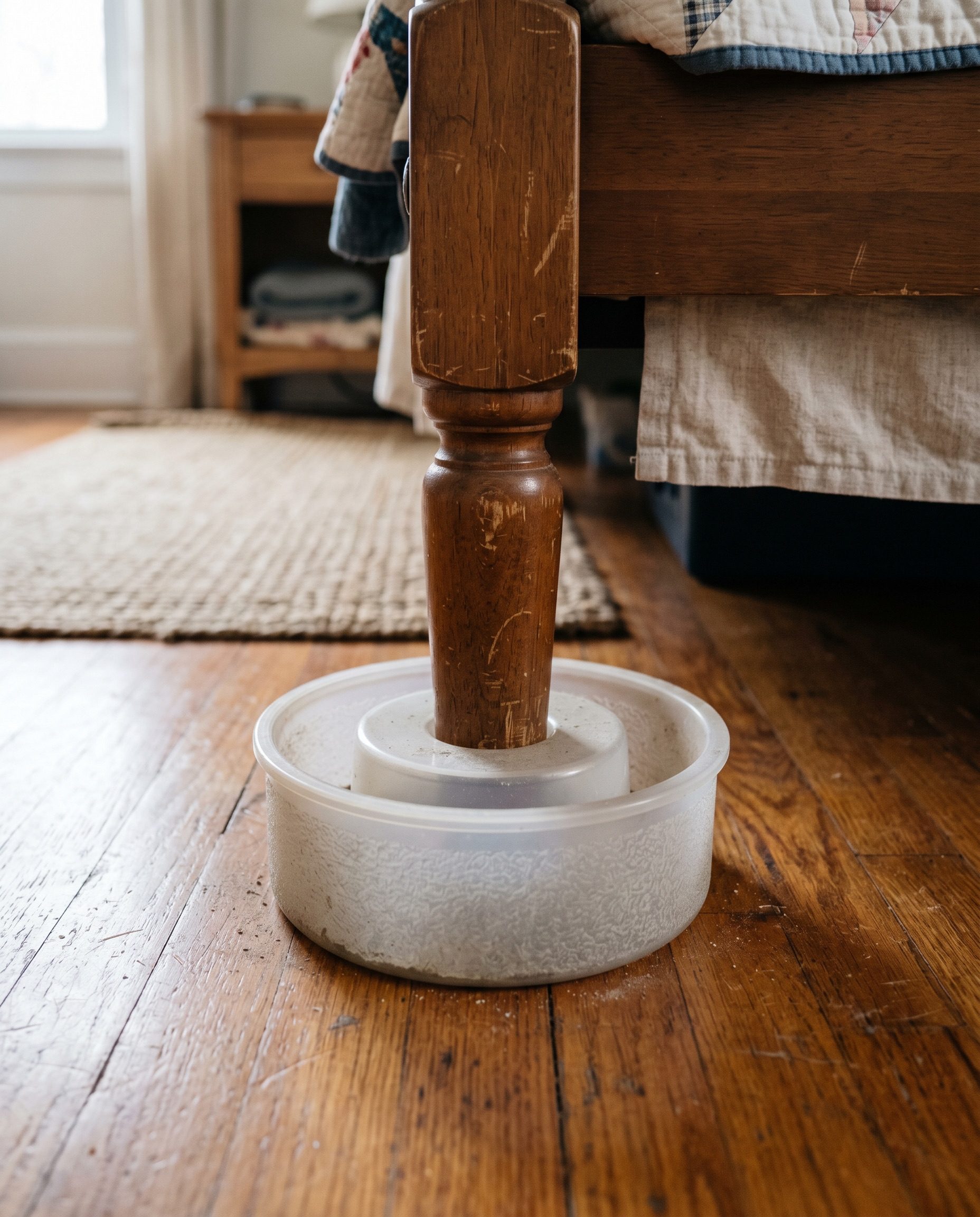
Bed bugs are lazy travelers; they hide within a few feet of where you sleep, so you inspect from the bed outward. Strip the bed and work in good light with a flashlight and an old credit card to drag along the seams. Start with the mattress: run the light along the piping and tufts, then flip it and check the underside seams. The mattress piping is the single highest-yield spot, so give it the most time.
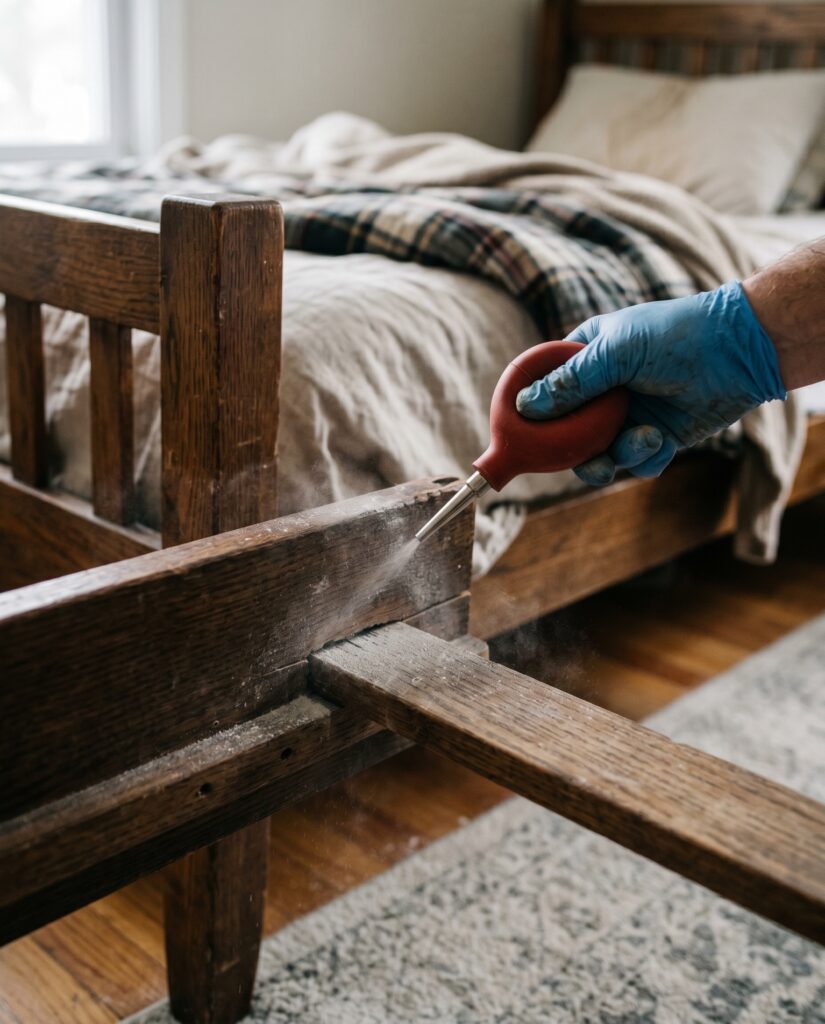
Then go deeper into the frame. Pull the fabric dust cover off the bottom of the box spring and check the wood and staples, work the headboard crevices and bolt holes, and open every joint in the bed frame. After that, widen out to the nightstand seams, the edge of the carpet along the baseboard nearest the bed, and any upholstered chair in the room. The University of Kentucky’s bed bug fact sheet (ENTfact-636) makes the point that early, low-level infestations are concentrated almost entirely on the bed and its frame, which is why a careful bed inspection catches most cases before they spread.
A quick map of where the evidence lands:
| Where to check | What you find there | How to inspect it |
|---|---|---|
| Mattress seams and piping | Fecal spots, shed skins, live bugs | Flashlight along the seam, both sides |
| Box spring underside | Bugs and eggs on the wood and staples | Peel back the dust cover and look |
| Headboard and frame joints | Bugs and clustered staining in crevices | Card edge dragged through each gap |
When you cannot find any bugs
Here is the part most guides skip. A clean-looking inspection does not mean you are clear, because a brand-new infestation can be one or two bugs hiding in a crack you will never spot by eye. This is exactly where bites mislead people into thinking they are imagining it. When the visual search comes up empty but you still suspect something, you confirm with a trap, not a shrug.
The cheapest tool that settles it is an interceptor: a shallow plastic dish you set under each bed and sofa leg. Bugs traveling between their hideout and you fall into the slick-walled well and cannot climb out, so you wake up to evidence in the cup instead of guessing. Place one under every leg of the bed and any couch, pull the bed a few inches off the wall so the legs are the only bridge, and check the cups every morning for one to two weeks. The EPA’s do-it-yourself bed bug control steps put non-chemical monitoring like this first, and for good reason: it is quiet, it runs while you sleep, and it gives you a yes or no without spraying anything. For the specific cups worth buying, see our guide to bed bug traps and interceptors.
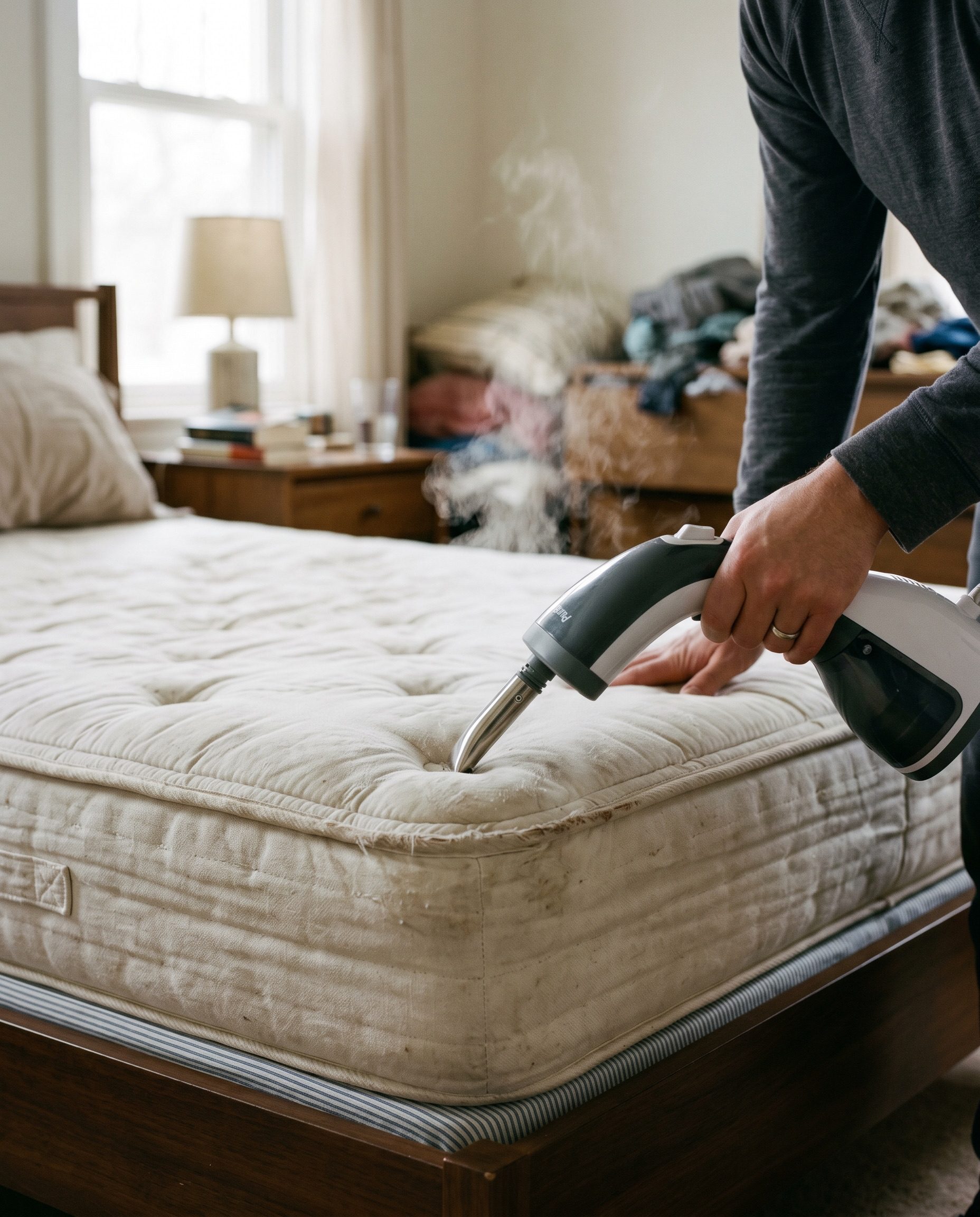
Confirm before you spend
Why all this fuss before treating? Because confirmation changes everything about what you do next, and a wrong call is expensive in both directions. Treat a room that does not have bed bugs and you have wasted money and exposed your home to pesticide for nothing; assume it is just dust when it is a real infestation and you let a problem that doubles itself quietly turn into a whole-house job.
The math is on the side of patience. Bed bugs are slow breeders compared with most household pests, and the EPA’s overview of bed bug appearance and life cycle describes a development from egg to biting adult that takes weeks, not days. That lag is your window to confirm and act before it spreads. A few nights of careful inspection plus interceptors is cheap insurance against a months-long fight. Once you have a confirmed yes, move straight to a real plan in our complete bed bug control guide rather than improvising with a can of spray.
Common questions
Can you have bed bugs and no bites?
Yes, and it is common. A large share of people show no skin reaction at all, especially early on, so a clean back is not a clean room. This is the whole reason to inspect for fecal spots, shed skins, and eggs instead of trusting your skin, and to set interceptors when the visual search comes up empty.
What do bed bug fecal spots look like?
Dark rust-brown to black dots, usually clustered along a seam, about the size of a marker tip. The giveaway is that they smear: a damp swab drags them into a reddish-brown smudge because they are mostly digested blood. A speck that brushes off dry as a solid fleck is dirt, not a fecal spot.
Are bed bugs dangerous to your health?
They are a miserable nuisance, not a disease risk. The CDC notes that bed bugs are not known to spread disease to people, though heavy bites can itch badly and, rarely, trigger a strong allergic reaction. Get medical help if a reaction involves trouble breathing or fast-spreading swelling, but for most people the harm is lost sleep and stress.
How can I tell bed bugs from other small bugs?
Look at the shape and where they are. Adult bed bugs are flat, oval, reddish-brown, and about an apple-seed long, and they live within a few feet of the bed, not in your pantry or your potted plants. Carpet beetles and roach nymphs get mistaken for them, so match the bug to its hiding spot and check for fecal staining nearby.
Do interceptors really confirm an infestation?
They are one of the most reliable low-cost confirmations there is. A bug moving between its hideout and a sleeping person has to cross the floor, and a cup under the leg catches it. No catch over one to two weeks with people sleeping in the bed is a genuinely reassuring sign, which is more than bites can ever give you.
Final verdict
Stop reading your skin and start reading the bed. Bites are not proof, because reactions vary so much and plenty of people never react, so confirm with the four physical signs instead: smearing rust-brown fecal spots, pale shed skins, pearly millimeter eggs, and live flat reddish-brown bugs in the mattress piping, the box spring, and the headboard crevices. When a careful inspection turns up nothing but you still suspect it, set interceptors under every bed and sofa leg and check them for a week or two before you call it clear. Confirm first, then treat, because that order saves you from spraying a room that does not need it and from missing one that does.
Next steps:
– Run a flashlight inspection of the seams and frame using the order above.
– Set interceptors under the legs if you find nothing, per our bed bug traps and interceptors guide.
– Once it is confirmed, work the full plan in our complete bed bug control guide.
Pingback: Best Bed Bug Traps and Interceptors for Early Detection