Waking up with itchy red bumps can feel like a mystery you did not sign up for. The good news is that bed bug bites often leave a recognizable “trail” that helps separate them from flea and mosquito bites. In this guide, you will learn what to look for in bite size, pattern, timing, and body location, plus the real-world clues that matter more than skin marks alone. You will also get practical, low-stress next steps for relief and for confirming what is actually biting you.
\\\
Two neighbouring questions come up here: Dust Mites vs Bed Bugs and Baby Bed Bugs: What Do Nymphs Look Like?.
Quick identification: bed bugs vs fleas vs mosquitoes
\\\
If you are trying to identify bites fast, focus on pattern + location + timing – not just redness.
\\\
Quick bite ID checklist (most useful first):
\\\
- \\\
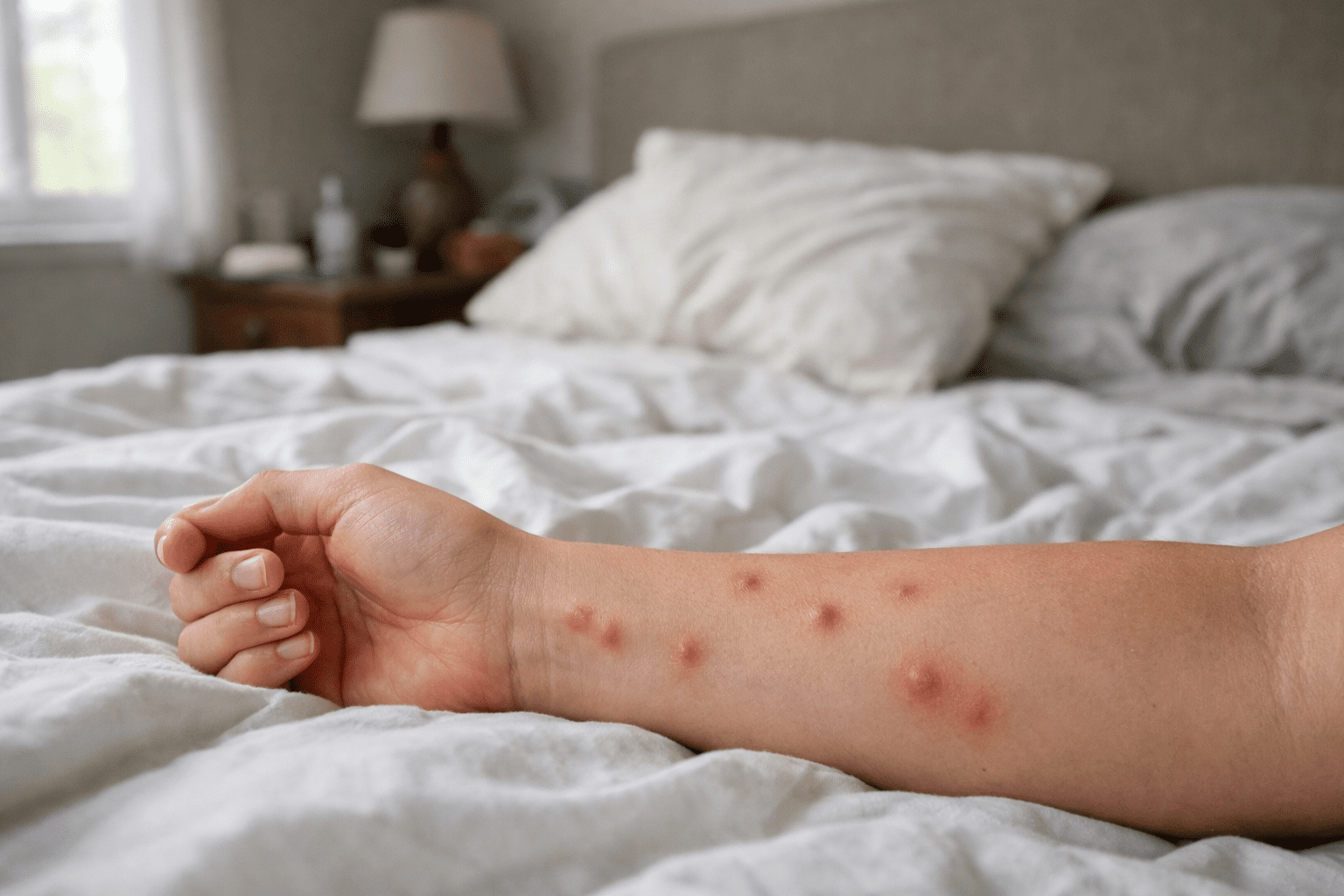
- Lines or clusters on exposed skin after sleeping (arms, neck, face) often point to bed bug bites.
- Small, bright red dots around ankles and lower legs, especially if you have pets or carpeted floors, often suggest flea bites.
- Single, scattered puffy welts after being outdoors (or near open windows) are most consistent with mosquito bites.
\\\
\\\
\\\
\\\
| Clue | Bed bugs | Fleas | Mosquitoes |
|---|---|---|---|
| Typical size | ~5 to 7 mm raised bumps | ~1 to 3 mm dots | Variable welts |
| Pattern | Lines, zigzags, groups of 3 to 5 | Random clusters | Random, usually isolated |
| Common location | Exposed sleeping areas | Ankles, feet, lower legs | Any exposed skin |
| When itch starts | Often delayed (hours to days) | Often fast | Minutes to hours |
| Best “confirming” evidence | Fecal spots, shed skins in bed | Flea dirt, pet scratching | Outdoor exposure, buzzing |
\\\
If you want a broader comparison across many pests, see our guide to Mosquito Bites vs Bed Bugs, Fleas, Spiders & Ticks.
\\\
What bed bug bites look like (and why they show up in lines)
\\\
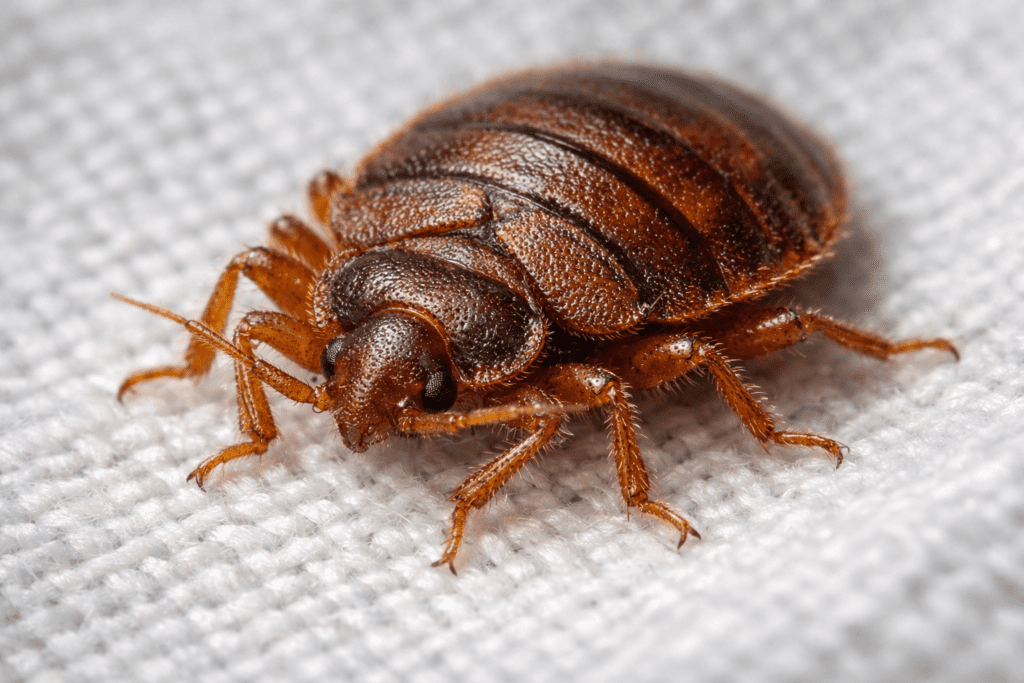
Bed bugs (Cimex lectularius) are stealth feeders. They usually bite at night, then retreat into seams and cracks near where people sleep. That behavior is why bed bug bites often show up in clusters or short lines on exposed skin.
\\\
A common misconception is that “one bite equals one bug.” In reality, a single bed bug may probe more than once to find a good blood vessel. Multiple bugs can also feed in the same area on the same night. Think of it like someone testing a pen on paper – you may see several marks close together.
\\\
Typical appearance and pattern
\\\
Many people develop:
\\\
- \\\
- Small, red, raised bumps with a darker red center
- Grouped bites in a line, zigzag, or tight cluster (often 3 to 5)
- Occasional blistering in more sensitive skin
\\\
\\\
\\\
\\\
Not everyone reacts the same way. Medical sources note that a significant portion of people may show little to no visible reaction to bed bug feeding, which can delay detection. This is one reason “no marks” does not rule out bed bugs.
\\\
Common body locations
\\\
Because bed bugs need direct skin contact, bites tend to concentrate where skin is uncovered during sleep:
\\\
- \\\
- Face, neck, shoulders
- Arms and hands
- Lower legs and feet (if uncovered)
\\\
\\\
\\\
\\\
Mosquitoes, by contrast, can sometimes bite through thin fabric. Bed bugs generally cannot.
\\\
Visual: fast bed bug bite clues
\\\
Look for this combination:
\\\
- \\\
- Bites that appear after sleeping
- A clustered or linear pattern
- Evidence on the bed itself (more on that below)
\\\
\\\
\\\
\\\
For additional medical-style comparison photos and symptom notes, see bite comparisons from Healthline’s bed bug vs mosquito overview and Medical News Today’s bite comparison guide.
\\\
Actionable takeaway
\\\
If you suspect bed bugs, do not rely on bites alone. The most reliable next step is a targeted inspection of mattress seams, bed frame joints, and nearby baseboards for physical signs.
\\\
Flea bites vs bed bug bites: the “ankle test” and pet clue
\\\
\\\
\\\
\\\
Fleas are built for jumping and quick feeding. That changes how their bites look and where they land. When readers send photos thinking they have bed bugs, the location often gives it away: fleas love lower legs.
\\\
If you walk across a room where fleas are present, they tend to hop onto the closest available skin – usually ankles and calves. Bed bugs usually start where you sleep, not where you walk.
\\\
What flea bites typically look like
\\\
Flea bites are often described as:
\\\
- \\\
- Tiny (about 1 to 3 mm) red bumps
- A halo or ring of irritated skin around the bump
- Random clusters, not tidy lines
\\\
\\\
\\\
\\\
Itching can start quickly. Many people notice an almost immediate “hot itch” sensation after new bites.
\\\
Where flea bites show up most
\\\
On humans, common areas include:
\\\
- \\\
- Ankles
- Feet
- Lower legs
\\\
\\\
\\\
\\\
On pets, fleas often concentrate around:
\\\
- \\\
- Tail base
- Neck
- Belly
\\\
\\\
\\\
\\\
If your dog or cat is scratching more than usual, or you see pepper-like specks in their fur, fleas move higher on the suspect list.
\\\
Visual: flea vs bed bug clues at a glance
\\\
Ask yourself:
\\\
- \\\
- Are the bites mostly below the knee?
- Do you have pets, or have you been in a home with pets?
- Is the itch immediate and intense?
\\\
\\\
\\\
\\\
If yes, fleas are more likely than bed bugs.
\\\
What to check in the home (simple, fast)
\\\
Use this quick checklist:
\\\
- \\\
- Pet bedding: look for flea dirt (dark specks that smear reddish when wet)
- Carpet edges and rugs: fleas often rest where pets lie
- Socks line: bites right at the sock edge are a common flea pattern
\\\
\\\
\\\
\\\
For a practical bite comparison from a pest control perspective, see the overview from Mosquito Squad’s flea vs bed bug bite guide.
\\\
Actionable takeaway
\\\
If fleas are likely, treat the problem at the source: pet + home together. Treating only the human bites will not stop new ones.
\\\
 \\\
\\\\\\
\\\
Mosquito bites vs bed bug bites: timing, exposure, and “single welts”
\\\
\\\
\\\
\\\
\\\
\\\
Hot Shot Bed Bug and Flea Killer, 1 Gallon\\\
\\\
\\\
Hot Shot Bed Bug and Flea Killer 1 Gallon receives positive mentions across retailers for its non-staining, odor-free formula that effectively kills bed bugs, eggs, fleas, and dust mites with long-lasting protection and easy sprayer application[1][2][3][4]; however, without Amazon-specific data like ratings, reviews, or pricing, it cannot be confidently recommended as an affiliate product at this time.
\\\
\\\
\\\
\\\
Check Price on Amazon →\\\
\\\
\\\
\\\
\\\
\\\
\\\
\\\
\\\
\\\
\\\
Repel 100 Insect Repellent, 4 oz\\\
\\\
\\\
This high-DEET mosquito repellent is relevant for readers looking to protect themselves from mosquito bites.
\\\
\\\
\\\
\\\
Check Price on Amazon →\\\
\\\
\\\
\\\
\\\
\\\
\\\
\\\
\\\
\\\
\\\
Adams Plus Flea and Tick Killer, 24 Ounces\\\
\\\
\\\
No Amazon product page or ASIN located in search results for ‘Adams Plus Flea and Tick Killer, 24 Ounces’; a similar Adams Plus Flea & Tick Home Spray (24 oz) appears on Tractor Supply with claims of up to 7 months flea protection indoors and control of multiple pests, but lacks Amazon ratings, reviews, or pricing data. Cannot recommend for affiliate purposes without verified Amazon listing.[1]
\\\
\\\
\\\
\\\
Check Price on Amazon →\\\
\\\
\\\
\\\
\\\
\\\
Mosquitoes are opportunists. They bite outdoors, but they can also bite indoors if they get inside. The key difference is that mosquito bites are usually more scattered and tied to recent exposure rather than sleep location.
\\\
If you stepped outside at dusk, sat near a porch light, or opened windows without screens, mosquito bites can appear quickly afterward. To understand why they find you so efficiently, read How Mosquitoes Find and Bite You.
\\\
What mosquito bites typically look like
\\\
Mosquito bites often appear as:
\\\
- \\\
- Puffy, itchy welts (sometimes pale in the center)
- Single bumps or widely spaced bumps
- Occasionally a visible central puncture point
\\\
\\\
\\\
\\\
Size varies a lot. A mild reaction can be a small welt. A stronger reaction can swell larger and feel warm.
\\\
Timing: how fast do they show up?
\\\
Many people itch within minutes to hours. That is different from bed bugs, where bite reactions can be delayed and show up the next day (or even later).
\\\
If you want a deeper symptom guide, including stronger allergic-type reactions, see Mosquito Bite Reactions: Swelling, Blisters, Rash, Hives & When to Worry.
\\\
Visual: mosquito vs bed bug bite clues
\\\
A simple way to sort them:
\\\
- \\\
- Mosquitoes: “I was just outside” + random welts
- Bed bugs: “I woke up with new bites” + clusters/lines
\\\
\\\
\\\
When mosquito bites are not “just annoying”
\\\
Most mosquito bites are harmless, but some people develop large local swelling. Seek medical advice if you notice:
\\\
- \\\
- Rapidly spreading redness
- Fever or flu-like symptoms after travel or heavy exposure
- Facial swelling, trouble breathing, or dizziness (emergency symptoms)
\\\
\\\
\\\
\\\
For practical relief options that actually help, see Best Mosquito Bite Relief: Products, Remedies & What Works.
\\\
Actionable takeaway
\\\
If bites appear after outdoor time and are scattered, focus on bite care and prevention (repellent, screens, removing standing water). If bites keep appearing only after sleep, shift your effort to bed bug inspection.
\\\
Don’t diagnose by bites alone: how to confirm what’s biting you
\\\
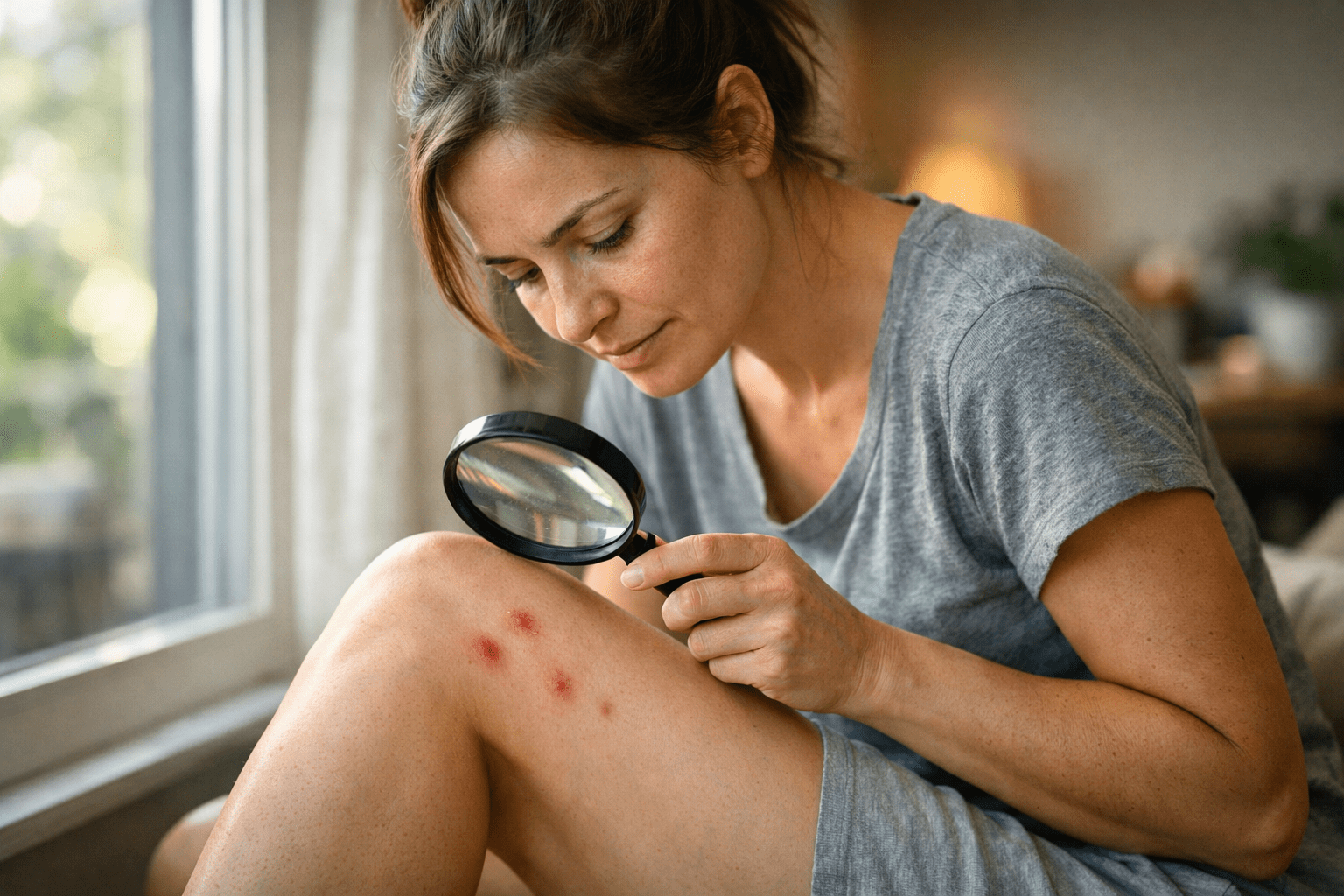
Skin marks are clues, not proof. Many rashes mimic insect bites, and different insects can produce similar-looking bumps. The most reliable approach is to pair bite patterns with environmental evidence.
\\\
Bed bug confirmation signs (what to look for)
\\\
If bed bugs are involved, you are likely to find at least one of these:
\\\
- \\\
- Rusty or ink-like fecal spots on sheets, mattress seams, or bed frame joints
- Shed skins (translucent, papery exoskeletons)
- Tiny eggs (pearl-like, in cracks and seams)
- Occasional blood smears on bedding
\\\
\\\
\\\
\\\
\\\
A helpful reality check: pest experts consistently emphasize that bed bug bites alone are not diagnostic. See guidance from Orkin’s bed bug vs mosquito bite resource for what they recommend looking for in the sleeping area.
\\\
Flea confirmation signs
\\\
For fleas, the strongest signs are:
\\\
- \\\
- Pet scratching or hair loss
- Flea dirt in fur or pet bedding
- Fleas visible as tiny, fast-moving dark insects (often hard to catch)
\\\
\\\
\\\
\\\
Mosquito confirmation signs
\\\
Mosquito confirmation tends to be situational:
\\\
- \\\
- You were outdoors at peak activity times (dusk and dawn for many species)
- You notice mosquitoes indoors near lights or windows
- Standing water nearby (gutters, buckets, birdbaths)
\\\
\\\
\\\
\\\
Visual: “evidence ladder” (most to least reliable)
\\\
- \\\
- You find the insect (or clear signs like fecal spotting and shed skins)
- Bite pattern + timing fits one insect strongly
- Only bite appearance (least reliable)
\\\
\\\
\\\
\\\
Actionable takeaway
\\\
If you suspect bed bugs, place your effort into finding physical signs near the bed. If you suspect fleas, start with the pet and sleeping areas. If you suspect mosquitoes, look at exposure and entry points (screens, doors, standing water).
\\\
 \\\
\\\\\\
\\\
What to do next: relief, prevention, and when to call a pro
\\\
Once you have a strong suspect, the goal is twofold: calm the skin and stop new bites. The best plan depends on whether you are dealing with bed bugs, fleas, or mosquitoes.
\\\
Step 1: Treat the bites safely (works for all three)
\\\
For most uncomplicated bites:
\\\
- \\\
- Wash with soap and water.
- Apply a cold compress for 10 minutes to reduce swelling.
- Use an over-the-counter anti-itch option (hydrocortisone or an oral antihistamine, if appropriate).
- Avoid scratching to reduce the risk of secondary infection.
\\\
\\\
\\\
\\\
\\\
If redness spreads, you see pus, or pain increases, consider medical advice. Skin infections can happen simply from scratching.
\\\
Step 2: Stop bed bugs (practical, non-alarmist plan)
\\\
Bed bugs are tough because they hide well and can survive a long time without feeding. A focused, methodical approach works better than panic cleaning.
\\\
High-impact steps:
\\\
- \\\
- Reduce hiding spots: declutter around the bed.
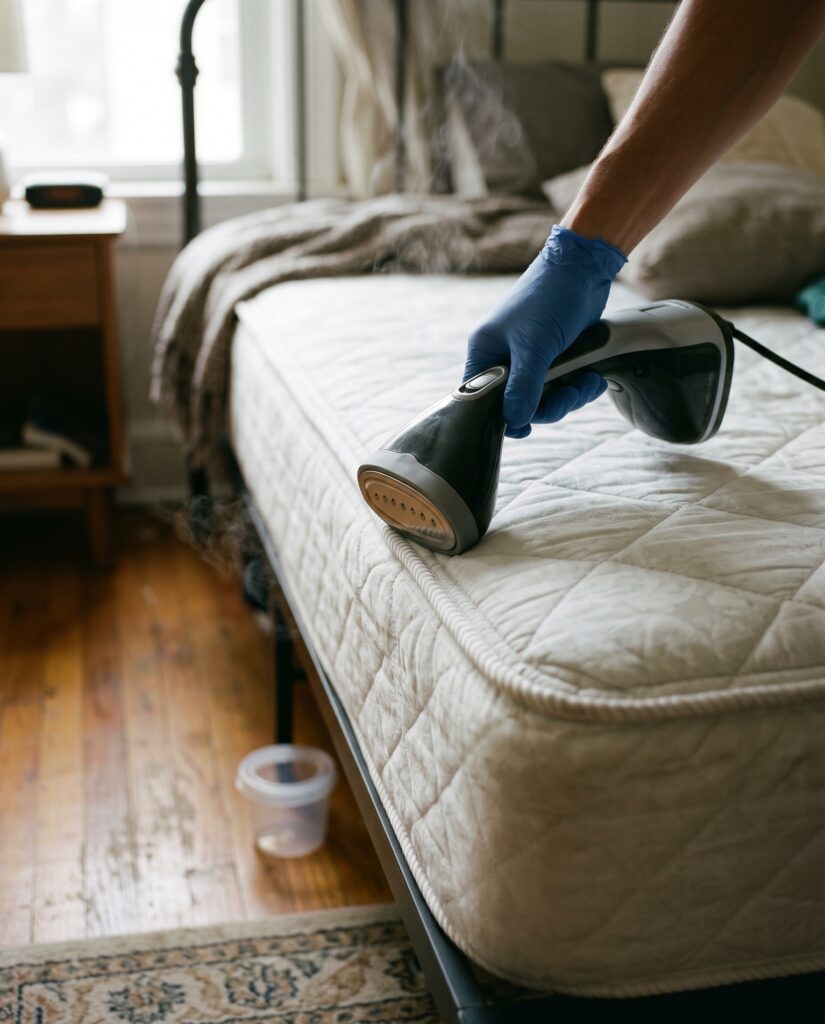
- Heat and laundering: wash and dry bedding on hot. Heat is a reliable killer when applied correctly.
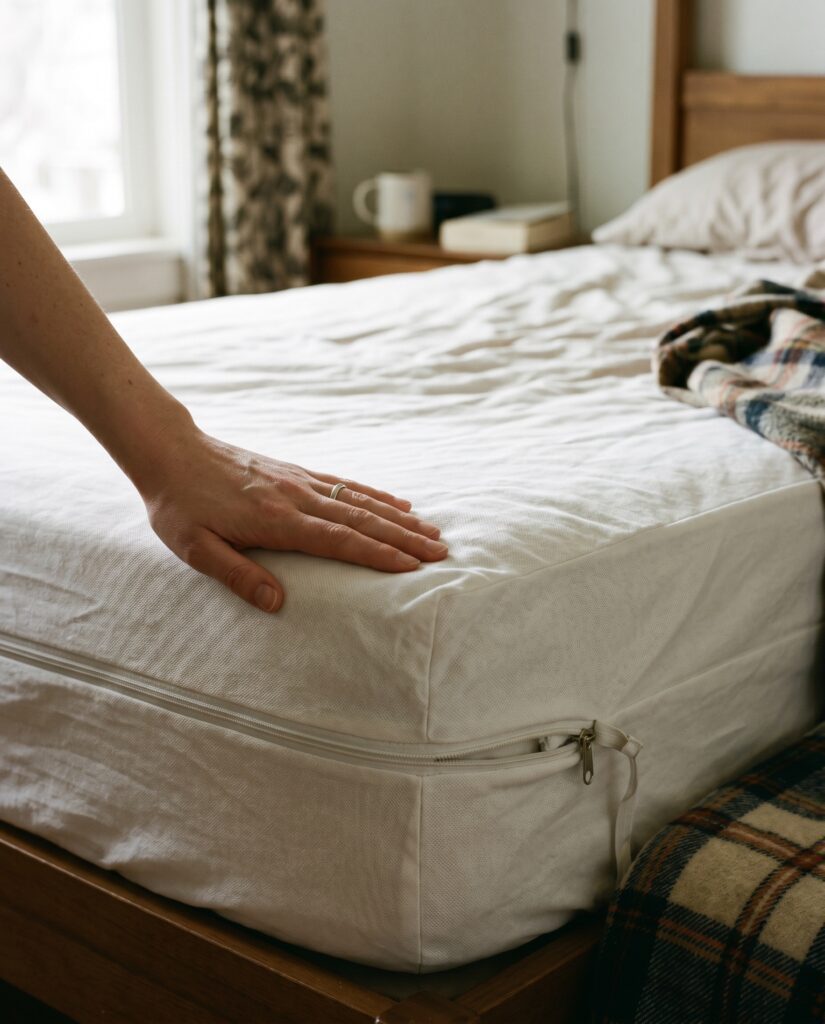
- Encase the mattress and box spring: this traps bugs and makes inspections easier.
- Vacuum seams and cracks: empty the vacuum outside immediately.
- Use interceptors/monitors under bed legs to confirm activity and track progress.
\\\
\\\
\\\
\\\
\\\
\\\
Avoid “bug bombs.” They often spread bed bugs deeper into walls and furniture.
\\\
When to call a professional for bed bugs\\\
Call a licensed pest management professional if:
\\\
- \\\
- You find live bugs or repeated fecal spotting
- Bites continue despite encasements and monitoring
- The infestation involves multiple rooms
\\\
\\\
\\\
\\\
Professional heat or targeted insecticide programs can be more effective than DIY attempts that miss hidden harborages.
\\\
Step 3: Stop fleas (treat pet + home together)
\\\
Fleas have life stages in carpets and bedding, so you need a combined approach:
\\\
- \\\
- Use veterinarian-recommended flea control on pets.
- Wash pet bedding and vacuum floors frequently (especially edges).
- Consider an IGR (insect growth regulator) product if advised, because it interrupts development.
\\\
\\\
\\\
\\\
Step 4: Stop mosquitoes (reduce bites and breeding)
\\\
Mosquito prevention works best when you combine:
\\\
- \\\
- Repellent and protective clothing during peak activity
- Fixing screens and sealing entry points
- Dumping standing water weekly (containers, clogged gutters)
\\\
\\\
\\\
\\\
Actionable takeaway
\\\
If bites are severe, persistent, or paired with systemic symptoms, prioritize health first. If bed bugs are suspected, confirm with physical evidence and consider professional help early to save time and cost.
\\\
Key takeaways (and your next best step)
\\\
Bite identification becomes much easier when you stop staring at one bump and start looking for patterns. Bed bug bites often cluster in lines on exposed skin after sleep, flea bites commonly pepper ankles and lower legs, and mosquito bites tend to be scattered and tied to recent outdoor exposure.
\\\
Your next best step:
\\\
- \\\
- If bed bugs seem likely, inspect mattress seams and bed frame joints tonight and set simple monitors.
- If mosquitoes seem likely, review How Mosquitoes Find and Bite You and improve prevention.
- If you want a broader comparison tool, use Mosquito Bites vs Bed Bugs, Fleas, Spiders & Ticks to narrow it down quickly.
\\\
\\\
\\\
\\\
With the right clues, you can move from guessing to confirming, then take the exact steps that stop the bites at the source.
\\\
As an Amazon Associate, I earn from qualifying purchases. Product recommendations are based on real reviews and independent research.