If you’re worried about bed bugs jumping, you can relax on that one point – bed bugs do not jump, and they also do not fly. What they can do is crawl quickly, climb surprisingly well, and hide in spaces as thin as a credit card. That combination makes them easy to mistake for other pests, and it also explains how infestations spread so fast in homes, hotels, and apartments. Below is a clear, science-based look at how bed bugs really move, what “jumping” sightings usually are, and what to do next.
Quick answer: do bed bugs jump or fly?
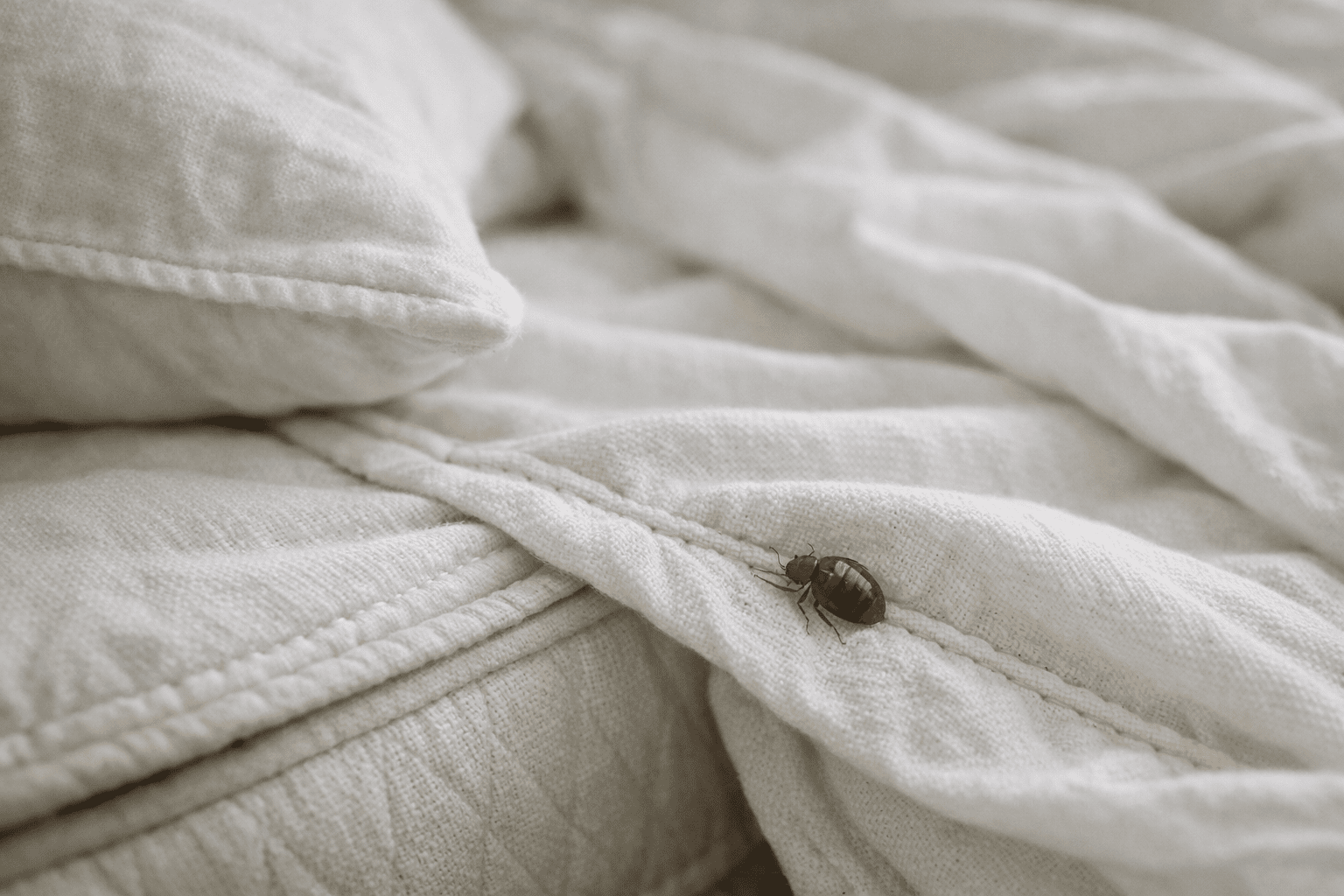
Bed bugs (Cimex lectularius) cannot jump and cannot fly. They move by crawling and climbing.
Here’s the fast, practical breakdown for anyone searching about bed bugs jumping:
- Jumping? No. Bed bugs lack the enlarged hind legs that jumping insects (like fleas) use.
- Flying? No. They have no functional wings, only small wing pads that never develop.
- How they move: Fast crawling (often estimated around 3-4 feet per minute) plus climbing on fabric, wood, and walls.
- How they spread room-to-room: Mostly by hitchhiking on luggage, clothing, backpacks, furniture, and bedding.
- If you saw a “jump”: It was likely a flea, springtail, or another small insect – not a bed bug.
If you’re seeing bites and need help sorting the culprit, compare patterns in Bed Bug Bites vs Flea Bites vs Mosquito Bites.
Why bed bugs can’t jump (and why people think they do)
People usually search “bed bugs jumping” after one of two moments: they see a tiny bug “pop” off a sheet, or they notice bites and assume the pest must be jumping like a flea. The reality is simpler – bed bugs are built for gripping and crawling, not leaping.
The anatomy problem: no jumping legs, no launch power
Jumping insects have obvious equipment. Fleas have oversized hind legs with elastic structures that store energy like a spring. Bed bugs don’t. Their legs are more evenly sized and designed for walking and climbing, not explosive takeoff.
A helpful mental image: fleas are like tiny pogo sticks. Bed bugs are like tiny rock climbers.
What bed bugs actually have: claws for climbing
Bed bugs use hooked claws and sticky pads on their feet (tarsi) to grab onto rough surfaces and fabrics. That’s why they can move up bed frames, curtains, and luggage seams. It also explains why interceptors under bed legs can work – they interrupt a climbing route.
“It jumped!” – the common misread
A bed bug can look like it jumped when it:
- Drops from a blanket fold or headboard seam when disturbed
- Gets flicked by a sheet, sock, or your hand
- Runs quickly and changes direction, making its movement look erratic
If the insect truly launched upward or sideways in a clear hop, it is far more likely a flea. For a bite-and-bug reality check, start with Signs of Bed Bugs and then confirm with How to Check for Bed Bugs.
Quick comparison chart: “jumpers” vs bed bugs
| Feature | Bed bug | Flea | Springtail |
|---|---|---|---|
| Jumps? | No | Yes | Yes |
| Flies? | No | No | No |
| Typical location | Beds, couches, seams, cracks | Pets, pet bedding, carpets | Damp areas, sinks, windowsills |
| Body shape | Flat, oval, apple-seed look | Narrow, laterally compressed | Tiny, soft-bodied |
| Movement | Crawls, climbs | Jumps, crawls | Pops/jumps |
Bed bug movement facts: crawling speed, climbing ability, and hiding skills
Hot Shot Bed Bug and Flea Killer, 1 Gallon
Hot Shot Bed Bug and Flea Killer 1 Gallon is a ready-to-use spray effective against bed bugs, eggs, fleas, and ticks, featuring a non-staining, odor-free, residue-free formula for long-lasting protection; available at retailers like Walmart and Home Depot, but no Amazon ASIN or ratings found in current data, so verify directly on Amazon for purchase.
Bed bugs don’t need to jump to be effective at what they do. They are optimized for finding a host at night, feeding quickly, and disappearing into tight spaces before morning. That whole strategy depends on three movement skills: crawling, climbing, and squeezing into crevices.
How fast can a bed bug crawl?
Field and pest-control observations commonly place bed bug crawling speed around 3-4 feet per minute, which is faster than most people expect. At that pace, a bed bug can cross a bedroom floor in minutes, especially at night when it’s actively seeking a blood meal.
Practical takeaway: if your bed touches the wall, bedding drapes to the floor, or clutter creates “bridges,” bed bugs have easy pathways.
Climbing: why walls and bed frames aren’t barriers
Bed bugs can climb:
- Painted drywall (often easier if textured)
- Wood bed frames and slats
- Upholstery fabric and seams
- Cardboard and paper edges
- Some plastics, especially if scuffed or dusty
This is why “I don’t understand how they got onto the bed” is such a common complaint. They don’t need to jump onto the mattress. They can simply climb up a bed leg or use a blanket as a ramp.
Hiding: built like a living playing card
Bed bugs are dorsoventrally flattened, meaning their bodies are compressed top-to-bottom. That lets them wedge into narrow cracks like:
- Mattress piping and labels
- Headboard joints and screw holes
- Baseboards and floor trim gaps
- Nightstand corners and drawer slides
- Behind picture frames near the bed
If you want a step-by-step inspection map, follow How to Check for Bed Bugs and focus first on areas within 5-8 feet of where people sleep.
Visual checklist: where crawling bed bugs leave evidence
Use this quick list during a nighttime flashlight check:
- Live bugs in seams (adults are about 5-7 mm, nymphs smaller and paler)
- Black ink-like fecal spots on fabric or wood
- Shed skins (translucent, papery)
- Tiny pale eggs (about 1 mm) tucked in crevices
For a full evidence guide, see Signs of Bed Bugs.
Can bed bugs fly? Wing pads explained (and what you might be seeing instead)
EcoSMART Organic Bed Bug Killer, 14 oz
This organic bed bug killer is useful for readers looking for a non-toxic solution to manage bed bug issues, enhancing the article’s practical advice.
“Can bed bugs fly?” comes up because people spot small flying insects near beds and assume they must be bed bugs. Entomologists and pest professionals are consistent on this point: bed bugs do not fly. They are wingless in any practical sense.
The wing pad myth: remnants, not real wings
Bed bugs have small, undeveloped structures sometimes called wing pads. These are evolutionary leftovers, not functional wings. They do not open, flap, or generate lift.
Several pest education sources that compile entomology-based guidance emphasize this: bed bugs are flightless and rely on crawling and hitchhiking rather than aerial movement, including explanations in resources like the ZappBug bed bug movement overview and pest control educational write-ups such as the Rove Pest Control guide on bed bug flight.
If it flies, it’s not a bed bug: common lookalikes
Here are the usual “flying bed bugs” people actually see:
- Fungus gnats: tiny, dark, weak fliers near damp soil or houseplants
- Drain flies: fuzzy little moth-like flies near sinks and tubs
- Mosquitoes: active flyers that bite exposed skin, often with a noticeable whine
- Carpet beetle adults: small, oval beetles that may appear near windows
Practical takeaway: flying insects suggest a different problem, or a second problem. Treat the right pest, not the assumed one.
Quick ID table: bed bugs vs common flying room insects
| Clue | Bed bug | Gnat/drain fly | Mosquito |
|---|---|---|---|
| Wings visible | No | Yes | Yes |
| Where found | Seams, cracks near bed | Near moisture, plants, drains | Anywhere, often near people |
| When active | Mostly at night | Day and night | Dusk/night |
| Movement | Crawls, hides | Flies, lands on surfaces | Flies, lands on skin |
If bites are the main clue, use Bed Bug Bites vs Flea Bites vs Mosquito Bites to narrow it down before you spend money on the wrong treatment.
How bed bugs spread if they can’t jump or fly (the hitchhiking truth)
ClimbUp Insect Interceptor Bed Bug Trap, 4 Count
These interceptors can help prevent bed bugs from climbing onto beds, which ties into the article’s discussion about how bed bugs move and spread.
If bed bugs can’t jump or fly, why do infestations appear “out of nowhere”? Because bed bugs are world-class stowaways. Long-distance movement usually happens because humans unknowingly carry them to new places.
The main route: travel and secondhand items
Bed bugs commonly spread through:
- Luggage and backpacks (especially seams and zipper folds)
- Clothing piles and laundry baskets
- Secondhand furniture (couches, recliners, bed frames)
- Mattresses and box springs (high risk if used)
- Electronics with warm crevices (alarm clocks, laptops)
- Shared housing turnover (apartments, dorms, shelters)
A clear explanation of this hitchhiking pattern is echoed across bed bug education resources, including the Dodson Bros. overview of bed bug jumping myths which emphasizes crawling and transport rather than jumping.
Room-to-room: slow enough to miss, fast enough to matter
Inside a home, bed bugs can disperse by crawling, especially when:
- The infestation grows and harborage spots become crowded
- People sleep on couches or in multiple rooms
- Items move between rooms (laundry, blankets, backpacks)
They can also survive a long time without feeding by lowering metabolism, which makes them harder to “starve out” than most people expect. That’s one reason DIY efforts often fail when they rely only on leaving a room empty.
Mini action plan: reduce hitchhiking risk (especially after travel)
Use this checklist the day you return from a hotel or rental:
- Keep luggage off beds and upholstered furniture.
- Heat-dry travel clothes on high heat (follow fabric care labels).
- Inspect suitcase seams with a flashlight, focusing on stitching and pockets.
- Store luggage away from sleeping areas if possible.
- If you suspect exposure, follow How to Check for Bed Bugs within 24-48 hours.

What to do if you thought you saw bed bugs jumping: next steps that actually work
When someone reports “jumping bed bugs,” the most useful response is not debate. It’s a simple process: confirm the insect, confirm the evidence, then choose a control plan that matches the situation.
Step 1: Confirm the pest (don’t skip this)
Misidentification wastes time and money. Before treating:
- Look for live bugs in mattress seams and bed frame joints
- Check for fecal spotting (black dots that can smear)
- Look for shed skins and eggs in cracks
If you only have bites, use Bed Bug Bites vs Flea Bites vs Mosquito Bites and remember that skin reactions vary widely between people.
Step 2: Use monitoring tools to stop guessing
Monitoring gives you proof and helps measure progress:
- Interceptor cups under bed legs
- Mattress encasements designed for bed bugs
- Sticky monitors placed near bed legs (not a cure, but helpful)
Practical tip: pull the bed slightly away from the wall and ensure bedding does not touch the floor. This reduces easy climbing routes.
Step 3: Combine physical control with targeted treatment
Effective bed bug control usually requires a layered approach:
- Vacuum seams and crevices (dispose of the bag or contents immediately)
- Launder and heat-dry bedding and clothes
- Reduce clutter near sleeping areas to remove hiding spots
- Consider professional-grade methods when needed (heat treatments, targeted insecticides, or a coordinated IPM plan)
For a full, step-by-step plan, follow How to Get Rid of Bed Bugs.
When to call a professional
Professional help is recommended if:
- You find bed bugs in multiple rooms
- The infestation persists after 2-3 weeks of consistent effort
- You live in multi-unit housing (apartments, condos) where spread is likely
For broader, science-based IPM principles, the EPA guidance on integrated pest management is a reliable reference for how monitoring, sanitation, exclusion, and targeted treatment fit together.
Conclusion
Bed bugs jumping is a persistent myth, but the biology is clear: bed bugs do not jump and do not fly. They succeed through fast crawling, strong climbing ability, and a talent for hiding in tight crevices, then spreading long distances by hitchhiking on our belongings.
If you suspect bed bugs, start by confirming evidence with Signs of Bed Bugs and a focused inspection using How to Check for Bed Bugs. Once you have confirmation, move straight to a proven plan in How to Get Rid of Bed Bugs.
As an Amazon Associate, I earn from qualifying purchases. Product recommendations are based on real reviews and independent research.