Finding bites is frustrating, but the truth about bed bugs causes is usually simpler than people think: bed bugs show up because they are carried in, not because a home is “dirty.” Most infestations begin when a few insects hitchhike on luggage, clothing, or used furniture, then disappear into tiny cracks near where people sleep. This guide explains exactly how bed bug infestations start, the most common sources, why even one bug can snowball into a problem, and what to do next if you suspect activity.
Quick answer: what causes bed bugs to appear?
Bed bugs causes come down to one main event: introduction. Bed bugs (Cimex lectularius and, in warmer regions, Cimex hemipterus) do not fly or live in drains. They get inside by riding along with people and belongings.
Here are the most common ways infestations start:
- Travel: hitchhiking in luggage seams, backpacks, and folded clothing
- Secondhand items: used mattresses, couches, bed frames, nightstands, and even books
- Visitors and shared spaces: guests, roommates, and adjacent apartments (through wall voids)
- Moves and deliveries: moving trucks, storage units, and poorly inspected rentals
- Clutter near sleeping areas: not a “cause,” but it creates more hiding spots and slows detection
If you need help confirming what you’re seeing, start with Signs of Bed Bugs: How to Identify an Infestation and then use How to Check for Bed Bugs: Complete Detection Guide.
Bed bugs causes: the real ways infestations start (and why cleanliness isn’t one)
Picture the last time you stayed in a hotel, visited family, or sat on upholstered seating in a public place. Bed bugs are built for that exact moment. Their bodies are small and flat, typically about 4-7 mm long as adults (roughly apple-seed sized), and they wedge into seams and cracks where you would never notice them.
The key point: bed bugs are introduced from an infested location. According to the CDC bed bug overview, bed bugs spread mainly by hitchhiking on items that move from place to place. That is why outbreaks can happen in spotless homes, high-end hotels, and well-managed buildings.
Myth check: “Bed bugs only happen in dirty homes”
Bed bugs are not attracted to grime. They are attracted to hosts. Research summarized in a peer-reviewed review in the National Library of Medicine notes bed bugs orient to cues like carbon dioxide, heat, and human odors. Sanitation does not “invite” them in.
Cleanliness does matter in a different way: clutter gives bed bugs more places to hide, which can delay detection and make treatment harder. But it does not create bed bugs from nothing.
Two species, similar behavior
Most infestations are caused by:
- Common bed bug (Cimex lectularius): widespread in temperate regions across North America and Europe
- Tropical bed bug (Cimex hemipterus): more common in tropical and subtropical climates
Both hide near sleeping areas, feed mostly at night, and prefer tight harborages like mattress seams, headboards, and baseboards.
Quick visual: “Cause” vs “Condition”
| What’s happening | Is it a cause? | What it means for you |
|---|---|---|
| Bringing home bugs in luggage | Yes | Most common start point after trips |
| Buying used couch or mattress | Yes | High-risk, inspect before bringing inside |
| Neighboring unit has bed bugs | Yes | Bugs can move through wall voids |
| Clutter around the bed | No (but worsens) | More hiding spots, slower detection |
| Poor hygiene | No | Not linked to bed bug introduction |
Action takeaway: focus on how items enter your home. That is where prevention works best.
Travel and luggage: the #1 bed bug “hitchhiker” pathway
Hot Shot Bed Bug and Flea Killer, 1 Gallon
This product is relevant as it helps readers who may be dealing with a bed bug infestation by providing a solution for extermination.
If bed bugs had a strategy, it would look a lot like airport travel. A single insect can tuck into a zipper track, a suitcase seam, or the fold of a jacket and ride home unnoticed. Many people never see the bug that started the infestation because it immediately hides close to the bed.
Travel-related introductions are so common that public health agencies emphasize inspection and early response. The EPA bed bug resource hub highlights bed bugs as a widespread public health concern largely because they spread easily through human movement and are difficult to eliminate once established.
Where bed bugs hide during travel
Here are the “hot spots” entomologists look for first:
- Luggage seams, piping, and handle attachments
- Backpack stitching and laptop bag corners
- Folded clothes, especially items worn near bedding
- Toiletry bags stored near beds
- Hotel headboards and nightstands (then onto your belongings)
A simple hotel-room routine that prevents most problems
Use this quick checklist before you unpack:
- Put luggage in the bathroom tub or on a luggage rack pulled away from the wall.
- Check mattress corners and seams for live bugs, shed skins, or pepper-like fecal spots.
- Look behind the headboard area if accessible, and inspect the nightstand edges.
- Keep clothing in sealed bags if you are staying somewhere with uncertain history.
For a more detailed, step-by-step approach, use How to Prevent Bed Bugs When Traveling: Expert Tips.
What to do when you get home (the “airlock” method)
Think of your entryway like an airlock. You want to keep potential hitchhikers from reaching the bedroom.
- Unpack on a hard floor, not on the bed
- Heat-treat travel clothes in a dryer on high heat (when fabric allows)
- Vacuum suitcase seams and store luggage away from sleeping areas
- If you suspect exposure, inspect again using How to Check for Bed Bugs: Complete Detection Guide
Visual: travel risk ranking (fast reference)
| Travel item | Risk level | Why |
|---|---|---|
| Soft-sided suitcase | High | Many seams and folds |
| Backpack | High | Close contact with seats and floors |
| Hard-shell suitcase | Medium | Fewer seams, still has zippers |
| Shoes | Medium | Can pick up bugs from floors |
| Sealed plastic bag of clothes | Low | Limits access and hiding spots |
Action takeaway: treat luggage like a potential carrier, especially after hotels, hostels, cruises, or multi-unit stays.
Secondhand furniture and “free curb finds”: the fastest way to import an infestation
EcoSMART Organic Bed Bug Killer, 14 oz
EcoSMART Organic Bed Bug Killer (14 oz) is a natural, plant-based aerosol spray using peppermint oil, rosemary oil, and 2-phenethyl propionate to kill bed bugs, eggs, and dust mites on mattresses and carpets; it is safe for use around children and pets with a fresh scent, though Amazon-specific ratings, reviews, and pricing could not be verified from available data[1][2][4].
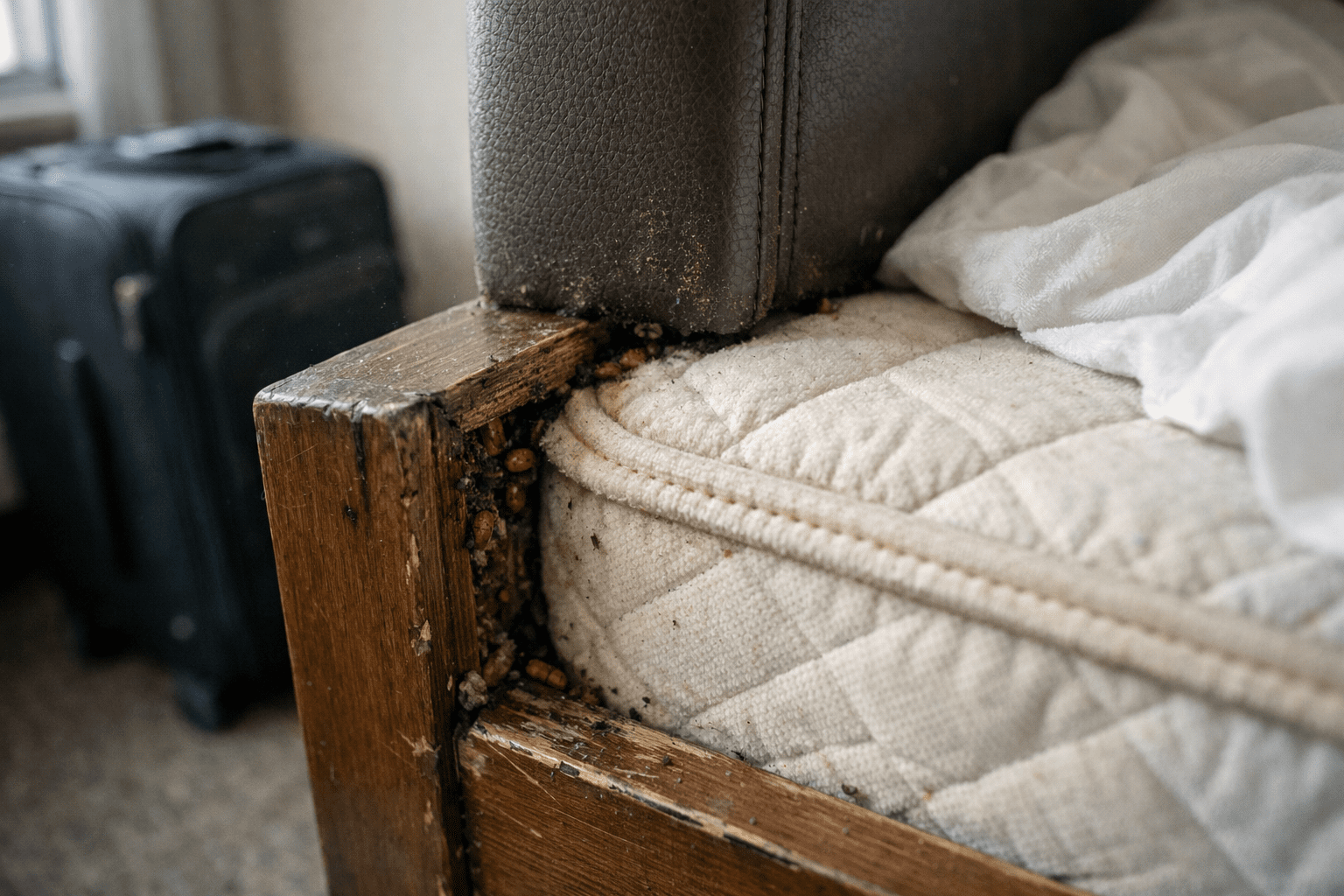
A used dresser can be a bargain. A used mattress can be a disaster. Bed bugs love upholstered furniture, bed frames, and anything with joints, staples, and fabric folds. Even if the item looks clean, bed bugs can hide where you cannot see them.
This is one of the most misunderstood bed bug infestation sources because people expect a smell, visible dirt, or obvious insects. Often, none of those are present.
Highest-risk items (avoid or inspect intensely)
- Mattresses, box springs, and bed frames
- Couches, recliners, and upholstered chairs
- Wooden furniture with many joints (nightstands, dressers, headboards)
- Items stored in basements, garages, or storage units with unknown history
How to inspect secondhand items in 10 minutes
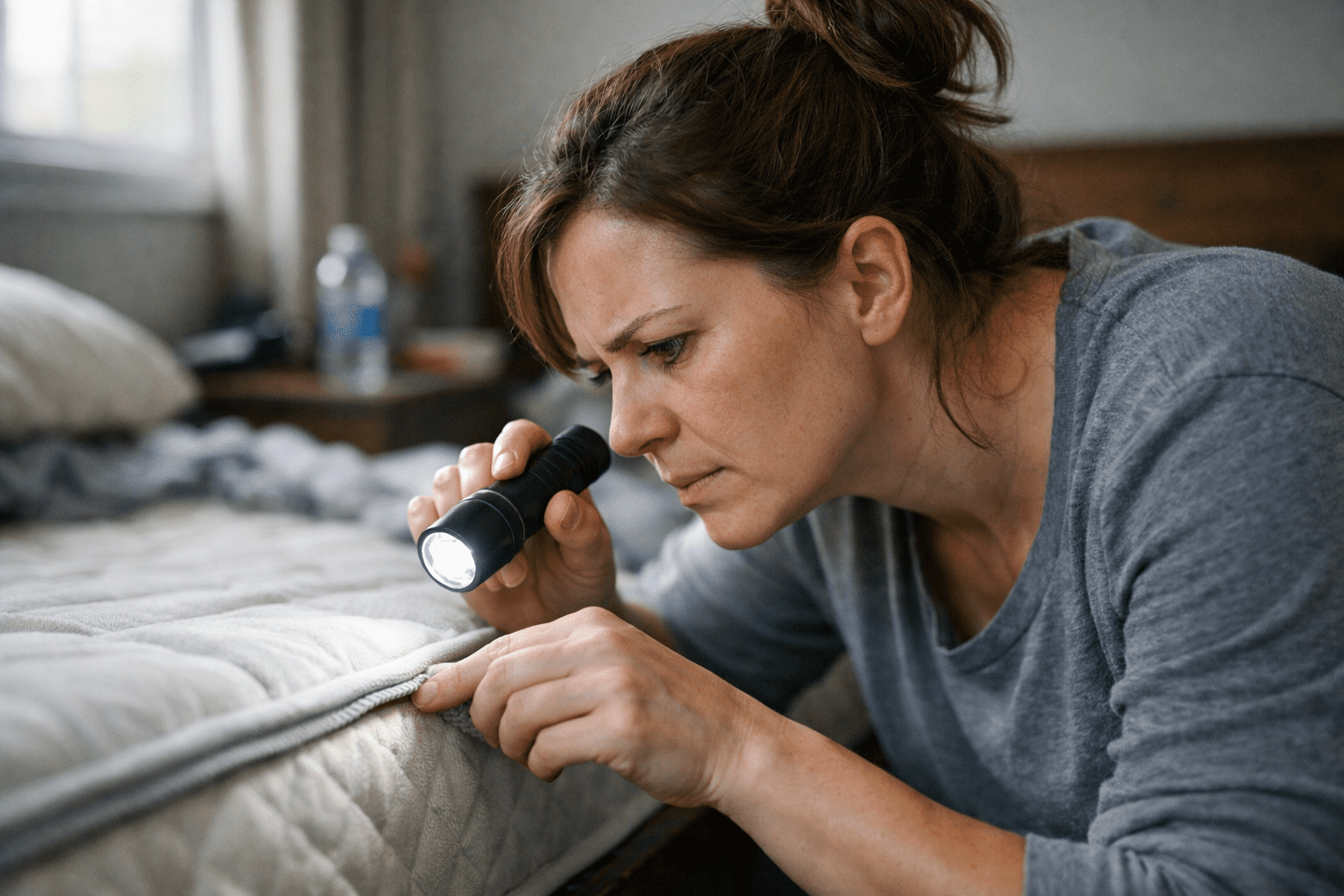
Bring a bright flashlight and, if possible, a thin card (like an old gift card) to run along seams.
- Inspect seams, tufts, and under fabric edges for dark spotting and shed skins.
- Check screw holes, joints, and underside corners.
- Look inside drawer joints and along runners for spotting.
- If you see even one live bug, walk away.
For help recognizing the evidence, the photo-based checklist in Signs of Bed Bugs: How to Identify an Infestation is the fastest way to avoid false alarms.
“But it was wrapped in plastic”
Plastic wrap reduces risk, but it does not erase it. If an item was wrapped after being inside an infested home, bugs or eggs could already be in seams or joints. Also, plastic can tear during transport.
Visual: secondhand item risk chart
| Item | Risk | Safer alternative |
|---|---|---|
| Used mattress/box spring | Very high | Buy new or certified treated |
| Used upholstered couch | High | Avoid unless professionally treated |
| Solid wood table | Low to medium | Inspect joints and underside |
| Used books/electronics | Medium | Inspect cracks, keep bagged initially |
Action takeaway: the cheapest furniture is often expensive later. If you do buy used, inspect before it crosses your threshold.
Why a tiny introduction becomes a big problem: biology that favors bed bugs
Bed Bug Interceptor Traps, 8 Count
No Amazon product page or ASIN found for ‘Bed Bug Interceptor Traps, 8 Count by Rest Assured’ in search results; similar products like ClimbUp or Hot Shot exist with mixed reviews on effectiveness for monitoring but not eliminating infestations. Cannot recommend without verified Amazon data.
Many pests need a large population to “take off.” Bed bugs do not. One of the most unsettling (and important) realities is that a single mated female can start an infestation. Guidance on bed bug biology from the Virginia Department of Agriculture and Consumer Services explains that females can lay eggs after mating, and once established near a steady food source, populations can grow steadily.
So what makes them so persistent?
1) They hide where sprays often miss
Bed bugs prefer tight spaces: behind baseboards, inside bed frames, under carpet edges, behind wallpaper seams, and in screw holes. Those harborages protect them from casual cleaning and many over-the-counter insecticides.
2) They can survive long periods with no meal
Bed bugs are resilient. Research discussed in a PNAS study on bed bug biology and spread highlights their ability to persist and rebound, especially in multi-unit environments where movement between units can occur.
3) They are active year-round indoors
Unlike many seasonal insects, bed bugs live in climate-controlled spaces. That means infestations can begin in any month, then slowly build until bites or spotting finally get noticed.
4) People often react too late
Early infestations can be nearly invisible. Bites vary widely by person, and some people have little to no skin reaction. That delay gives bed bugs time to spread from the bed to nearby furniture.
Visual: what growth looks like in the real world
| Stage | What you notice | What’s happening behind the scenes |
|---|---|---|
| Early (days to weeks) | Often nothing | Bugs hide close to the bed |
| Developing (weeks to months) | Occasional bites, small spots | Eggs and nymphs increase |
| Established | Frequent bites, visible spotting | Bugs spread to furniture and walls |
Action takeaway: if you suspect bed bugs, confirm quickly. Waiting is one of the biggest reasons small introductions become difficult jobs.
Apartments, dorms, and shared walls: how bed bugs spread without “bringing them home”
In single-family homes, introductions usually trace back to travel or used items. In multi-unit housing, there is another pathway: movement between units. Bed bugs can travel through wall voids, along plumbing penetrations, and under doors, especially when populations grow or when a neighboring unit is treated improperly and bugs scatter.
This is why two people in the same building can have very different experiences. One unit may have no signs, while another has an established infestation.
Common building-related sources
- Adjacent unit with an untreated or partially treated infestation
- Shared laundry rooms (bugs on baskets or folded laundry)
- Trash rooms and hallways where infested furniture is staged
- Frequent turnover in rentals and dorm rooms
What to do if you live in multi-unit housing
- Document signs (photos of spotting, skins, or bugs) and report promptly.
- Ask about building-wide inspection and coordinated treatment.
- Reduce hiding spots near beds, and use mattress encasements if recommended by your pest professional.
For a practical next step, follow How to Get Rid of Bed Bugs: Complete Step-by-Step Guide – it includes preparation steps that matter a lot in apartments.
Are bed bugs dangerous?
They are not known to be reliable disease spreaders in real-world settings. The EPA’s bed bug public health guidance notes bed bugs are a public health issue mainly due to bites, allergic reactions in some people, and mental stress. A scientific review in the National Library of Medicine also discusses pathogen findings while emphasizing that routine disease transmission to humans has not been proven.
That said, bites can lead to secondary skin infections from scratching, and infestations can cause sleep loss and anxiety. Take them seriously, but don’t panic.
Visual: “shared building” prevention checklist
- Seal gaps around baseboards and pipe penetrations where possible
- Keep bed slightly away from walls; reduce bedding touching the floor
- Inspect any used items coming from within the building
- Report early signs before bugs spread unit-to-unit
Action takeaway: in apartments and dorms, prevention and control work best when the whole building responds, not just one unit.
Conclusion: the real cause is introduction – so focus on entry points and early detection
Most bed bugs causes trace back to a simple story: bed bugs were carried in on luggage, belongings, or furniture, then hid close to where people sleep. Clean homes get bed bugs the same way cluttered homes do, but clutter can make them harder to find and treat.
Next steps that pay off immediately:
- If you suspect activity, confirm it using Signs of Bed Bugs: How to Identify an Infestation
- Then follow How to Check for Bed Bugs: Complete Detection Guide to inspect the right places in the right order
- If you confirm bed bugs, use How to Get Rid of Bed Bugs: Complete Step-by-Step Guide and consider professional help early, especially in multi-unit buildings
Stop the hitchhikers at the door, and you prevent most infestations before they ever begin.
As an Amazon Associate, I earn from qualifying purchases. Product recommendations are based on real reviews and independent research.