
That itchy bump is your immune system reacting to a little mosquito saliva, and most of the time it settles on its own within a few days. There is nothing to cure here, so mosquito bite treatment is really about relief: cool the bite, calm the itch, and above all leave it alone. The one rule that matters most is don’t scratch, because broken skin is how a harmless bite turns into a skin infection. Past that, a few signs change the plan: redness and warmth that spread, a severe whole-body reaction, or fever and body aches that show up days later. This guide walks through what is normal, the red flags worth watching, and how to get bitten less next time.
Most mosquito bites just itch and fade in a few days, so treat the symptom, not a cure: cool it, calm the itch, and do not scratch, since broken skin is what turns a bite into an infection.
- Normal: An itchy, raised pink or red bump that peaks within a day and fades over several days with simple itch relief.
- See a doctor: Spreading warmth and redness, pus, red streaks, or a fever days later with body aches, which can signal an infection or mosquito-borne illness.
- Get emergency help: Trouble breathing, throat or tongue swelling, dizziness, or hives spreading fast, which can mean a severe allergic reaction.
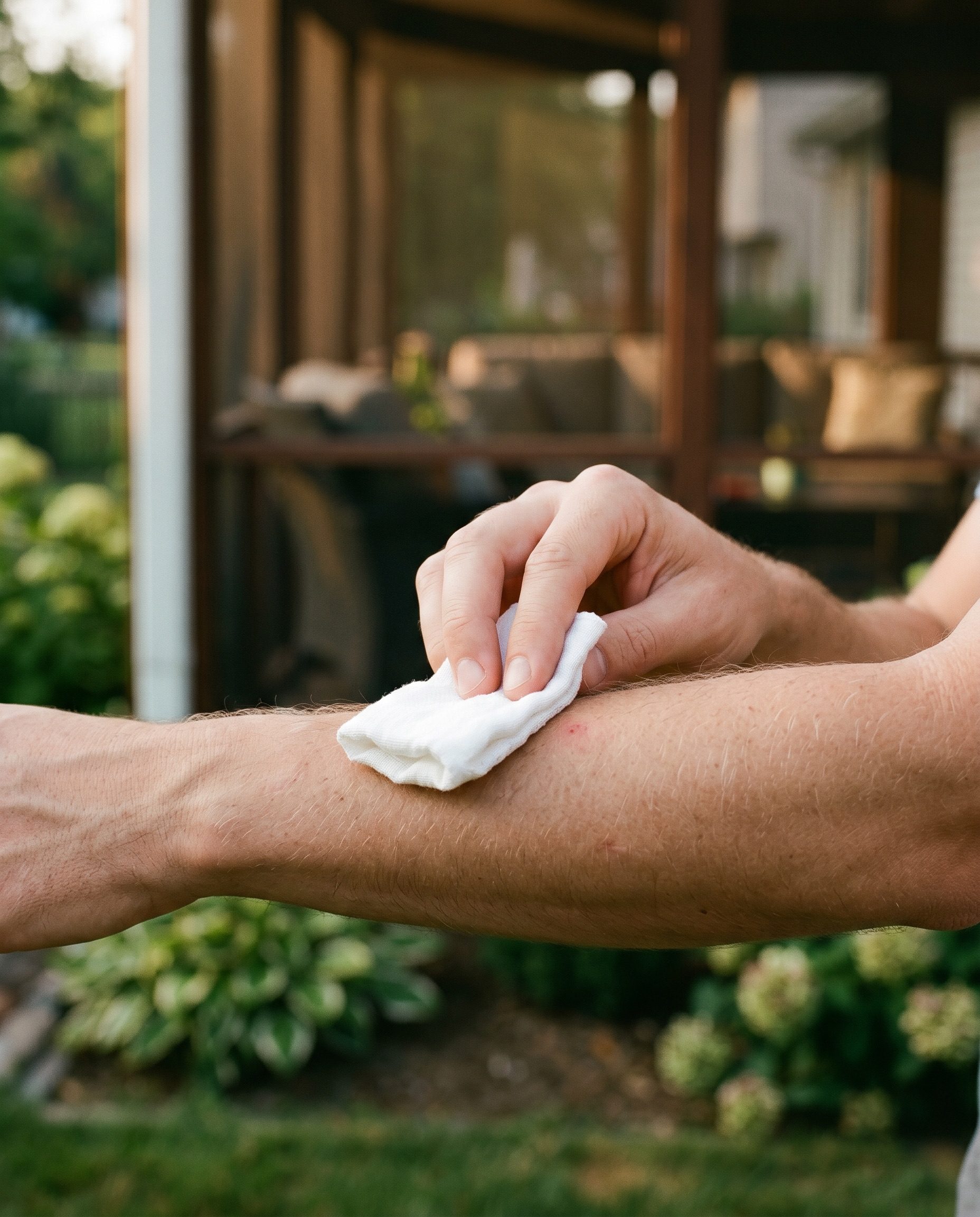
Why bites itch
A mosquito bite itches because of what the mosquito leaves behind, not because of any wound. When she feeds, she injects a little saliva to keep your blood flowing, and your immune system answers that protein with a small, localized histamine reaction. That reaction is the bump and the itch. The itch is the whole event for most people, and it is the body overreacting to something harmless, not a sign of damage.
How big that reaction gets is personal. The American Mosquito Control Association notes that how strongly a person reacts to bites varies from one individual to the next, so the same bite that barely marks one person can raise a hot, swollen welt on someone else. Kids often react more than adults, and you can react less to local mosquitoes over time as your body grows used to them. None of this changes the basic plan, which is to ease the itch and keep your hands off it.
What a normal bite looks like
A routine mosquito bite is a small, raised, itchy bump, usually pink or red, sometimes with a paler firm center. It tends to appear within minutes to a few hours, the itch peaks in the first day, and then the whole thing settles over several days. You might get one or you might get several if you were out at dusk, and they turn up on whatever skin was uncovered.
A few normal variations can look alarming but are not. Some people develop a larger area of warmth, redness, and swelling around the bite within the first day, a stronger local reaction that is still just the immune system being enthusiastic. The timeline is the useful tell: a normal bite is at its worst early and then steadily improves. The trouble starts when a bite does the opposite and gets worse after a day or two, which is the pattern the next section covers.

When to see a doctor
A normal bite fades. The change that should move you from home care to a doctor is a bite that gets worse instead of better over a day or two, because that points away from a simple reaction and toward a problem. The usual cause is not the mosquito, it is scratching: nails break the skin, bacteria get in, and an itchy bump becomes a skin infection.
Watch for these concrete signs and treat them as a reason to be seen, not a reason to panic:
| Sign | What it can mean | What to do |
|---|---|---|
| Redness and warmth spreading past the bite | Possible skin infection (cellulitis) | Contact a healthcare provider |
| Pus, increasing pain, or a bite that hardens | Possible infected bite | Contact a healthcare provider |
| Red streaks running from the site | Infection spreading | Seek medical care promptly |
| Fever and body aches a few days later | Possible mosquito-borne illness | Contact a healthcare provider |
If you see any of these, stop home care and contact a healthcare provider, since these can point to an infection rather than a normal reaction. MedlinePlus, the NIH consumer health service, covers home care for a bite and the signs that mean you should get medical help, and spreading redness or fever is on that list. A provider can confirm what is happening and decide whether you need treatment.
One point worth separating out: the bite itself does not make you sick. When mosquito-borne illness happens, the CDC explains that mosquito-borne illness shows up days later as fever and body aches, not as the bite. So the thing to monitor is not how the bump looks, but whether you feel feverish and achy in the week or two after being bitten. For most viruses these mosquitoes can carry, that day-later illness is also uncommon: the CDC notes that most West Nile infections cause no symptoms at all, and serious illness is rare. Knowing the real signal keeps you from reading too much into an ordinary itchy bump.
Emergency signs
A severe allergic reaction to mosquito bites is uncommon, but it is the one situation that needs immediate care, so it gets its own section. Get emergency medical help right away for signs of anaphylaxis: trouble breathing, swelling of the throat, tongue, or lips, tightness in the chest or throat, dizziness or fainting, a fast heartbeat, or hives spreading quickly over the body. These signs mean call emergency services, not wait and see. If the affected person has a known severe insect allergy and an epinephrine auto-injector such as an EpiPen has been prescribed, use it as directed and still get emergency care, because symptoms can return.
Keep this in proportion. The overwhelming majority of mosquito bites never come anywhere close to this. The point is simply to know the signs so you can act fast in the rare case they appear.
How to stop the itch
For an ordinary itchy bite, relief is simple, and the main job is to resist scratching so the skin stays intact. Start with a cold compress or an ice pack wrapped in a cloth for a few minutes, which numbs the itch and calms swelling. Wash the bite with soap and water, keep your fingernails short, and cover a bite you keep going after so you cannot dig at it in your sleep.
For the itch itself, an over-the-counter antihistamine or a hydrocortisone cream can help some people; follow the product label, and ask your pharmacist if you are unsure or if the bite is on a young child. There is no dose or special product to chase here, and nothing to cure beyond easing the itch while the bump fades. If you want a rundown of the calamine, antihistamine, and topical options people reach for, our guide to mosquito bite relief products lays them out. The honest takeaway is that time and not scratching do most of the work.
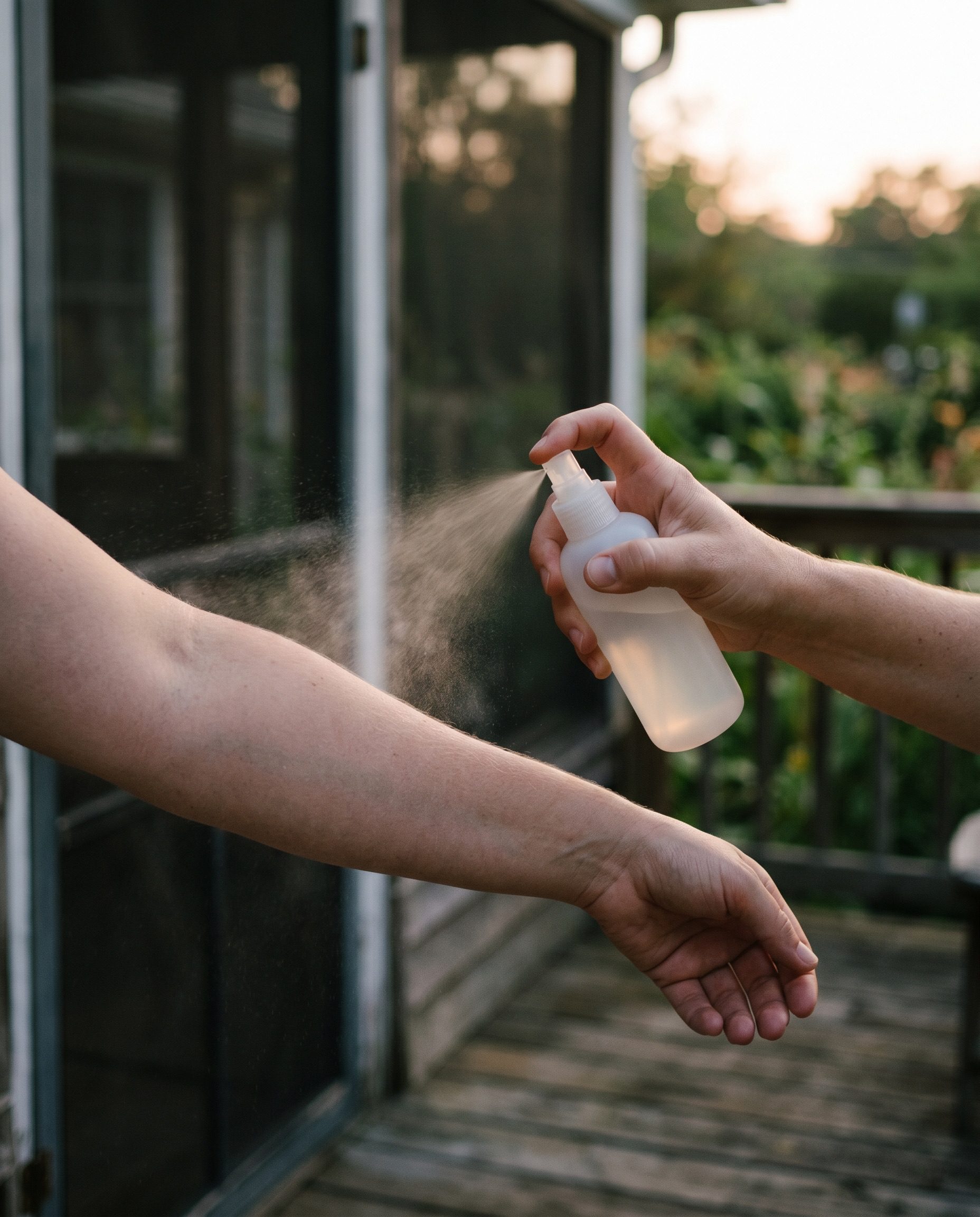
Lower your risk
Prevention does more here than any after-the-fact remedy, because the bite you never get needs no treatment at all. Start with the two things that punch above their weight: repellent and standing water. The EPA’s guidance confirms that an EPA-registered repellent used per the label is the most reliable way to stop bites, and the registered active ingredients to look for are DEET, picaridin, IR3535, and oil of lemon eucalyptus. Pick one, apply it per the label, and reapply as the label says; our breakdown of DEET, picaridin, and natural repellents compares them.
The second lever is your own yard. Mosquitoes breed in still water, so dumping standing water every few days breaks their cycle: tip out plant saucers, buckets, kiddie pools, clogged gutters, and anything that holds rain. Long sleeves at dusk and intact window screens help too, and if the problem has moved indoors, see our notes on getting rid of mosquitoes inside the house. In our own yard, emptying a couple of forgotten saucers behind the shed made the biggest difference of anything we tried.
When it’s not a mosquito bite
Not every itchy bump is a mosquito bite, and assuming it is can send you chasing the wrong fix. A few common look-alikes: bites from fleas or other biting insects, hives from an allergen, contact dermatitis from a plant or a new soap, folliculitis around a hair follicle, or an eczema flare. Bites usually land on exposed skin and stay localized, while many rashes are widespread, symmetric, or tied to something you touched.
If the bumps keep coming with no mosquitoes around, appear in lines or tight clusters, or spread into a broad rash, the cause may not be a mosquito at all. This is not a diagnosis you have to make alone: a healthcare provider can tell these apart, and if the cause is unclear or the rash spreads, get it checked.
Common questions
How long does a mosquito bite last?
A typical bite itches most in the first day and fades over several days to a week. If it is getting redder, warmer, or more painful after a day or two instead of better, treat that as a possible infection and contact a healthcare provider.
What stops the itch fastest?
A cold compress is the quickest first move, and an over-the-counter antihistamine or hydrocortisone cream eases the itch for many people; follow the label. The most important step is not scratching, which is what keeps a bite from getting worse.
Should I worry about disease from one bite?
For most people, no. Mosquito-borne illness is uncommon and, when it happens, shows up as fever and body aches days later rather than at the bite. Watch how you feel over the next week or two, and see a provider if you develop a fever.
Why are my bites so big and swollen?
Reactions vary a lot from person to person, and a larger warm, swollen welt within the first day is often just a stronger local reaction, not an infection. The tell is timing: a reaction that peaks early and improves is normal, while one that worsens after a day or two is worth a doctor’s look.
Is it safe to put repellent on kids?
EPA-registered repellents have age guidance on the label, so follow it and ask your pediatrician or pharmacist if you are unsure. Removing standing water and using screens cuts a child’s exposure without putting anything on their skin.
Final verdict
There is no cure for a mosquito bite because there is nothing to cure: it is a small, self-limiting reaction that fades on its own. So treat the symptom, cool it and calm the itch, and put your real effort into the one thing that turns a harmless bump into a problem, which is scratching. Keep your attention on the signs that actually change the plan: spreading warmth and redness that can mean an infection, the rare emergency signs of a severe allergic reaction, and fever with body aches days later that point to illness rather than the bite. Then prevent the next round with repellent and a quick pass to empty standing water, because the bite you avoid is the one you never have to treat.
This guide is information, not medical advice. Use it to know when home care is fine and when it is not, and defer to your clinician for anything that worries you.
Reviewed by Dr. Lena Foster, public health writer, focused on insect-related health risks. This article is for information only and is not medical advice.


