Finding tiny, pale bugs in mattress seams can be unsettling, especially when they seem to “disappear” the moment you look away. Bed bug nymphs (baby bed bugs) are the juvenile stages of the common bed bug (Cimex lectularius), and they are often the first sign an infestation is actively growing. This guide shows exactly what to look for: size and color by stage, where nymphs hide, and how to confirm you are seeing bed bugs (not lint, fleas, or carpet beetles). You will also get practical next steps that target nymphs and eggs.
Quick identification: what bed bug nymphs look like (fast answer)
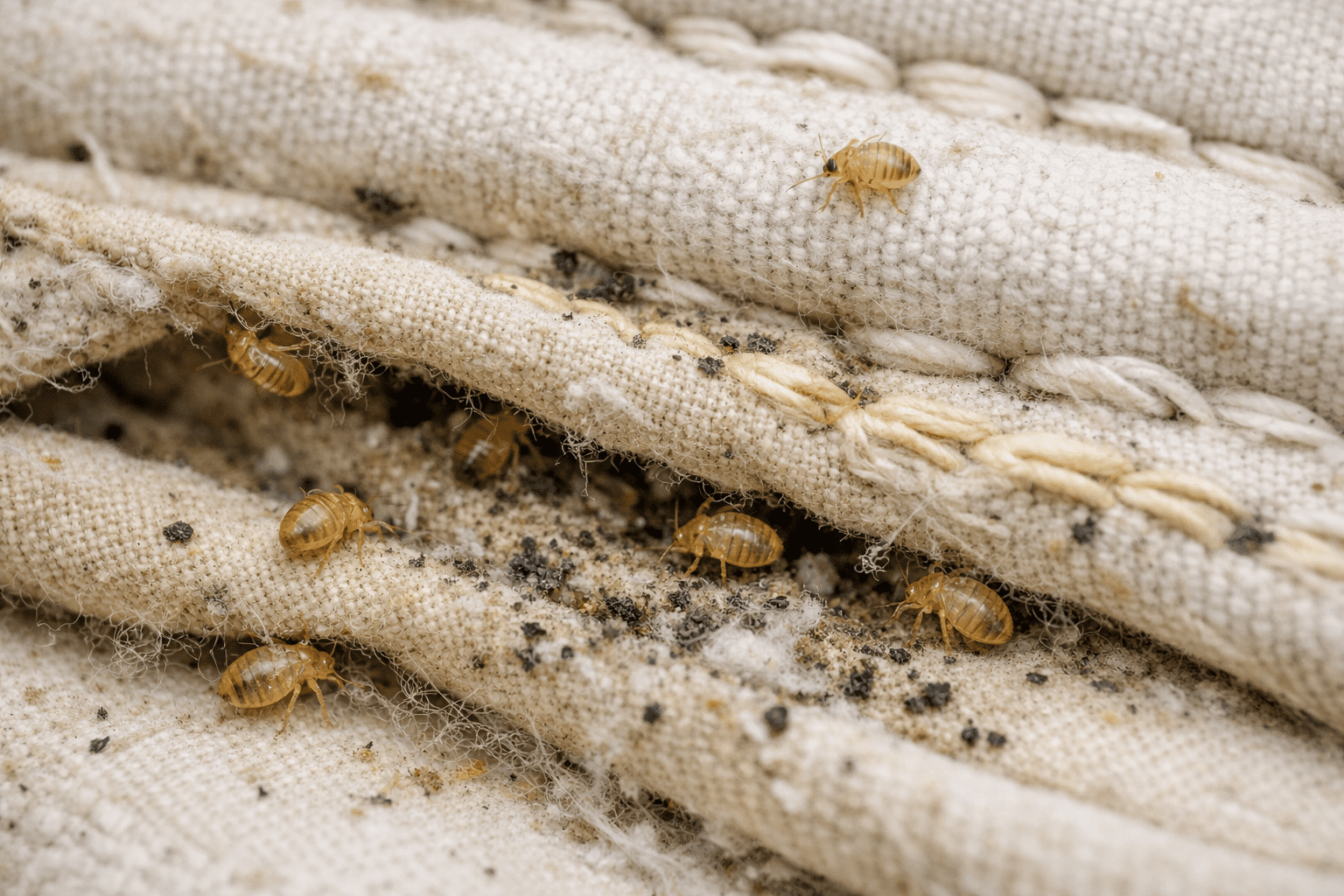
Bed bug nymphs are tiny, flat, oval-shaped bugs that start nearly translucent and turn red after feeding. They look like miniature adults but are lighter and harder to spot, especially in the first two stages.
Use this checklist to confirm a likely nymph:
- Size: about 1 to 4.5 mm (pinhead to sesame seed sized, depending on age)
- Color (unfed): clear to whitish-yellow, sometimes pale tan
- Color (after feeding): abdomen looks bright red (fresh blood) then darkens as it digests
- Shape: oval and flattened, with a visible “beak” (piercing mouthpart) tucked under the head
- Movement: crawls quickly, does not jump or fly
- Nearby clues: pearl-white eggs (about 1 mm), inky fecal dots, tiny blood smears, and shed skins
Nymph stages at a glance (instars)
| Nymph stage | Approx. size | Typical look (unfed) | After feeding |
|---|---|---|---|
| 1st instar | 1 to 1.5 mm | nearly clear, red eyes | abdomen turns pink-red |
| 2nd instar | 1.5 to 2 mm | off-white to yellow | red “blood belly” shows |
| 3rd instar | 2 to 2.5 mm | light yellow-tan | red to darker red-brown |
| 4th instar | 3 to 3.5 mm | tan, thicker body | reddish-brown |
| 5th instar | 4 to 4.5 mm | tan-brown, adult-like | darker brown-red |
Bed bug nymphs by stage: size, color, and what changes after feeding
If you have ever tried to spot baby bed bugs, you already know the trick: unfed nymphs blend in like dust, then look obvious once they have eaten. That isn’t your imagination. Early instars are small enough to hide in fabric folds and wood grain, and their pale bodies can look like skin flakes until blood fills the abdomen.
Entomologists describe bed bugs as “true bugs” (order Hemiptera). Nymphs share the same basic body plan as adults: flattened oval body, four-segment antennae, and a beak-like mouthpart used for feeding. According to the U.S. Environmental Protection Agency bed bug biology overview, bed bugs develop from egg to adult through five nymph stages, and each molt requires a blood meal.
What “instars” mean (and why it matters for your inspection)
Think of instars like children’s clothing sizes. A nymph must feed, then shed its outer skin (exoskeleton) to “size up.” That shed skin is one of the most reliable clues during inspections because it stays behind, doesn’t move, and collects in hiding areas.
Here’s what tends to change as nymphs grow:
- Visibility: 1st and 2nd instars are easiest to miss; 4th and 5th are easier to see.
- Color: early stages are translucent; later stages become tan to brown.
- Body thickness: older nymphs look more “bug-like,” less glassy.
- Evidence left behind: more molts mean more cast skins near harborage sites.
Stage-by-stage identification notes (practical cues)
Use these cues when you find a suspicious speck:
- 1st instar (1 to 1.5 mm): nearly clear until it feeds. Under bright light, look for red eyes and a tiny oval outline.
- 2nd instar (1.5 to 2 mm): still pale, often mistaken for lint. After feeding, the abdomen can look like a tiny red droplet.
- 3rd instar (2 to 2.5 mm): “mini adult” shape becomes more obvious. Legs and antennae are easier to see.
- 4th instar (3 to 3.5 mm): tan and thicker. More likely to be spotted in mattress seams.
- 5th instar (4 to 4.5 mm): strongly resembles a small adult but usually lighter and less uniformly brown.
Actionable takeaway: If you see multiple sizes of nymphs, the infestation is established (not a one-off hitchhiker). At that point, jump to a structured inspection plan like How to Check for Bed Bugs: Complete Detection Guide so you do not miss eggs and hiding clusters.
Where bed bug nymphs hide (and the signs they leave behind)
Hot Shot Bed Bug and Flea Killer, 1 Gallon
Hot Shot Bed Bug and Flea Killer 1 Gallon is a ready-to-use spray praised for its non-staining, odor-free formula that kills bed bugs, eggs, fleas, ticks, and dust mites while leaving no residue, available at retailers like Home Depot and Walmart; however, no Amazon ASIN or ratings were located in search results, limiting direct affiliate recommendation[1][2][3].
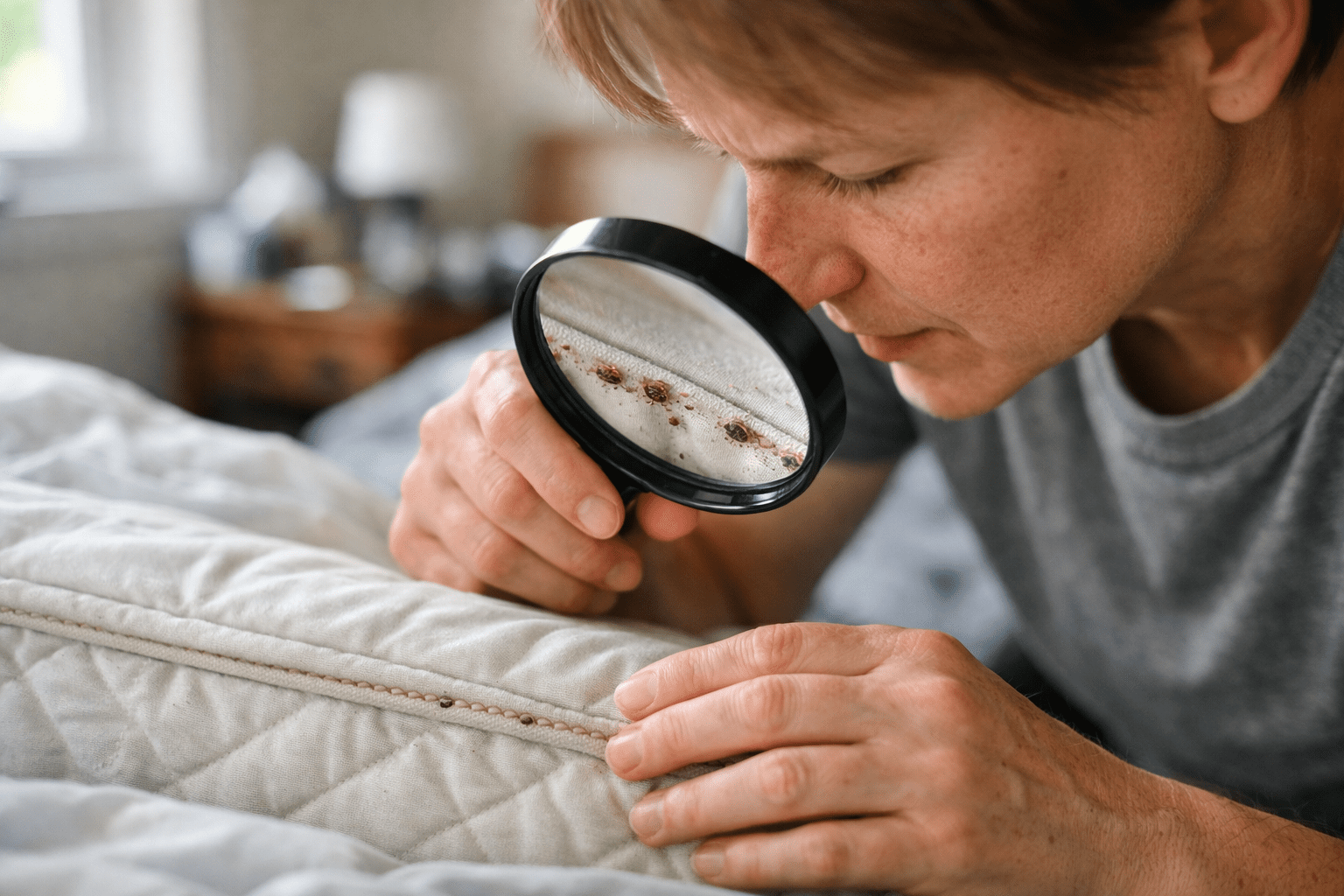
Most people check the top of the mattress and stop. That is exactly why nymphs keep getting missed. Baby bed bugs prefer tight, protected cracks near where a host sleeps, and they can fit into spaces about the thickness of a credit card edge – sometimes less for the smallest instars.
University-based bed bug programs emphasize that early nymphs are difficult to detect because of their size and pale color, and because they wedge into crevices where light rarely reaches. The University of Tennessee bed bug identification resources describe common hiding sites that match what pest professionals see in homes and hotels: seams, folds, screw holes, and joints close to the bed.
High-yield hiding places (check these first)
Use this quick “top 10” list to focus your search:
- Mattress seams and piping, especially near the head of the bed
- Box spring corners, underside fabric, and wooden frame edges
- Headboard cracks, mounting brackets, and wall contact points
- Bed frame joints, slats, and screw holes
- Nightstand corners, drawer joints, and underside lip
- Upholstered furniture seams (couches, recliners)
- Baseboards and carpet edges near the bed
- Behind picture frames and loose wallpaper seams
- Electrical outlet plates near sleeping areas (power off before removing)
- Luggage, backpack seams, and laundry hampers (common reintroduction sources)
The “trail of evidence” nymphs leave
Even when nymphs are hard to spot directly, their evidence is easier:
- Fecal spots: tiny dark dots that can look like ink. On fabric, they may bleed slightly when damp.
- Shed skins: translucent, bed-bug-shaped casings in different sizes.
- Eggs and eggshells: pearl-white, about 1 mm, often cemented to surfaces.
- Blood smears: small rust-colored marks from crushed bugs or fresh feeding.
If you want a full checklist of what counts as a true sign versus a false alarm, use Signs of Bed Bugs: How to Identify an Infestation. It helps you connect the dots between nymphs, eggs, spotting, and bite patterns.
Quick “evidence map” you can copy
When inspecting, note what you find and where:
| Evidence found | What it suggests | Most common location |
|---|---|---|
| Mixed-size shed skins | ongoing growth over weeks | box spring edges, frame joints |
| Eggs + 1st instars | active breeding nearby | tight cracks near headboard |
| Heavy fecal spotting | established harborage | headboard, mattress seam corners |
| Mostly larger nymphs | older infestation or missed earlier stages | bed frame, furniture seams |
Actionable takeaway: Do not relocate the bed or start moving items room-to-room until you have a plan. Spreading infested objects is a common way infestations expand.
Bed bug nymphs vs lookalikes: fleas, ticks, carpet beetles, and roach nymphs
EcoSMART Organic Bed Bug Killer, 14 oz
EcoSMART Organic Bed Bug Killer (14 oz) is a plant-based aerosol spray using peppermint oil, rosemary oil, and other natural ingredients to kill bed bugs, eggs, and dust mites on mattresses and carpets; it’s fast-acting, safe for kids and pets, and chemical-free, making it a solid eco-friendly choice for home pest control based on product descriptions, though Amazon-specific ratings and reviews could not be verified.
A tiny bug on a sheet is not automatically a bed bug. Misidentification leads to wasted time and the wrong treatment. The good news is that baby bed bugs have a few consistent traits you can use to separate them from the most common lookalikes.
Start with behavior. Bed bug nymphs crawl. Fleas jump. Ticks cling and move more slowly. Carpet beetle larvae look fuzzy or bristly, not flat and oval.
Comparison chart (fast visual logic)
| Lookalike | Key difference from bed bug nymphs | What you will notice |
|---|---|---|
| Fleas | laterally compressed and built to jump | sudden hopping, often on pets |
| Ticks | rounder body, 8 legs as nymphs/adults | slow movement, attached to skin |
| Carpet beetle larvae | hairy, segmented, often carrot-shaped | bristles, found near natural fibers |
| Cockroach nymphs | longer antennae, different body outline | more cylindrical, often in kitchens/baths |
| Booklice | soft-bodied, long antennae, prefer humidity | found near paper/mold, not beds |
Three “confirming features” to look for up close
If you can safely contain the specimen (clear tape or a small zip bag), use a flashlight and phone zoom:
- Flat, oval body with visible segmentation on the abdomen.
- Beak-like mouthpart tucked under the head (not chewing jaws).
- Post-feeding red abdomen that looks like a translucent red stain inside the body.
If bites are part of your concern, remember that skin reactions vary widely. Use side-by-side visuals and patterns in Bed Bug Bites vs Flea Bites vs Mosquito Bites to avoid assuming “three bites in a row” is always diagnostic.
Common misconceptions that cause misreads
- “Nymphs are too small to see.” Early instars are hard to notice, but with bright light and a careful angle, they are usually visible.
- “No adults means no bed bugs.” Nymphs and shed skins often appear before you ever see a full-grown bug.
- “They fly or jump.” Bed bugs do neither. If it jumps, suspect fleas.
Actionable takeaway: If the bug is fuzzy, jumps, or is round with eight legs, it is not a bed bug nymph. That single rule eliminates most false alarms.
What to do if you find bed bug nymphs: immediate steps and control options
Bed Bug Detection Kit, 1 Kit
No Amazon product page or ASIN found for ‘Bed Bug Detection Kit, 1 Kit by Bed Bug Alert’ in search results; a similar but unrelated product appears on SHEIN. Cannot recommend due to lack of verifiable data on ratings, reviews, price, or testing.
Seeing nymphs means the bed bugs are feeding and molting successfully. In practical terms, that often means eggs are present nearby, even if you have not spotted them yet. The goal is to stop spread, reduce numbers quickly, and then use a treatment plan that hits all life stages.
The EPA’s bed bug guidance consistently stresses an integrated approach: inspection, physical removal, heat and encasements, and careful pesticide use when needed. This matters because eggs are well-protected, and small nymphs can hide in places sprays never reach.
Step-by-step: what to do in the first 24 hours
- Confirm and document. Take close photos and note where you found them.
- Reduce clutter near the bed. Fewer hiding spots means faster control.
- Bag and isolate soft goods. Seal bedding, pajamas, and nearby clothing in bags.
- Launder and heat-dry. Wash hot when fabric allows, then dry on high heat.
- Vacuum strategically. Focus on seams, cracks, and baseboards. Immediately seal and discard the vacuum contents.
- Install bed interceptors. These help monitor and reduce climbing bugs.
- Use mattress and box spring encasements. Encasements trap bugs and simplify inspections.
Treatment options that work well against nymphs (and what to avoid)
Non-chemical tools (highly recommended as a base layer):
- Heat: professional heat treatments can reach lethal temperatures in hidden areas.
- Steam: effective for seams and cracks when applied slowly and carefully.
- Desiccant dusts: products like silica gel dust can damage the waxy cuticle, dehydrating bugs over time (apply lightly and only where appropriate).
Conventional options (use carefully and follow labels):
- Targeted residual insecticides may help when applied to cracks and crevices by trained professionals.
- Avoid “bug bombs” or total-release foggers. They often spread bed bugs deeper into hiding and rarely reach harborage sites effectively.
When to call a professional
DIY can work for very early, contained cases, but professional help is often the faster path when:
- You find nymphs in multiple rooms
- You see mixed life stages and heavy spotting
- Someone in the home cannot tolerate bites or sleeplessness
- You have tried DIY steps for 2 to 3 weeks with no improvement
If you are wondering how the problem started in the first place, What Causes Bed Bugs? How Infestations Start breaks down the most common routes, from travel to secondhand furniture.
Conclusion
Bed bug nymphs are small, pale, and easy to miss until they feed, but their size and color changes follow a predictable pattern across five stages. Focus your inspection on tight cracks near the bed, and look for the full evidence set: nymphs, eggs, shed skins, and dark fecal spotting. If you confirm nymphs, act quickly with heat, laundering, vacuuming, interceptors, and encasements, and bring in a pro when the infestation is spread out or persistent.
Next step: use How to Check for Bed Bugs: Complete Detection Guide to run a room-by-room inspection, then compare your findings with Signs of Bed Bugs: How to Identify an Infestation so you can choose the right control plan with confidence.
As an Amazon Associate, I earn from qualifying purchases. Product recommendations are based on real reviews and independent research.