Finding bed bugs in hotels is one of those travel problems that can turn a relaxing trip into a stressful one fast. The good news is you can lower your risk dramatically with a quick, consistent routine when you arrive, plus a smart “exit plan” when you get home. This guide shows exactly what to look for, where to look (most people check the wrong spots), and what to do if you spot signs so you do not bring hitchhikers back in your suitcase.
Quick answer: how to avoid bed bugs in hotels (fast checklist)
You can’t control what happened in a room before you arrived, but you can control your inspection and where your belongings go. Use this snippet-friendly checklist for bed bugs in hotels:
- Before you unpack: put luggage in the bathtub or on a luggage rack pulled away from the wall.
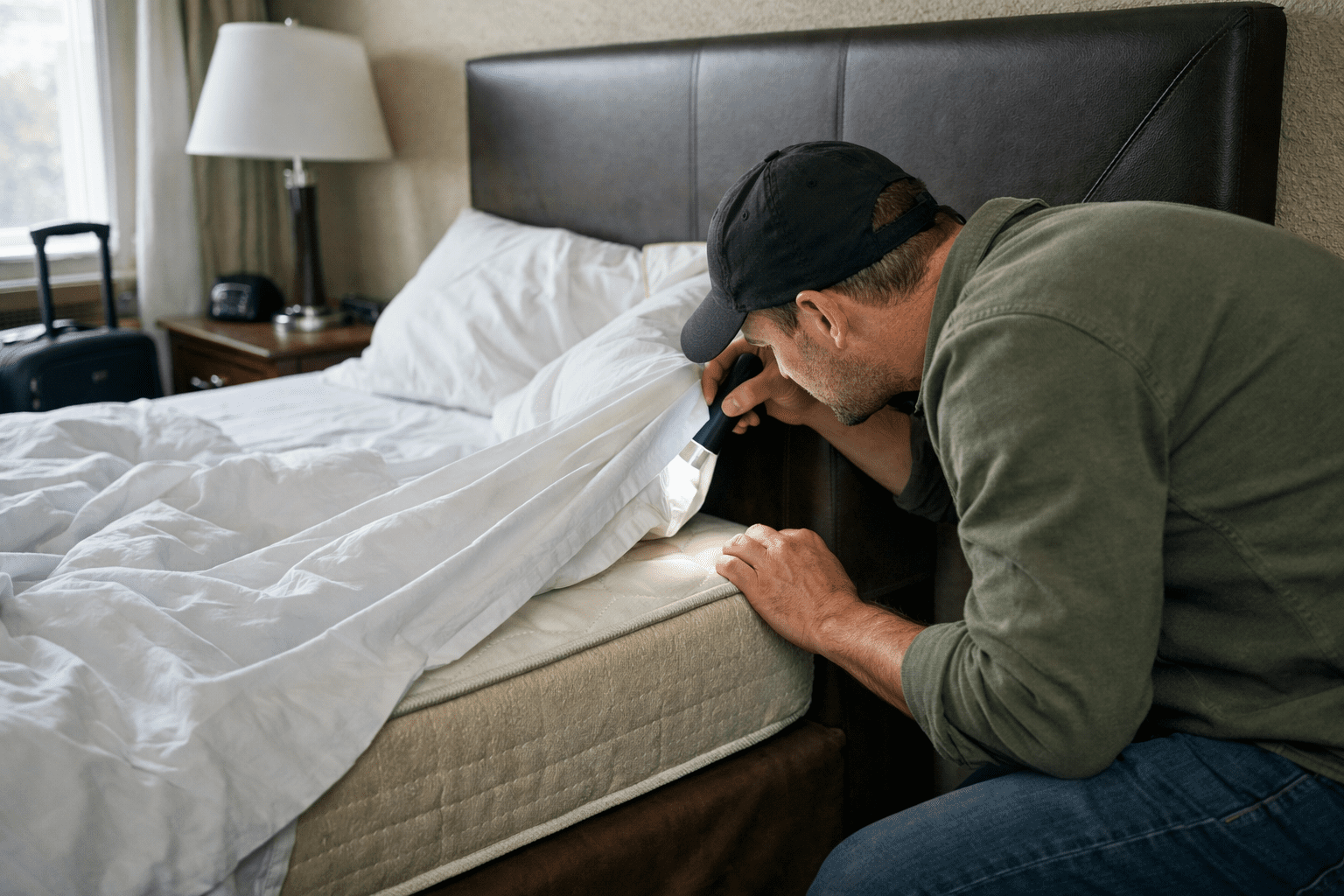
- Check the bed first (2 minutes): pull back sheets and inspect mattress seams, piping, and tags.
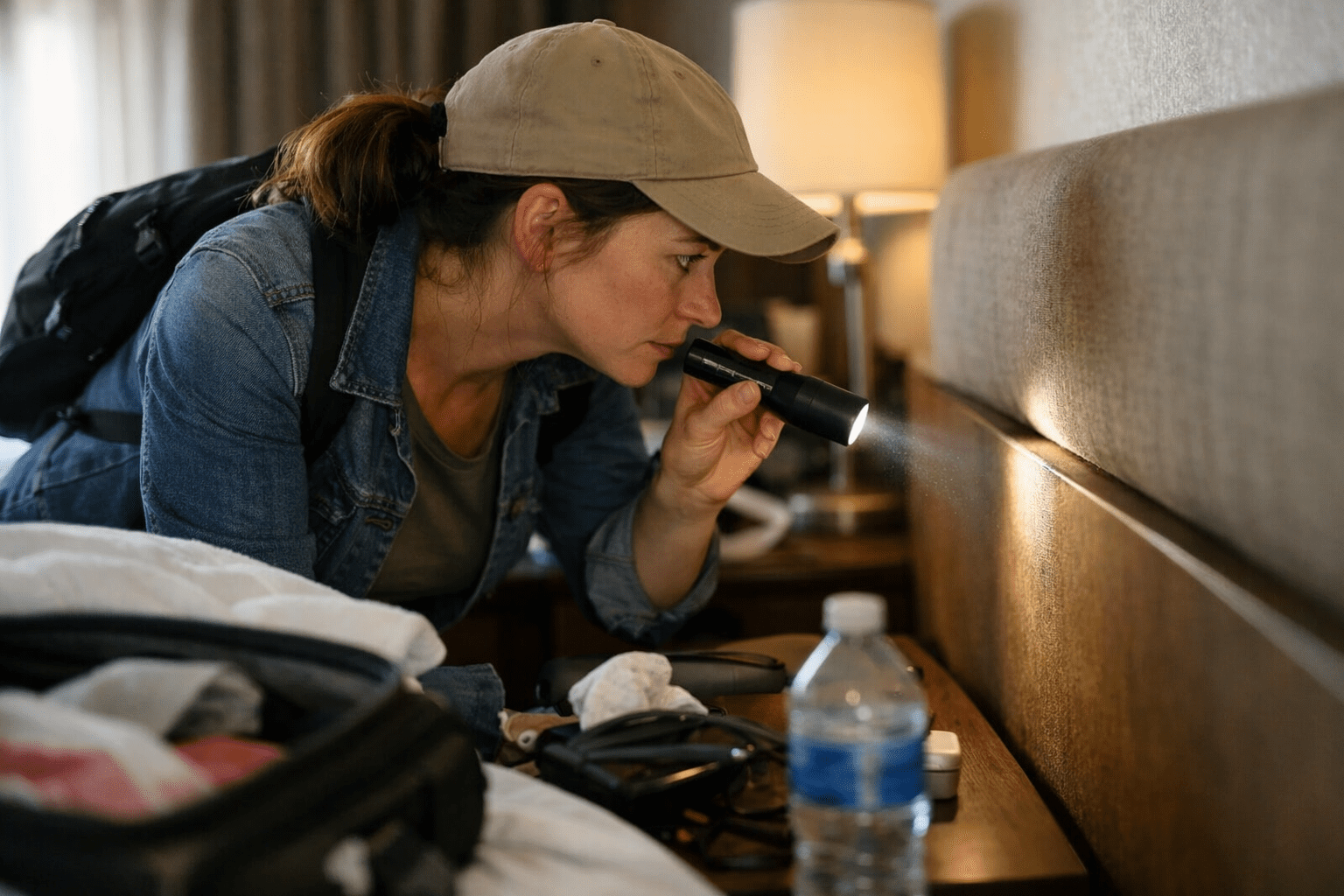
- Scan the headboard zone (1 minute): look at headboard edges, wall seams, and nightstand corners.
- Know the top signs:
- rusty or ink-like fecal spots on fabric or wood
- shed skins (pale, papery)
- eggs (pearl-white, ~1 mm) in cracks
- live bugs (flat, reddish-brown, adults ~5-7 mm)
- If you see evidence: request a new room not adjacent (not next door, above, or below) or change hotels.
For a deeper walkthrough, see our step-by-step How to Check for Bed Bugs: Complete Detection Guide.
Why bed bugs show up in hotels (and why it’s not about cleanliness)
Hotels are built for turnover. That’s great for travelers and also perfect for bed bugs (common bed bug, Cimex lectularius) that spread by hitchhiking in luggage, backpacks, jackets, and laundry bags. They do not need dirty conditions. They need hiding places near a sleeping host and a steady stream of new “rides.”
A few trends explain why travelers keep encountering them:
- Travel season boosts introductions. Infestations often spike in spring and summer when vacations, festivals, and conferences increase room turnover.
- High-traffic cities see repeat pressure. Annual rankings based on treatments show persistent hotspots. For example, Orkin’s annual “Worst Cities for Bed Bugs” report has repeatedly highlighted major metro areas where travel volume stays high.
- Awareness is still low. Survey data summarized by the National Pest Management Association (NPMA) suggests many travelers either do not check rooms or are not confident identifying bed bugs and their signs.
Think of a hotel like a busy airport. Most bags are fine, but there are always some “connections” you cannot see. Bed bugs exploit that same movement pattern – not because a place is poorly kept, but because guests and luggage move constantly.
What this means for you (practical takeaway)
Your best defense is a repeatable routine that assumes bed bugs could be present anywhere people sleep, from budget motels to luxury suites. For broader travel strategy, bookmark How to Prevent Bed Bugs When Traveling: Expert Tips.
Visual: hotel risk factors you can actually control
| Risk factor | Why it matters | What to do |
|---|---|---|
| Luggage on bed/floor | Easy access for hitchhikers | Use tub or rack away from walls |
| Uninspected mattress seams | Primary harborages | Check seams, tags, and piping |
| Cluttered unpacking | More hiding spots | Keep items sealed until inspection |
| Soft-sided bags unprotected | More folds and seams | Consider liners or protective covers |
How to inspect a hotel room for bed bugs in under 5 minutes (S.L.E.E.P. method)
Luggage Protector Bed Bug Zippered Mattress Encasement, Queen Size
No Amazon ASIN or product page found for the exact ‘Luggage Protector Bed Bug Zippered Mattress Encasement, Queen Size’ by SafeRest in search results; related SafeRest mattress encasements praised for bed bug protection, breathability, and micro-zipper features but cannot recommend without verified Amazon data.
Most travelers do a quick glance at the sheets and assume they’re safe. Bed bugs rarely sit out in the open. They wedge into seams and cracks like a credit card sliding into a tight slot.
A fast, reliable approach is the S.L.E.E.P. routine popularized in pest control education:
S – Scan the room (30 seconds)
Start with a wide scan using your phone flashlight.
Look for:
- dark spotting on the mattress edge, bed skirt, or headboard
- small pale skins near the bed frame
- any “pepper-like” specks around the headboard or nightstand
Action step: keep your suitcase in the tub or on a rack while you scan.
L – Lift and look (90 seconds)
Pull back sheets and lift the mattress edge slightly. Focus on:
- mattress seams and piping
- corners near the head of the bed
- the fabric near mattress tags and handles
You’re not trying to dismantle the bed. You’re checking the most likely harborages.
E – Examine the headboard and nearby furniture (90 seconds)
Headboards are a common hiding zone because they’re close to a sleeping person and full of crevices.
Check:
- headboard edges and mounting points
- behind the nightstand (especially along the back panel)
- drawer joints and screw holes
E – Educate yourself on signs (30 seconds)
Bed bug evidence is often more visible than the bugs themselves.
Key signs:
- fecal spots: dark brown to black dots that can look like ink
- blood smears: small rusty marks on sheets (not always present)
- eggs: tiny white grains in cracks
- shed skins: translucent, bug-shaped “shells”
If you want a visual guide, use Signs of Bed Bugs: How to Identify an Infestation.
P – Place luggage safely (ongoing)
Once the room passes inspection:
- keep luggage on a rack pulled away from walls
- keep clothing in zippered packing cubes or sealed bags
- avoid placing jackets, purses, or backpacks on upholstered chairs
Visual: 5-minute inspection map (where to look first)
- Mattress seams at the head of the bed
- Headboard edges and wall seam behind it
- Bed frame joints and slats
- Nightstand back panel and drawer corners
- Baseboards near the bed
Practical note: If you’re staying multiple nights, do a 30-second re-scan nightly. Bed bugs are nocturnal, and fresh spotting can appear after feeding.
What to do if you find bed bugs in a hotel (and how to avoid bringing them home)
Bed Bug Detector and Trap, 2 Pack
No Amazon ASIN or product page found for ‘Bed Bug Detector and Trap, 2 Pack by Bug Bite Thing’ in search results; Bug Bite Thing primarily offers suction tools for bite relief, not bed bug detectors or traps. Cannot recommend for affiliate purposes due to lack of verifiable Amazon data.
Travel Size Bed Bug Spray, 3 oz
Hot Shot Travel Size Bed Bug Spray (3 oz) earns a solid 4.3-star rating from over 1,200 Amazon reviews for its effectiveness in killing bed bugs on contact and portable design, making it a practical choice for travelers. Reviewers praise its ease of use and lack of strong smell, though it doesn’t prevent future infestations. At around $9.99, it’s an affordable affiliate recommendation for immediate spot treatment, but pair with professional services for severe cases.
You found a bug or suspicious spotting. Now what? The goal is twofold: protect your belongings and make sure you do not carry bed bugs to your next hotel or back home.
Start with a calm, methodical response:
Step-by-step: the safest response plan
- Do not unpack further. Re-seal clothing and personal items.
- Photograph evidence. Use clear close-ups of bugs, spotting, shed skins, or eggs.
- Notify the front desk immediately. Ask for a room change that is not adjacent – not next door, not across the hall, not above or below.
- Keep luggage isolated. Use the tub or a hard surface away from beds and upholstered furniture.
- Decide whether to leave. If you see a live bug, multiple signs, or bites plus evidence, switching properties is often the simplest option.
Why the “not adjacent” rule matters: bed bugs can move through wall voids and along wiring or plumbing routes. A room next door might share the same hidden pathways.
What to do with your luggage and clothes right away
Even if you switch rooms, treat your belongings as “possibly exposed.”
- Clothing: when possible, run items through a hot dryer cycle. Heat is one of the most reliable killers across life stages.
- Shoes and non-washables: seal in bags until you can heat-treat or inspect carefully.
- Suitcase exterior: wipe or vacuum seams and pockets. Pay attention to zipper tracks.
A travel-focused gear list can help reduce hiding spots. See our guide to Best Bed Bug Proof Luggage & Travel Accessories.
If you were bitten but saw no bugs
Bites alone are not proof. Many skin reactions mimic bed bug bites, and reactions can be delayed.
Use this approach:
- check for clusters or lines of itchy welts (common pattern, not diagnostic)
- look for physical signs in the room (spots, skins, eggs)
- document and monitor your skin
For symptom guidance and what helps, read Bed Bug Bites: Symptoms, Treatment & Prevention Guide.
Visual: “Leave or stay?” decision table
| What you found | Likely risk | Best move |
|---|---|---|
| 1 questionable spot, no other signs | Low to moderate | Reinspect carefully, keep luggage isolated |
| Multiple fecal spots or shed skins | Moderate to high | Request non-adjacent room or change hotels |
| Live bed bug (any stage) | High | Change rooms non-adjacent or leave property |
| Bites only, no evidence | Unclear | Inspect again, document, take precautions |
After your trip: the 30-minute routine that prevents a home infestation
Ziploc Gallon Size Storage Bags, 20 Count
No Amazon product page or ASIN found in search results for this exact Ziploc Gallon Size Storage Bags 20 Count; available on Walmart and other sites with features like Grip ‘n Seal technology and stand-up design, but cannot recommend as Amazon affiliate without verified ASIN and review data.
Most “hotel-to-home” infestations happen because a few bed bugs or eggs ride back in luggage and then quietly settle near a bed or couch. The fix is not complicated, but it has to be consistent.
Here’s a simple post-travel workflow entomologists recommend because it targets how bed bugs actually spread – by hitchhiking and hiding in seams.
Step 1: Unpack in a controlled area (5 minutes)
Avoid unpacking on your bed. Use one of these instead:
- bathtub (smooth surface, easy to spot bugs)
- garage or laundry room (if available)
- hard-floor entryway with good lighting
Action step: keep your suitcase closed until you’re ready to move items directly into treatment (dryer or sealed bag).
Step 2: Heat-treat what you can (15-25 minutes)
Heat is a bed bug’s weak point when applied correctly. Many pest management resources emphasize heat as a reliable kill method when temperatures are high enough.
- Dryer first is often better than washer first for suspect items. A hot dryer cycle can kill bed bugs on dry fabrics more reliably than washing alone.
- Run a high heat cycle long enough to thoroughly heat items. Thicker fabrics take longer to reach lethal temperatures.
For broader bed bug biology and control principles, the University of Florida Entomology resources on bed bugs provide a clear science-based overview.
Step 3: Isolate and inspect the suitcase (10 minutes)
Your suitcase has folds, piping, zipper tracks, and pockets – all good hiding spots.
Do this:
- vacuum seams, pockets, and zipper tracks slowly
- empty the vacuum into a sealed bag and discard it outside
- store the suitcase in a sealed plastic bin or bag if you can
If you travel frequently, consider a hard-sided case or protective liner. It reduces the number of fabric folds bugs can grip.
Step 4: Watch for early signs at home (ongoing)
For the next 2-3 weeks:
- keep an eye out for bites plus physical signs
- inspect bed frame joints and mattress seams
- consider bed leg interceptors if you suspect exposure
Visual: post-travel checklist you can screenshot
- Unpack in tub/garage, not bedroom
- Dryer on high heat for clothing and travel fabrics
- Vacuum suitcase seams and zipper tracks
- Store luggage sealed for a few weeks
- Monitor bed area for spots or shed skins
Myths about bed bugs in hotels that lead to bad decisions
Bad information causes two common mistakes: travelers either panic and do the wrong thing, or they shrug it off and accidentally transport bed bugs to the next stop.
Let’s clear up the myths that matter most.
Myth 1: “Only dirty hotels get bed bugs”
Reality: bed bugs feed on blood, not crumbs. Clean rooms can still have them. What matters is whether bed bugs were introduced by a recent guest and whether the property’s inspection and treatment program catches them quickly.
Travel volume and turnover are the real drivers, which is why major city rankings and seasonal spikes keep appearing in industry reporting like the NPMA bed bug survey coverage and hotel trade analysis such as Hotel Business coverage of travel-season bed bug trends.
Myth 2: “If I don’t see bugs, I’m safe”
Reality: bed bugs are experts at hiding in seams and cracks. Early infestations can be hard to spot. That’s why you should look for evidence (spots, skins, eggs), not just live insects.
Action step: do the 5-minute inspection every time, even on short stays.
Myth 3: “Bed bugs jump from bed to suitcase”
Reality: they don’t jump or fly. They crawl and hitchhike. Most suitcase infestations happen when luggage sits on the bed, on carpet near the bed, or against upholstered furniture.
Action step: keep luggage elevated and away from walls, and keep clothing sealed.
Myth 4: “One spray fixes the problem”
Reality: bed bugs are tough to eliminate once established. Many populations show resistance to some insecticides, and eggs are protected in cracks. Hotels typically need an integrated approach, often including professional heat or targeted applications by licensed technicians.
When to call a professional at home: If you return from travel and see confirmed signs (live bugs, fecal spotting, shed skins), skip DIY guesswork and contact a licensed pest management pro. Early professional intervention is usually cheaper and simpler than letting an infestation grow.
Visual: myth vs fact snapshot
| Myth | Fact | Better choice |
|---|---|---|
| Bed bugs equal poor hygiene | They spread via travel and turnover | Inspect any hotel, any time |
| Bugs must be visible | Signs often appear before you see bugs | Check seams and headboards |
| Bites prove bed bugs | Bites are not diagnostic | Confirm with physical evidence |
| Aerosols solve it | Control is often multi-step | Use heat and professional help when needed |
Conclusion: a calm routine beats bad luck
Preventing bed bugs in hotels comes down to three habits: inspect fast, keep luggage isolated, and heat-treat after travel. Those steps match how bed bugs really behave – they hide near beds and move by hitchhiking, not by chasing you across a room.
If you want to tighten your routine, start with How to Prevent Bed Bugs When Traveling: Expert Tips and keep our Signs of Bed Bugs: How to Identify an Infestation guide handy for quick confirmation on the road.
As an Amazon Associate, I earn from qualifying purchases. Product recommendations are based on real reviews and independent research.