Finding a bite is annoying. Watching it balloon into a hot, painful welt can be scary. Mosquito allergic reactions range from the familiar itchy bump to large, long-lasting swelling (sometimes called Skeeter syndrome) and, rarely, a whole-body emergency reaction. This guide helps you tell what’s normal, what’s allergic, and what’s a red-flag situation. You’ll also learn practical treatment steps, prevention tips, and when it’s time to call a clinician instead of just reaching for anti-itch cream.
Quick Answer: What mosquito allergy looks like (and when to worry)
Most people get a small itchy bump. A “mosquito allergy” usually means your immune system overreacts to proteins in mosquito saliva.
Mosquito allergic reactions are more likely when you have:
- A wheal larger than 4 in (10 cm), especially if it keeps expanding
- Swelling that lasts longer than 48 hours
- Blistering (bullae), intense heat, or tightness around the bite
- Fever, widespread hives, vomiting, dizziness, or breathing trouble
Use this fast guide
- Normal reaction: 0.25-1 in (5-25 mm) itchy bump, fades in 1-3 days
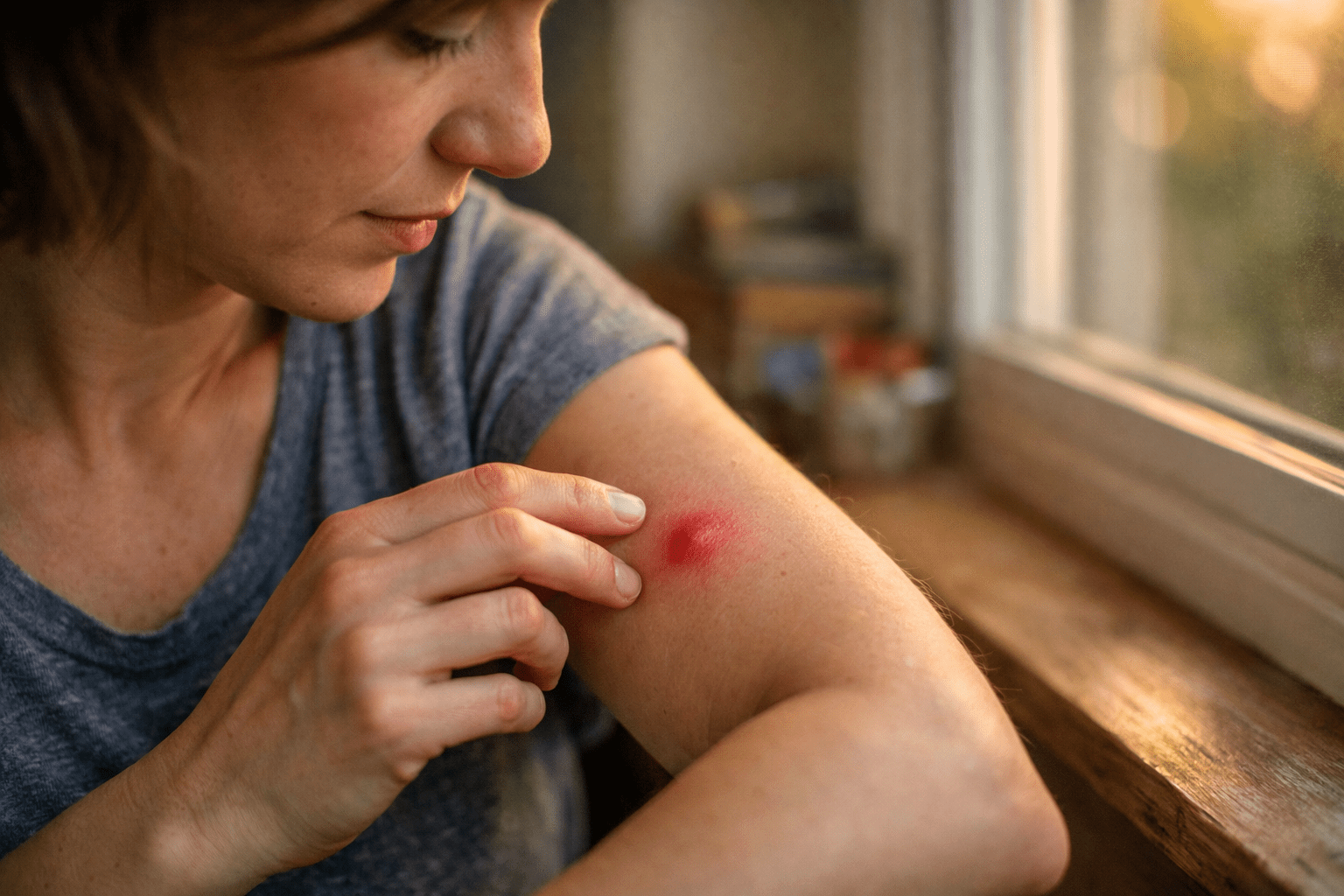
- Large local allergic reaction (Skeeter-type): 4-8 in (10-20 cm) swelling, warm and painful, lasts 7-14 days
- Emergency reaction: swelling of lips/face/throat, wheeze, faintness, or hives away from the bite – seek emergency care
For a deeper symptom breakdown, see Mosquito Bite Symptoms: From Normal Reactions to Skeeter Syndrome.
Mosquito allergic reactions: why they happen and who is at risk
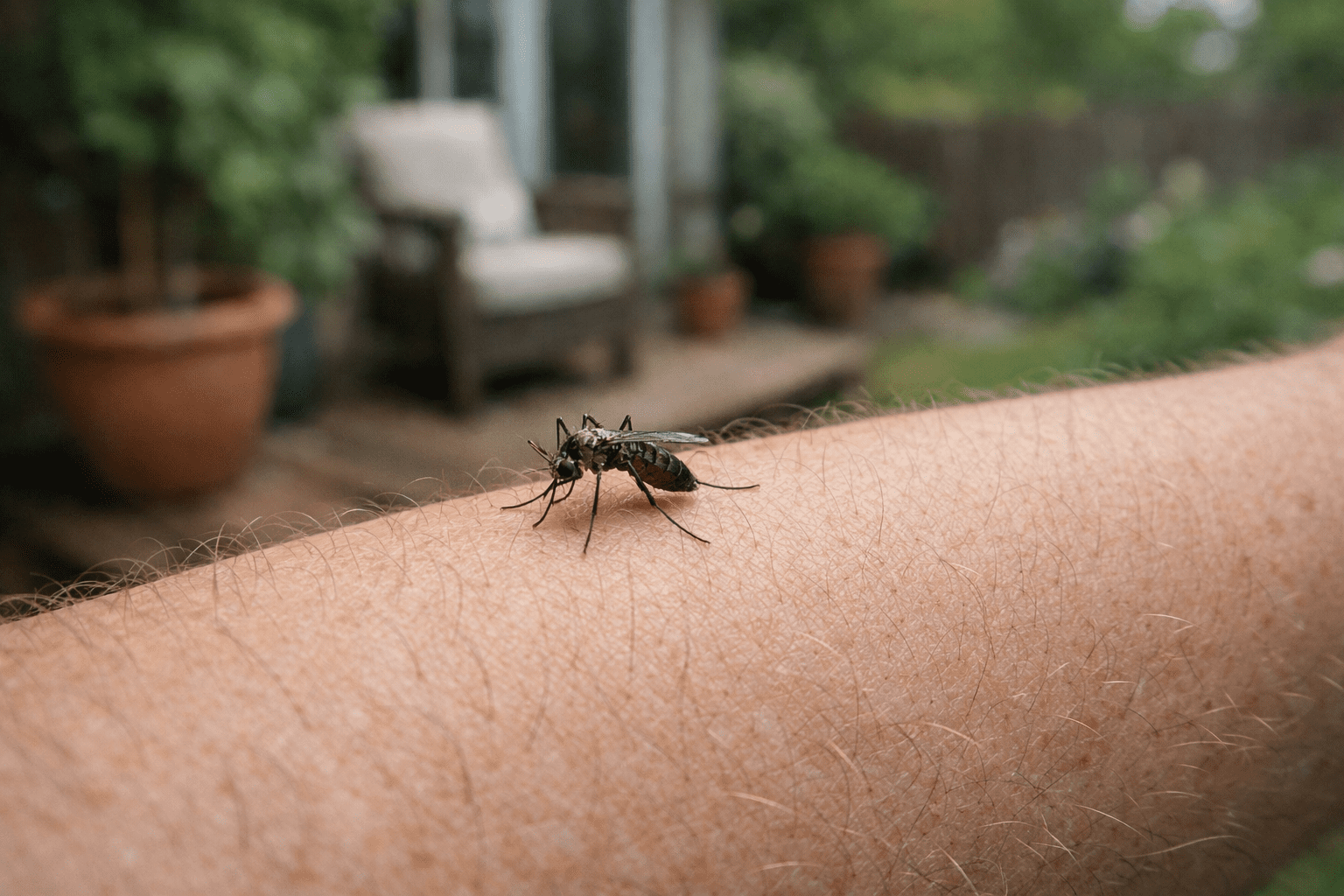
A mosquito bite is not just a “poke.” It’s a tiny injection. The mosquito uses needle-like mouthparts to find a blood vessel and releases saliva that keeps blood flowing. Your skin reacts to those salivary proteins, and in allergic people, the immune response is bigger and faster.
Research summarized in a review from the journal Frontiers in Allergy describes mosquito allergy as largely IgE-mediated hypersensitivity to mosquito allergens, especially salivary proteins. In other words, your body treats parts of mosquito saliva like a serious threat and releases histamine and other inflammatory chemicals.
What actually triggers the reaction?
Mosquito allergy can involve:
- Saliva allergens injected during feeding (a common trigger)
- Body-derived proteins (possible when mosquitoes are crushed on skin)
- Cross-reactive allergens – some people show IgE binding to proteins that resemble allergens from mites or shellfish in certain regions
Entomologists also see a pattern: exposure matters. In warm, humid climates with long mosquito seasons, repeated bites can raise the chance of sensitization. In temperate areas, reactions can still happen, but the “background exposure” is often lower.
Who tends to get bigger reactions?
Large reactions are more common in:
- Children, especially ages preschool to early school years
- People with atopy (a tendency toward allergies such as asthma, allergic rhinitis, or eczema)
- Anyone with frequent mosquito exposure (summer camps, wetlands, tropical travel, outdoor evening work)
A clinical study indexed by the National Library of Medicine found that atopic children were more likely to have large or unusual reactions compared with controls. That matches what many clinicians observe: if a child’s immune system already “runs hot” for allergens, mosquito saliva can provoke a bigger skin response.
Quick visual: normal vs allergic response
| Feature | Typical bite | Large local allergic reaction |
|---|---|---|
| Size | 5-25 mm | 10-20 cm (or more) |
| Feel | Itchy | Itchy + painful, hot, tight |
| Timing | Peaks in 24-48 hours | Can worsen for 1-2 days |
| Duration | 1-3 days | 7-14 days |
| Look-alikes | Simple irritation | Cellulitis (but no pus) |
If you want the “how and why” of biting behavior, How Mosquitoes Find, Bite & Feed on You explains the saliva, the probing, and why some people seem to get bitten more.
Symptoms checklist: normal bite vs Skeeter syndrome vs anaphylaxis
After Bite Kids Itch Relief Stick, 0.5 oz
This product provides relief from itching and discomfort caused by mosquito bites, making it relevant for readers concerned about mosquito allergic reactions.
Many people worry that a big welt means infection. Sometimes it does, but often it’s allergy. The tricky part is that Skeeter syndrome can mimic cellulitis: warmth, redness, swelling, and tenderness can look like a bacterial skin infection.
A pediatric report available through the National Library of Medicine describes Skeeter syndrome as large local reactions that may include blistering and can last a week or longer, often in children with an atopic background.
Use this “3-bucket” symptom sorter
Bucket 1 – Typical reaction (common)
- Small raised bump or wheal
- Mild to moderate itch
- Minimal warmth
- Improves steadily over 1-3 days
Bucket 2 – Large local allergic reaction (Skeeter-type)
- Rapid swelling around the bite, often >4 in (10 cm)
- Skin feels hot and tight, sometimes painful
- Possible blisters
- Swelling may limit movement if near an eyelid, finger, ankle, or knee
- Can last 7-14 days
Bucket 3 – Systemic or emergency reaction (rare)
- Hives away from the bite site
- Swelling of lips, tongue, face, or throat
- Wheezing, shortness of breath, chest tightness
- Vomiting, severe abdominal pain, dizziness, fainting
For a dedicated guide to red flags and what to do next, read Mosquito Bite Allergic Reaction: Signs, Treatment & When to Worry.
A simple “infection vs allergy” comparison chart
| Clue | More like allergy | More like infection |
|---|---|---|
| Speed | Swells quickly after bite | Worsens slowly over days |
| Itch | Prominent | Often less itchy |
| Drainage | None | Possible pus or crusting |
| Fever | Usually absent (mild fever can occur) | More likely if spreading infection |
| Pattern | One or more bites, similar each time | Expanding redness, increasing pain |
If you suspect infection (spreading redness, pus, worsening pain), seek medical advice. Scratching can break skin and invite bacteria, turning an allergic bite into a true infection.
Treatment that actually helps (at home and at the clinic)
CeraVe Hydrating Cream-to-Foam Cleanser, 12 fl oz
CeraVe Hydrating Cream-to-Foam Cleanser is a dermatologist-developed, fragrance-free face wash that effectively cleanses while hydrating dry skin via ceramides, hyaluronic acid, and MVE technology, earning 4.7 stars from over 3,000 Walmart reviews for its gentle, non-stripping formula suitable for daily use.[2]
When a bite reaction is big, the goal is simple: calm the histamine response, reduce inflammation, and prevent skin damage from scratching. Many people unintentionally do the opposite by rubbing, heating, or “digging” at the bite, which prolongs inflammation.
Step-by-step home care for mild to moderate reactions
- Wash with soap and water to remove surface irritants and reduce infection risk.
- Cold compress 10 minutes on, 10 minutes off for the first hour.
- Oral antihistamine (non-drowsy options are common choices) to reduce itch and swelling.
- Topical anti-itch (1% hydrocortisone or a soothing lotion) on intact skin.
- Protect the area – keep nails short, consider a bandage for kids who scratch.
A product-focused breakdown is in Best Mosquito Bite Relief: Products, Remedies & What Works.
What to do for large local reactions (Skeeter-type)
Large reactions often need more than a dab of cream. Consider:
- Scheduled antihistamines for 24-72 hours (as directed on label or by clinician)
- Cold packs several times daily
- Elevation if the bite is on a limb (helps reduce swelling)
- Avoid heat (hot showers and heating pads can worsen itching)
If swelling is severe, a clinician may recommend:
- Prescription-strength topical steroids
- A short course of oral corticosteroid in select cases
- Evaluation for infection if the skin becomes increasingly painful, drains, or the redness spreads rapidly
When to see a doctor for mosquito bite allergy (decision list)
Seek same-day urgent care if:
- The bite is near the eye and swelling affects vision
- There is blistering, severe pain, or swelling that continues to expand after 48 hours
- A child has a history of large reactions and develops fever or looks unwell
Seek emergency care immediately if:
- Trouble breathing, wheezing, throat tightness
- Swelling of lips/tongue/face
- Fainting, confusion, or severe dizziness
Guidance from the Asthma and Allergy Foundation of America emphasizes that biting insects can cause allergic reactions ranging from local swelling to rare severe responses, and emergency symptoms need urgent evaluation.
Quick “do and don’t” table
| Do | Don’t |
|---|---|
| Use cold, antihistamines, and anti-itch meds early | Scratch or “open” the bite |
| Watch size and duration (take a photo) | Assume every large welt is cellulitis |
| Seek help for facial swelling or systemic symptoms | Use antibiotics without medical advice |
Prevention: reduce bites, reduce reactions
Benadryl Allergy Ultratabs Antihistamine Tablets, 25 mg, 100 Count
This antihistamine can help alleviate allergic reactions to mosquito bites, making it a suitable recommendation for readers.
If you’re prone to big welts, prevention is not just comfort. It can reduce the number of immune “reminders” your body gets during mosquito season. Think of it like lowering the volume on an over-sensitive alarm system.
Repellents that work (and how to use them correctly)
Most repellent failures come from not applying enough, missing key areas (ankles, behind knees), or not reapplying after sweat and water exposure.
According to clinical guidance summarized by the Mayo Clinic, EPA-registered repellents and protective clothing are mainstays for prevention.
Common options include:
- DEET (often 20-30% for adults in high-mosquito settings)
- Picaridin
- Oil of lemon eucalyptus (not for very young children, follow label)
For a side-by-side breakdown and practical picks, use Best Mosquito Repellents 2025: DEET vs Picaridin vs Natural.
Bite-proofing your routine (especially for kids)
Use this checklist before dusk and dawn (peak activity for many species):
- Dress in long sleeves and long pants when feasible
- Choose light-colored clothing (easier to spot mosquitoes)
- Use fans on patios – moving air makes landing harder
- Fix window and door screens
- Empty standing water weekly (buckets, plant saucers, clogged gutters)
Can you “pre-medicate” if you react badly?
Some allergy-prone people use an antihistamine before outdoor exposure during peak season. This can reduce itching and swelling for some individuals, but it’s not a substitute for repellent and protective clothing. If reactions are frequent and severe, discuss a plan with an allergist. Standardized mosquito immunotherapy is not widely available in many regions, partly because extracts and testing methods vary.
Visual: prevention stack (best to least effective alone)
- Repellent + clothing (strongest combo)
- Source reduction (remove breeding sites)
- Barriers (screens, nets, fans)
- Timing (avoid peak mosquito hours when possible)
Common myths that lead to the wrong response
Misinformation is a big reason people either panic or ignore warning signs. Here are the most common misreads entomologists and clinicians see.
Myth 1: “If it’s big, it must be infected.”
Large swelling can be allergic, especially when it appears quickly after a bite and itches intensely. Skeeter-type reactions often look dramatic but are not automatically bacterial infections. Infection becomes more likely when there’s increasing pain, spreading redness over days, pus, or significant tenderness out of proportion to itching.
Actionable takeaway: If the reaction is huge but very itchy and started fast, treat it like an allergic reaction first and monitor closely. If it keeps worsening after 48 hours or develops drainage, get evaluated.
Myth 2: “Mosquito allergy is extremely rare.”
Severe, life-threatening reactions are rare. But sensitization and large local reactions are not unusual in high-exposure regions or in people with other allergies. The review in Frontiers in Allergy describes wide variation in sensitization rates across countries and study methods, especially in tropical areas with heavy mosquito exposure.
Actionable takeaway: If you or your child repeatedly gets large reactions, it’s worth documenting and discussing with a clinician.
Myth 3: “Reactions always get worse as you age.”
Some people notice reactions lessen over time, others don’t. Severity depends on exposure patterns, immune sensitivity, and atopic conditions more than age alone.
Actionable takeaway: Track your own pattern across seasons. Photos with a ruler or coin for scale help.
Myth 4: “Only saliva matters.”
Saliva is the main driver, but some people show IgE binding to other mosquito proteins too. That matters when mosquitoes are crushed on skin, or when testing uses whole-body extracts.
Actionable takeaway: Avoid slapping and smearing mosquitoes on your skin. Brush them off or use a swatter.
Conclusion: treat early, watch the red flags, prevent the next bite
Mosquito allergic reactions usually stay local, but they can be intense, especially in children and people with other allergies. Early cold therapy, antihistamines, and anti-itch treatment can shorten the misery and reduce scratching-related infection risk. The key safety line is simple: any breathing trouble, facial or throat swelling, or widespread hives is an emergency.
Next step: If you’re trying to decide whether your bite is “normal” or a Skeeter-type reaction, compare your symptoms with Mosquito Bite Symptoms: From Normal Reactions to Skeeter Syndrome. If you need a practical treatment plan, keep Best Mosquito Bite Relief: Products, Remedies & What Works handy for the next time mosquitoes find you first.
As an Amazon Associate, I earn from qualifying purchases. Product recommendations are based on real reviews and independent research.