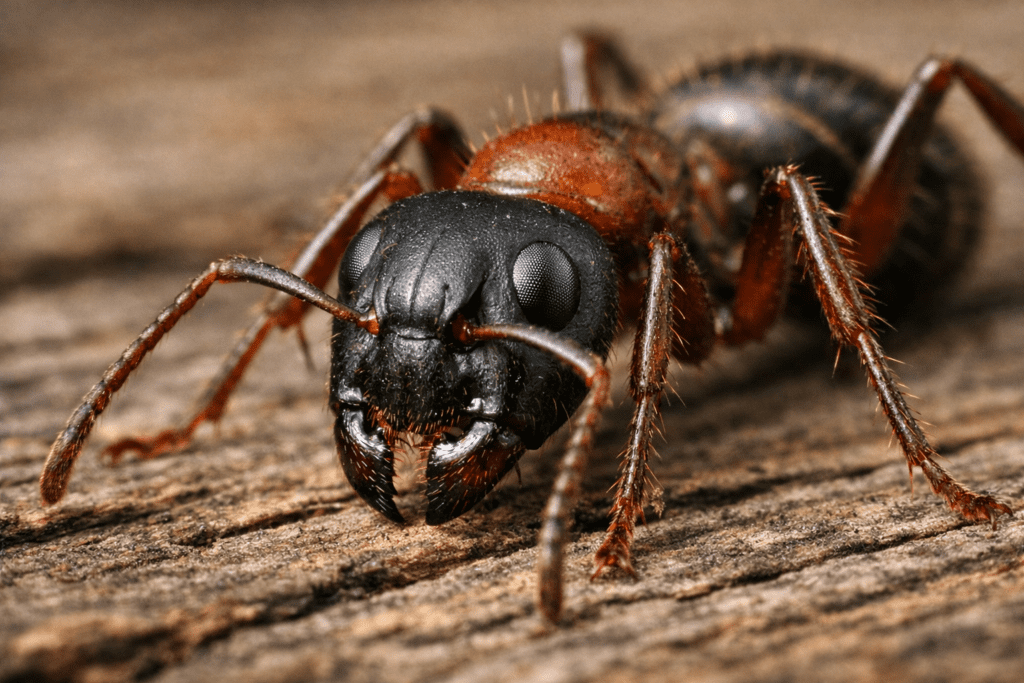
Watching ants build tunnels, carry food, and care for their young is one of the easiest ways to bring real animal behavior into your home or classroom. The best ant farms are not “toy bugs in a box” – they are small, well-designed habitats (formicaria) that let you observe a queen-led colony for months, years, and sometimes much longer with simple weekly care. This guide breaks down which setups work best for kids vs. adults, what to buy (and what to avoid), and how to keep a colony healthy without turning it into a chore.
\
Quick Answer: What are the best ant farms for learning and long-term viewing?
\
The best ant farms for education are formicaria with a separate nest and outworld, because they show the widest range of natural behaviors and are easier to maintain than “all-in-one” novelty habitats.
\
Here’s a quick, snippet-friendly checklist to choose the right ant farm:
\
- \
- Best overall design: Nest area + outworld (foraging space) + hydration control
- Best for young kids (with supervision): Simple, sturdy viewing habitat that’s hard to open accidentally
- Best for teens and adults: Modular formicarium you can expand as the colony grows
- Best for long-term success: A queen-right colony (with a queen) rather than workers only
- Maintenance reality: Many setups need about 5 minutes per week for feeding, water, and basic cleanup, according to classroom-focused ant-keeping guidance from STEAM Powered Family
\
\
\
\
\
\
Ant Farms 101: How they work (and what you’re actually seeing)
\
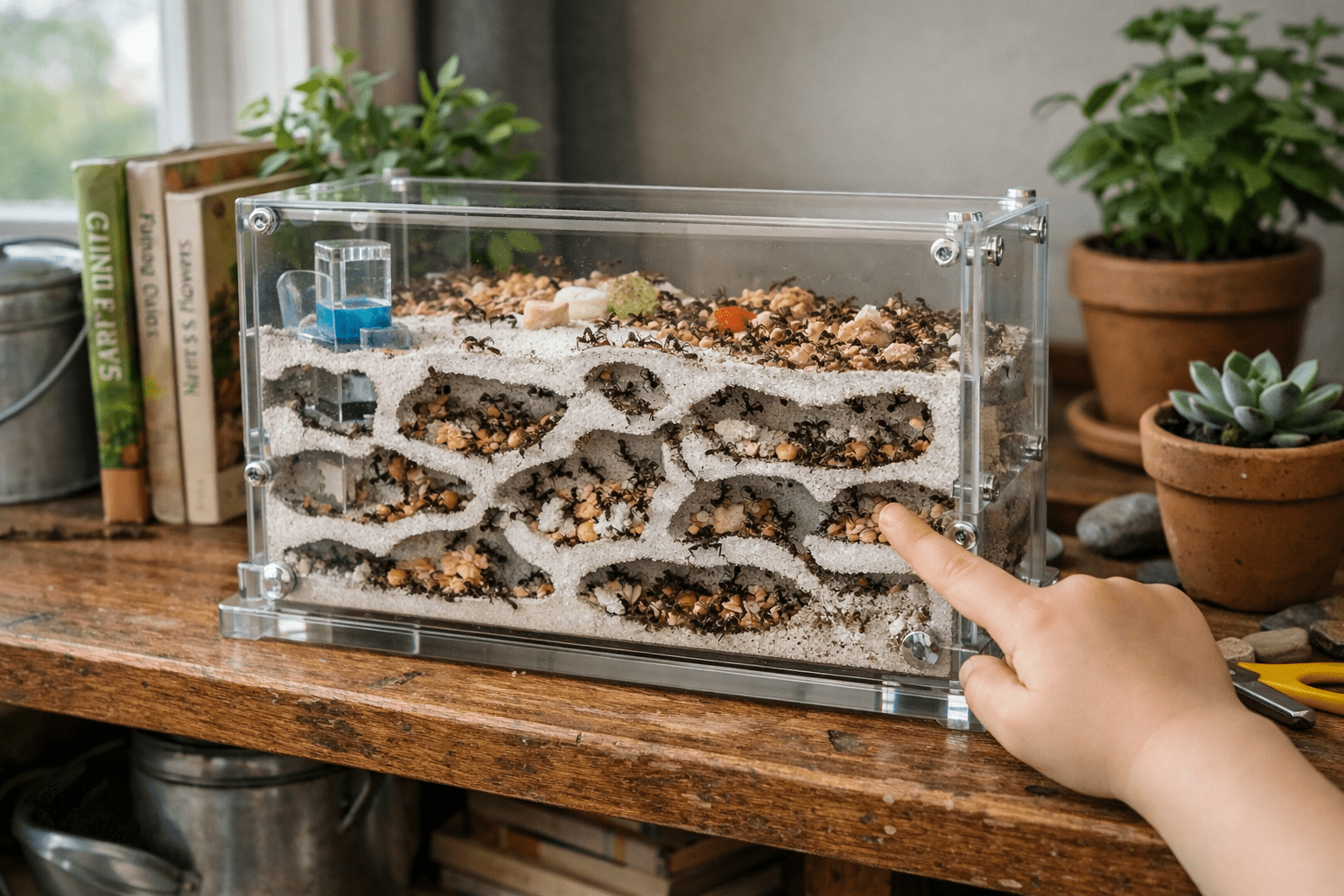
If you’ve ever watched a line of ants march across a sidewalk and wondered who’s “in charge,” an ant farm answers that question in real time. A proper ant farm is a formicarium – a nesting habitat designed to mimic underground chambers and tunnels, paired with an open “outworld” where ants forage, process food, and manage waste.
\
The two-zone setup that makes ant farms work
\
Most successful educational ant habitats have two distinct parts:
\
| Zone | What it simulates | What you can observe |
|---|---|---|
| Nest (formicarium) | Underground chambers | Egg, larva, pupa stages, queen behavior, brood care, resting clusters |
| Outworld (foraging area) | Surface environment | Trail-following, food sorting, “trash” piles, water drinking, defense |
\
That separation matters. Ants prefer to keep the nest clean and stable, and they often designate a “dump” area in the outworld. In classroom ant farm observations, keepers commonly see ants carrying waste away from the brood chambers – essentially taking out the trash – which is one of the easiest ways to teach hygiene and division of labor in social insects.
\
Why queen-led colonies change everything
\
Many store-bought kits historically used worker-only colonies. Those can be interesting briefly, but they fade out because workers do not reproduce. A queen-led colony, by contrast, can grow steadily and show a full life cycle.
\
Educational ant-keeping resources note that with appropriate care, queen-led colonies can persist for years and sometimes far longer, while still staying low-maintenance for families and schools. Practical classroom guidance from STEAM Powered Family emphasizes that routine upkeep can be surprisingly brief once the habitat is stable.
\
A quick reality check on “ants as pests”
\
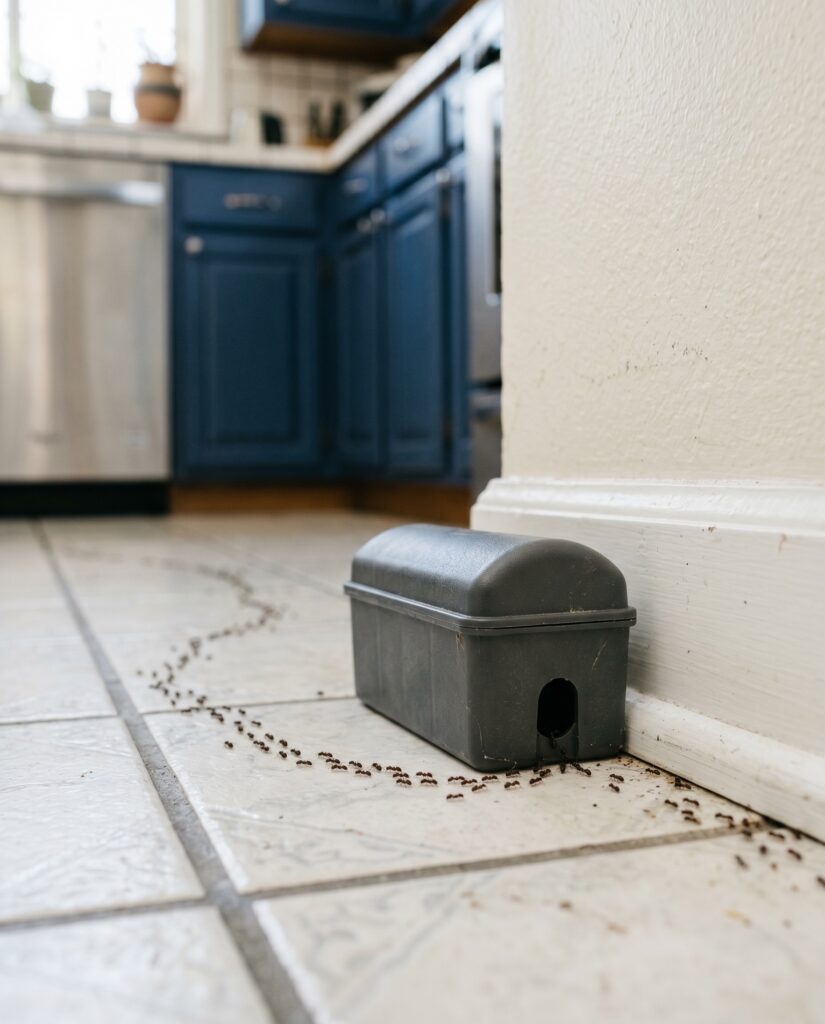
Ants can absolutely be household pests when they’re in your pantry, wall voids, or wiring. But the ants in a well-contained formicarium are a controlled learning tool. If you’re dealing with an indoor ant problem at the same time, keep those goals separate – and use targeted methods from our guide to Best Ant Killers & Baits rather than improvising near a pet colony.
\
Visual: What “good” ant farm behavior looks like
\
Use this quick behavior guide to know if your colony is settling in:
\
- \
- Normal: Ants cluster over brood, carry food to a corner, form clear trails, drink at cotton or a water feeder
- Normal (early days): Lots of exploring, frequent carrying of brood as they pick a preferred chamber
- Concerning: Ants constantly trying to escape, brood scattered for days, repeated die-offs, mold spreading in the nest
\
\
\
\
Best ant farms for kids vs. adults: picking the right level of complexity
\
\
\
\
Choosing an ant farm is less about “cool factor” and more about matching the habitat to the keeper. A seven-year-old needs a setup that’s safe, stable, and forgiving. A hobbyist or teen scientist benefits from a formicarium that supports controlled experiments and colony growth.
\
Comparison chart: kid-friendly vs. hobbyist formicaria
\
Here’s a practical way to decide:
\
| Feature | Kids-focused setups | Adult/teen hobbyist setups |
|---|---|---|
| Primary goal | Safe observation, simple routines | Long-term colony growth, research-style observation |
| Best design | Durable viewing nest, limited access points | Nest + outworld, hydration control, modular expansion |
| Time commitment | Short weekly checks with an adult | Short weekly checks, plus optional data logging |
| Best learning outcomes | Counting, mapping tunnels, basic life cycle | Pheromone trails, colony dynamics, variable testing |
| Typical colony duration | Months to years (depends on queen) | Years to decades (with queen and good husbandry) |
\
Family-oriented ant-keeping educators point out that modern ant habitats can fit on a desk corner and still offer deep observation value, especially when paired with simple routines and seasonal expectations like winter slowdowns. For example, guidance from Best Ants UK’s ant-keeping education blog highlights how colonies often enter a natural rest period in cooler months, reducing activity and feeding needs.
\
What to avoid (especially for classrooms)
\
Some kits are designed more for novelty than animal welfare or long-term use. Be cautious with:
\
- \
- Gel-only habitats marketed as “no feeding needed”
- Overly bright, constantly lit displays that stress ants
- Habitats with poor ventilation that trap humidity and encourage mold
- Tiny, sealed containers with no outworld for waste management
\
\
\
\
\
If your goal is insect education, you want a setup that supports natural behaviors, not just tunneling.
\
Visual: Age-based learning ideas (simple to advanced)
\
Use this as a ready-made plan:
\
- \
- Ages 5-8: Count workers, sketch tunnels, spot “food vs. trash” piles
- Ages 9-13: Track roles, compare food preferences, chart weekly growth
- High school and adults: Test variables (temperature, humidity, diet), map trail “traffic,” observe seasonal cycles
\
\
\
\
Hands-on programs have shown measurable learning gains. In school outreach work such as the “ImportANTs of ANTs” effort summarized by Best Ants UK, students increased awareness of invasive species and their ecosystem effects after structured ant observation.
\
 \
\\
\
Setup and care: the 5-minute weekly routine that keeps colonies thriving
\
\
\
\
Most ant farm failures come from two things: wrong moisture and wrong feeding habits. The good news is that once you get hydration and containment right, upkeep is simple.
\
Step-by-step: setting up an ant farm the right way
\
Use this order to reduce stress on the colony:
\
- \
-
Place the habitat in a stable location
Choose a shelf or desk away from direct sun, heaters, and vibrating appliances. A steady 68-75°F (20-24°C) works for many beginner species.\
-
Hydrate the nest properly before moving ants in
Many formicaria use a hydration chamber, sponge, or water reservoir. The nest should be gently humid, not wet.\
-
Connect the outworld and secure all seals
Ants are small, persistent, and excellent at finding gaps. Test lids, tubing, and ports before introducing the colony.\
-
Introduce the colony and let them choose chambers
Expect rearranging. Ants often move brood several times while “deciding” on the best microclimate.\
-
Feed lightly at first
Overfeeding causes mold and mites. Start small and adjust based on how fast food disappears.\
\
\
\
\
\
\
Weekly care checklist (realistic and sustainable)
\
A simple weekly routine often looks like this:
\
- \
- Water: Refresh the water source (test for leaks or dried cotton)
- Carbs: Offer a small amount of sugar water or nectar substitute
- Protein: Offer a small insect portion (pre-killed feeder insect is common)
- Clean: Remove leftovers and obvious waste from the outworld
- Observe: Quick check for mold, escapes, or unusual die-off
\
\
\
\
\
\
Classroom ant farm guidance from STEAM Powered Family notes that many keepers can manage maintenance in about five minutes per week once routines are established.
\
Visual: Feeding guide by colony stage
\
Use this simple “how much is enough” chart:
\
| Colony size | Carbs | Protein | Common mistake |
|---|---|---|---|
| Queen + a few workers | Tiny drop 1-2x/week | Very small piece weekly | Feeding too much too soon |
| 20-100 workers | Small drop 2-3x/week | Small insect portion 1-2x/week | Leaving leftovers to mold |
| 100+ workers | Small drop most days | Protein 2-3x/week | Underestimating water needs |
\
Safety note for homes with pest-control needs
\
If you’re using sprays, foggers, or strong residual insecticides indoors, keep the ant farm far from treated areas. Many insecticides can harm colonies via fumes or contaminated hands/tools. If you need to control nuisance ants elsewhere in the home, stick to contained, targeted approaches from our Best Ant Killers & Baits and wash hands before handling the habitat.
\
What ant farms teach: social roles, “ant farming,” and real ecology at home
\
\
\
\
Ant farms are popular because they’re entertaining. They’re also one of the clearest windows into eusocial life, where a colony behaves like a coordinated unit.
\
The “job board” inside a colony
\
In a healthy colony, you’ll typically see:
\
- \
- Queen: egg-laying and colony chemical signaling
- Workers: nursing brood, foraging, nest maintenance, food processing
- Soldiers (in some species): defense and guarding
\
\
\
\
It’s tempting to describe this as a tiny city, but a better analogy is a living system where tasks shift based on colony needs. You can watch workers switch roles as food availability changes or brood numbers surge.
\
“Ant cows” and other behaviors you can actually observe
\
Some ant species tend aphids and scale insects for honeydew, a behavior often nicknamed “ant farming.” You may not see aphid tending inside a basic ant farm unless you provide a safe plant-based setup, but you can still observe related behaviors:
\
- \
- Trail communication: ants reinforce routes with pheromones
- Food sorting: protein to brood, sugars to workers
- Waste management: designated trash corners in the outworld
- Risk assessment: cautious scouting, then mass recruitment when food is confirmed
\
\
\
\
\
These are not just fun facts. They connect directly to ecology. Ants aerate soil, recycle nutrients, and interact with many other insects. If your family is exploring broader insect roles, pair ant observations with a quick read on insect diet and behavior to compare how different insects feed and contribute to gardens.
\
Classroom-ready mini-investigations (with a built-in “why”)
\
Here are experiments that work well without stressing the colony:
\
- \
- Trail choice test (simple): offer two bridges to food and count traffic
- Food preference test: compare sugar water vs. fruit vs. nectar substitute
- Temperature gradient observation: note where ants cluster when one side is slightly warmer
- Tunnel mapping: trace visible chambers weekly and estimate growth rate
\
\
\
\
\
Visual: Data table template (copy into a notebook)
\
| Date | Colony activity (1-5) | Food offered | Food taken? | Brood visible? | Notes |
|---|
\
Why this matters beyond your house
\
Insect observation often changes how people feel about “bugs.” Programs summarized by Best Ants UK report that structured ant projects can increase student awareness of invasive species and improve attitudes toward ants. That kind of perspective connects naturally to bigger topics like habitat loss and insect conservation, where understanding leads to better choices outdoors.
\
Common mistakes and misconceptions: what ruins ant farms (and how to prevent it)
\
Most people don’t quit ant keeping because ants are “hard.” They quit because of a few predictable surprises: the colony slows down in winter, mold appears after overfeeding, or a lid wasn’t fully secured.
\
Misconception: ant farms are short-term toys
\
Reality: a queen-right colony can last a long time with stable conditions. Educational resources emphasize that long-term viewing is a core benefit of modern formicaria, not a bonus feature.
\
Misconception: ant farms are only for kids
\
Reality: adults often enjoy ant keeping for the same reason people enjoy aquariums – calm, repetitive behaviors that reward patient observation. Ant-keeping retailers and educators have discussed this “adult version” appeal, including attention and stress benefits, in pieces like the hobby-focused overview from Talis US ant-keeping blog.
\
The big four mistakes (and quick fixes)
\
Here’s what to watch for:
\
| Problem | What it looks like | Likely cause | Fix |
|---|---|---|---|
| Mold | Fuzzy growth near food | Overfeeding, poor airflow | Feed smaller portions, remove leftovers fast |
| Die-offs | Workers dying steadily | Dehydration, toxins, temperature swings | Stabilize water, avoid fumes, move habitat |
| Escapes | Ants exploring outside | Poor seals, dry nest | Tighten connections, add barrier, adjust humidity |
| “Nothing happens” | Low activity | Seasonal slowdown | Reduce feeding, keep stable temps, be patient |
\
Visual: When to call a professional (yes, sometimes)
\
An ant farm is a controlled habitat, but if you also have ants establishing in walls or damaging areas of the home, you may need help. Consider professional pest control if:
\
- \
- Ants are nesting in structural voids and returning despite baits
- You suspect carpenter ants (wood damage risk)
- Someone in the home has severe allergies and ants are persistent
\
\
\
\
For non-urgent indoor trails and kitchen invasions, start with targeted baiting strategies in our Best Ant Killers & Baits and keep your formicarium in a separate, secure area.
\
 \
\\
\
Conclusion: the right ant farm turns curiosity into real observation
\
The best ant farms are the ones that match your goals: a safe, sturdy viewing setup for kids, or a modular formicarium with an outworld for teens and adults who want long-term colony behavior. Focus on a queen-led colony, stable hydration, light feeding, and secure containment. Do that, and you’ll see far more than tunnels – you’ll see division of labor, communication, waste management, and a living example of how insects shape ecosystems.
\
Next step: If you’re balancing ant keeping with an ant problem elsewhere in the house, use targeted control methods from our Best Ant Killers & Baits. And if this sparked a bigger interest in the roles insects play outdoors, explore our guide to insect conservation for a wider view of what’s happening in your backyard.
\
As an Amazon Associate, I earn from qualifying purchases. Product recommendations are based on real reviews and independent research.