n
n
n
You pulled a tick off a sock after a hike and the first real question is not “is it a tick,” it is “which one.” That matters because the species tells you the disease risk: the blacklegged or deer tick carries Lyme, the American dog tick and Rocky Mountain wood tick carry Rocky Mountain spotted fever, and the aggressive lone star tick is the one tied to STARI and the alpha-gal red-meat allergy. Only a handful of US species account for almost every bite that worries people. You separate them by size and by the pattern on the scutum, the hard shield on the back, and you remember that the poppy-seed-size nymphs are the stage that bites most.
nn
n
The species sets the risk: a small dark-legged tick with a solid black shield is the blacklegged (Lyme) tick, an ornate marbled shield means the American dog or wood tick (spotted fever), and a single white dot on the back means a female lone star tick (STARI, alpha-gal).
n
- n
- The confirming feature: The scutum (back shield) pattern plus leg color and body size separate the four ticks that matter.
- Most-confused pair: Blacklegged versus American dog tick, separated by the solid-black versus ornate-marbled shield.
- What it means: ID the tick, then read our tick-bite symptoms guide and remove it correctly; a bite is not an emergency by itself.
n
n
n
n
nn
nn
Quick answer: the four that matter
nn
Out of the roughly 90 tick species in the United States, only four send most people searching for answers. The blacklegged tick, also called the deer tick (Ixodes scapularis in the East, Ixodes pacificus on the West Coast), is small, has dark legs, and wears a solid black shield. The American dog tick (Dermacentor variabilis) and the Rocky Mountain wood tick (Dermacentor andersoni) are larger and carry an ornate marbled pattern on the shield. The lone star tick (Amblyomma americanum) is round and aggressive, and the female carries a single bright white dot in the center of her back. Get the shield right and you have the species, because the CDC’s catalog of US tick species and where they live sorts them the same way.
nn
The scutum is the feature that confirms it
nn
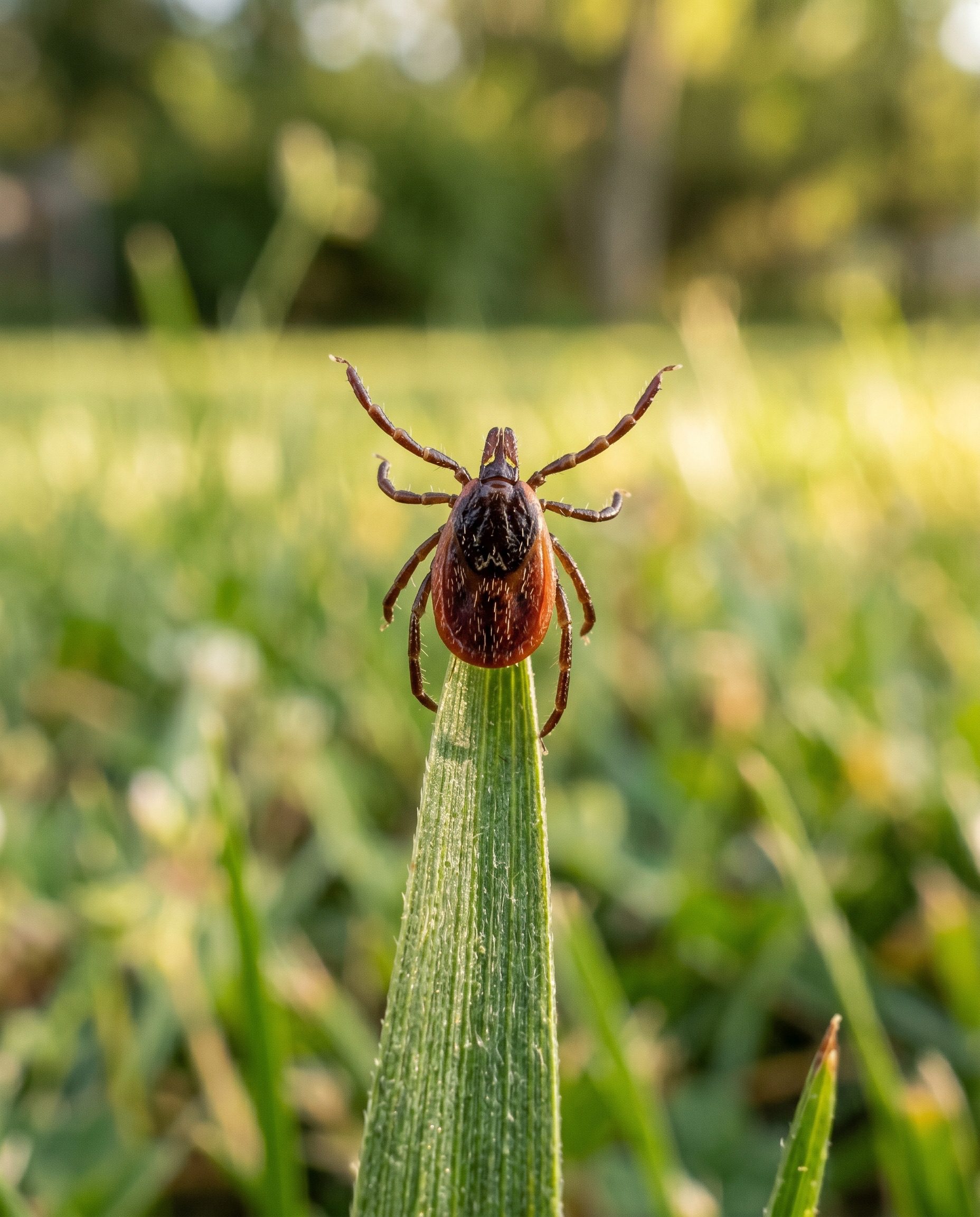
If you check one thing, check the scutum. The scutum is the hard plate behind the head, and its color and pattern do most of the identification work before you ever think about size. On a blacklegged tick the scutum is a plain, solid reddish-black with no markings, the legs are dark, and the back half of an unfed female looks orange-red. A solid, unmarked shield on a small tick points straight to the Lyme vector. That single trait is why this tick is worth knowing on sight.
nn
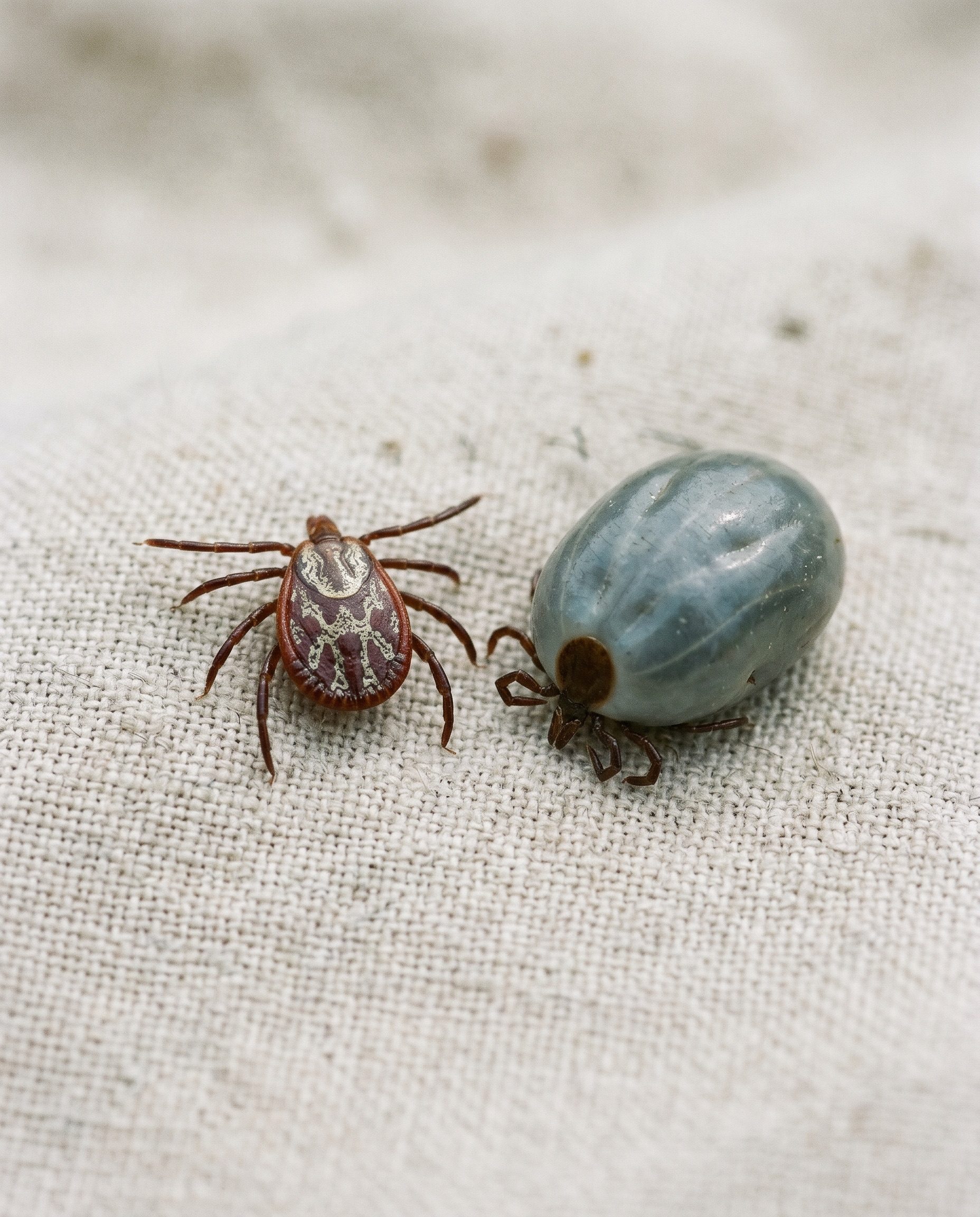
The two Dermacentor ticks, the American dog tick and the Rocky Mountain wood tick, wear the opposite: an ornate, marbled, silvery-and-brown shield that looks almost painted. The lone star female breaks the rule entirely, with a mostly plain brown body and one unmistakable white spot. Honesty about the limits matters here. On a male tick the shield covers nearly the whole back, so size shifts and the female pattern is muted, and on a blood-swollen tick the body balloons and the markings stretch out of recognition. When the back is distorted, fall back on leg color and the head region, and lean on the larva, nymph, and adult life stages each look different reference from URI TickEncounter to match what you are holding.
nn
The size and life-stage trap
nn
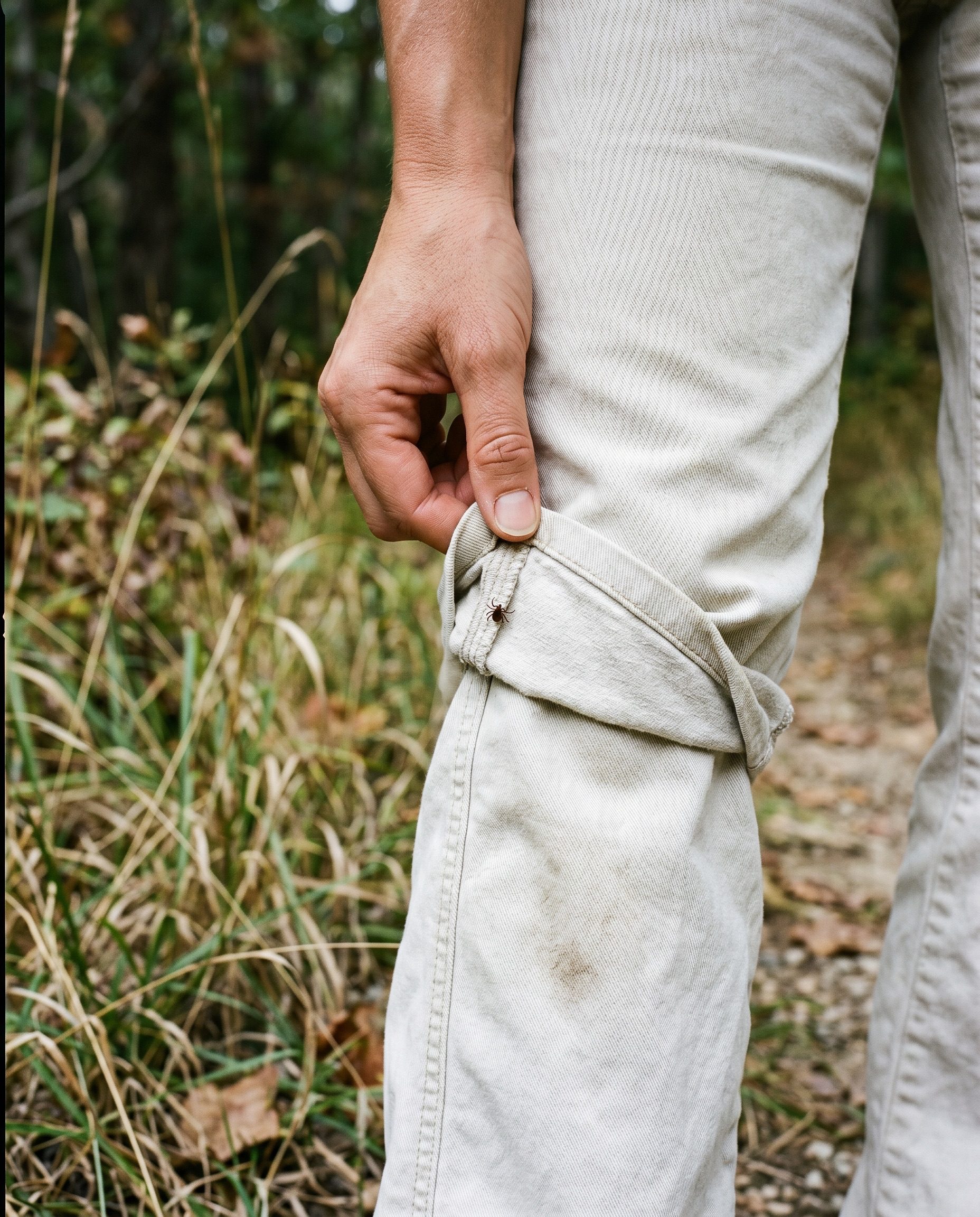
Here is the mistake people make: they picture a tick the size of a watermelon seed and miss the one that actually bit them. Most bites that transmit Lyme come from nymphs the size of a poppy seed, not from the adults you can see clearly. A larva has six legs and is barely a speck. A nymph has eight legs and runs about a millimeter, roughly a poppy seed. An adult is the familiar sesame-to-apple-seed size, larger and easier to spot, which is exactly why adults get found and removed before they finish feeding.
nn
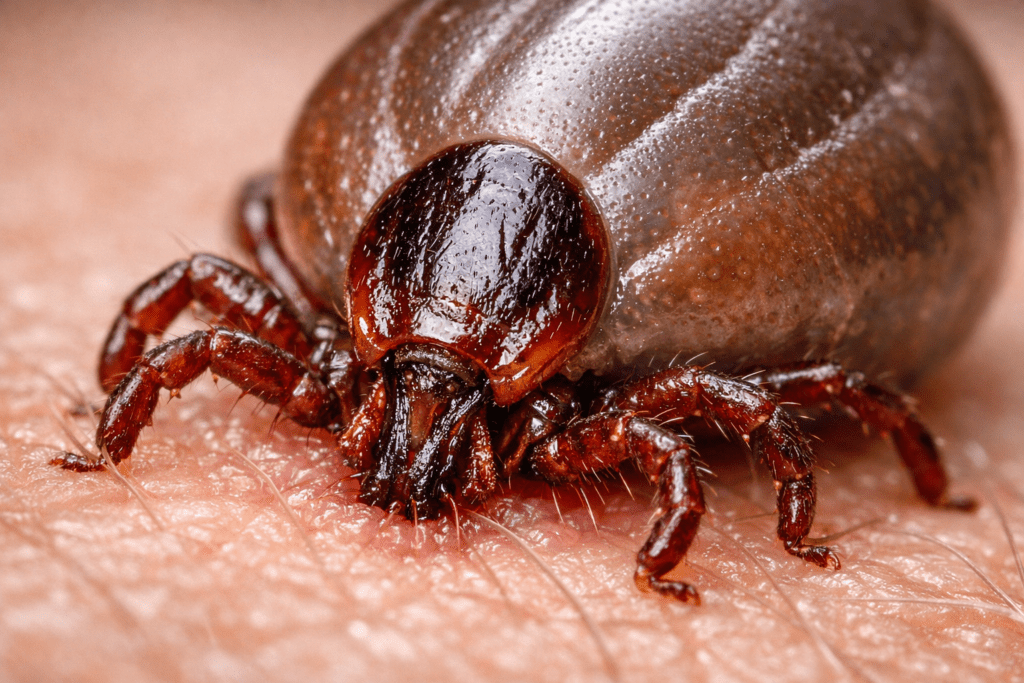
That size jump explains a lot of summer Lyme cases. The nymphs are out in late spring and early summer, they are tiny, and they tuck into the back of a knee or a hairline where you do not look. An engorged tick is a separate puzzle, because a fed female swells into a gray bean three or four times her flat size and loses most of her field marks. The trick is to read the legs and head, which do not balloon, and to remember that a swollen tick has been attached a while.
nn
nn
Blacklegged (deer) tick: the Lyme carrier
nn
This is the one most worth recognizing. The blacklegged tick is small, with a flat reddish-brown body, a solid black scutum, and dark legs that give it the name. It lives across the Northeast, the upper Midwest, the mid-Atlantic, and parts of the Pacific Coast, and it hides in leaf litter at the edge of woods and lawns. The deer tick is the main vector for Lyme disease, which is why blacklegged ticks are the main vector for Lyme disease according to the CDC, along with anaplasmosis and babesiosis in much of the same range. The look-alike to rule out is the American dog tick: same general silhouette, but the dog tick is bigger and carries the marbled shield the blacklegged tick never has.
nn
American dog and Rocky Mountain wood ticks: spotted fever
nn
The two Dermacentor ticks are the larger, showier ones, and the marbled shield is their signature. The American dog tick covers most of the eastern two-thirds of the country and pockets of the West Coast, while the Rocky Mountain wood tick lives in the Rocky Mountain states at higher elevations. Both can transmit Rocky Mountain spotted fever and tularemia, and the American dog tick is also linked to a rare tick paralysis that resolves once the tick is off. An ornate shield on a chunky tick is your spotted-fever cue, not a Lyme cue, which is the practical reason to tell the two apart.
nn
Lone star tick: STARI and the meat allergy
nn
The lone star tick is the aggressive one. It actively hunts a host instead of waiting, it is round-bodied, and the female wears that lone white dot. It dominates the Southeast and is pushing north and west. A single white spot means a female lone star tick, and that ID carries two unusual consequences: STARI, a rash illness resembling Lyme, and alpha-gal syndrome, a delayed allergy to red meat that can follow repeated bites. It does not carry Lyme. The look-alike confusion is usually with a young female dog tick before her pattern fills in, so check for the discrete central dot versus a spread marbled field.
nn
nn
How to identify a tick step by step
nn
Run the same short checklist every time and you will rarely miss.
nn
| Tick | Where & look | Disease risk |
|---|---|---|
| Blacklegged (deer) | Northeast, Midwest, Pacific; small, dark legs, solid black shield | Lyme, anaplasmosis, babesiosis |
| American dog | Eastern US, West Coast; larger, ornate marbled shield | Rocky Mountain spotted fever, tularemia |
| Rocky Mountain wood | Rocky Mountain states; larger, marbled shield | Rocky Mountain spotted fever, tularemia |
| Lone star | Southeast, spreading; round, female has one white dot | STARI, alpha-gal allergy, ehrlichiosis |
nn
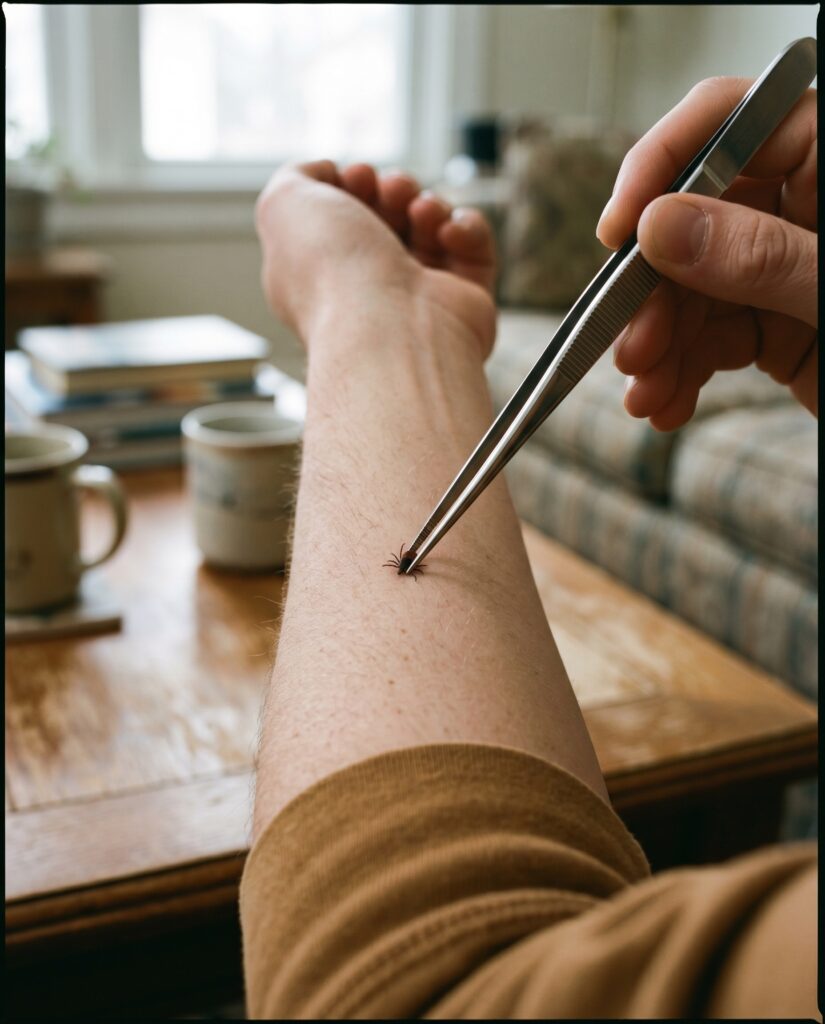
Start by counting legs to confirm it is a tick and an adult or nymph, then read the scutum color and pattern, then judge size against a poppy seed and a sesame seed, and finally note where you were and what region you live in. Region narrows the field before you even look closely, since a tick from a Colorado trail and a tick from a Connecticut backyard come from different short lists. If the body is engorged, photograph it before removal so the legs and head stay readable, and save the tick in a sealed bag in case symptoms appear later.
nn
Common questions
nnWhich tick carries Lyme disease?n
The blacklegged tick, also called the deer tick, is the main carrier in the US. It is the small one with dark legs and a solid black shield. Its larger marbled look-alikes, the dog and wood ticks, carry spotted fever instead, not Lyme.
nnHow small are the ticks that actually bite?n
Smaller than people expect. Nymphs are about the size of a poppy seed, and they cause most Lyme transmission precisely because they are easy to miss in skin folds and hairlines. Adults are sesame-seed to apple-seed size and far easier to spot and remove.
nnAre ticks getting more common?n
The reported numbers are large and tickborne disease is a recognized public-health concern, as the scale of tickborne disease reported each year shows. Ranges are also shifting, with the lone star tick in particular expanding north and west from the Southeast.
nnDoes a tick bite mean I will get sick?n
No. Many bites transmit nothing, and risk depends on the species, how long the tick was attached, and your region. The practical move is to remove it promptly and watch for symptoms; our tick-bite symptoms guide covers what to track and when to contact a doctor.
nnHow do I tell a male tick from a female?n
On a male, the hard shield covers almost the entire back, so the body looks uniformly armored and changes little when fed. On a female, the shield covers only the front portion, leaving the rear free to swell with a blood meal. That difference is why a fed female looks so different from the flat one in a field guide.
nn
Final verdict
nn
The species is the whole point, because the species sets the disease risk. A small tick with dark legs and a solid black shield is the blacklegged tick that carries Lyme. A chunkier tick with an ornate marbled shield is an American dog or Rocky Mountain wood tick that can carry spotted fever. A round tick with one white dot is a female lone star tick tied to STARI and the alpha-gal meat allergy. Read the scutum first, size against a poppy seed, and let your region narrow the list, then act on the ID rather than the fear.
nn
Next steps:
nn
– If a tick was attached, take it off correctly with our step-by-step safe tick removal guide.
n
– Cut your odds before the next hike using the CDC’s tick-bite prevention guidance and our Lyme disease prevention guide.
n
– Watch for warning signs and know when to get checked with our tick-bite symptoms guide.
If the thing you found is not on this page, our guide to working out what a bug is from what you saw starts from colour, place and movement instead.
nn