
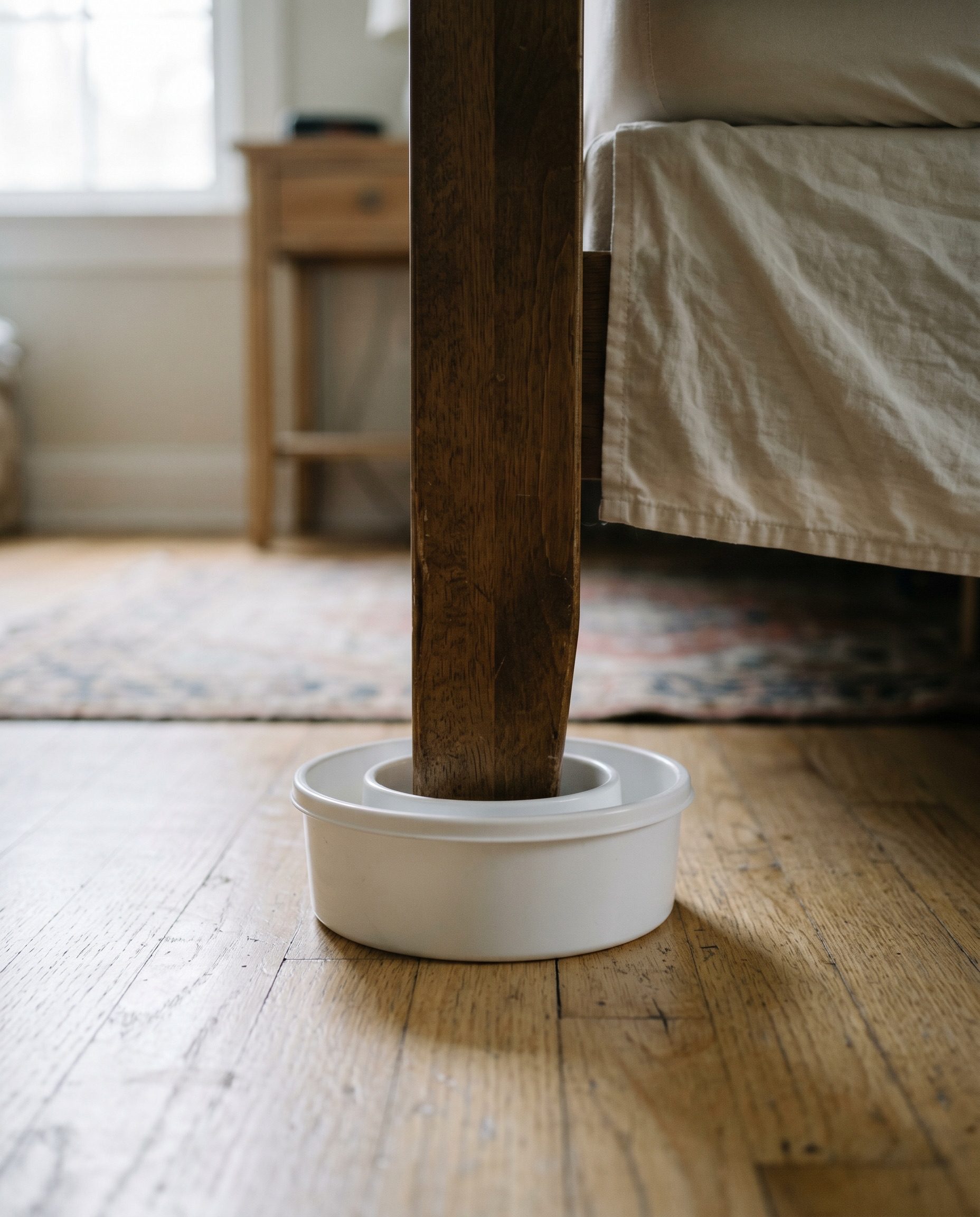
If you think you might have bed bugs, the smartest few dollars you can spend are interceptors: shallow cups that sit under every bed and furniture leg and catch the bugs crawling to you at night or away from you by day. They are the cheapest round-the-clock monitor you can own, and they double as real partial control, isolating the bed while you treat the rest of the room. They will not wipe out a colony on their own, so pair them with the full plan, but nothing else tells you this much for the price. In our own guest room we keep a set under the bed permanently, just so a problem can never go unnoticed. Most lists rank a pricey active monitor first; the passive cups below earn their place better.
Interceptors are the cheapest 24/7 bed bug monitor you can own and a real partial control: cups under every leg catch bugs crawling to or from you, confirming an infestation early and isolating the bed during treatment, but they never kill a colony alone.
- Do first (free): Inspect the mattress seams and headboard for rust spots and shed skins before you buy anything.
- Best for the common case: A passive interceptor cup under each of the four bed legs, plus the furniture beside it.
- Skip: Treating interceptors as a cure; they monitor and isolate, they do not exterminate.
Check the seams first
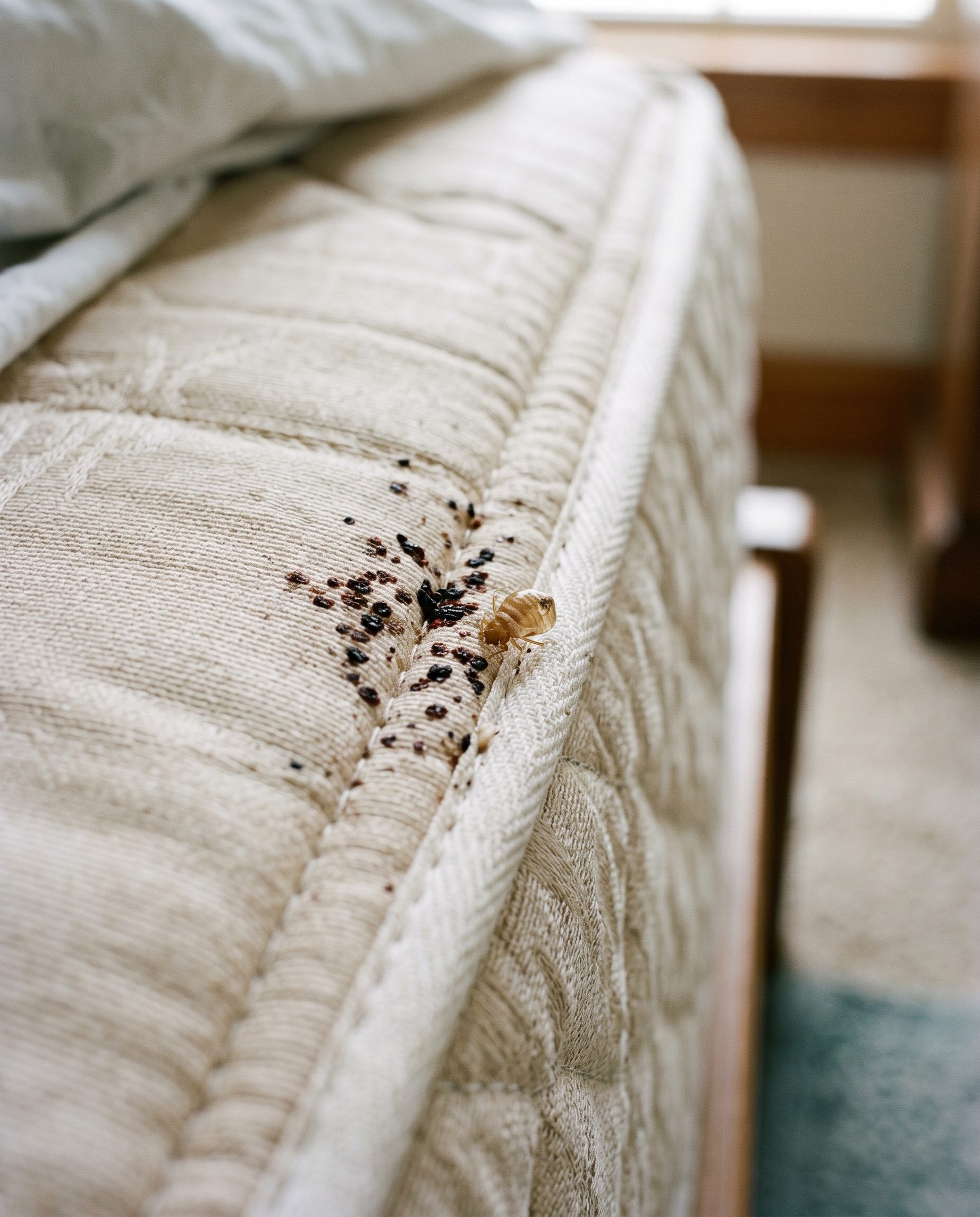
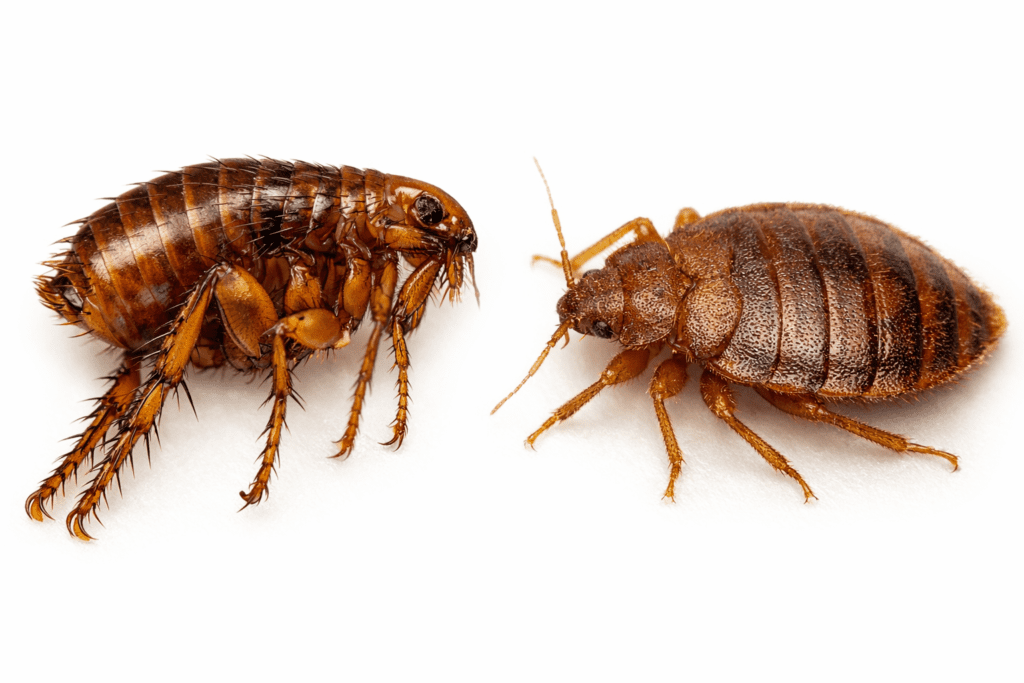
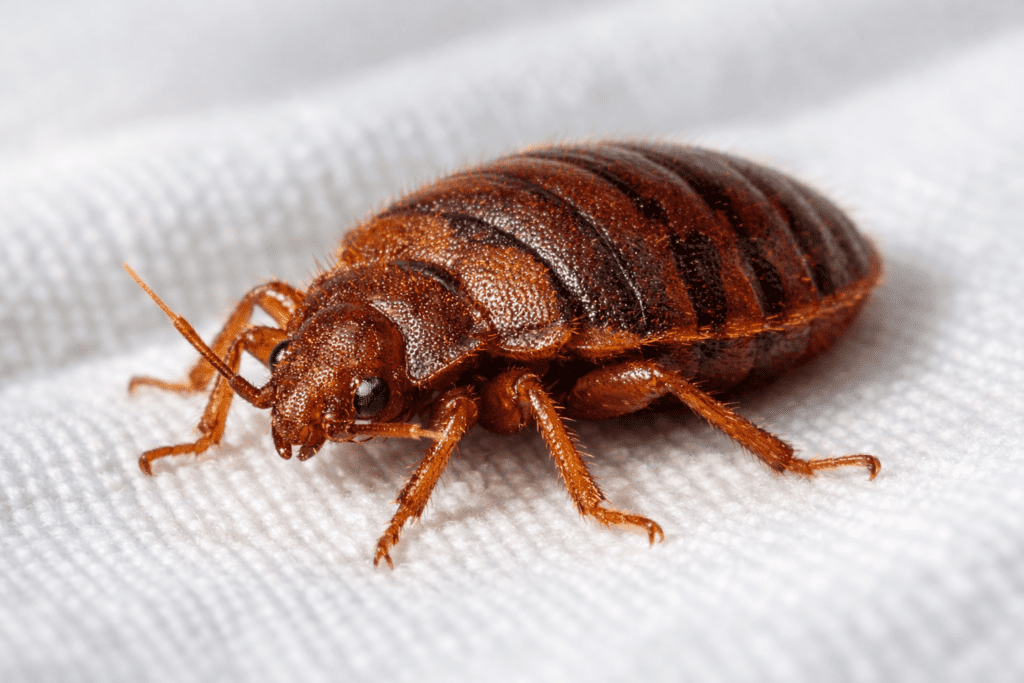
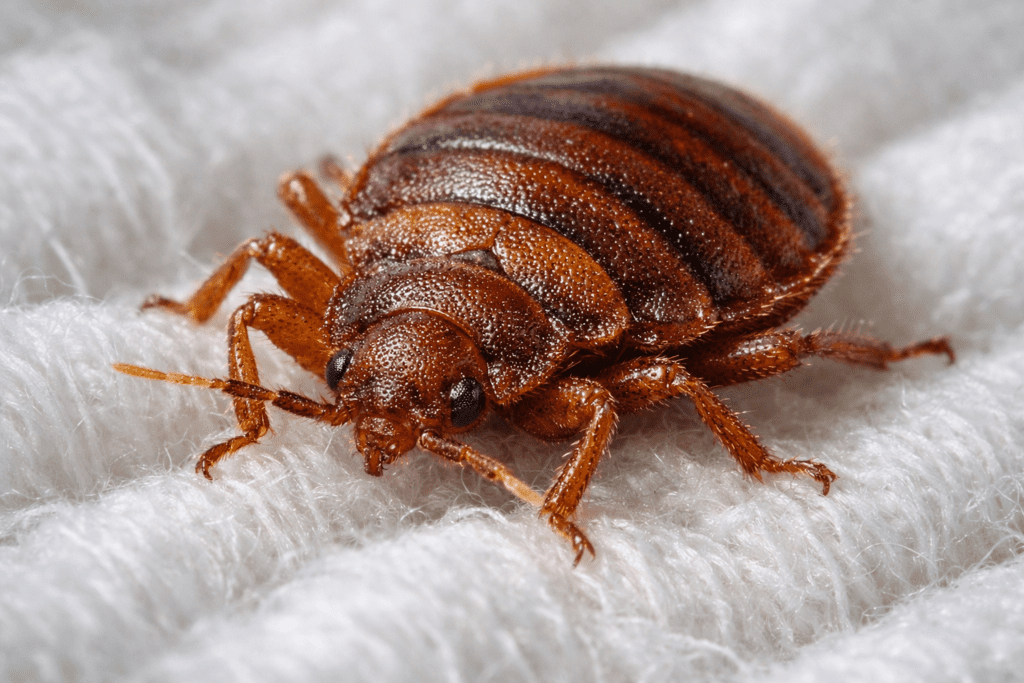
Before you order anything, spend ten minutes confirming what you are dealing with, because that decides everything that follows. Strip the bed and look hard at the piping seams of the mattress and box spring, the headboard, and the cracks where the frame joins. The EPA’s guide to finding bed bugs tells you exactly what to look for: live bugs, pale shed skins, tiny pale eggs in the seams, and the rust- or ink-colored fecal spots they leave where they hide. If you find that, you have a confirmed problem and interceptors become a treatment tool. If you find nothing but you woke up with bites, that is the gap interceptors fill.
Bed bugs are a hitchhiking problem, not a dirty-house problem, so a clean home is no proof you are clear. The EPA’s do-it-yourself bed bug control sequence puts inspection and non-chemical steps first for exactly this reason. Confirm before you spend on chemicals. If the seam check leaves you unsure what you are looking at, our walkthrough on the signs of bed bugs and how to identify an infestation shows the difference between bed bug evidence and the lookalikes people panic over.
Why a $25 cup beats a $40 gadget
Here is the call-out that most roundups bury. The shelf is full of plug-in active monitors that pump out heat or carbon dioxide to lure bugs, and they cost real money. For a homeowner who just wants to know whether bed bugs are present and to keep the bed safe during treatment, that money is usually wasted. A passive interceptor needs no power, no lure, and no refills; it works because bed bugs cannot climb its slick inner wall, so any bug moving between the floor and the bed gets stuck in the trough where you will find it.
The University of Minnesota Extension’s bed bug detection and treatment guidance backs the cheap approach: interceptors placed under bed and furniture legs are an effective way to detect and help reduce a population, and they let you monitor over weeks without tearing the room apart nightly. Cheap and passive is the point, not a compromise. The pricey active monitors have a niche in very low-level professional surveys, but for a household they answer a question you can answer for a quarter of the price.
One honest limit, so nobody expects too much. Interceptors catch bugs that travel along the legs; they will not catch a bug that drops from the ceiling or rides in on a pile of clothes against the bed. That is why this is partial control. The University of Kentucky’s bed bug ENTfact is blunt that no single tactic clears bed bugs, and that pulling the bed away from the wall so the legs are the only path is what makes interceptors actually isolate it.
How the cups compare
The decision is short once you know what each style is for. Compare the cup styles by the two things that matter: whether it survives a heavy bed and whether it fits your legs and casters.
| Style | Best for | Watch-out |
|---|---|---|
| Heavy-duty plastic cup | Large or heavy beds and frames that crush thin cups | Bulkier; check it fits under low frames |
| Standard passive cup | The common bedroom case under each of the four legs | Wide casters may not seat; measure first |
| Enclosed travel detector | Hotels, dorms, and luggage checks on the road | For spotting, not for isolating a bed at home |
Whichever style you choose, the working principle is identical: a smooth, non-climbable inner wall the bug cannot scale, with an outer ring rough enough for it to climb in but not back out. You need one under every leg, not two under the bed and none under the nightstand, because a single uncovered path defeats the whole set. A complete ring beats a clever cup. Buy the multi-pack so you can cover the bed and the chair beside it at once.
Set them up so they actually isolate
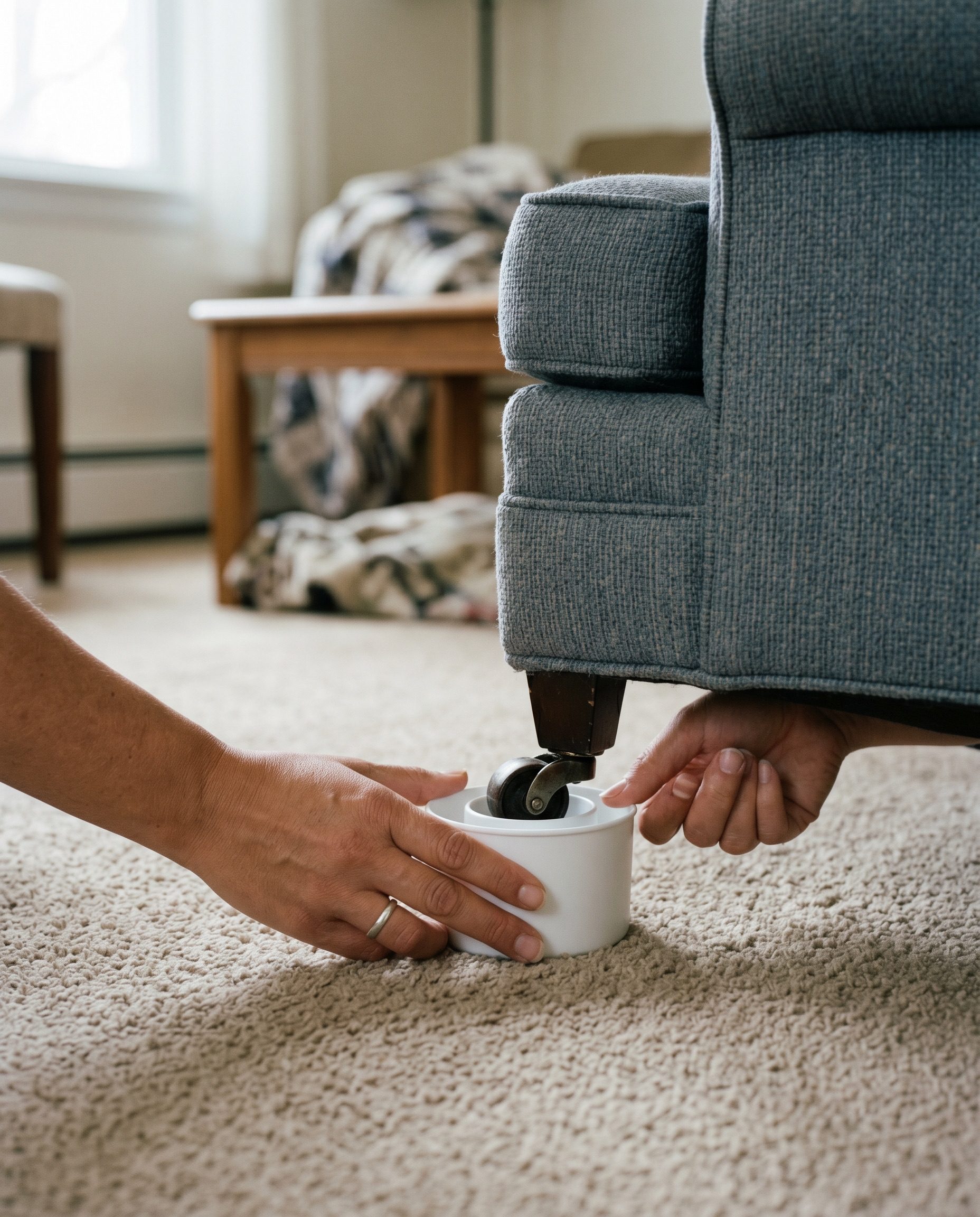
Placement is what turns a monitor into partial control. Put one cup under each leg of the bed, seated so the leg rests in the inner well, then do the same for the nightstand, the chair, and anything else touching the bed area. Pull the whole bed about an inch off the wall and make sure no blanket, dust ruffle, or charging cable touches the floor. The legs must be the only road to the bed. Now every bug trying to reach you, or retreat after feeding, has to cross a cup.
Check the cups daily for the first couple of weeks, then weekly. A captured bug confirms an active infestation and tells you the bed is still a target; an empty run of cups over time is real evidence the population is dropping. Interceptors pair naturally with a zipped encasement, which seals the mattress so bugs already inside cannot feed or escape. Our roundup of the best bed bug mattress encasements covers that half of the isolation step, and the full how to get rid of bed bugs guide lays out the heat, laundering, and treatment work the cups cannot do.
Set expectations honestly on the rest of the plan. Sprays alone do not solve bed bugs; the EPA notes that resistance to common pesticides is widespread, which is why interceptors, encasements, hot laundering, and steam carry most of a DIY job. If the bug count keeps climbing despite a clean setup, that is the signal to bring in a licensed professional rather than escalate chemicals on your own. For peace of mind on the health side, the CDC notes bed bugs are not known to spread disease, so this is a sleep-and-sanity problem to manage methodically, not a medical emergency.
The picks
Cards come after the analysis because the decision is style and fit, not brand. These three cover the heavy-duty case, the value multi-pack, and a travel detector for the road.
InsectoGuide is reader-supported. As an Amazon Associate we earn from qualifying purchases at no extra cost to you.
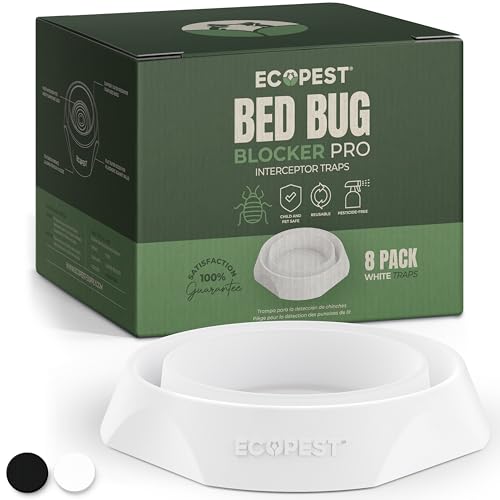
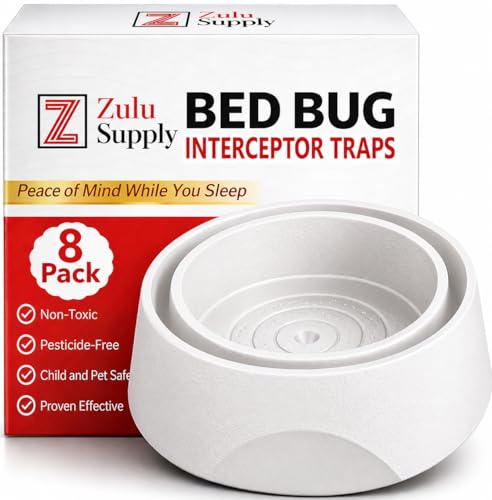
A heavy-duty 8-pack for whole-bed coverage that survives a large or heavy frame.
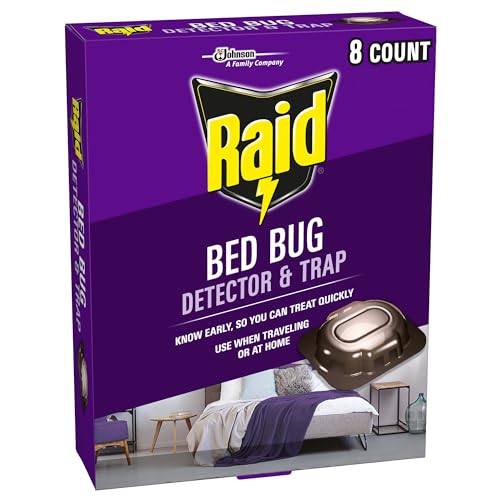
A reusable 8-pack that fits most legs and covers a full bedroom set.
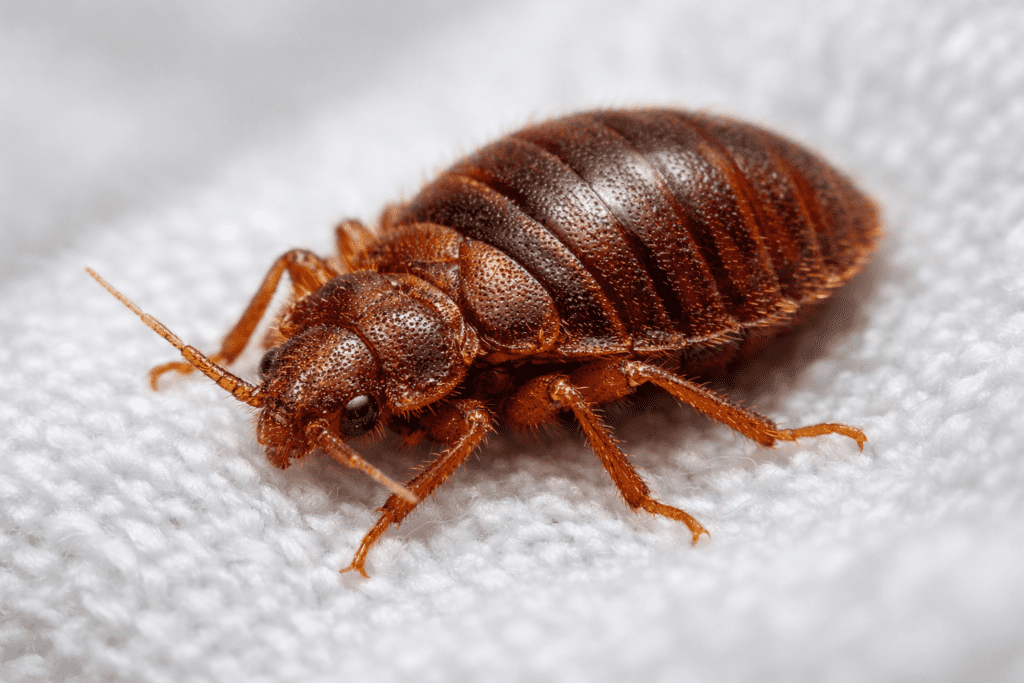
An enclosed detector with a viewing window for hotels, dorms, and luggage checks.
Common questions
Do bed bug interceptors actually work?
Yes, for what they are built to do. They reliably catch bugs traveling between the floor and the bed, which confirms an infestation and helps reduce the population. University of Minnesota Extension lists interceptors as an effective detection-and-reduction tool, but they monitor and isolate rather than exterminate, so they work as part of a plan, not alone.
How long do I leave them down?
Indefinitely is fine. Check them daily for the first two weeks while you treat, then weekly. Leaving a set under the bed permanently is the cheapest insurance there is, because it means a new problem can never build for months before you notice it.
Will interceptors catch every bed bug?
No, and expecting that is the mistake. They only catch bugs that travel along the legs, so you have to pull the bed off the wall and keep bedding off the floor to force that path. Bugs that ride in on clothing or already live in the mattress are handled by an encasement and laundering, not the cups.
Are they safe around kids and pets?
They are, because passive interceptors use no pesticide, lure, or power. They are simply slick plastic cups, which makes them one of the few bed bug tools with no chemical caution attached. Keep the bed pulled away from the wall and you are set.
When should I call a professional?
If your cups keep filling week after week despite a sealed, isolated setup, the infestation is past a DIY fix and a licensed pest control pro should take over. Sprays are not the answer to escalate with on your own, since resistance to common bed bug pesticides is widespread.
Final verdict
There is no cheaper way to know where you stand with bed bugs than a set of interceptor cups under every leg. Start free by inspecting the seams for rust spots and shed skins, then put a cup under each bed and furniture leg and pull everything an inch off the wall so the legs are the only path in. Buy the heavy-duty multi-pack for a normal bedroom, the value pack to cover the chair and nightstand too, and an enclosed detector for travel. Skip treating the cups as a cure; they monitor and isolate brilliantly, but the heat, laundering, and encasement work clears the colony. Check them daily at first, leave a set down for good, and you will catch the next problem on night one instead of week ten.

Pingback: Best Bed Bug Mattress Encasements: A Buyer's Guide to Bite-Proof Covers