
\
\
A mosquito trap only earns its spot if it pretends to be you. The biting females hunt by following carbon dioxide, body heat, and a scent that says “warm blooded animal nearby,” so the traps that actually catch them are the ones that fake those signals with CO2, heat, and an attractant. The glowing UV “zappers” people buy by the truckload? They mostly fry moths and beetles. And here is the part nobody likes to hear: a trap is a supplement, not a substitute. If you haven’t killed the larvae sitting in the standing water around your property, you’re just skimming a few adults off the top of an endless supply.
\
\
\
The best mosquito trap imitates a human, using CO2, heat, and an attractant to draw biting females; UV-only zappers kill harmless bugs and barely dent the mosquito population. Treat any trap as a supplement to larval control, not a replacement, and only after you’ve drained or treated the standing water that breeds them. Then match the trap to the job: a plug-in unit for a patio, a propane CO2 trap for a half-acre or more.
\
\
\
\
\
What mosquitoes are actually following
\
\
Female mosquitoes need a blood meal to lay eggs, and they find you with a stack of cues. From a distance it’s the plume of carbon dioxide you exhale. Up close it’s your body heat, your skin moisture, and a cocktail of skin odors. The CDC’s mosquito biology overview lays out this hunting sequence, and it’s the single most useful thing to understand before you spend a dollar on hardware.
\
\
Everything good about a trap flows from that list. A device that emits CO2, gives off a little warmth, and releases a lure smells like prey. A device that just glows is, to a mosquito, mostly irrelevant. That’s the entire reason trap type matters more than trap price. A cheap CO2 trap will out-catch an expensive light every time.
\
\
There’s a second cue people forget: the mosquitoes hanging around your yard were born in your yard. They don’t fly in from miles away. Most of the common backyard species travel only a few hundred feet in their whole lives, which means the breeding source is almost always on your own property or your neighbor’s. That changes how you should think about the whole problem.
\
\
Why UV zappers disappoint
\
\
Bug zappers feel productive. They snap and crackle all evening, you wake up to a tray of dead insects, and it seems like the war is being won. The trouble is what’s in the tray. When entomologists at Michigan State Extension actually counted the catch, biting mosquitoes made up a tiny fraction of the kill. The bulk was moths, beetles, midges, and beneficial insects that have nothing to do with your itchy ankles.
\
\
Light just isn’t a strong draw for host-seeking females. The American Mosquito Control Association’s plain-spoken FAQ puts zappers in the same bin as ultrasonic gadgets and repellent wristbands: not where to put your money. None of that means a zapper is useless, exactly. It’ll thin out the soft-bodied nuisance bugs on a porch. Just don’t expect it to be the thing that stops the bites. If a glowing fixture is what you’re after for general nighttime bugs, I’d point you to a dedicated bug zapper comparison rather than a trap, because you’re shopping for two different jobs.
\
\

\
\
The step you can’t skip: kill the larvae first
\
\
Here’s where I get a little preachy, because it’s the part that makes or breaks the whole effort. Mosquitoes spend their first week as wrigglers in water. Not a pond, necessarily, a bottle cap’s worth will do. The EPA’s integrated mosquito management guidance is built around one priority above all others: source reduction. Find the water and get rid of it.
\
\
Walk your property after the next rain and look for the obvious offenders: clogged gutters, plant saucers, kids’ toys, tarps, the saucer under the grill, an old tire, a forgotten bucket. Tip them out. For the water you can’t drain, a rain barrel, a low spot, a pond, drop in a Bti larvicide. The EPA explains how larvicides kill mosquitoes in the standing water before they ever sprout wings, and Bti is safe for pets, fish, and birds. I keep a sleeve of larvicide dunks for standing water in the garage and toss one in the rain barrel every month.
\
\
Do this for two weeks and you’ll notice the difference before you ever plug in a trap. Skip it, and your trap is bailing out a boat with a hole in it. The full play, screens and yard habits included, is laid out in our mosquito-proof backyard guide, and a trap sits near the end of that list, not the start.
\
\
Matching the trap to your yard
\
\
Once the breeding is under control, a trap can mop up the adults that drift in or hatch from sources you can’t reach. The choice comes down to two things: coverage and power.
\
\
| Trap type | How it lures | Best yard size |
|---|---|---|
| Plug-in CO2 / UV hybrid | UV light plus a CO2-style attractant and fan, no fuel | Patio up to about 1/2 acre |
| Propane CO2 trap | Burns propane for true CO2, heat, and moisture | 1/2 to 1 acre |
| UV-only zapper | Light, electric grid | Nuisance bugs only, not biters |
\
\
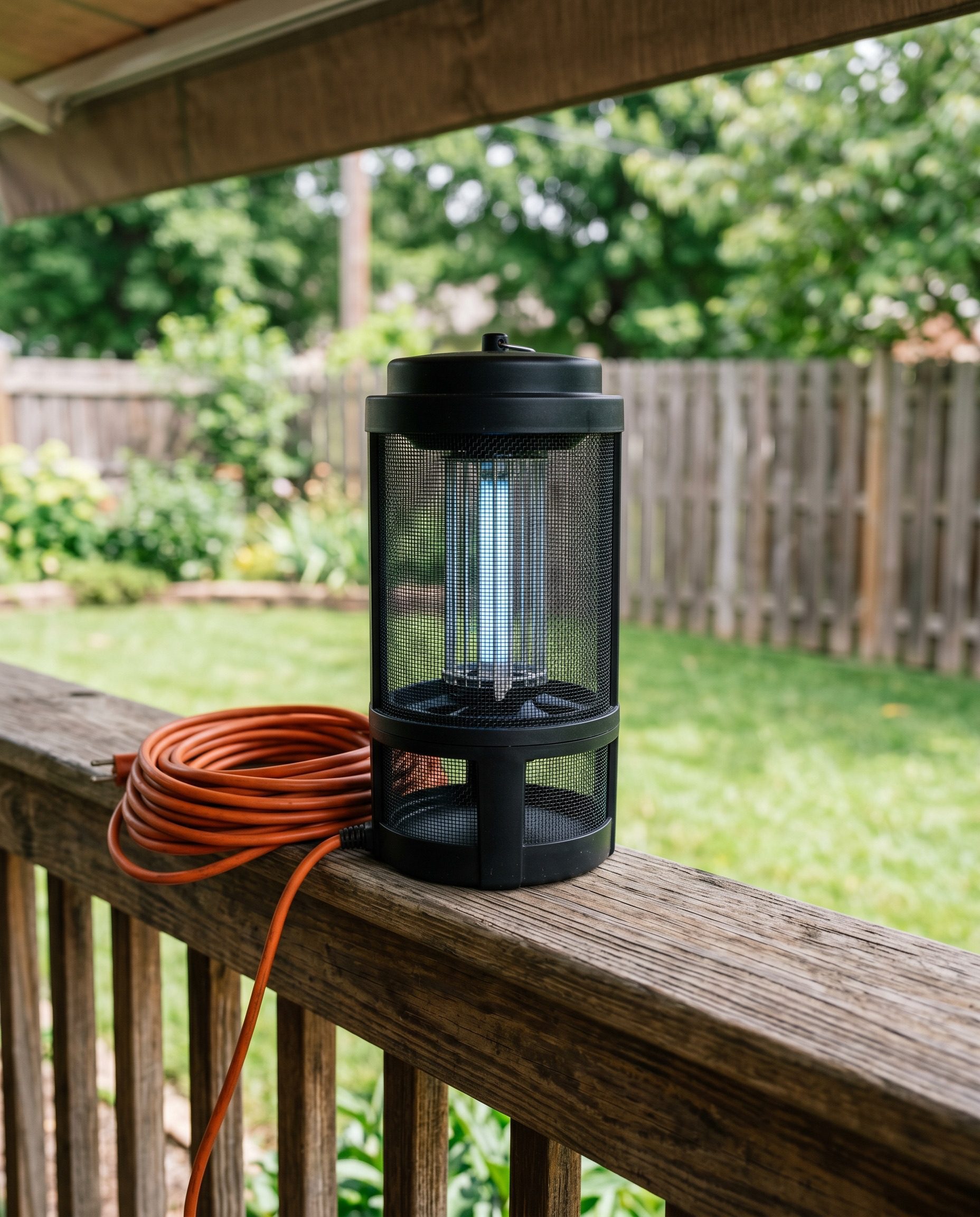
A plug-in unit is the easy answer for a patio or deck. You set it, run a cord, and forget it, and the better ones add an attractant so they’re not relying on light alone. The catch is coverage. These cover a corner of the yard, not the whole lot, so placement matters: put it between where the mosquitoes breed and where you sit, downwind of your seating, not next to your chair.
\
\
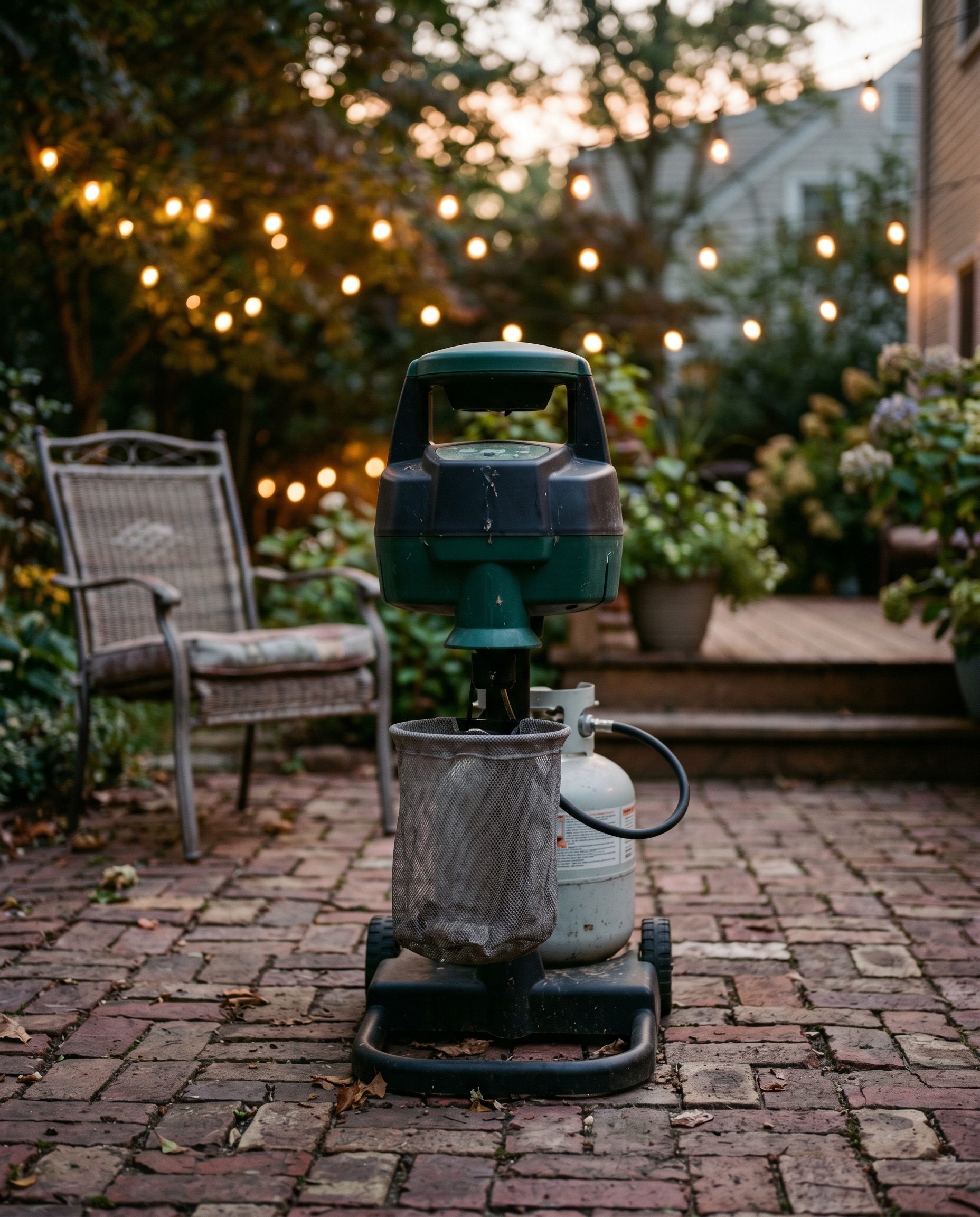
A propane trap is the heavy machinery. By burning propane it produces real carbon dioxide along with heat and moisture, which is the closest thing to a human a machine can manage. The CDC’s home control hierarchy reminds you these adulticide tools come after source reduction, but for an acre of property they genuinely pull their weight. The cost is upkeep: propane tanks to refill, attractant cartridges to replace, and a few weeks of running time before the local population dips, because you’re catching the egg-layers one generation at a time.
\
\
\
\
The picks
\
\
These are the three I’d actually put in a yard, sorted by the job they do best. The notes below are honest about the trade-offs of each type rather than the box copy.
\
\
InsectoGuide is reader-supported. As an Amazon Associate we earn from qualifying purchases at no extra cost to you.
\
\
\
 \
\
\
\
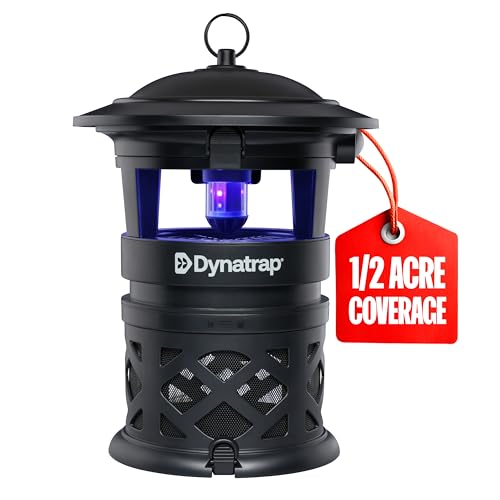
For a patio or deck where you want a plug-in unit and no fuel to manage.
\
\
\
\
\
 \
\
\
\
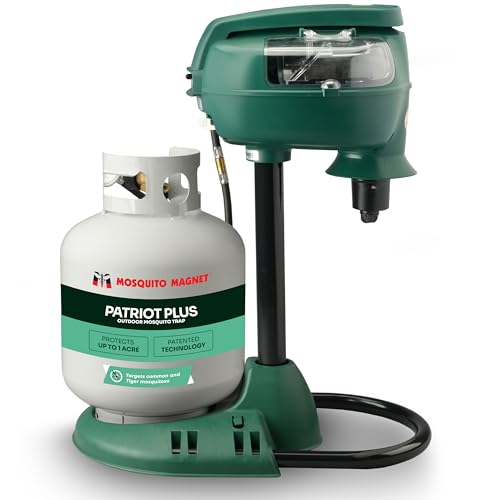
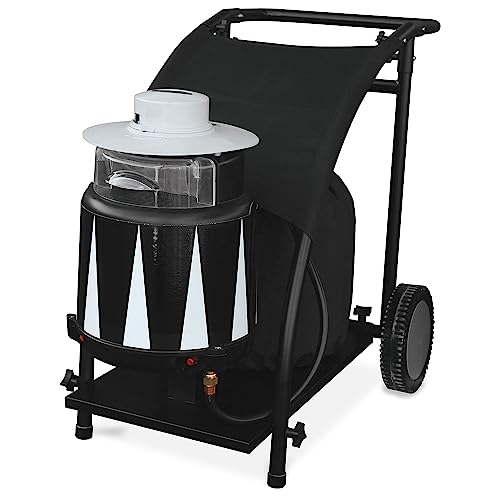
For anyone who wants real CO2 and heat to pull biting females, not just light.
\
\
\
\
\
 \
\
\
\
For a big lot where you need cordless placement far from the house.
\
\
\
\
Common questions
\
\
Do mosquito traps really work?\
The right kind does, with a catch. A CO2-and-heat trap will steadily pull biting females out of an area, but it works on the population over weeks, not on the mosquito about to land on your arm tonight. And it only works if you’ve also killed the larvae feeding the population. A trap alone, sitting over untreated standing water, is a losing battle.
\
\
Are bug zappers good for mosquitoes?\
No, and the research is blunt about it. Counts of zapper trays show biting mosquitoes are a sliver of the catch, while the bulk is harmless and beneficial insects drawn to the light. For mosquitoes specifically, your money is better spent on source reduction and a CO2 trap.
\
\
Where should I place a mosquito trap?\
Between where mosquitoes breed and where you spend time, never right next to your chair, or you become the bait. Put it in shade, downwind of your seating area, and give it a week or two before judging it.
\
\
Plug-in or propane, which should I buy?\
Go by yard size and how much upkeep you’ll tolerate. A plug-in unit suits a patio and runs on an outlet with no fuel. A propane trap covers up to an acre with true CO2 but needs tanks and cartridges. Don’t buy more trap than your yard needs.
\
\
Will a trap replace repellent and screens?\
No. A trap thins the local population over time; it doesn’t protect the person standing next to it right now. For that you still want an EPA-registered repellent on your skin and intact screens on the windows. Layers, not a single gadget.
\
\
Final verdict
\
\
If you remember one thing, make it this: buy the trap that fakes being human. CO2, heat, and an attractant are what biting females follow, so a propane unit like the Mosquito Magnet or SkeeterVac, or a hybrid plug-in like the DynaTrap for a patio, is where the catch actually happens. UV-only zappers are a different tool for a different bug. But the trap is the last move, not the first. Drain the water, treat what you can’t drain with Bti, and only then let a trap clean up what’s left. Do it in that order and you’ll spend a lot fewer evenings scratching.
\
\

Pingback: Best Bug Zappers for Mosquitoes: Indoor & Outdoor | InsectoGuide
Pingback: How to Mosquito-Proof Your Backyard: A Standing-Water Playbook