
That white ball in the corner is almost certainly a spider egg sac, and you can read who made it from the silk texture, the shape, and where it sits. Most belong to harmless house spiders, most spiderlings that hatch indoors do not survive, and a vacuum removes the entire question in about five seconds.
- Read it fast: A papery ball hanging in a messy corner web is a cobweb spider; a pea-sized ball glued to a running spider is a wolf spider mother; a ball with no web at all is probably not a spider sac.
- The caution: A smooth, creamy-tan sphere about a half inch across in undisturbed clutter deserves careful identification before you reach in, because that matches a widow sac.
- Best move: Vacuum the sac, the web, and the corner, empty the canister outside, then seal the gap that let the parents in before fall.

Why you are seeing sacs right now
Late summer and early fall is peak egg sac season around houses. Spiders that hatched in spring are now full-sized adults, females are provisioning the next generation, and males of many species abandon their webs to wander in search of mates, which is when they blunder through door gaps and end up in your bathtub. That surge of sightings makes people assume the whole population is fleeing the cold, but the picture is less dramatic. The University of Kentucky’s guide to common spiders found around homes and buildings describes most spiders found indoors as accidental invaders that came in around doors, windows, and other openings, while a smaller cast of species, cellar spiders and cobweb spiders among them, simply lives in buildings year round and was never outside to begin with.
So the sac you found has one of two stories behind it: a resident house spider placed it in a corner it has held for months, or a wandering female deposited it recently. Both stories end the same way, with a small silk package that tells you a lot if you look before you squish.
How to read an egg sac: texture, shape, placement
Three features do nearly all the identification work. First, texture: spider egg sacs are pure silk, so they look papery, cottony, or satiny, never muddy, waxy, or foamy. Second, shape: families are surprisingly consistent, producing round balls, flattened discs, or loose bundles. Third, placement: a sac’s position, hanging in a web, glued into a crevice, or carried by the female herself, narrows the maker faster than anything you can see on the sac itself.
Placement is where the wolf spider gives the clearest lesson. A female wolf spider never parks her eggs in a corner; the Missouri Department of Conservation’s wolf spider profile describes a pea-sized egg sac attached to her spinnerets, dragged behind her wherever she hunts, after which the spiderlings climb onto her abdomen and ride there for up to two weeks. If you see a brown, fast, ground-running spider with a white ball stuck to her rear end, that is a wolf spider mother, she is harmless, and the humane move is to guide her outside rather than stomp, since one shoe strike there ends a few dozen lives at once.
Egg sac shapes by spider family
Here is the field guide version for the sacs you will actually meet indoors. Treat the widow row with respect and the rest with curiosity.
| Spider group | Typical sac | Where you find it |
|---|---|---|
| Cobweb (house) spiders | Papery, tan-to-white, rounded or teardrop shaped, suspended in the web | Messy irregular webs in room corners, window angles, garages, basements |
| Cellar spiders | Loose, thin silk wrap with eggs visible through it, held in the female’s mouthparts | Ceilings of cellars, crawl spaces, under stairs, near the long-legged spider herself |
| Wolf spiders | Pea-sized white or gray ball attached to the female’s spinnerets | Moving with the spider at floor level, never parked alone in a corner |
| Black widow | Mostly spherical, about a half inch across, creamy yellow to light tan, smooth and papery | Undisturbed clutter, meter boxes, wood piles, garage corners near the ground |
| Funnel weavers (grass spiders) | Disc-shaped or lens-shaped sac tucked into a silk retreat | Crevices near ground level, window wells, under siding edges |
| Sac and jumping spiders | Eggs inside a flattened silk retreat rather than a hanging ball | Ceiling and wall junctions, behind trim, under sills |
The widow description is worth committing to memory because it is the one case where identification changes your handling. The UC IPM Pest Note on spiders describes black widow egg sacs as mostly spherical, about a half inch long, creamy yellow to light tan, and widows favor exactly the cluttered, undisturbed spots where hands go without looking. If a sac matches that description, do not reach in bare-handed; use the vacuum hose, wear gloves, and if you have found the adult spider too, our guide to spider bites and when to worry covers what a widow actually looks like and which symptoms mean a clinician should be involved. A confirmed widow population in an occupied garage is a reasonable job to hand to a licensed pest professional rather than manage blind.
How many spiderlings come out, and how few make it
The number that alarms people is real. The University of Kentucky’s guidance on eliminating spiders around homes and buildings notes that each egg sac can contain hundreds of young spiders, which is exactly why the same publication recommends removing sacs rather than ignoring them. But the arithmetic that follows the hatch is brutal in your favor. Spiderlings emerge tiny, soft, and hungry into a house that, from their perspective, is a desert: humidity is low, prey insects are scarce indoors, and their own siblings are the nearest available meal. Cannibalism and starvation thin every clutch, and only a small fraction of any brood survives to adulthood even outdoors, where conditions are far better. A hatched sac indoors typically produces a brief scatter of pinhead-sized spiderlings, most of which die or disperse within days.
A hatching sac looks like a horror movie and behaves like a rounding error. The realistic outcome of the sac you missed behind the water heater is one or two surviving house spiders, not a colonized home. Vacuum it anyway, but skip the panic.
Lookalikes: white blobs that are not spider sacs
Fall basements and firewood piles are full of white and tan objects that get blamed on spiders. The University of Kentucky’s firewood insects publication lists spider egg sacks, praying mantid egg masses, and moth cocoons among the fauna riding in on logs, and telling them apart takes about ten seconds once you know the tells.
| Object | How it differs from a spider sac |
|---|---|
| Moth cocoon | Spun fiber that often incorporates debris, bark bits, or the caterpillar’s own hairs; attached flat to a surface with no web around it |
| Mud dauber nest | Hardened mud tubes or cells, gritty and earthen, not silk at all; common on walls, eaves, and garage ceilings |
| Mantid egg mass | Foamy-looking hardened tan case glued to a twig or board, with a ridged, styrofoam-like texture |
| Shed spider skins | Crumpled, leggy, translucent husks caught in old webbing; alarming at a glance but completely empty |
One note on mud daubers: the wasp stocks those cells with paralyzed spiders, so cracking one open reveals a pantry of spider bodies that convinces people they have found a nest of live ones. The wasp is a solitary spider hunter, and an old mud nest can simply be scraped off dry.
One sac or a breeding population?
A single sac in a window corner is a data point, not a diagnosis. The pattern that suggests spiders are actually breeding and recruiting indoors looks different: multiple webs with sacs in several rooms, fresh pinhead spiderlings on walls or ceilings, regular sightings of the same species at different sizes, and prey remains accumulating in webs, which means the spiders are finding enough food inside to sustain themselves. That last detail matters most, because spiders persist where prey persists. A basement supporting a standing population of spiders is usually also supporting the insects they eat, and residents like camel crickets or other moisture-loving basement dwellers are often the actual foundation of the food chain you are seeing the top of.
Sticky traps settle the question cheaply. The same Kentucky publication recommends glue boards placed flush along the bottom of walls and in the corners of rooms to reveal hotspots, and a week of trapping tells you whether you have a stray wanderer or steady traffic. Glue boards also quietly outperform spraying for the actual job: UC IPM is blunt that control by spraying is only temporary unless it is accompanied by housekeeping, and that most spiders are beneficial predators you are under no obligation to persecute. If your traps are catching many long-legged, fast movers at floor level, check our guide to house centipedes before assuming spider, because the two get confused constantly.
How to remove a sac the smart way
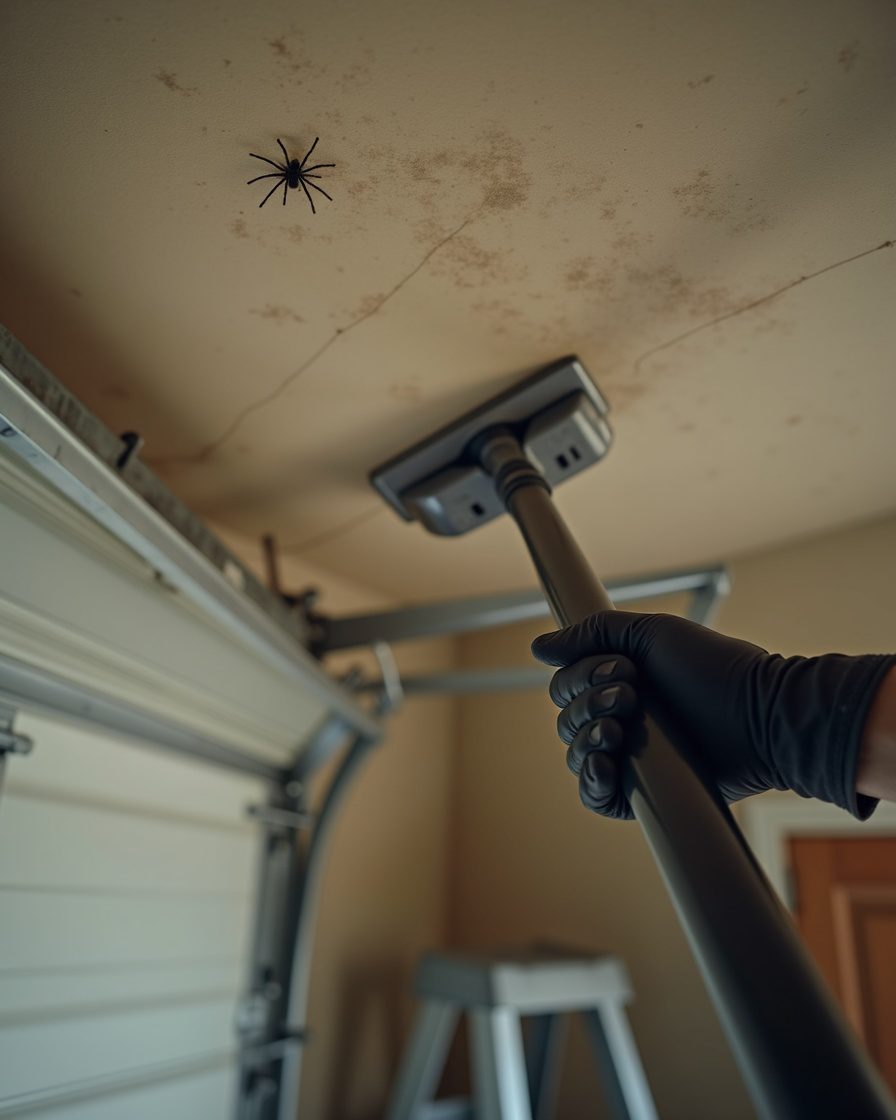
The vacuum is the correct tool, and it is not a folk remedy; it is the literal extension recommendation. Kentucky’s spider elimination guidance states that a vacuum cleaner or broom effectively removes spiders, webs, and egg sacs, and UC IPM adds the mechanical detail that soft-bodied spiders usually do not survive the tumbling trip through the hose. Vacuum the sac, the web, and the adjacent corner, then empty the canister into a sealed trash bag outside. For a suspected widow sac, use the hose at full length, wear gloves, and flashlight-check the surrounding clutter before any bare-handed cleanup.
What you should not do is spray the corner and call it handled. The silk shields the eggs from insecticide mist, and a dead adult beside a viable sac is half a job. Foggers are worse; Kentucky notes that total-release bug bombs are seldom effective against spiders, which sit in cracks the fog never reaches. Save chemical control for a heavy outdoor population at the foundation line, follow the label exactly, and treat everything indoors as a vacuum-and-seal problem first.
Keeping the next generation outside
Every sac you find indoors is downstream of an opening, so the durable fix is the same exclusion work that blocks every other fall invader. The University of Kentucky’s pest-proofing guide notes that gaps of just one sixteenth of an inch permit entry of insects and spiders, and its checklist is the classic fall lineup: door sweeps on exterior doors, caulk around window and door frames, sealed utility penetrations where pipes and wires pass through the foundation, and intact screens. Do it in early fall, before the mate-seeking males and sac-laden females start moving; our walkthroughs on pest-proofing your home against fall invaders and the step-by-step fall pest-proofing sequence cover the full weekend’s work in order.
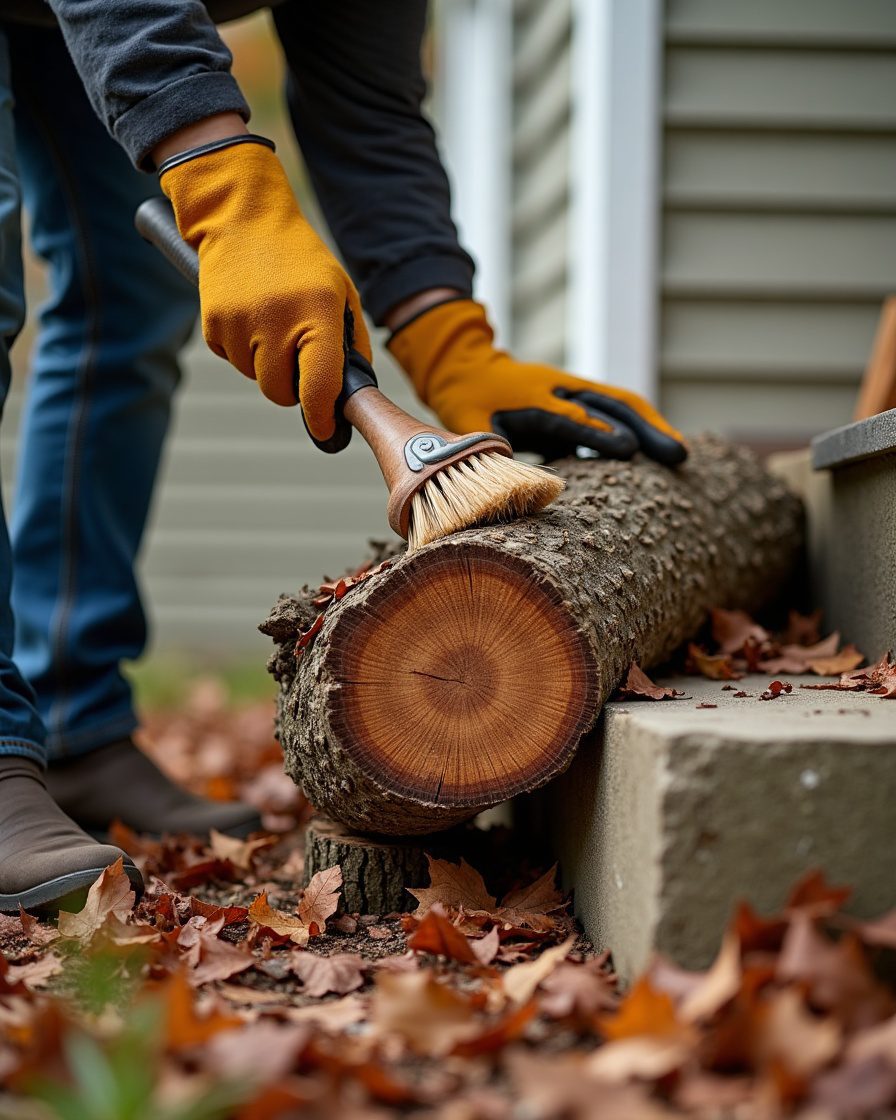
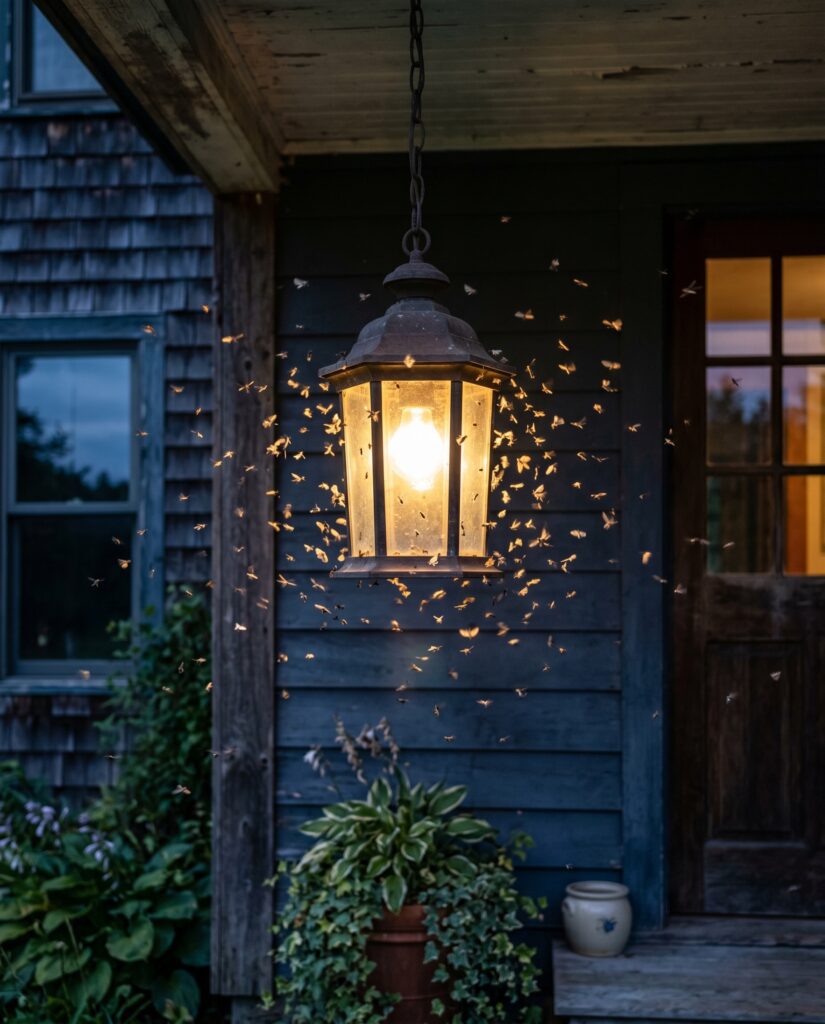
Two outdoor habits close the loop. First, firewood: bring in only what you will burn within a day or so, and knock logs together sharply outdoors to dislodge hitchhikers and brush off webbing and cocoons first; Kentucky also warns to never treat firewood with insecticides, since the residues can produce dangerous fumes when the wood burns. Second, lighting and clutter: yellow or sodium vapor bulbs at entrances attract fewer of the flying insects that feed spiders, and moving stacked items and vegetation back from the foundation removes the sheltered rim where sacs get laid an inch from your door. The same sealing work pays off across every species in our overview of winter-invading bugs.
Common questions
Should I squish a spider egg sac or vacuum it?
Vacuum it. Squishing a sac against a wall grinds silk and eggs into the surface and leaves part of the clutch intact more often than people assume, while the vacuum removes sac, web, and any attending adult in one pass. Empty the canister into a sealed bag outside the same day.
If a sac hatches indoors, will spiderlings take over my house?
No. A sac can hold hundreds of eggs, but indoor conditions are hostile to spiderlings: little prey, dry air, and hungry siblings. The realistic result of an indoor hatch is a short-lived scatter of tiny spiders and one or two eventual survivors, not an infestation.
Is every white ball in my garage a black widow sac?
Almost never. Cobweb spider sacs, moth cocoons, and mantid egg cases account for most white objects people photograph. The widow signature is a smooth sphere about a half inch across, creamy yellow to tan, in an undisturbed, cluttered, ground-level spot, usually with the glossy black spider nearby. When in doubt, vacuum with the hose extension rather than reaching in.
How can I tell an old sac from an active one?
An intact, clean, taut sac is potentially viable. A sac with a ragged exit hole, a torn side, or a dusty, collapsed look has already hatched or been parasitized. Old or new, the removal method is the same vacuum pass, so the distinction mostly affects how urgently you get to it.
When should I bring in a professional?
Confirmed widow or recluse activity in living spaces, or heavy repeated sac finds you cannot trace to an entry point, are fair reasons to call a licensed pest control professional. For a bite with severe pain, spreading redness, fever, or other signs of infection, contact a clinician rather than diagnosing from photographs.
Final verdict
A spider egg sac indoors is a note from the house, not a threat. Texture, shape, and placement tell you who wrote it: papery balls in corner webs are harmless cobweb spiders, a carried pea-sized ball is a wolf spider mother doing everything right, and only the smooth tan sphere in undisturbed clutter warrants real caution. Hundreds of eggs sounds like a siege, but indoor hatches collapse under starvation and sibling appetite. Vacuum the sac and the web, empty the canister outside, rule out the cocoons and mud cells that impersonate it, then spend your remaining energy where it compounds: door sweeps, caulk, sealed pipe penetrations, shaken-out firewood, and yellow porch bulbs. The spiders will keep writing notes. Fewer will get delivered.
This article is for information only and is not medical advice.
Pingback: Spider Webs in Your House: What Each Type Tells You