Rub marks are dark, greasy smears left where a rodent’s fur repeatedly brushes a surface. They form along walls, at the edges of openings, on joists and around pipes, because rodents travel with one flank in contact and use the same routes nightly. They are the most useful rodent evidence available, since they map the runway and confirm which openings are in use. Rats produce heavier marks than mice, and a mark that darkens after cleaning proves current activity.
- They mark routes, not resting places. Follow them to the entry.
- Heavy and broad means rat. Faint and narrow means mouse.
- Clean a section and date it. Return within a week means current use.
Droppings tell you an animal was somewhere. Rub marks tell you where it goes, which is considerably more useful, because sealing the route is what ends the problem and cleaning up the droppings does not.
What they are
A rodent’s coat carries oils and picks up dirt. Travelling repeatedly along the same route with one flank against a surface transfers that mixture onto anything it touches, and over weeks it builds into a visible dark deposit.
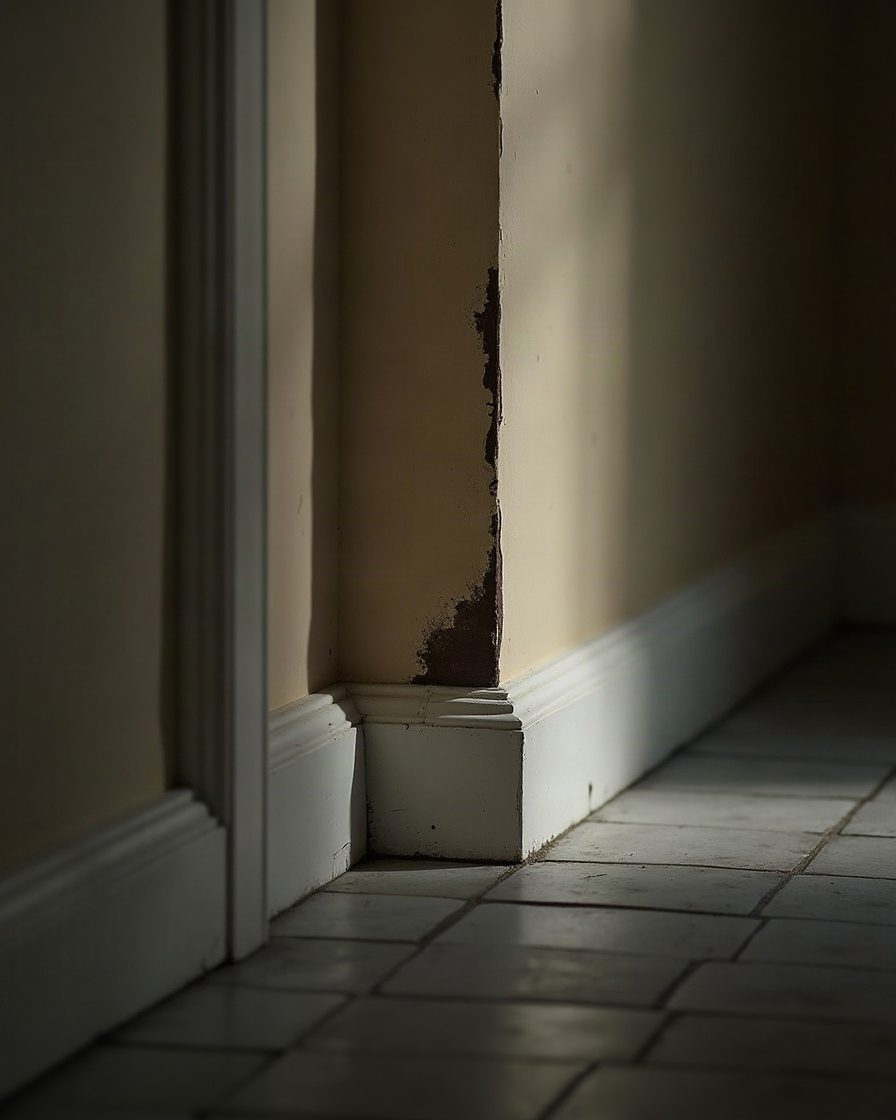
Appearance. Dark grey to black, greasy to the touch, smeared rather than spotted, with soft edges. On gloss paint they show as a slightly shiny band; on matt surfaces as a dull dark smudge.
Position. Following walls at floor level, along the top edge of a skirting board, around the edges of holes and gaps, on joists and pipe runs in a loft, over the top of a wall plate, and at any point where the animal squeezes through.
Why walls. Rodents are thigmotactic, meaning they prefer constant contact with a surface, and they navigate largely by touch and memory rather than by sight. That produces highly repetitive routes and therefore concentrated deposits.
UC IPM’s guides to the house mouse and to rats cover the behaviour.
Mouse or rat
Mice leave faint, narrow marks, often only visible in raking torchlight, and mainly at pinch points rather than along a whole run.
Rats leave heavier, broader, more obvious deposits, and because they are larger and more habitual, an established rat run can produce a genuinely conspicuous dark band. Rat rub marks around a hole in a wall, or along a pipe, are often the first thing a surveyor looks for.
Corroborate with droppings, which separate the two unambiguously by size: 3 to 7 mm and tapered for mouse, 12 to 19 mm and capsule shaped for rat. See the droppings chart and rat droppings.
Reading them as a map
This is why they are worth the trouble.
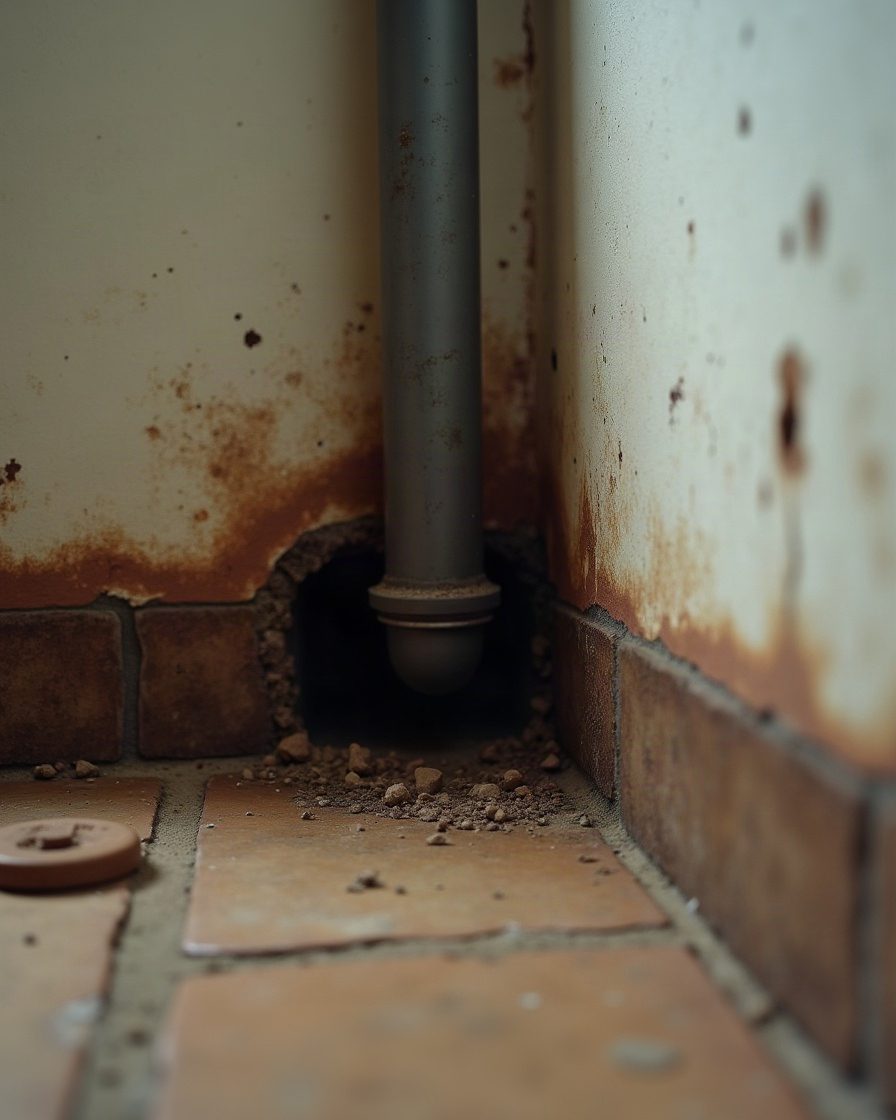
A mark around the edge of an opening confirms that opening is in use. That is information no dropping provides. A gap around a pipe with a dark halo is an active entry, and it is the thing to seal.
A continuous band along a wall marks a runway. Following it in both directions tends to lead to a harbourage at one end and an entry point at the other.
Marks on a joist or a pipe in a loft show the route through the roof space, which is often quite different from where the noise seems to come from.
A mark at the base of a door or at a corner of a frame is often accompanied by gnawing, since the animal enlarges a tight squeeze over time. Reading gnaw marks covers that, and the two together are the strongest possible evidence of an entry in current use.
Dating them
Rub marks persist for a long time after activity stops, so an old mark alone means nothing about the present. The test is trivial.
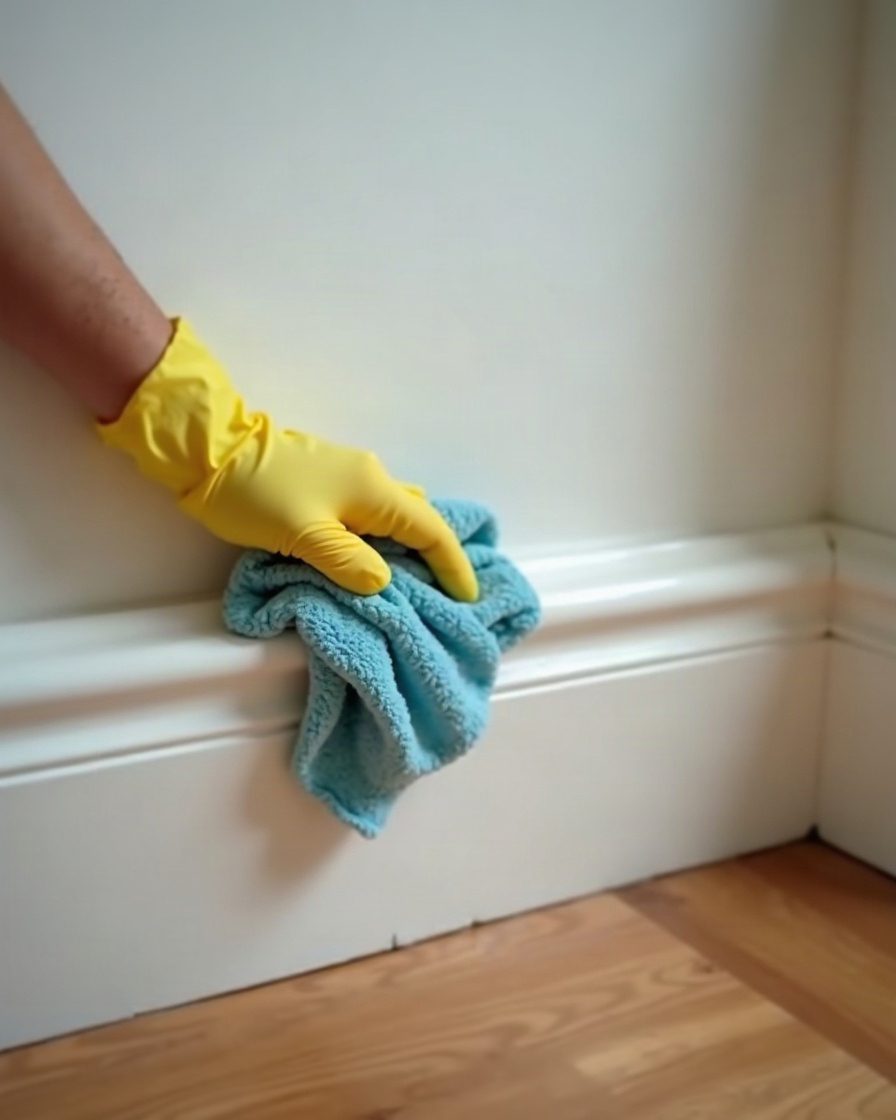
Clean a short section thoroughly. Degreaser and a cloth, leaving a clean stripe across the band. Photograph it and note the date.
Check in a week. Any darkening across the cleaned stripe means the route is in current use.
This is far more informative than counting droppings, which accumulate and persist and give no sense of timing at all.
Where to look
Along skirting boards in hallways, behind furniture, and in rooms adjacent to a kitchen.
In the cupboard under the sink and behind a kickboard, around pipe penetrations.
Behind and beneath appliances, where the runway from a wall void to a food source usually runs. What lives behind the fridge covers that gap.
In the loft, along joists and over the wall plate, and around any service penetration.
At the exterior, around air bricks, at the gap beneath a door, and where an extension meets the original building.
Use a torch held nearly parallel to the surface. Rub marks are low contrast and are routinely missed under overhead light.
What to do with the information
Seal the openings the marks identify. Steel wool or metal mesh packed tight and sealed over, not filler alone, because filler gets gnawed through.
Place traps on the runway rather than in the open. Rodents follow walls, so a trap set against the skirting on a marked route is far more likely to work than one placed in the middle of a floor. Set them at right angles to the wall with the trigger toward it.
Clean the marks afterwards, both because they are unpleasant and because a clean surface lets you detect any return immediately.
Do not rely on cleaning alone. The mark is a symptom, and the animal will re-mark the route within days if it is still using it.
Common questions
Is it dangerous to touch? Treat it as rodent-contaminated: gloves, dampen, wipe, bag, wash. The general precautions on the droppings page apply.
Can I tell how long they have been here? Heavier deposits suggest longer use, but it is not a precise measure. The clean-and-wait test is the reliable one.
They are on a joist in the loft but nowhere downstairs. Common. The loft is the highway and the kitchen is the destination, and the route between them runs inside the walls.
Nothing came back after cleaning. Good evidence the activity has stopped, and worth confirming over a month before assuming it.
The bottom line
A dark greasy band along a wall or around an opening is a rodent route, and it is better evidence than droppings because it points somewhere. Follow it to the entry, clean one section and date it to find out whether it is still in use, and then seal what the marks identified. Cleaning without sealing simply gives the animal a fresh surface to mark.