Squirrel droppings are 8 to 12 mm, barrel shaped with rounded ends rather than tapered, and they fade toward pale brown or grey as they age where rat droppings stay dark. They scatter across open surfaces such as insulation instead of forming lines along walls. The fastest confirmation is not the droppings at all: squirrels are active in daylight and rats are not, so noise overhead at two in the afternoon settles it in seconds.
- Rounded ends, not pointed. Rat droppings taper or are bluntly capsule shaped; these are barrels.
- They bleach with age. Pale, chalky pellets are old squirrel, not old rat.
- Daytime noise is the decisive evidence. Listen before you climb.
Squirrels and rats leave similar-looking evidence in similar places, and the two are confused constantly. The confusion is worth resolving early, because the entry points differ, the damage differs, and in many jurisdictions the legal position on what you may do about a squirrel differs too.
The droppings
Size. 8 to 12 mm, so overlapping with roof rat at the small end. Size alone will not settle it.
Shape. This is the useful feature. Squirrel droppings are barrel shaped, thicker in the middle and rounded at both ends. Roof rat droppings taper to points; Norway rat droppings are blunt but distinctly capsule shaped and heavier. Held side by side the difference is obvious; from memory it is not, which is why photographing them against a ruler is worth the trouble.
Colour and ageing. Fresh squirrel droppings are dark brown and soft. As they dry they lighten, often noticeably, toward tan, pale brown or grey, and they become chalky. Rat droppings darken and stay dark. A pale, dusty pellet in a loft is far more likely to be old squirrel than old rat.
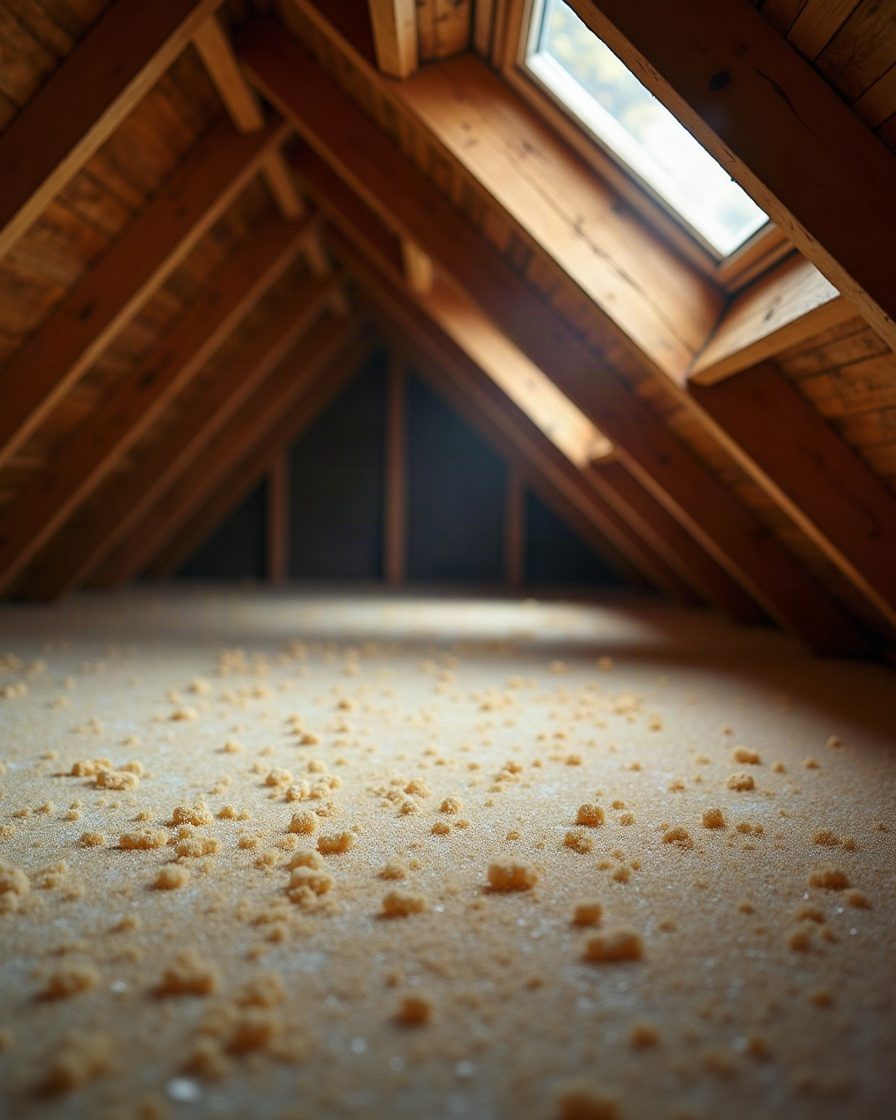
Distribution. Squirrels move across open spaces and do not hug walls, so droppings scatter over insulation, boarding and stored boxes. Rats run runways with a flank in contact, so their droppings line up along joists, walls and behind stored goods.
The droppings identification chart places both against the rest of the size ladder, and rat droppings covers the species split on the rat side.
The faster test: listen
Droppings are static evidence. Behaviour is quicker.
Squirrels are diurnal. Activity peaks in the hours after dawn and again in the late afternoon, and there is usually something to hear at midday. The sound is heavy for the size of the animal: scampering, rolling, thumping, and the sound of something being dragged.
Rats are nocturnal. Activity concentrates from dusk through the night. The sound is lighter and more continuous: scratching, gnawing, scurrying.
Bats are quieter still and concentrate at dusk and dawn.
If you hear running overhead at two in the afternoon, you have a squirrel and no further identification is needed. Attic pests identified by sound covers the full time-of-day test, and scratching in walls at night covers the nocturnal side.
The entry point looks different too
Rats and mice exploit existing gaps, and gnaw to enlarge them by a few millimetres. The resulting hole is small, roughly circular and neatly worked.
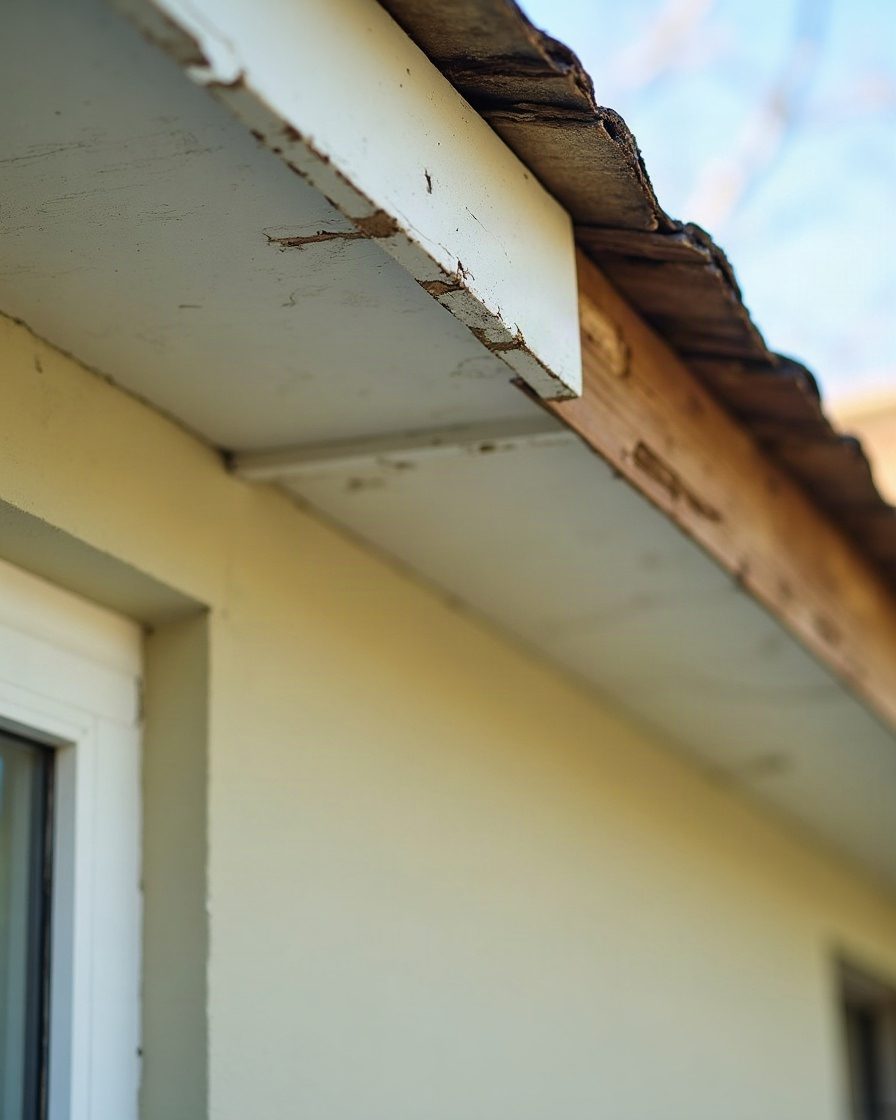
Squirrels are far stronger and work on a different scale. They tear at soffits, lift edges of flashing, pull back tiles, and enlarge a weakness into an opening several centimetres across with splintered, torn edges rather than neat gnawing. Look along the roofline: soffit and fascia junctions, the gap where a roof meets an extension, loose ridge tiles, and any point where a branch overhangs within jumping distance.
The damage inside follows the same pattern. Squirrels strip insulation for nesting, shred stored cardboard and paper, and gnaw structural timber and cabling. Chewed wires and what to do first covers the electrical risk, which is real and is the reason this is not a problem to leave for a season. Shredded paper and nesting material covers what the nest itself looks like.
Cleaning up
The precautions are the same as for any rodent, and the reasoning is the same: dried droppings should not be made airborne. Ventilate the loft first, wear disposable gloves, dampen the material thoroughly before disturbing it, wipe or lift with paper towel rather than sweeping, bag it, and wash afterwards. The CDC’s guidance on rodents and associated diseases covers the general principle.
Contaminated insulation that has been used as nesting material is usually easier to remove and replace than to clean.
The timing question
There is one thing not to do, and it parallels the rule for bats.
Do not seal the entry point without knowing whether young are inside. Squirrels have young in the spring and often again in late summer. Sealing a lactating female out leaves dependent young in the loft, where they will die, and she will make a determined and often destructive effort to get back in. The result is worse than the original problem in every respect.
The safe sequence is to establish that the loft is empty before closing anything: watch the entry at dawn and dusk, or use a one-way exclusion device and confirm no activity for several consecutive days. In many places grey squirrels are subject to specific legal rules on trapping and release, so it is worth checking the local position rather than assuming. The EPA’s general point about whether a pesticide is needed at all applies here with unusual force, since this is an exclusion problem rather than a chemical one.
Common questions
Could it be a mouse? Mouse droppings are 3 to 7 mm and pointed. They are much smaller than anything discussed here, and the noise is lighter.
The droppings are pale and dusty and I hear nothing. That combination suggests a historic occupation. Clear an area, note the date, check in a week.
How did it get up there with no tree nearby? Squirrels travel along fences, wires and rooflines, and jump further than most people expect. Overhanging branches are the commonest route but not the only one.
Is the smell a problem? A long-occupied loft develops a strong smell from urine-soaked insulation. That is a removal job rather than a cleaning one.
The bottom line
Rounded barrel-shaped pellets that bleach pale with age, scattered rather than lined up, mean squirrel. Confirm it by listening at midday rather than by studying the pellets further. Then treat the entry point as the actual problem, and establish the loft is empty before you close it, because sealing young inside turns a nuisance into something much harder to undo.