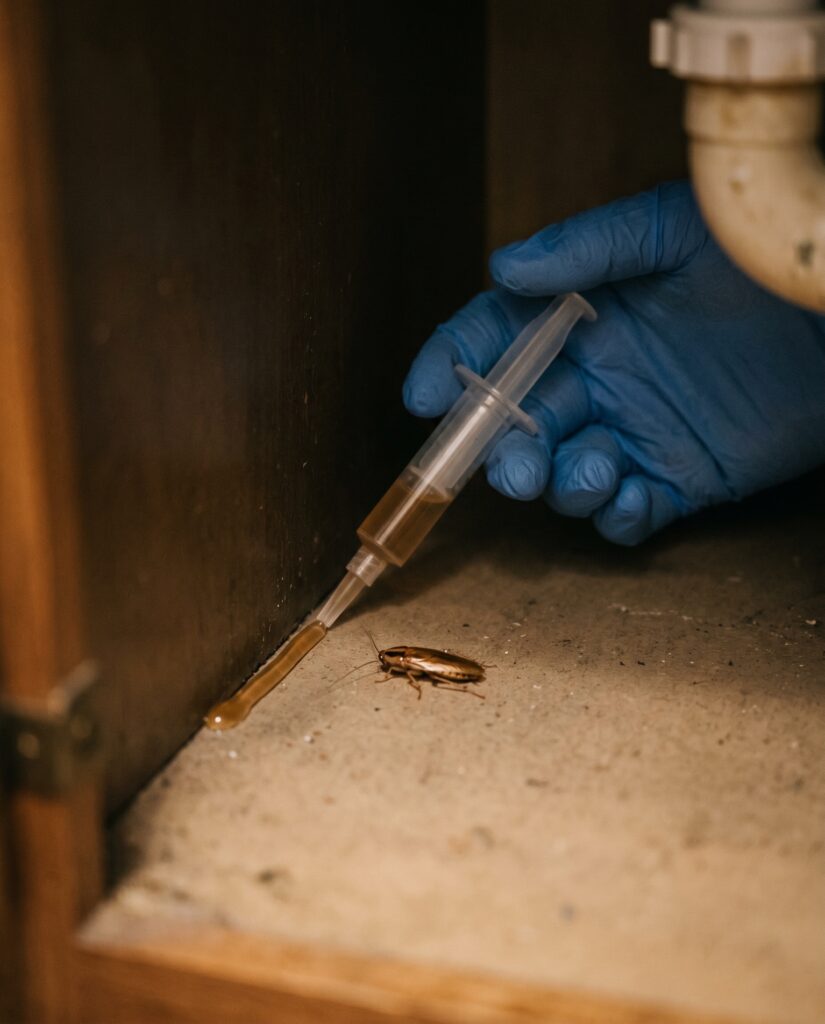
An established cockroach population produces a distinctive smell: musty and oily, faintly sweet, sometimes described as stale or slightly almond-like. It comes from aggregation pheromone in the droppings and from oils in the cuticle, so it is a function of numbers and of time rather than of a few insects passing through. Its practical value is directional: the smell is strongest at the harbourage, so it leads you to where they live.
- The smell means an established population, not a stray insect.
- Follow it to its strongest point. That is the harbourage, not the feeding area.
- Confirm with droppings. Smell alone is suggestive; specks in a corner are evidence.
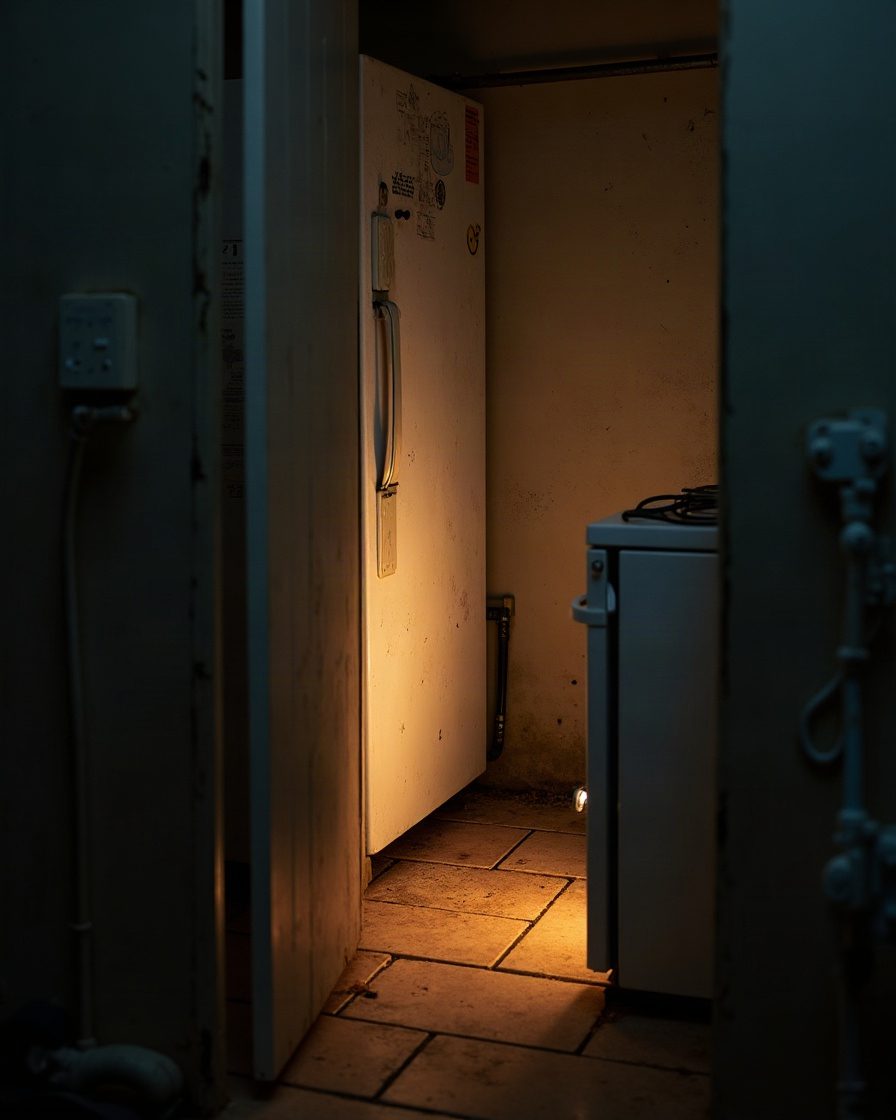
Of the smells covered on this site, this is the one people most often notice without being able to place, and it is frequently the first sign of a problem that has been building for months. It is worth being able to name.
What it smells like
Descriptions vary, which is part of the difficulty. The most common are musty, oily, greasy, stale, faintly sweet, and occasionally almond-like or like damp cardboard. It is not the earthy smell of mould, though people reach for the same word.
It is persistent rather than intermittent, it does not clear when a window is opened, and it clings to items stored in an affected cupboard.
Where it comes from
Two sources, and both explain why it correlates with numbers.
Aggregation pheromone. Cockroaches deposit a chemical signal in their droppings that attracts others to a harbourage. It is what makes them cluster rather than disperse, and it accumulates in a used harbourage over time. More droppings, more signal, more smell.
Cuticular hydrocarbons. The waxy compounds on the insect’s surface that prevent water loss. In quantity these contribute the oily character.
Both mean the same thing: a detectable smell indicates an established, reproducing population, present long enough to have marked its harbourage. One or two insects that came in on a delivery produce nothing perceptible. UC IPM’s guide to cockroaches covers the aggregation behaviour behind it.
Using it as a direction finder
This is the practical part, and it is genuinely useful because the smell is a gradient.
Walk the room slowly and note where it is strongest, then get low. The concentration is highest at the harbourage, which will be warm, dark, enclosed and close to both water and food.
In practice that is: the gap behind and beneath a fridge or a freezer, the motor compartment of any appliance, the underside of a sink cabinet, hinge recesses and the corners of cupboard shelves, the void behind a kickboard, the space around pipe penetrations, and inside a cupboard containing a boiler.
What lives behind the fridge and under the kitchen sink cover the two most productive locations.
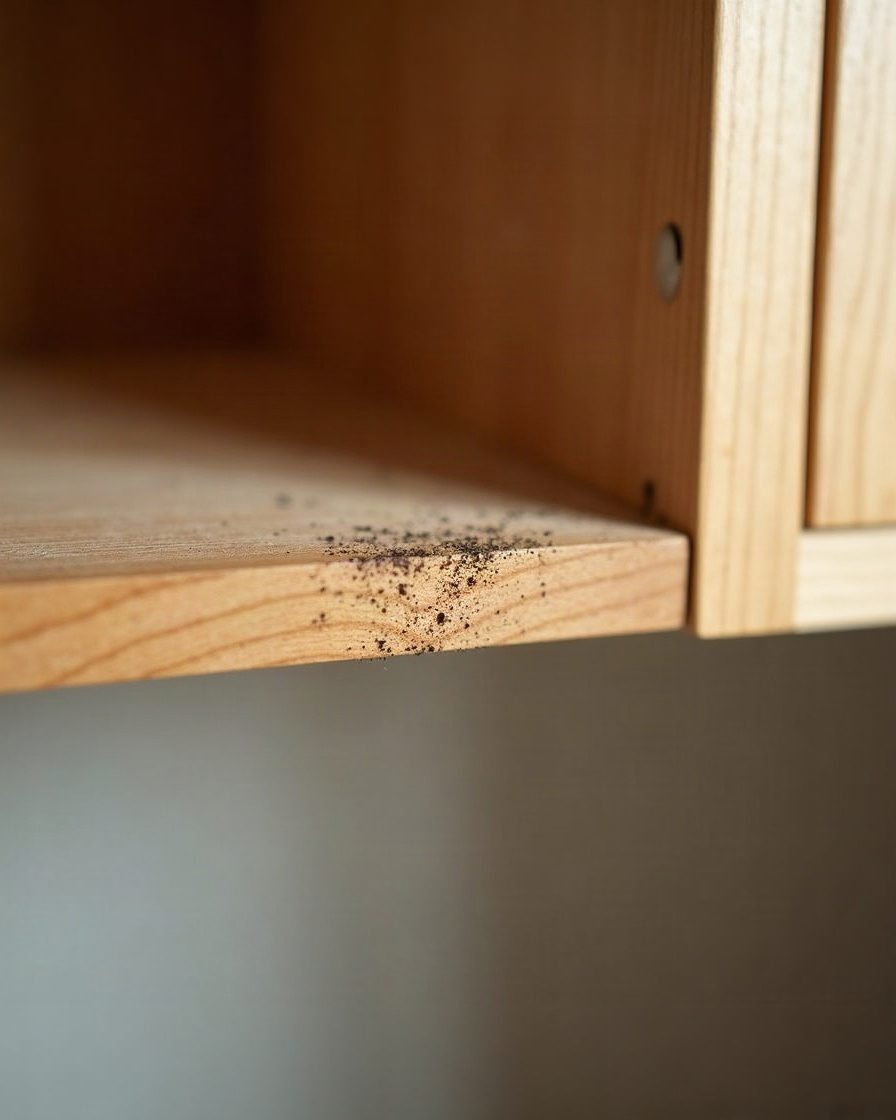
Then confirm with something physical. Droppings are the corroboration: dark specks with blunt ends and ridged sides, under 1 mm for German cockroach, gathered in corners and recesses rather than out in the open. Cockroach droppings covers reading them, and cockroach egg cases covers the other reliable finding.
A torch and a phone camera pushed into the gap behind an appliance at night, with the kitchen light having been off for an hour, will usually settle it.
What else smells like this
Mould. Earthy rather than oily, and it comes with visible growth or a damp tide line. See a musty smell in the house.
Rodent urine. Sharper and ammoniacal, and it comes with droppings that are far larger and tapered.
Stink bugs and lady beetles, seasonally, if a mass of them has come indoors to overwinter. That smell is more acrid and coriander-like and it is associated with autumn. See bugs clustering on outside walls.
Drains. A neglected trap or a dry trap produces its own smell and often its own insects.
Why it matters beyond the nuisance
Cockroach allergens are the reason to act rather than tolerate. Proteins in the droppings, shed skins and body fragments are a recognised indoor allergen and an established asthma trigger, particularly for children in multi-unit housing, which the CDC’s page on cockroaches and health sets out.
The practical consequence for cleanup is specific: do not dry-sweep or dry-vacuum an accumulation of droppings. Dampen the surface, wipe with a disposable cloth, bag it. A sealed HEPA vacuum is acceptable; a brush is not.
What to do about the population
Two things that make it worse, both common.
A repellent aerosol sprayed into a harbourage scatters the population into wall voids and adjoining rooms, which in a flat means the neighbours and then back again.
A single treatment without follow-up leaves egg cases, which are protected and hatch afterwards.
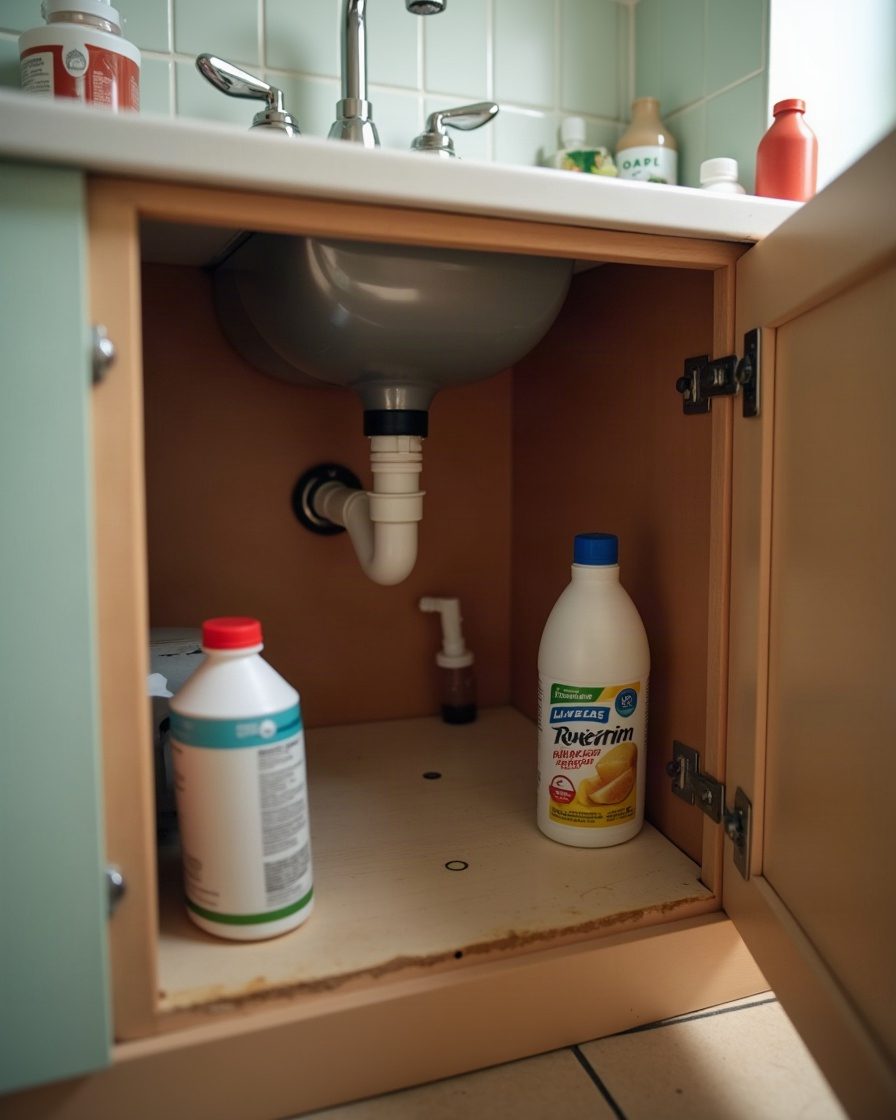
What works: gel bait placed in the harbourage rather than sprayed around it, sustained over weeks so that successive hatches are covered; removing water, which is the tighter constraint for them than food; sealing the harbourage gaps once the population is down; and, in a shared building, dealing with it as a building rather than a flat, because the population is almost certainly moving between units.
Common questions
I smell it but have never seen one. Entirely normal. They are nocturnal and stay hidden; by the time insects are visible in daylight the population is large.
The smell is in a room with no food. Warmth and water are enough. A cupboard with a boiler or pipework qualifies.
It got stronger after treatment. Disturbance and dead insects both contribute briefly. Persisting for weeks means the treatment has not reached the harbourage.
Can I mask it? Not usefully, and the smell is the most useful direction finder available. Use it before removing it.
The bottom line
Musty and oily with a faint sweetness means an established population that has been marking a harbourage for some time. Do not mask it: walk the room, find where it is strongest, get low, and look for dark ridged specks in the corners nearby. The smell will take you to the place that matters, which is the one thing droppings on an open shelf will not.