Height narrows it first. Small yellow or brown spots high on a wall or ceiling come from flies, or from stink bugs and lady beetles releasing a defensive secretion. Dark greasy bands low down at gaps and corners are rub marks from a rodent using the same route nightly. Small dark dots that bleed rusty brown into a damp cloth are bed bug faecal marks, and they cluster near where people sleep.
- High and yellow: something that flies. Low and greasy: something that runs.
- The damp cloth test separates bed bug marking from every other dark speck.
- Rub marks are the most useful, because they map a route to an entry point.
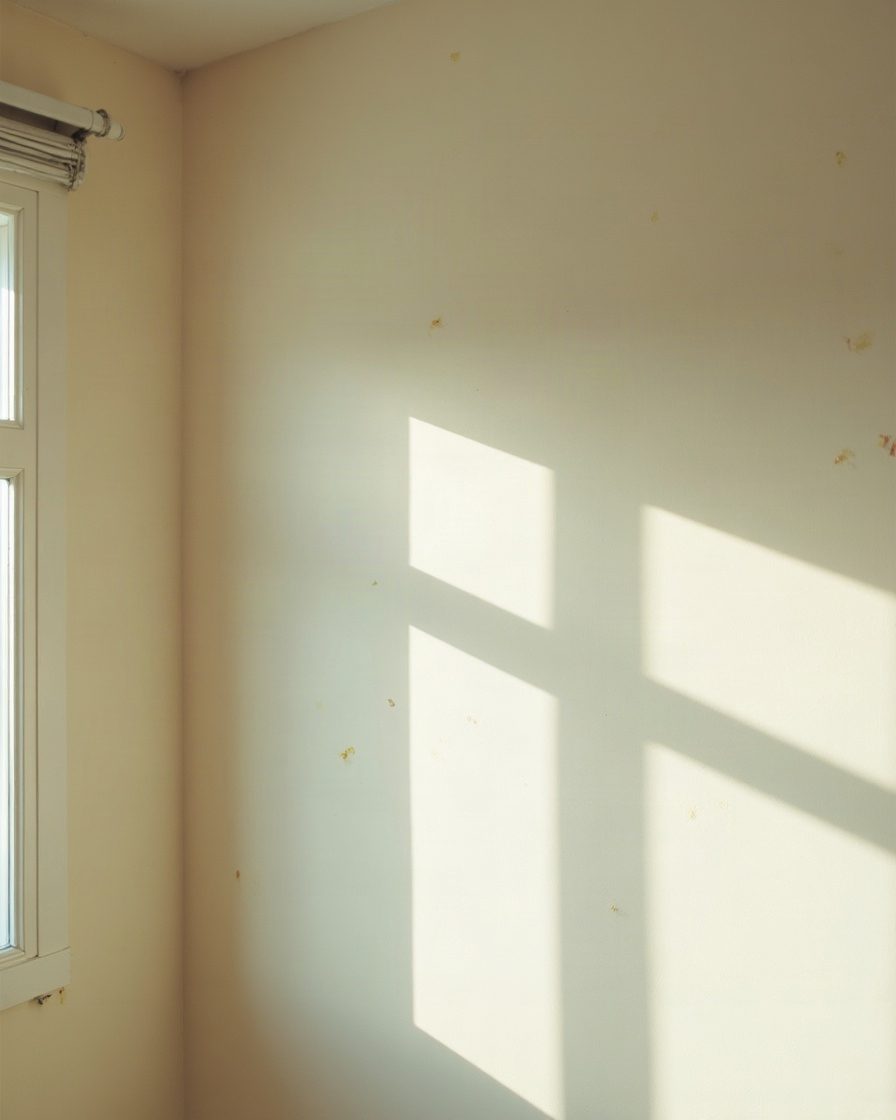
Marks on a wall are among the easier findings to read, because the position does most of the work before you get to the colour. Something has to be able to reach the spot, and very few things reach a ceiling.
High on the wall or on the ceiling
Small yellow, tan or dark brown spots, scattered. Fly specks. Houseflies and cluster flies deposit both regurgitated material and faeces where they rest, which is why the spotting concentrates around light fittings, on ceilings, near windows and on the tops of picture frames. It builds through a season and is a normal feature of a room with a fly population.
Yellowish or orange staining, seasonally, with an acrid smell. Stink bugs and lady beetles that have come indoors to overwinter release a defensive secretion when crushed or disturbed, and it stains porous surfaces. This is an autumn and spring finding, associated with clustering on sunlit walls outside first. See bugs clustering on outside walls.
Small dark specks around a light fitting. Also flies, in most cases, drawn to the fitting at night.
Cleaning aside, none of these is a structural or health matter. What they indicate is a population of flying insects with a way in, and the fix is at the window and the door rather than on the wall. Bugs attracted to light at night covers the lighting side.
Low down, at gaps and corners
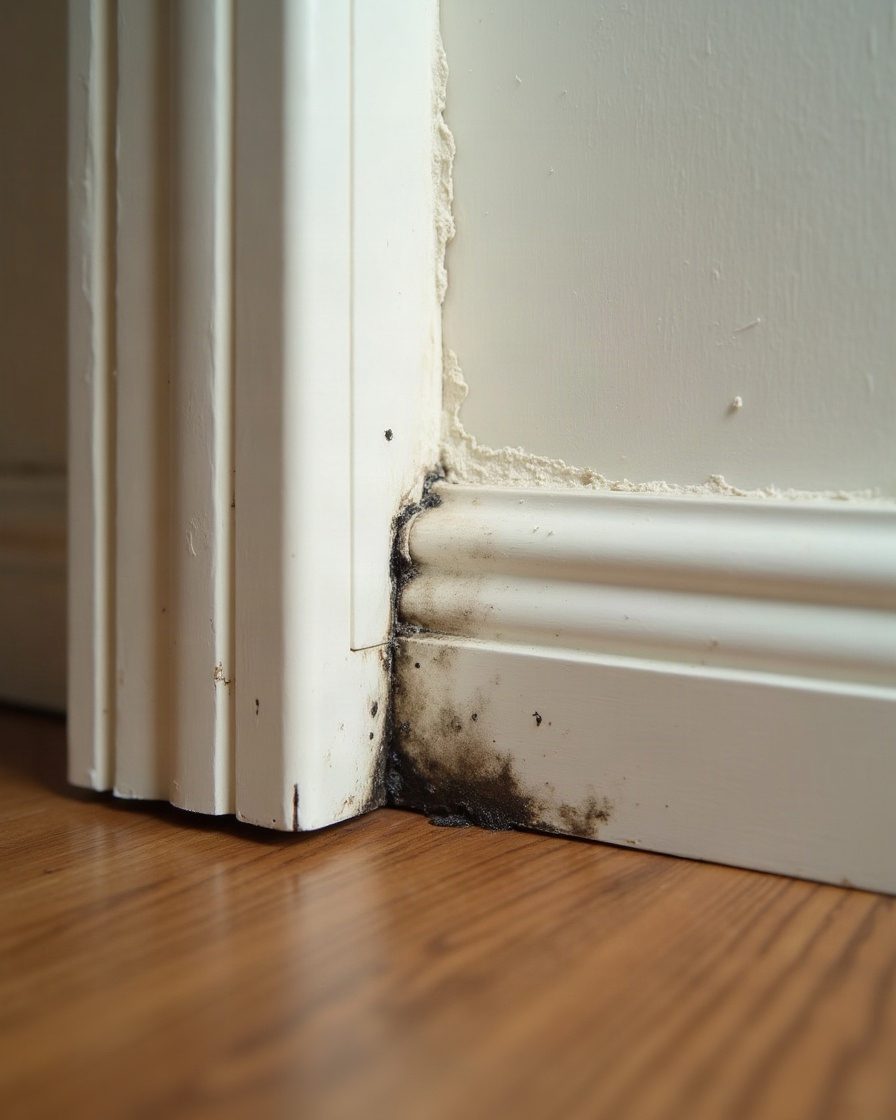
Dark, greasy, smudged bands along a skirting board, around a hole, at the corner of a doorway or under a gap. Rub marks, made by a rodent whose fur oils transfer to a surface it brushes past repeatedly.
These are the most useful marks in this article, because they are a map. Rodents travel the same routes nightly with one flank against a surface, so a rub mark identifies a runway, and following it in both directions finds the entry and the harbourage. UC IPM’s guide to the house mouse covers the behaviour, and greasy rub marks along skirting boards covers reading them.
A rub mark at a pinch point, such as where a pipe passes through a wall, is particularly informative because it confirms the opening is in use.
Near a bed
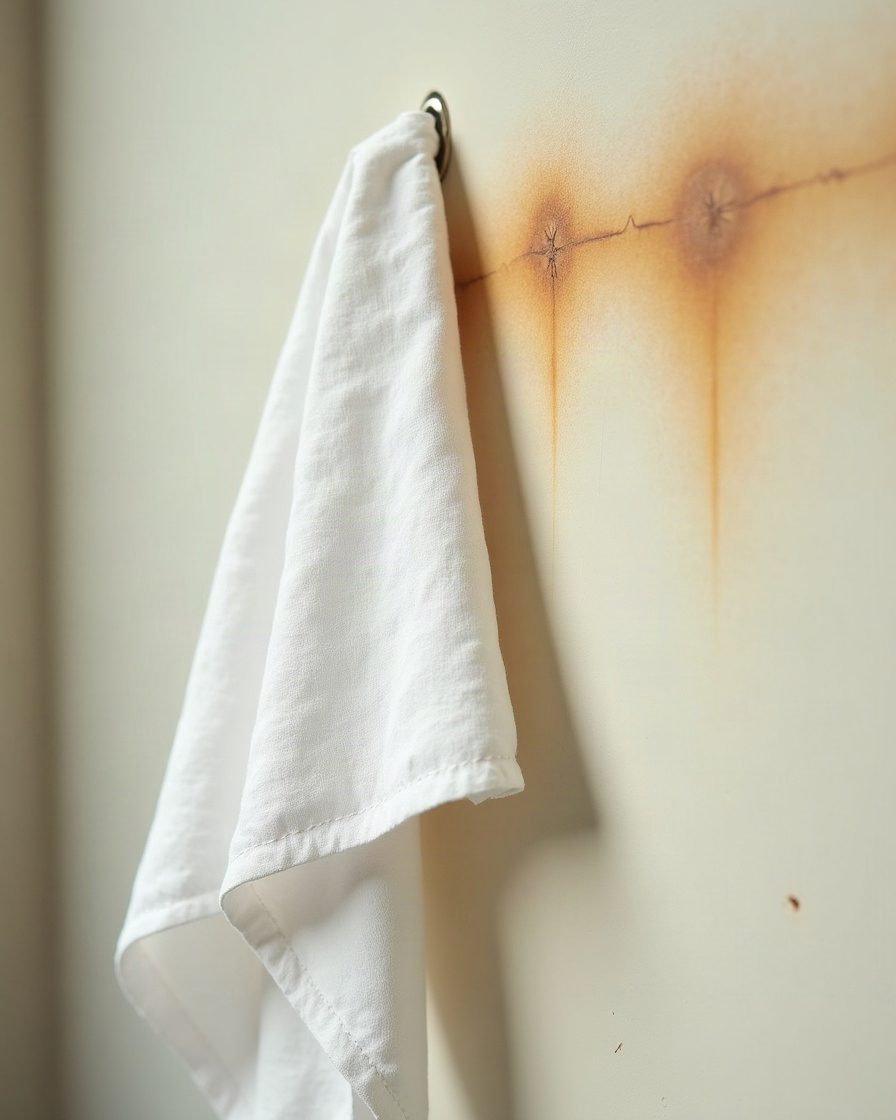
Small dark dots, 1 to 3 mm, on a wall close to a headboard or at a skirting joint by the bed. Bed bug faecal marks. These are digested blood, so they behave like ink, and the test is the same one used on a mattress: press a damp white cloth against the dot and look for a rusty brown halo bleeding outward.
Nothing else on this page does that. UC IPM’s guide to bed bugs covers the inspection, and bed bug droppings on a mattress covers the search that should follow. Marks on a wall rather than on bedding usually indicate a harbourage behind the headboard or in the wall itself.
Marks that are not insects
Worth ruling out, because they are common.
Mould. Grey, green or black, spreading rather than spotted, usually on a cold external wall or behind furniture, and it comes with a musty smell. See a musty smell in the house.
Ghosting. Fine dark lines following the studs, joists or fixings behind plasterboard, caused by dust and soot deposition on the cooler strips. It is thermal, not biological, and it is very often mistaken for something living.
Nicotine and cooking residue, which yellow a whole surface rather than spotting it.
Water staining, with a defined tide line and usually a brownish edge.
The distinction that does most of the work: insects leave discrete marks; damp and thermal effects produce continuous or gradient staining.
Cleaning them
Fly specks come off most painted surfaces with warm water and a mild detergent. They are acidic and can etch a surface if left for years.
Stink bug and lady beetle staining is difficult on porous surfaces and sometimes permanent. It is a reason not to crush or vacuum them against a wall, and to sweep them into a container instead.
Rub marks need degreasing, and they will return if the animal is still using the route, so cleaning them is also the test for whether it still is. Clear one, note the date, look in a week.
Bed bug marks should be photographed before cleaning, since they are evidence, and they often will not come out of paint entirely.
Common questions
Spots appeared over one summer. Almost certainly flies. Look at the window seals and the door.
The marks are only in one room. Consistent with a localised source: a runway, a harbourage, or a window that gets left open.
They come back after painting. Rub marks will, if the route is still in use. Fly specks will, if the flies are still getting in.
Could it be spiders? Spider droppings occur and appear as small dark or white splashes below a web, but they are far less common as a wall-marking complaint than the three above.
The bottom line
Start with how high the mark is. Ceiling and upper wall means something that flies, and the answer is usually fly specks or an overwintering cluster. Skirting level and greasy means a rodent runway worth following. And any dark speck near a bed gets the damp cloth test, because that one changes what you do next.