Bed bug droppings are digested blood, not solid pellets, so they behave like ink. Press a damp white cloth against a suspect dot and it bleeds outward into a rusty brown halo. Nothing else on a mattress does that. They appear as dots 1 to 3 mm across, clustered along piped seams, in frame joints and around screw holes, because that is where the insects rest between feeds rather than where they feed.
- The smear test settles it. Rusty brown bleeding means digested blood.
- Search the seam and the frame, not the sheet. Fabric surfaces hold almost nothing.
- Shed skins beside the dots confirm a breeding population rather than a single hitchhiker.

Most people looking for bed bug evidence look in the wrong place, which is why they find nothing and remain worried. The insects do not live on the sheet, or in the open weave of a mattress panel, or anywhere that gets moved and washed. They live in tight, dark crevices near the bed and come out to feed, and the droppings accumulate where they rest.
What they look like
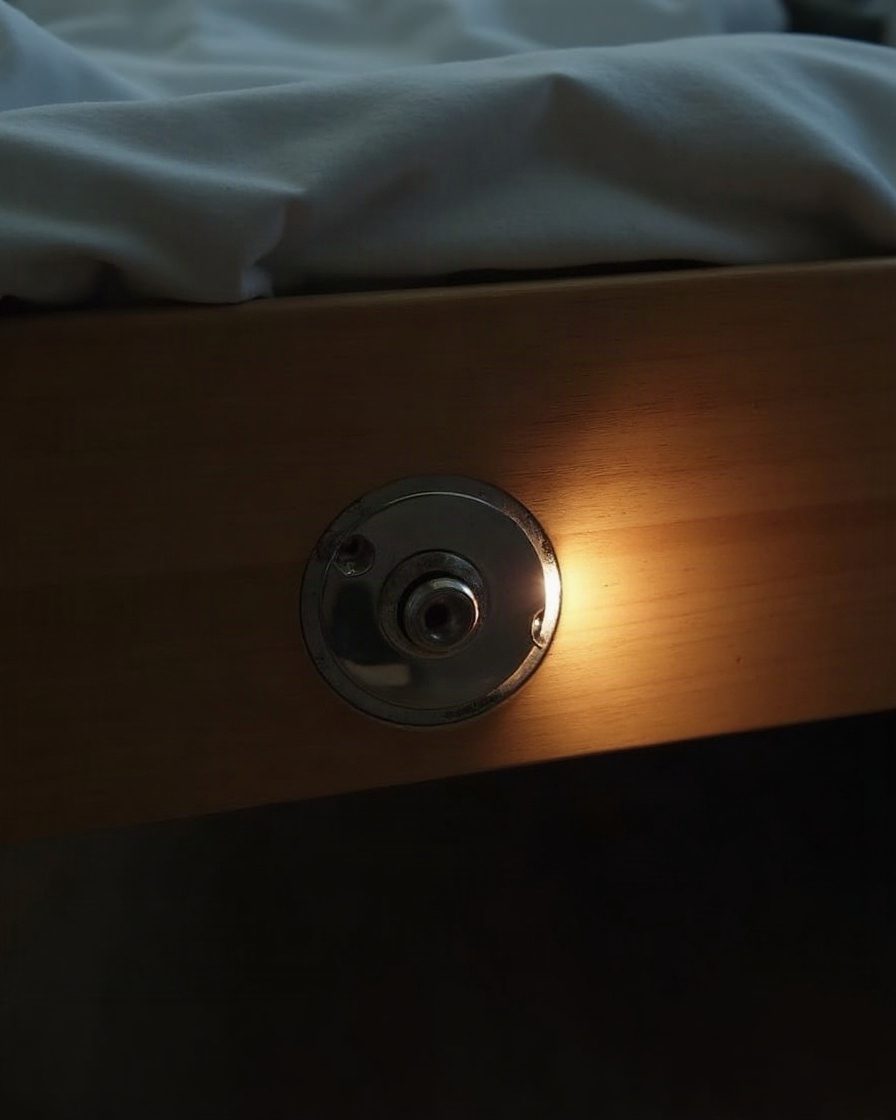
Small dots, roughly 1 to 3 mm across, dark brown to black. On a pale surface they read as ink dots. On a textured or dark surface they are easy to miss entirely, which is why a torch held at a low angle is worth more than an overhead light.
Fresh deposits sit slightly proud of the surface. Older ones have soaked in and flattened.
The important structural point: this is excreted digested blood, largely liquid when produced. On a hard surface it dries into a small dark dot. On fabric it soaks in and spreads slightly, so the edge is soft rather than crisp.
The smear test
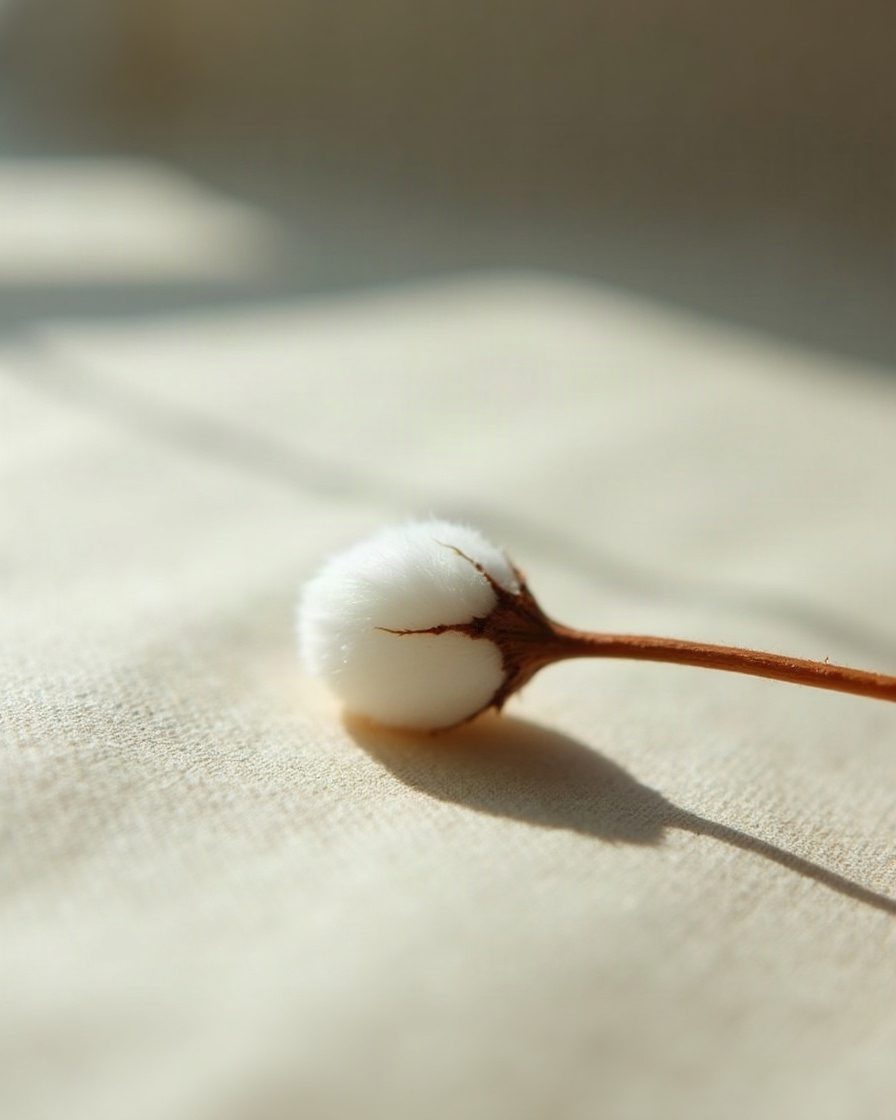
Take a white cotton bud or a piece of white cloth, dampen it slightly, and press it against a suspect dot for a second or two.
Bed bug droppings dissolve and bleed into the damp cloth as a rusty, reddish brown halo. The colour is the clue: not black, not grey, but the brown of dried blood.
Dirt, crumbs, mould specks and ordinary black grit do not. They either stay put or come away as a solid particle.
This is the single most useful test on the subject and it takes seconds. UC IPM’s guide to bed bugs covers the wider inspection method that this fits into.
Where to look, in order
The search matters more than the identification, because a negative result in the wrong place means nothing.
1. The piped seam of the mattress, along all four sides, top and bottom. Run a torch along it and open the piping slightly with a fingernail.
2. The box spring or divan base, especially the underside and the stapled dust cover. This is frequently more productive than the mattress.
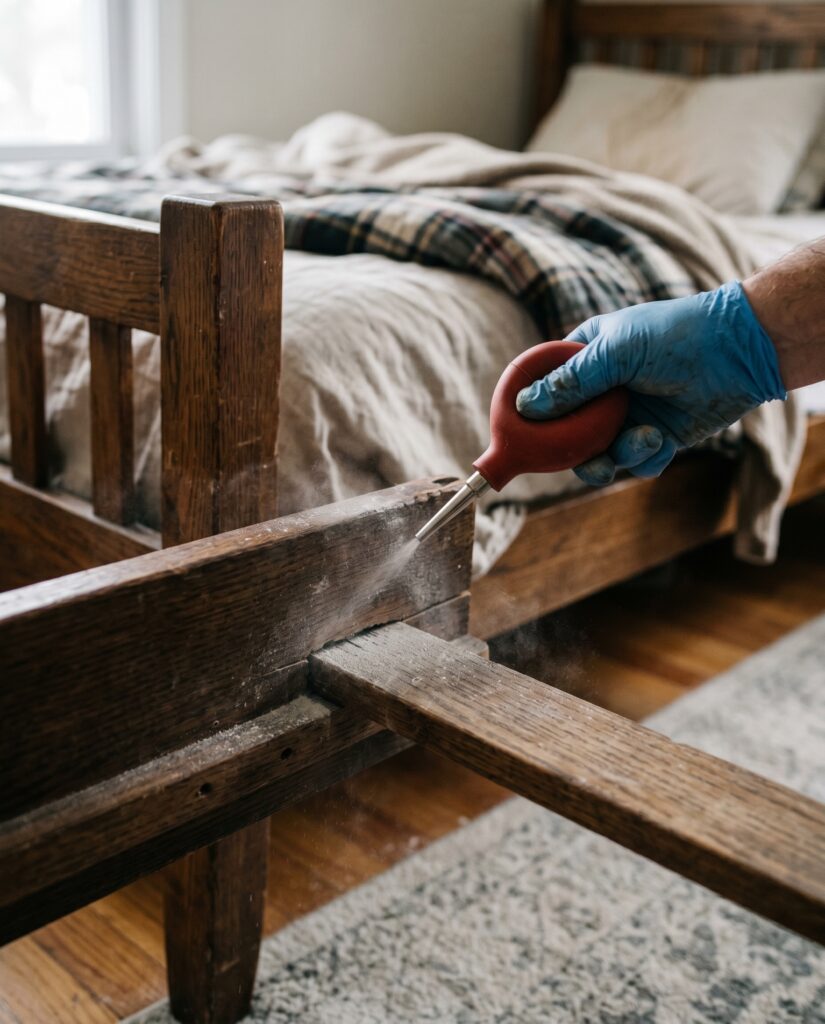
3. The bed frame, at every joint, screw hole and recess. Wooden frames with bolt holes are the classic harbourage.
4. The headboard, and behind it where it meets the wall.
5. Within a couple of metres of the bed: a bedside table’s drawer runners, a skirting board joint, the edge of a carpet, a picture frame back.
Alongside the dots you may find pale amber shed skins, which look like empty insects, and in a heavier infestation a distinctive sweetish, musty smell. Shed skins are the more valuable finding because they prove the population is breeding rather than a single introduced insect.
Our guide to tiny black specks and what they turn out to be covers the other candidates, the droppings identification chart places them by size, and bugs that look like bed bugs covers the insects that get mistaken for them.
What the droppings do not tell you
They do not date the infestation reliably. A dot soaked into fabric looks much the same after a month as after a year.
They do not indicate numbers. A cluster of dots on one seam is normal for a small population resting in one place.
They are not the reason to act. Bites are not either, since reactions vary enormously and many people show none. The finding that matters is live insects, eggs or shed skins, because those establish that something is currently living there. The University of Kentucky’s guide to bed bugs is direct about that distinction.
If you have bites and no physical evidence, bed bug bites compared with flea and mosquito bites covers what the pattern can and cannot tell you, which is less than most people hope.
What to do once you have found them
Two things not to do first, because both make the problem harder.
Do not start throwing furniture out. Discarding a mattress before treatment moves the problem rather than solving it, and often spreads it through a building on the way to the skip.
Do not spray a consumer aerosol into the harbourage. Repellent products scatter a localised population into wall voids and adjacent rooms, which converts a bedroom problem into a flat problem.
What does help immediately: strip the bed and wash and tumble dry the bedding on the hottest setting the fabric allows, since heat kills all life stages. Vacuum the seams and frame joints thoroughly, then seal and dispose of the vacuum contents outside the building. Fit a properly rated mattress and base encasement, which traps anything already inside and makes future inspection trivial. Then get a professional assessment, because this is one of the few household pests where amateur treatment reliably underperforms.
Common questions
The dots are on the wall, not the bed. That happens, usually near a bed head or at a skirting joint, and it suggests a harbourage in the wall or behind the headboard rather than in the mattress.
Can I get them from a dot? No. Droppings are not a route of transmission, and bed bugs are not known to transmit disease to people.
I found dots but no insects. Search harder in the frame and base before concluding anything; the insects are small, flat and good at not being found. Shed skins are easier to spot than live bugs.
Will washing the mattress remove the evidence? It will remove the stains, which destroys the record before you have used it. Photograph first.
The bottom line
Damp cloth, press, look for a rusty brown bleed. If it bleeds, search the seam, the base and the frame joints rather than the sheets, and look for shed skins to establish whether anything is currently breeding. Then stop, resist the urge to spray or discard, and get a proper assessment, because the common first responses to this particular pest are the ones that make it spread.