
Specks are better evidence than a glimpse of an insect, because they stay put and they come in recognisable kinds. Four cover almost every case: droppings, frass from wood, shed skins, and dead insects or ordinary dirt. Where they are and whether they smear when wet tells you which, and the answer names the pest without your ever seeing it.
- Smears reddish brown when damp: bed bug spotting. Check the mattress seams before anything else.
- Hard, ridged, grain-of-rice sized: mouse droppings, and they need care rather than a dustpan.
- Gritty and sawdust-like below timber: frass from a wood-boring insect, which is a building question.
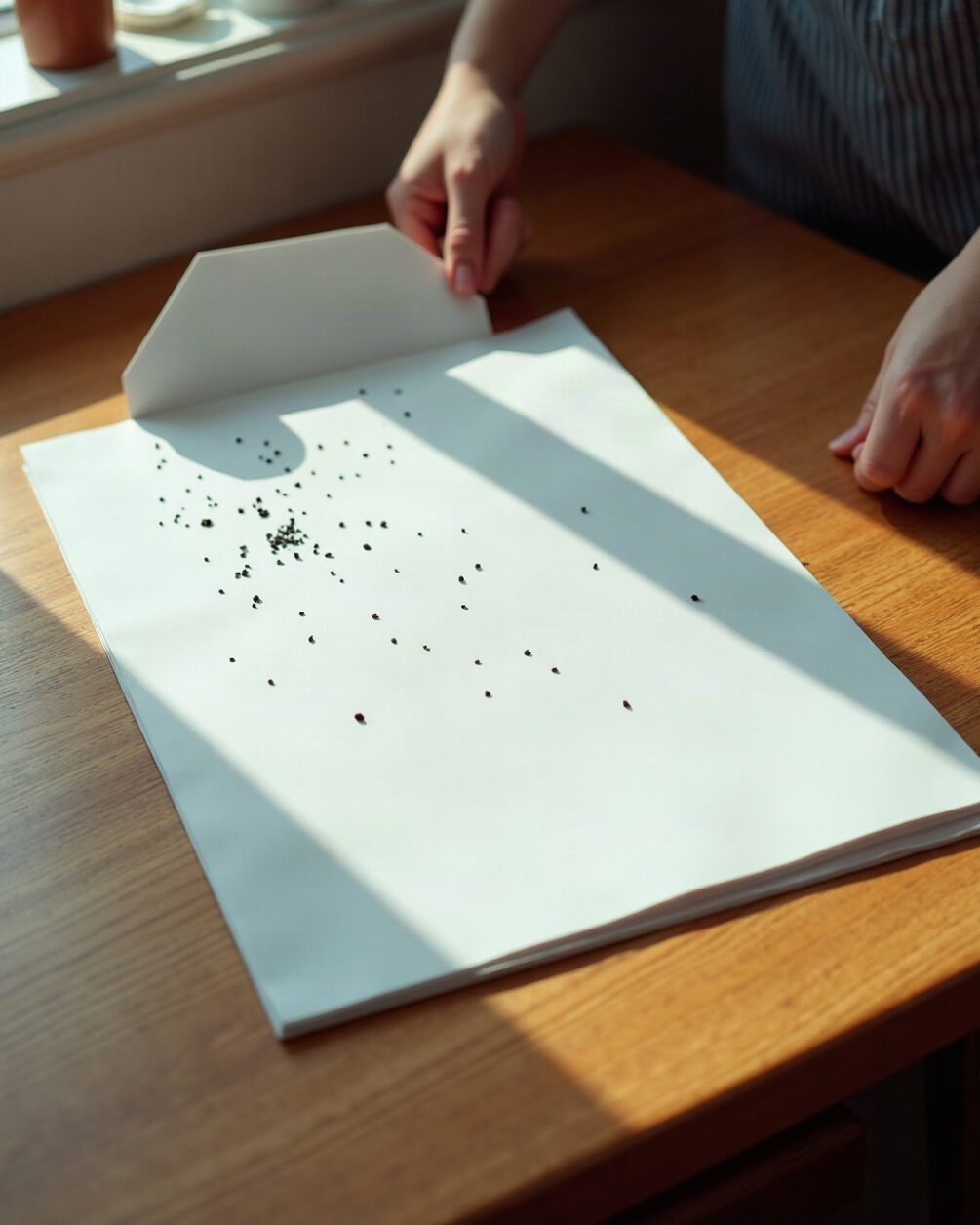
Most people arrive here having found something and not an insect, which is usually the better position to be in. A sighting lasts a second and is remembered badly. Specks stay where they are, can be photographed properly, and each kind carries information a glimpse never does.
Tip them onto white paper first. Scale, shape and colour all become obvious against white, and a phone in macro mode will resolve far more than the eye does.
The four kinds
| What it looks like | What it is | Where you find it |
|---|---|---|
| Dark marks that bleed into fabric | Bed bug spotting | Mattress seams, frame joints, headboard |
| Hard pellets, pointed ends, 3 to 6 mm | Mouse droppings | Cupboards, along walls, behind appliances |
| Fine dark grit, pepper-like | Cockroach droppings | Drawer corners, behind the fridge, under the sink |
| Sawdust or coffee-ground texture | Frass from wood borers | Below beams, window frames, skirting |
| Empty husks holding an insect shape | Shed skins | Anywhere the population lives |
| Whole insects, legs visible | Dead arrivals | Windowsills, light fittings |
Bed bug spotting, the one to rule out first
This is the kind people most want to exclude, and it has a specific appearance. Small dark marks that look like a marker pen dot bleeding slightly into the weave, concentrated in tight lines along mattress piping, seam stitching, frame joints and the back of a headboard. Damp a cotton bud and touch one: bed bug spotting smears reddish brown, because it is digested blood.
Kentucky describes bed bugs hiding in seams, folds and crevices near where people sleep, and the location discipline is part of the evidence. Spotting scattered around a room, in a kitchen, or on a windowsill is almost certainly something else.
Alongside spotting you would expect shed tan skins, because bed bugs moult five times. Our inspection guide walks the search in order, and if you have also found a dark insect and are not sure, the look-alike guide covers the six impostors.
Droppings, and how to tell mouse from cockroach
These two get confused constantly and they mean different things.
Mouse droppings are three to six millimetres, hard, dark, and pointed at one or both ends, roughly the size and shape of a grain of rice. They turn up along walls, in the backs of cupboards, in drawers and behind appliances, and they are usually accompanied by gnaw marks or shredded nesting material.
They matter for a reason beyond the pest: rodent droppings can carry pathogens, so do not sweep or vacuum them dry, which puts particles into the air. Damp them first, and use gloves. Our guide to identifying mouse droppings covers the cleanup properly, and the wider signs of mice covers what else to look for.
Cockroach droppings are much smaller: fine dark specks like ground pepper or coffee, sometimes with faint ridges on larger species, and they accumulate in corners rather than trails. Concentrations behind a fridge, under a sink or in the corners of a drawer are the classic finding. Kentucky notes that German cockroaches shelter in cracks and crevices near warmth and food, which is exactly where the specks build up. Our species guide matters here, because the approach differs between a German cockroach breeding indoors and a large outdoor species that came up a drain.
Frass, which is a building question
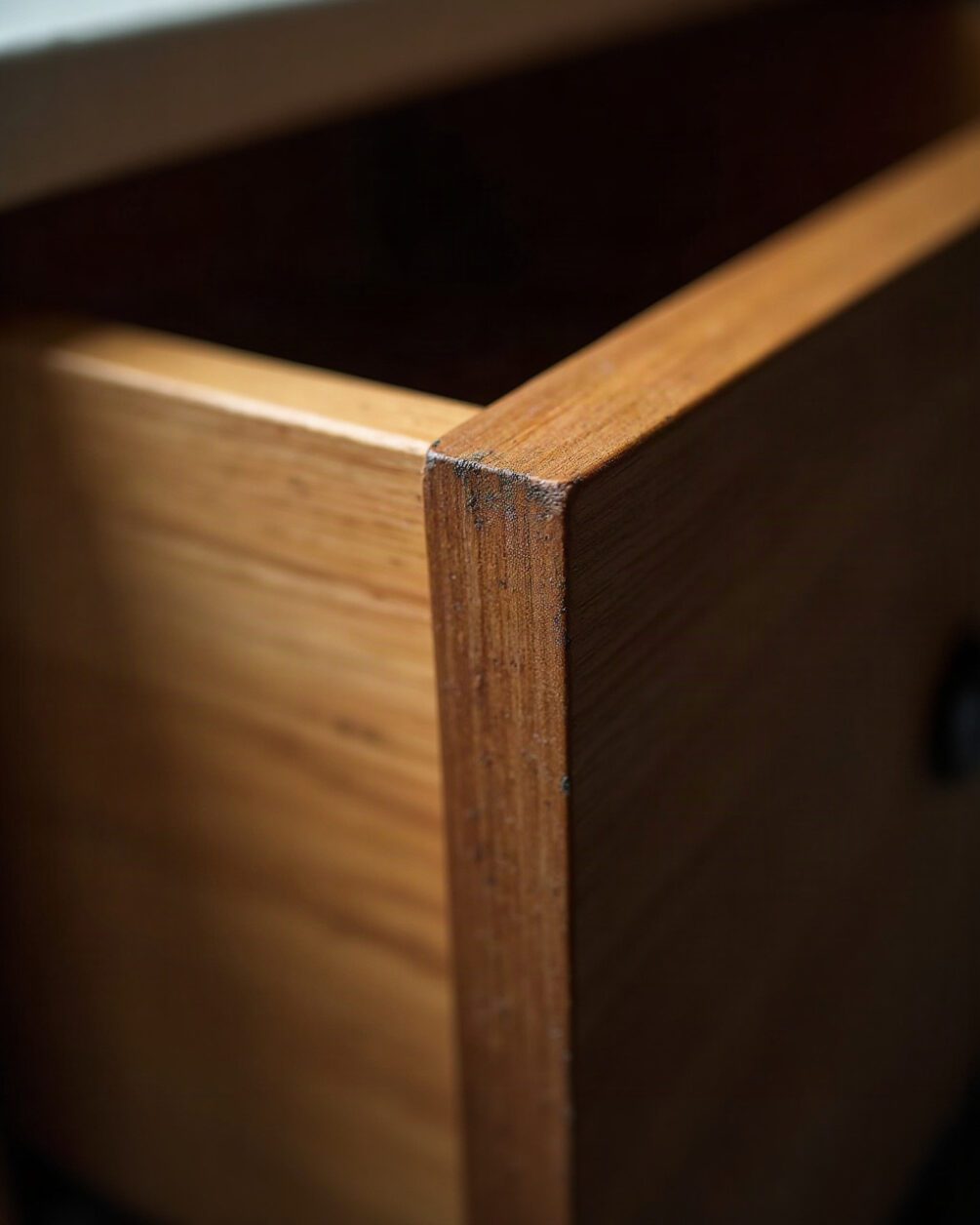
Frass is the debris a wood-boring insect pushes out of its galleries, and it is the one kind of speck that points at the structure rather than at hygiene.
Coarse shavings that look like pencil sharpenings, often mixed with insect fragments, sitting below a beam, a window frame or a skirting board, point at carpenter ants. They do not eat wood, they excavate it, and they prefer timber that is already damp, so it is a moisture signal too.
Very fine flour-like dust with small round exit holes points at powderpost beetles instead. Our powderpost beetle versus termite guide covers the distinction, which is worth getting right because the treatments differ.
Soil-like packed material in galleries, and no clean shavings at all, is more consistent with termites, which pack rather than eject. Our guide to termite signs covers the rest of the evidence, and finding it is a reason for a professional inspection rather than a product.
Shed skins, and why they matter
Insects that moult leave the previous shell behind, holding the shape of the animal but empty and usually translucent or tan rather than black.
Bed bug skins are apple-pip shaped and appear alongside spotting. Carpet beetle larval skins are bristly husks, often more numerous than the live larvae, and Kentucky notes the larvae feed on wool, fur and feathers, so they collect at carpet edges, in wardrobes and under heavy furniture. Cockroach skins are pale and papery and turn up in the same crevices as the droppings.
Skins are useful evidence because they persist. A population can be small and hard to see while its history is written in husks along a skirting board.

When it is just dirt
A fair share of these searches end here, and there is nothing embarrassing about it. Soot from a candle, coffee grounds, poppy seeds, dried soil from a plant pot, fibres from a dark rug, and toner dust all get photographed for identification.
Two checks separate debris from evidence. Under a phone camera in macro mode, insect droppings show consistent size and shape while dirt does not. And replenishment: clear the surface completely, then look again in three or four days. Something that comes back in the same place is a population. Something that does not was a one-off spill.
Common questions
They are on the windowsill. What does that mean?
Usually less than people fear. Sills accumulate dead insects that moved toward light, so they hold a record of what has been in the room rather than what lives there. Our guide to bugs that play dead covers the test that tells you whether they are even dead.
Should I keep a sample?
Yes, if you are going to ask anyone. Clear tape on white paper, or a sealed bag, with a note of where and when. It is worth far more than a description.
Nothing smears and nothing repeats. Now what?
Then it was debris. Clean it and stop looking. Not every speck is a pest, and hunting one that is not there costs more than it saves.
Final verdict
Tip them onto white paper and ask three questions. Do they smear reddish brown when damp, which means bed bug spotting and a mattress seam to inspect. Are they hard pellets the size of a rice grain, which means mice and a cleanup that needs damping down first. Are they gritty and sitting below timber, which means frass and a building to look at rather than a cupboard. If none of the three fits and the specks do not come back after cleaning, they were dirt.
Pingback: Bugs Behind the Fridge: Why That Spot Specifically
Pingback: Carpet Beetle Larvae: What They Look Like and Where
Pingback: Bed Bug Droppings: The Black Dots on a Mattress Seam
Pingback: Droppings in Kitchen Cupboards: What Left Them