
You pulled out the toaster, or opened the cabinet under the sink, and there they were: small dark specks scattered along the back edge. Before you grab the vacuum, stop. Those droppings are the most reliable clue you have about what animal is in your house, how active it is, and where it travels, and the worst thing you can do is sweep or vacuum them up dry. Here is how to read them, then how to clean them up safely, in that order.
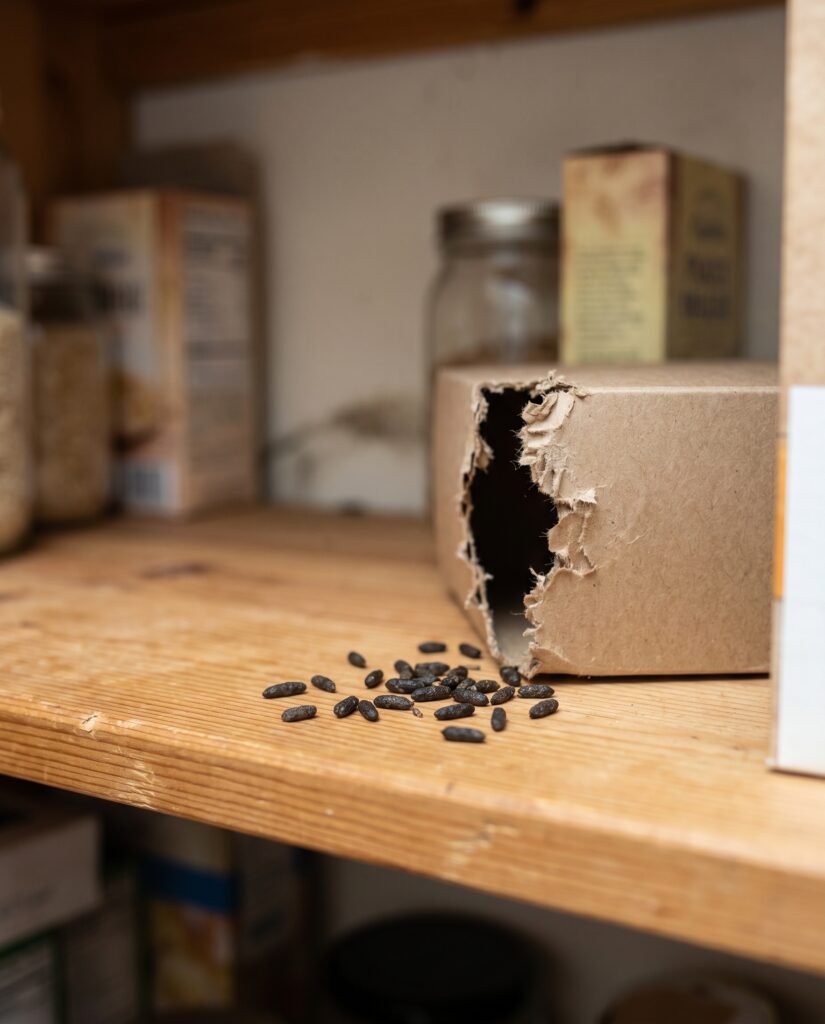
Mouse droppings are dark, rice-grain-sized pellets, about a quarter inch long with pointed ends, scattered along walls, in cabinets, and near food. Never sweep or vacuum them dry, because that can put dust from droppings and urine into the air.
- Identify first: Quarter-inch pellets with pointed tips mean mouse; blunt pellets over half an inch mean rat; crumbly pellets full of shiny insect bits mean bat; tiny ridged specks mean roach.
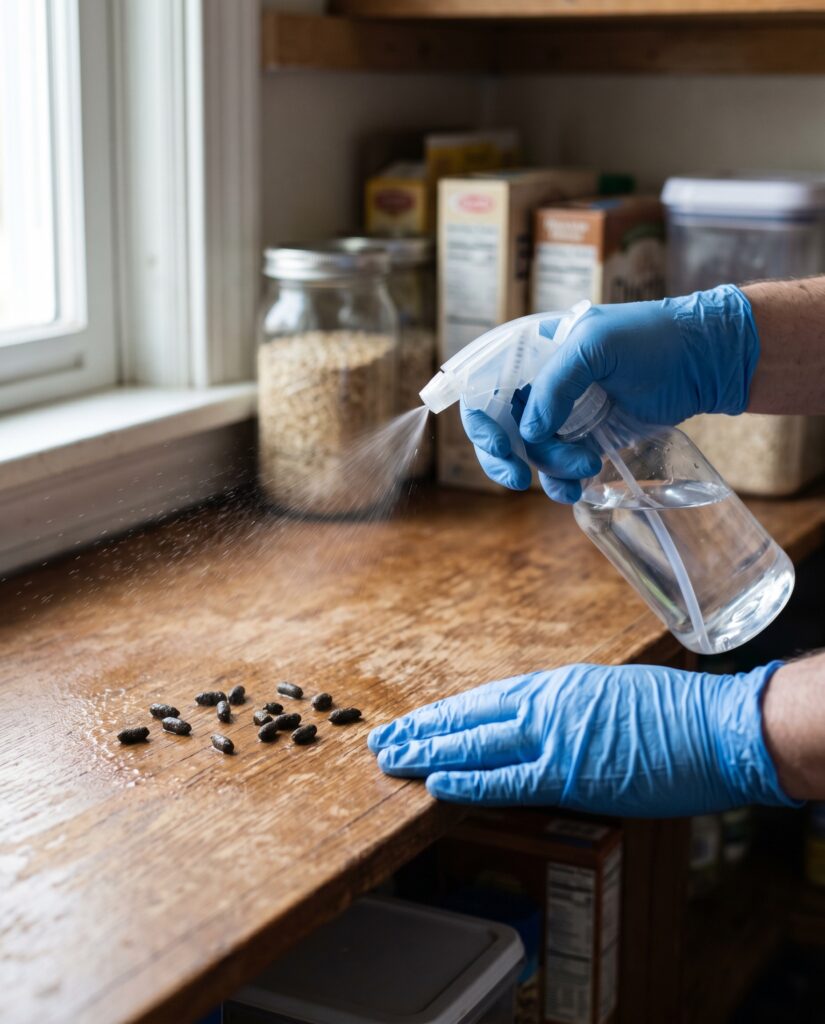
- Clean the safe way: Air out the room, put on gloves, soak the droppings with disinfectant for several minutes, then wipe up with paper towels and bag the waste.
- Then act: Fresh dark droppings mean an active mouse problem, so set traps along the walls and seal every gap wider than a pencil.
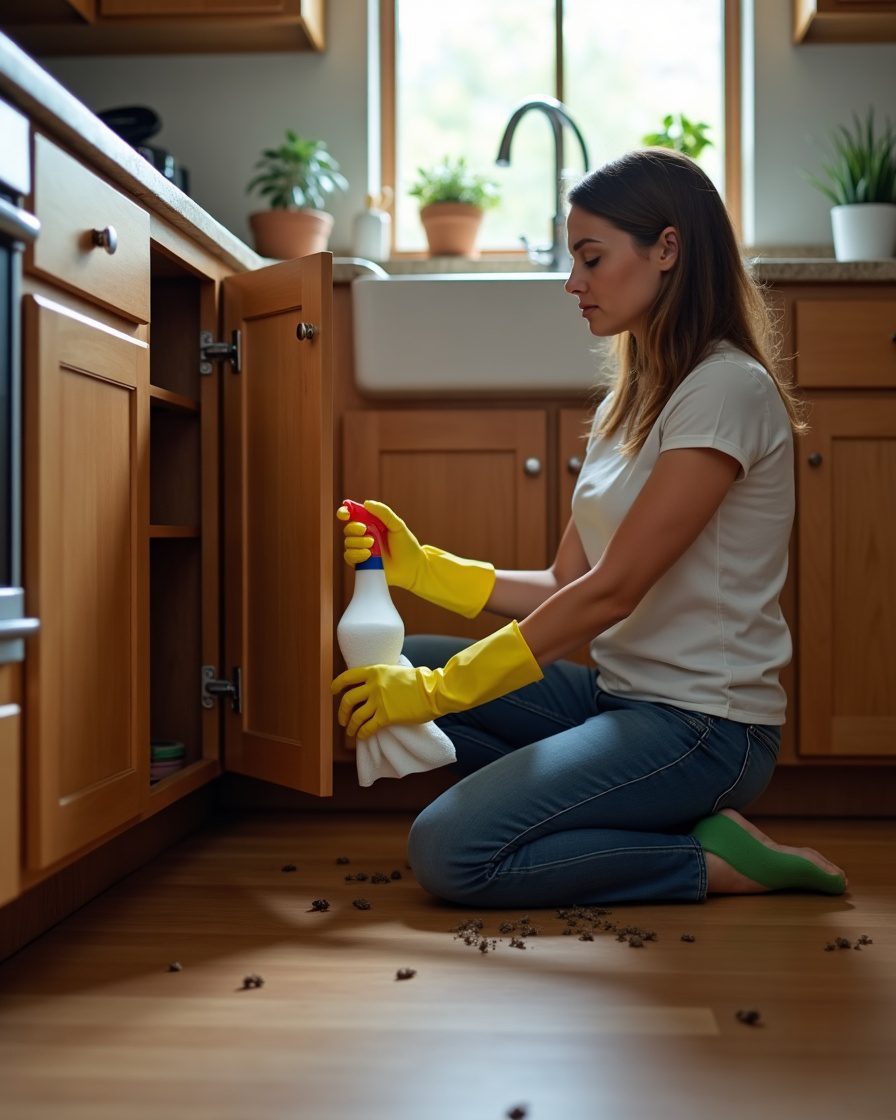
What mouse droppings look like
A mouse dropping is a small, dark pellet roughly the size and shape of a grain of rice: about a quarter inch long, tapered to a point at one or both ends, and dark brown to nearly black when fresh. You will rarely find just one. A single mouse produces dozens of pellets a day, so an active runway looks like a scatter, concentrated where the mouse feeds and travels.
Location is half the identification. Mice hug walls and edges when they move, so droppings pile up along baseboards, behind appliances, and inside cabinets and drawers, especially near food. The classic hot spots are the cabinet under the kitchen sink, the back of the pantry, the top of the water heater, and the garage wall behind stored boxes. Droppings tucked along an edge are the norm; pellets in the open middle of a floor are unusual.
Droppings almost never appear alone. The UC IPM Pest Note on house mice lists the full set of signs to check for together: droppings, fresh gnaw marks, tracks in dusty areas, nests made of finely shredded paper or other soft material, and a musky odor that builds up where mice have been living for a while. If you find pellets plus gnawed cardboard or that faint stale smell, you are not looking at a one-time visitor.
Mouse vs rat vs bat vs roach droppings
Most misidentifications happen between these four, and the fix is a size and texture check. A flashlight and a close look from a respectful distance will do it; you never need to handle anything to make the call.
| Dropping | Size and shape | Where you find it | Tell-tale detail |
|---|---|---|---|
| Mouse | About 1/4 inch, rod shaped, pointed ends | Along walls, in cabinets and drawers, near food | Many small pellets scattered along travel routes |
| Rat | 1/2 to 3/4 inch, thicker, blunt or banana shaped | Basements, crawl spaces, along foundations | Fewer, larger pellets; often with heavy gnaw damage |
| Bat | Similar length to mouse but crumbly | Attics, under roost points, on windowsills below gaps | Crushes to powder full of shiny insect fragments |
| Cockroach | Much smaller specks or tiny cylinders | Kitchen cracks, hinges, behind appliances | Ridged sides on larger roach droppings; pepper-like specks from small ones |
The bat versus mouse call matters most, because the droppings look alike at a glance and the responses are completely different. Bat droppings pile up directly below a roost rather than scattering along a wall, and pressed with a stick they crumble into a sparkly powder of undigested insect wings and shells; a mouse pellet stays firm. If the evidence points to bats, or to squirrels or raccoons in an attic, stop there: those are wildlife, often legally protected, and the right move is a licensed wildlife control operator, not a hardware store trap.
Rat droppings shift the plan too, since rats need bigger openings and do more structural damage. And if the specks are tiny, ridged, and concentrated in warm kitchen cracks, you are dealing with roaches, a different playbook entirely; our guide to winter pest control for invading bugs covers the insect side of the cold-weather indoor migration.
Fresh or old: reading the age of droppings
Age tells you whether you have a mouse problem or a mouse history. Fresh droppings, deposited within the last few days, are dark, moist looking, and slightly soft, with a faint sheen. Old droppings turn gray, dry, and hard, and crumble if disturbed. A pile of gray, dusty pellets behind a long-untouched box may be evidence of an infestation that ended years ago.
There is a simple way to settle it. Clean up the droppings using the safe method below, then check the same spots after a day or two. New pellets on a cleaned surface mean active mice, full stop. No new pellets after a week or two means old evidence, and your job shifts from trapping to sealing the house so the next mouse cannot repeat history.
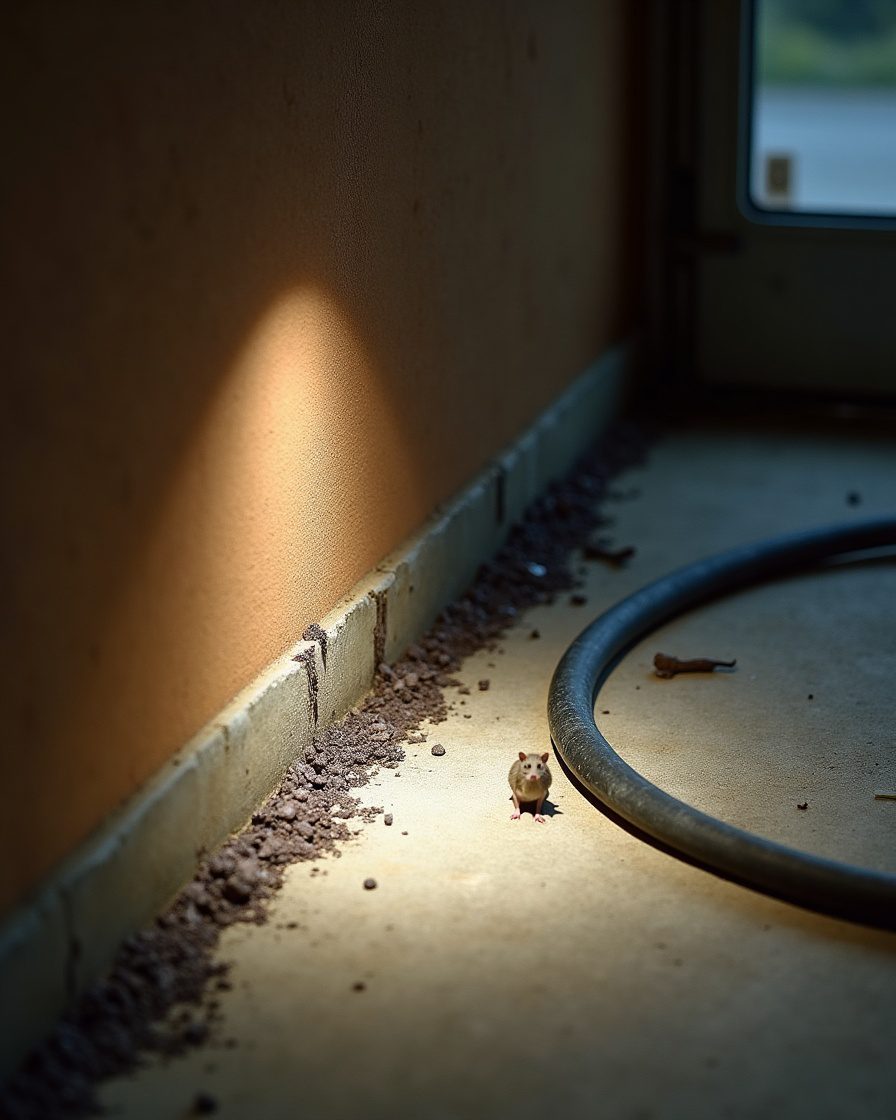
How to clean up mouse droppings safely
Here is the part too many articles bury: do not sweep or vacuum dry droppings. Rodent droppings and urine can carry pathogens, including hantaviruses in some regions, and the danger is stirring contaminated dust into breathable air. A broom or household vacuum does precisely that. The safe method, consistent with federal public-health and EPA guidance, is a wet cleanup, and it is simple enough to do right the first time.
Start by airing the space out: open windows and doors and leave the room for about 30 minutes. Then put on rubber, latex, or nitrile gloves. Spray the droppings and any urine stains thoroughly with a disinfectant or a bleach solution of about one part bleach to nine parts water, and let it soak for at least five minutes. The soak is the point: it keeps everything damp so nothing goes airborne when you pick it up. Wipe the droppings up with paper towels, bag the towels, then mop or sponge the whole area with more disinfectant. Seal the bag, put it in an outdoor trash can, and wash your hands well with soap and water when the gloves come off. Disinfectants are themselves regulated pesticides, so follow the label on the bottle; the EPA’s consumer guidance on safe pest control makes reading and following the label the first rule of using any product like this.
The same wet-first logic applies to a dead mouse in a trap. UC IPM’s advice is to avoid touching rodents with bare hands: use gloves to place the carcass and trap in a plastic bag, seal it, put it in the garbage, then wash your hands. For a large accumulation, think an attic floor or a shed that has hosted mice for years, the exposure math changes, and a professional crew with proper respiratory protection is the honest recommendation. If you develop a fever or breathing trouble in the weeks after heavy cleanup work, tell a clinician about the rodent exposure.
What the droppings tell you about the problem
Once identified, droppings become a map. The concentration marks the busiest routes: a heavy line of pellets along one wall says the mice travel there nightly, which is where control effort should go. Light droppings in several rooms suggest mice ranging for food; dense droppings plus shredded nesting material in one spot means the nest is close, often within a few feet.
Quantity is a rough activity meter. A single mouse leaves dozens of pellets a day, so a modest scatter can still be one animal, but droppings of visibly different sizes usually mean adults and juveniles together, a breeding population rather than a lone explorer. Mice breed quickly, so treat fresh evidence as a now problem: our walkthrough on how to get rid of mice takes you from this inspection step through trapping to an empty house.
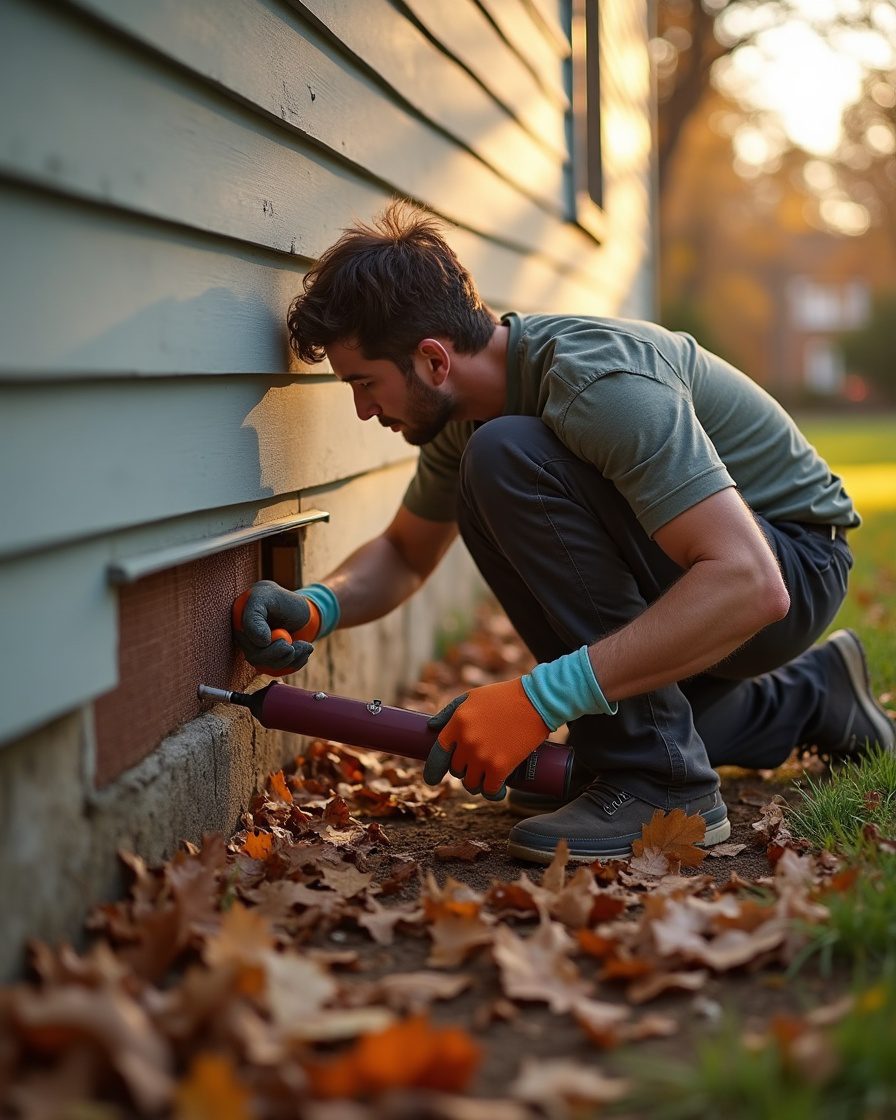
Next steps: traps first, then seal the house
Droppings told you where the mice run, so put that intelligence to work. Snap traps are the practical first tool, and placement matters more than brand: set them in the secluded areas the droppings marked, trigger end against the wall, and follow the UC IPM trapping guidance of spacing traps no more than about 10 feet apart in active areas. More traps on night one beats a few traps for a month, because mice grow wary.
Be careful with poison. Rodenticide baits are toxic by design, and the rules exist for good reasons: baits belong in tamper-resistant bait stations placed out of reach of children, pets, and wildlife, and a poisoned mouse that dies in a wall or gets eaten by an owl or the neighbor’s cat creates problems a snap trap never will. The EPA’s rodenticide program regulates how consumer bait products are sold and used precisely because of those risks, including secondary poisoning of wildlife and pets. For most households with a few mice, traps plus exclusion get the job done without bringing poison into the equation.
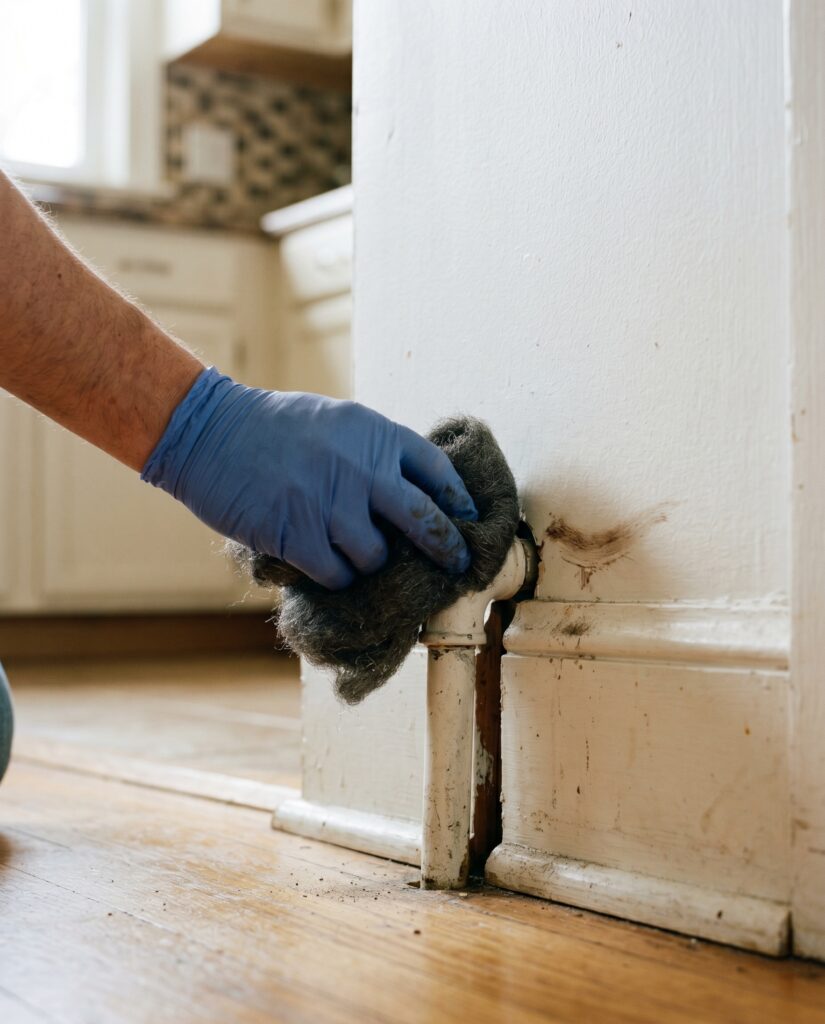
Exclusion is the permanent fix, and late summer is the deadline. As nights cool in early autumn, mice and a parade of insects start pressing into structures, which is why the University of Kentucky’s pest-proofing guide treats fall as the critical window for sealing work. The number to remember: a gap of just a quarter inch, the diameter of a pencil, is enough for a mouse. Check where pipes and wires enter the foundation and siding, around outdoor faucets, dryer vents, and gas meters, and at the bottom corners of doors, and close those routes with door sweeps, caulk, steel wool, or copper mesh stuffed into larger voids. Our dedicated guide to mouse-proofing your home works through the rodent-specific gaps, and the broader fall pest-proofing guide covers the same sweep for the insects that ride in on the same weather. If you want it as a weekend checklist, the step-by-step fall pest-proofing plan puts the tasks in order.
Sanitation closes the loop. Store pantry goods and pet food in sealed containers, sweep up crumbs, and clear the clutter that gives mice cover. A sealed house with nothing to eat is a house mice leave alone.
Common questions
How can I tell mouse droppings from rat droppings?
Size is the cleanest separator. Mouse droppings are about a quarter inch long, thin, and pointed at the ends; rat droppings run half an inch to three quarters of an inch, are noticeably thicker, and tend to have blunt or rounded ends. Rats also leave fewer pellets in any one spot, along with heavier gnaw damage.
Are mouse droppings dangerous to touch or breathe?
Treat them as a health hazard, not a horror. Rodent droppings and urine can carry disease organisms, and the main risk is breathing dust stirred up from dry droppings. That is why the safe method is gloves, ventilation, and a disinfectant soak before wiping, and never dry sweeping or vacuuming. Wash your hands afterward even though you wore gloves.
Can I vacuum mouse droppings with a HEPA vacuum?
No. Even HEPA models can aerosolize contaminated dust through agitation, and the machine itself becomes contaminated. Wet-clean instead: disinfect, soak, and wipe with paper towels. Professionals doing large cleanups use industrial equipment and respiratory protection that home gear does not match.
How long do mouse droppings stay dangerous?
Risk drops as droppings age and dry, but there is no safe-after date to count on, and disturbing old dry droppings still raises dust. Handle them with the same wet method as fresh ones. The difference is diagnostic: gray, crumbly pellets suggest past activity, dark soft ones mean mice are active now.
I found droppings but never see a mouse. Do I still have a problem?
Probably, if the droppings are fresh. Mice are nocturnal and shy, so evidence shows up long before the animal does. Clean up, then recheck the spot for a few days: new pellets mean active mice, and it is time for traps along the walls and a sealing pass around the exterior.
The bottom line
Mouse droppings are quarter-inch, pointed, rice-shaped pellets scattered along walls and inside cabinets, and they are both a warning and a gift: they tell you what animal you have, how active it is, and where it travels. Confirm mouse rather than rat, bat, or roach before you act, and route anything that points to bats or other wildlife to a licensed professional. Clean up the safe way every time: ventilate, glove up, soak with disinfectant, wipe wet, bag it, and wash your hands, with no dry sweeping or vacuuming ever. Then use what the droppings taught you: snap traps along the marked runways, and every pencil-width gap in the shell of the house sealed before the cold pushes the next wave in.
If that is where this is heading, telling bat guano from mouse droppings covers the crush test that separates them.
This article is for information only and is not medical advice.
Pingback: Types of Rodents in the House: What Got In
Pingback: Insect and Pest Droppings: An Identification Chart
Pingback: Rat Droppings: Identification and Safe Cleanup