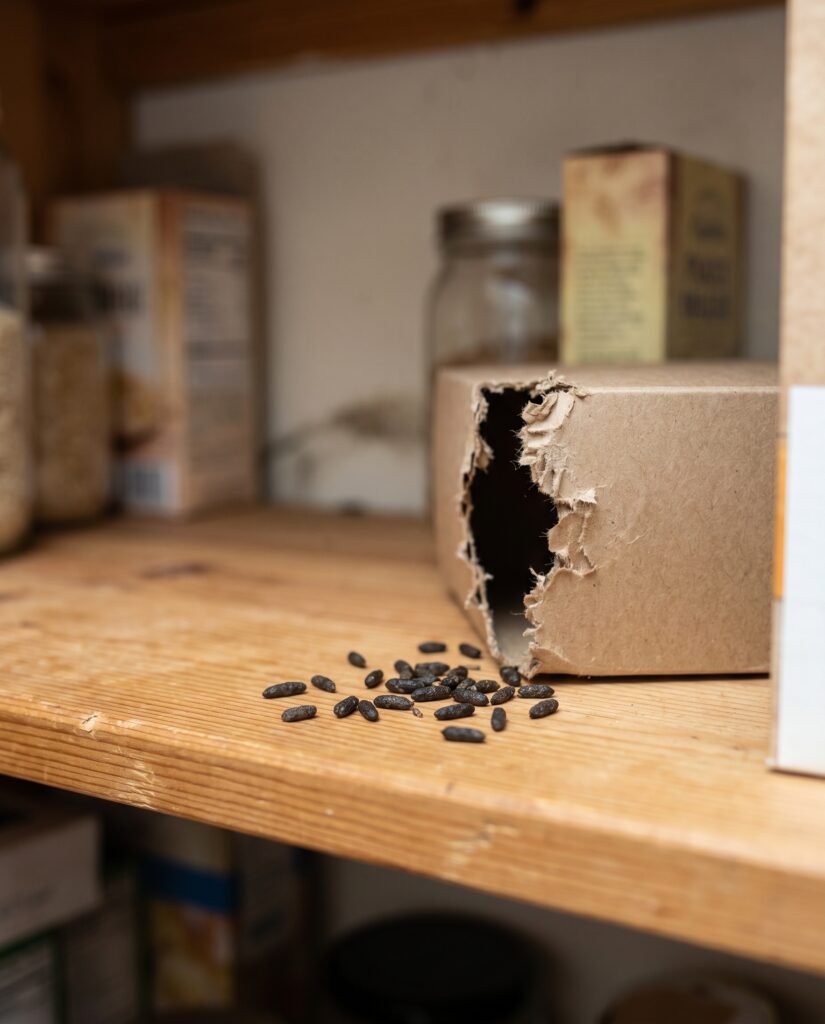
If you have mice, the first thing to understand is that trapping alone never wins. Mice breed faster than you can trap them, and as long as gaps stay open, new ones keep walking in to replace the ones you catch. The plan that actually clears them is a three-legged stool: seal every entry a mouse can use, cut off food and clutter so the house stops feeding them, and trap aggressively with many traps at once instead of one or two. Bait is an optional last resort, not step one. Do all three together or the problem just resets the week after you think you won.
No single trap gets rid of mice; doing three things at once does. Seal every gap wider than a pencil, remove the food and clutter feeding them, and set a dozen or more snap traps along the walls. Treat bait as a last resort, not the first move.
- Do first (free): Find and seal entry gaps with steel wool and caulk, then clean up food sources and clutter.
- Best for the common case: A dozen or more snap or electronic traps set against walls where you see droppings, baited and re-set daily.
- Skip: Ultrasonic repellers, which do not work, and glue boards, which are inhumane and catch fewer mice than snap traps.
Why trapping alone fails
People set two traps, catch a mouse, and assume they are done. Then the droppings come back, because catching a mouse does nothing about the open door it walked through or the open bag of rice it was eating. A house mouse can squeeze through a gap about the width of a pencil, roughly a quarter inch, so the building you think is sealed is full of highways you cannot see. As long as those highways are open and the kitchen is feeding them, the population refills.
The math is the other half of it. According to the UC IPM Pest Notes on house mice, a single female can produce several litters a year, and the young are ready to breed in a matter of weeks. That means a few mice become a colony fast, and removing a couple at a time barely dents the breeding rate. This is why a control plan has to hit all three levers together. Seal the gaps so no new mice get in, starve the ones already inside, and trap hard enough to drop the count faster than they can replace it. Skip any one leg and the stool falls over.
Find and seal every entry
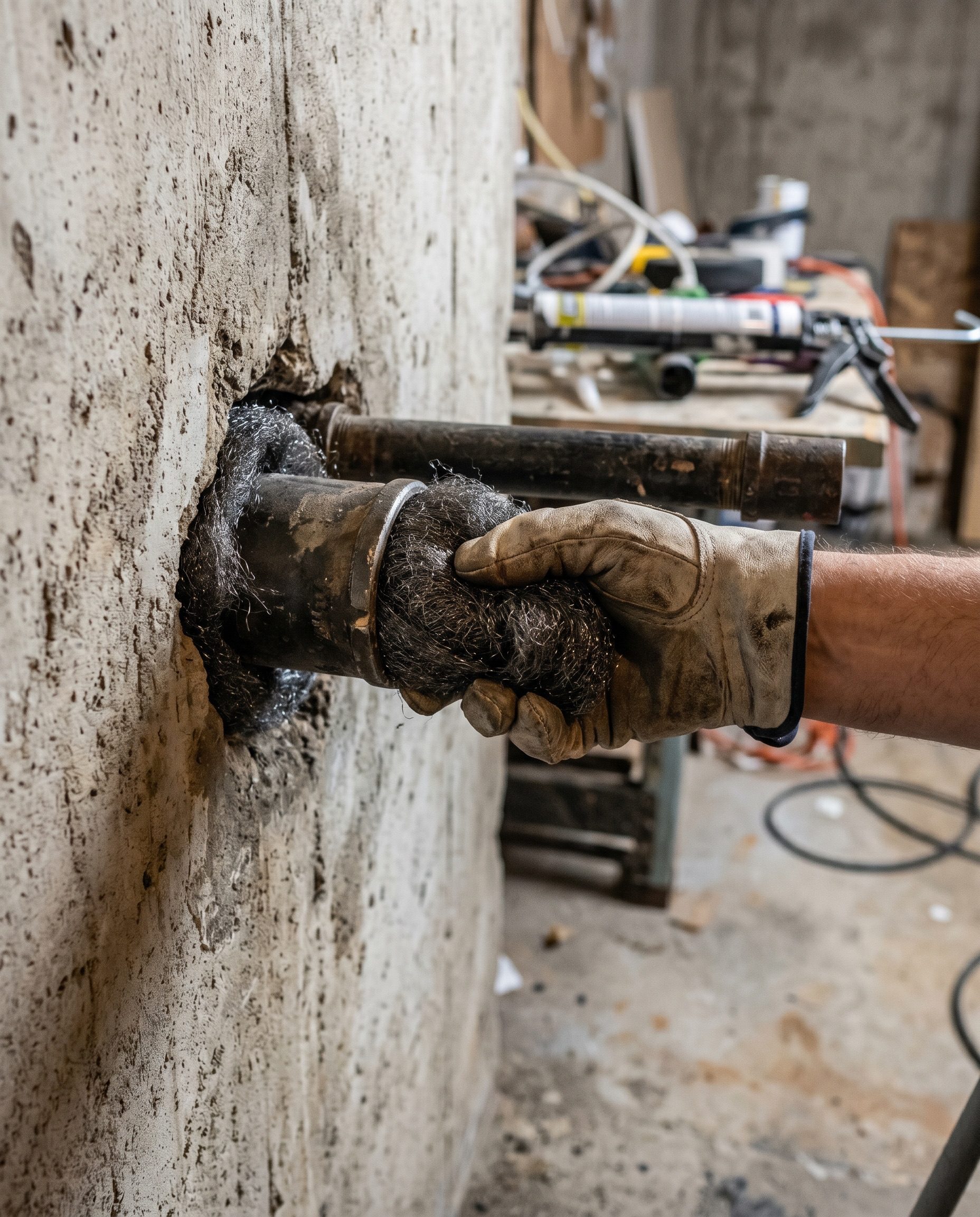
This is the leg most people skip, and it is the one that decides whether the mice ever come back. Walk the outside and the inside of the house slowly and look for any gap a pencil fits into. The usual offenders are where utility lines, pipes, and cables pass through walls, the gap under and beside exterior doors, weep holes and foundation cracks, dryer and AC line penetrations, and the corners where the garage door seal has worn. Mice follow walls, so check at floor level first.
Seal small gaps by packing them with coarse steel wool and sealing over it with caulk or foam, because mice can chew through plain foam or caulk alone but will not gnaw through the wire. For larger holes, use hardware cloth, metal sheeting, or cement. The UC IPM guidance on rats, which carries the same exclusion logic, is blunt that building them out is the only permanent fix; everything else is temporary. Fit door sweeps on exterior doors, since the gap under a back door is the single most common way mice get into a kitchen. Do this part thoroughly even though it is the least fun, because a sealed house is what keeps you from doing this whole project again next fall.
Cut off food and clutter
Mice stay where there is food and cover, so the second leg is making your house a worse place to live. Start in the kitchen and pantry. Move dry goods like rice, flour, cereal, pet food, and birdseed into sealed glass or hard plastic containers, because mice chew straight through cardboard and bags. Wipe up crumbs, do not leave dishes overnight, and take the trash out instead of letting it sit. Pet food left in a bowl overnight is a buffet, so put it away after meals.
Clutter is food’s partner because it gives mice somewhere to hide and nest where you will not disturb them. Cardboard boxes, piles of paper, and crammed storage areas are exactly where they want to be, so thinning out the garage, basement, and closets removes the harborage and makes your traps far more effective. Outside, keep firewood and stored items off the ground and away from the foundation, and trim back vegetation touching the house. Removing the food and cover is what makes the traps work, because a hungry mouse with nowhere to hide takes the bait instead of ignoring it.
Trap hard, the right way
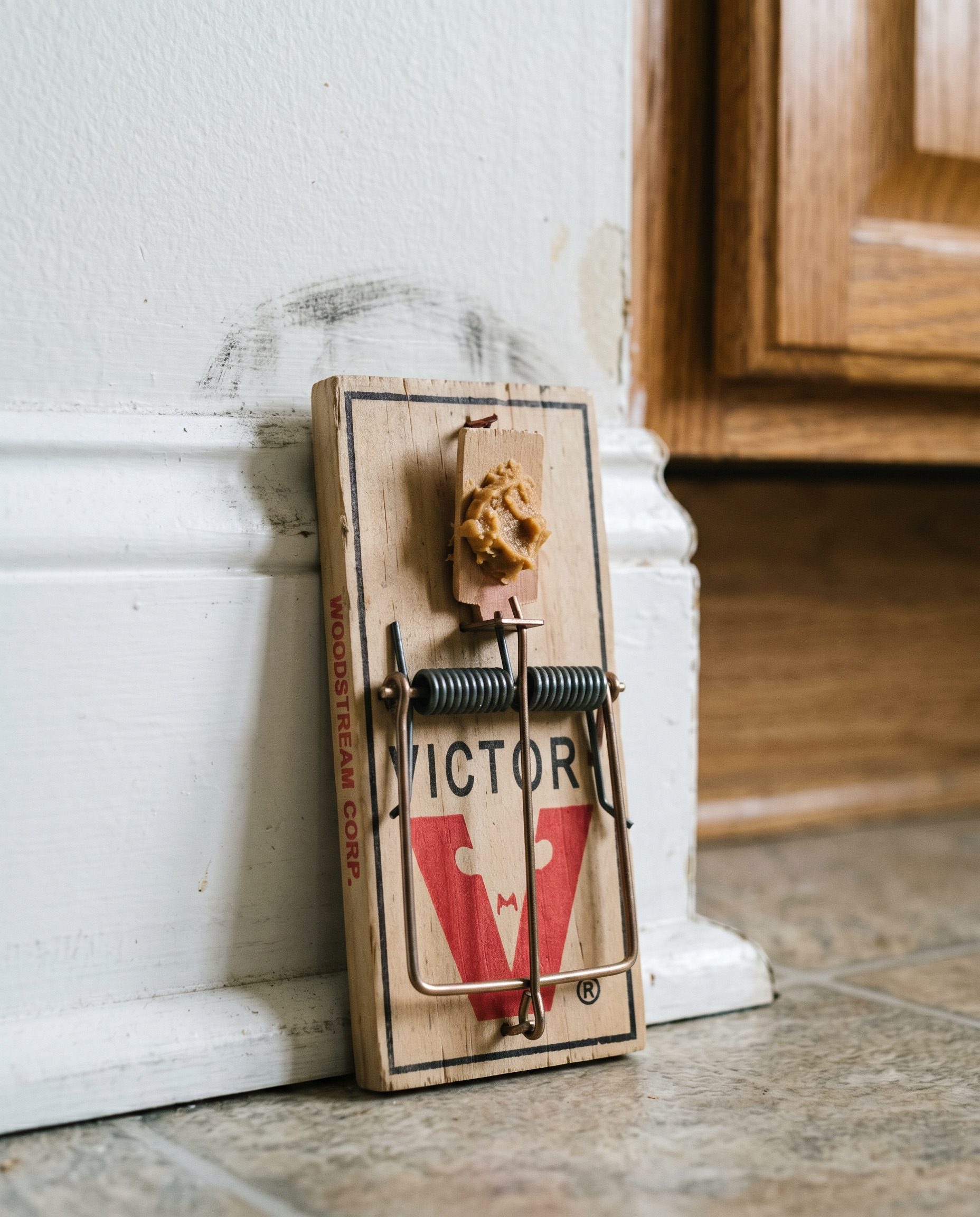
Now the part that drops the count. The mistake almost everyone makes is setting one or two traps and waiting. Mice are wary and territorial, so a couple of traps in a houseful of mice is a slow loss. Set a dozen or more traps at once, and place them close together, every few feet, along the walls and in the corners where you see droppings or dark rub marks. Mice rarely cross open floor, so a trap in the middle of the room does nothing; the trap has to sit tight against the wall with the trigger end facing it.
Match the tool to the spot. The honest pecking order looks like this.
| Trap type | When to use it | Watch out for |
|---|---|---|
| Snap trap | The default for most homes, cheap and effective | Set the trigger toward the wall, keep away from kids and pets |
| Electronic trap | Hands-off disposal, good if snap traps make you squeamish | Costs more, needs batteries checked |
| Glue board | Best avoided | Inhumane and catches fewer mice; snap traps beat it |
| Live catch | If you want to release | Release far away or they return; check often |
Bait the trigger with a tiny smear of peanut butter or a dab of chocolate, not a glob, so the mouse has to work at it and set off the trap. Tie or secure bait that can be stolen. Check and re-set traps daily, because a sprung trap catches nothing and mice learn fast. Snap traps and electronic traps are the workhorses; skip glue boards, which are inhumane, often leave a mouse stuck and suffering, and simply catch fewer mice than a well-placed snap trap. For specific models and how they performed against each other, see our rundown of the best mouse traps. And ignore the plug-in ultrasonic repellers entirely; multiple Extension reviews have found ultrasonic devices do not drive mice out of a home, so that money is better spent on traps and steel wool.
When bait makes sense, and the risk
Rodenticide bait is the last leg, and it is genuinely a last resort, not a first move, especially indoors. Bait does not kill instantly; a poisoned mouse wanders off and dies in a wall or under a cabinet, which means odor and, in a living area, often more trouble than it solves. Inside the home, exclusion plus heavy trapping clears the problem without that downside, so reserve bait for ongoing outdoor or detached-structure pressure where trapping cannot keep up.
If you do use it, the safety rules are not optional. The biggest danger is secondary poisoning: a pet, an owl, a hawk, or a fox that eats a poisoned mouse can be poisoned in turn, and so can a child or pet that reaches loose bait directly. Use only registered bait inside tamper-resistant bait stations, never loose pellets or trays where anything can get at them. Know that the EPA’s restrictions on the most dangerous rodenticides have pulled the worst second-generation anticoagulants off consumer shelves for exactly this reason. Whatever product you choose, read and follow the product label, because the label is the law, and keep all bait far out of reach of children and pets. If a child or pet may have gotten into bait, contact a doctor or your vet or call your local poison control center right away.

Common questions
What gets rid of mice fast?
The fastest real-world result is the three legs done together: seal the gaps, clean up the food, and set a dozen or more traps at once along the walls. A house with a small infestation, hit hard like that, can be quiet within a week or two. There is no instant single product; anything that promises one is selling you the slow version.
Do ultrasonic repellers work on mice?
No. They are heavily marketed, but Extension testing has repeatedly found that plug-in ultrasonic devices do not clear mice from a home. Mice get used to the sound and carry on nesting and feeding behind the walls. Spend that budget on steel wool, sealed containers, and traps instead, which actually move the needle.
Should I use poison or traps?
Indoors, lead with traps and sealing, not poison. Traps let you confirm the kills and remove the bodies, while poisoned mice tend to die in walls and create odor, and bait carries a real secondary-poisoning risk to pets and wildlife. Reserve rodenticide for stubborn outdoor pressure, always in tamper-resistant stations.
How do I find where they are getting in?
Look low, along walls and where pipes, wires, and vents pass through the exterior, and at the gaps under doors. Any opening a pencil fits is big enough. Droppings, dark greasy rub marks, and gnaw damage trace their routes. Our guide to the signs of mice in a house shows what the evidence looks like up close.
Will the mice come back?
Only if you leave a leg out. If the gaps are sealed and the food is locked up, there is nothing pulling new mice in and nothing keeping them once they arrive. The lasting fix is exclusion plus sanitation; trapping just clears the ones already inside. Our mouse-proofing walkthrough covers the durable sealing in detail.
Final verdict
Getting rid of mice is not one purchase, it is three jobs done at the same time. Seal every gap a pencil fits through, because that is what stops new mice and keeps you from repeating all of this next season. Cut off the food and clutter so the house stops feeding and hiding them. Then trap aggressively, a dozen or more snap or electronic traps tight against the walls where the droppings are, baited light and re-set daily. Skip the ultrasonic gadgets, which do nothing, and skip glue boards, which are inhumane and catch less. Hold rodenticide as a last resort for outdoor pressure, always in tamper-resistant stations, because of the risk to pets and wildlife. Do all three legs and the mice leave and stay gone; skip one and you start over.
Next steps:
– Confirm what you are dealing with with our signs of mice in a house guide.
– Lock in the durable fix with the mouse-proofing walkthrough.
– Before you clean up droppings, read the safe-cleanup steps in our guide to diseases mice and rats carry, and never sweep or vacuum dry droppings; dampen them with disinfectant first, wear gloves, ventilate the area, and see a doctor for any illness symptoms.