If mice keep coming back no matter how many you trap, the problem is not your trapping, it is your house. Exclusion is the only permanent fix, because a mouse can squeeze through a gap the width of a pencil, roughly a quarter inch. Walk the foundation, the utility penetrations where pipes and wires enter, the door sweeps, and the garage, and seal every opening with steel wool packed into caulk or with hardware cloth, materials mice cannot gnaw through. Trapping without sealing is an endless chore. Seal the house and the trapping finally ends.
Sealing the house is the only thing that keeps mice out for good, because a mouse fits through a quarter-inch gap. Walk the foundation, pipe and wire entries, doors, and garage, and close every opening with steel wool in caulk or hardware cloth, then trap the few already inside.
- Do first (free): Walk the outside of the house and mark every gap a pencil could fit through, especially where pipes, wires, and vents pass through the wall.
- Best for the common case: Pack steel wool into gaps and cap it with caulk, screen larger openings with quarter-inch hardware cloth, and fit tight door sweeps.
- Skip: Ultrasonic plug-in repellers; they do not drive out an established mouse population.

Why mice walk right in
A house mouse is mostly skull and fur, and an adult can flatten its body and slip through an opening about a quarter inch across, the width of a standard pencil. That single fact is why people who trap for months never get ahead: they are removing mice from a building that is still wide open, and a fresh one wanders in from the yard within days. According to the UC IPM Pest Notes on the house mouse, mice are most active at dusk and dawn and rarely travel more than ten to thirty feet from their nest, so they settle wherever food and a warm gap line up.
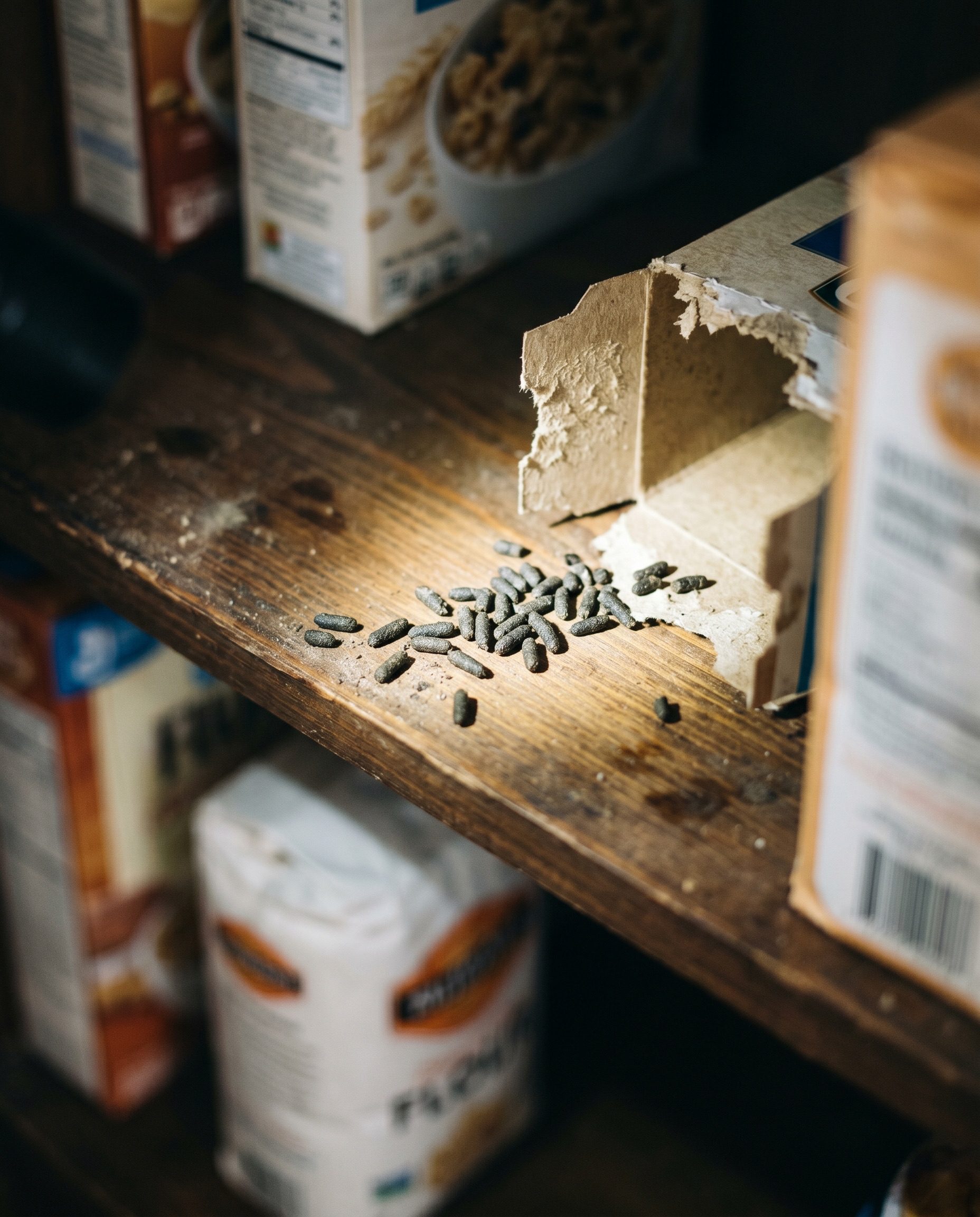
They press in hardest in fall when nights cool off, which is the season to get your sealing done. Mice also gnaw, and their teeth are hard enough to chew through wood, soft plastic, foam, and even thin aluminum, so a gap you stuff with expanding foam alone gets reopened in a week. The fix has to be made of something they cannot chew, which is the whole logic behind steel wool and metal screen. If you are not certain mice are what you have, our guide to the signs of mice in the house shows the droppings, gnaw marks, and grease trails so you can confirm before you start.
Walk the house and find every gap
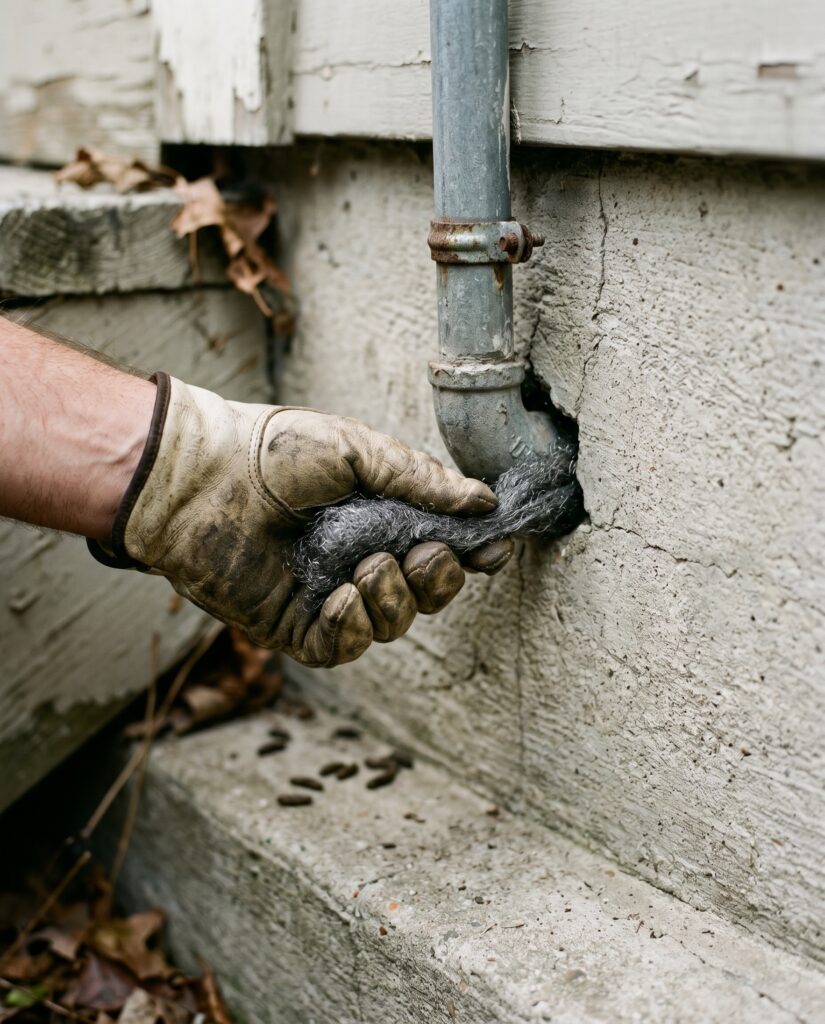
Before you buy anything, do the free part: walk the outside and inside of the house slowly and mark every opening a pencil could pass through. Start at the foundation line, where the siding meets the slab or block, and look for cracks, crumbled mortar, and gaps under the bottom course. Then hit the utility penetrations, the single most common entry point: every place a water pipe, gas line, electrical conduit, dryer vent, or cable enters the wall almost always has an oversized hole around it that nobody sealed.
Keep going around the doors. A garage door with a worn rubber bottom or gapped corners is an open invitation, and so is any exterior door without a tight sweep, since a quarter-inch gap under a door is plenty. Check where the roofline meets the wall, the gable vents, the soffit, and the chimney, because mice climb and roof access is real. The same walk works for larger rodents too, and rats are also kept out by sealing the same kinds of gaps, just sized up to a half inch. Bring a flashlight and rake it sideways along seams; raking light throws shadows that show holes you would walk past under flat overhead light.
Seal it with metal, not foam
Now the part that actually keeps them out, and the materials matter more than the technique. For most gaps, pack steel wool tightly into the opening and then cap it with a bead of caulk or sealant so the steel wool stays put and the seam is weatherproof. Mice will not chew through the abrasive steel fibers, and the caulk locks it in. Copper mesh works the same way and will not rust, which is the better choice around damp pipe entries. The principle behind all of it is simple: exclusion is the most successful and permanent form of control, because a sealed building stays sealed long after the last trap is put away.
For bigger openings, weep holes, vents, and gaps too wide to pack, cover them with quarter-inch hardware cloth screwed or stapled flat over the hole. Quarter-inch mesh stops mice; standard window screen does not, since they chew right through fiberglass. Fit new door sweeps on exterior doors and replace the garage door bottom seal if it is cracked or curled. Skip expanding foam as a standalone plug, because mice gnaw straight through it, though foam is fine as a backer behind steel wool or screen. This prevention-first order is exactly what the EPA’s safe pest control principles put prevention and exclusion first describes: shut off entry and food before you reach for anything else.
Where each fix belongs
Different openings call for different materials, so match the fix to the gap instead of caulking everything and hoping. This is the quick map for the spots you will actually find on a walk-around.
| Where the gap is | Best fix | Watch out for |
|---|---|---|
| Pipe and wire entries | Steel wool or copper mesh packed in, capped with caulk | Foam alone gets gnawed through |
| Vents and weep holes | Quarter-inch hardware cloth screwed flat over the opening | Window screen is too weak to stop mice |
| Doors and garage | Tight door sweeps and a fresh garage bottom seal | A quarter-inch gap under a door is enough |
Work from the most-used entries to the least. In practice the pipe and wire penetrations and the door gaps account for most of the traffic, so closing those first usually drops the count fast even before you finish the whole perimeter.
Trap the few already inside
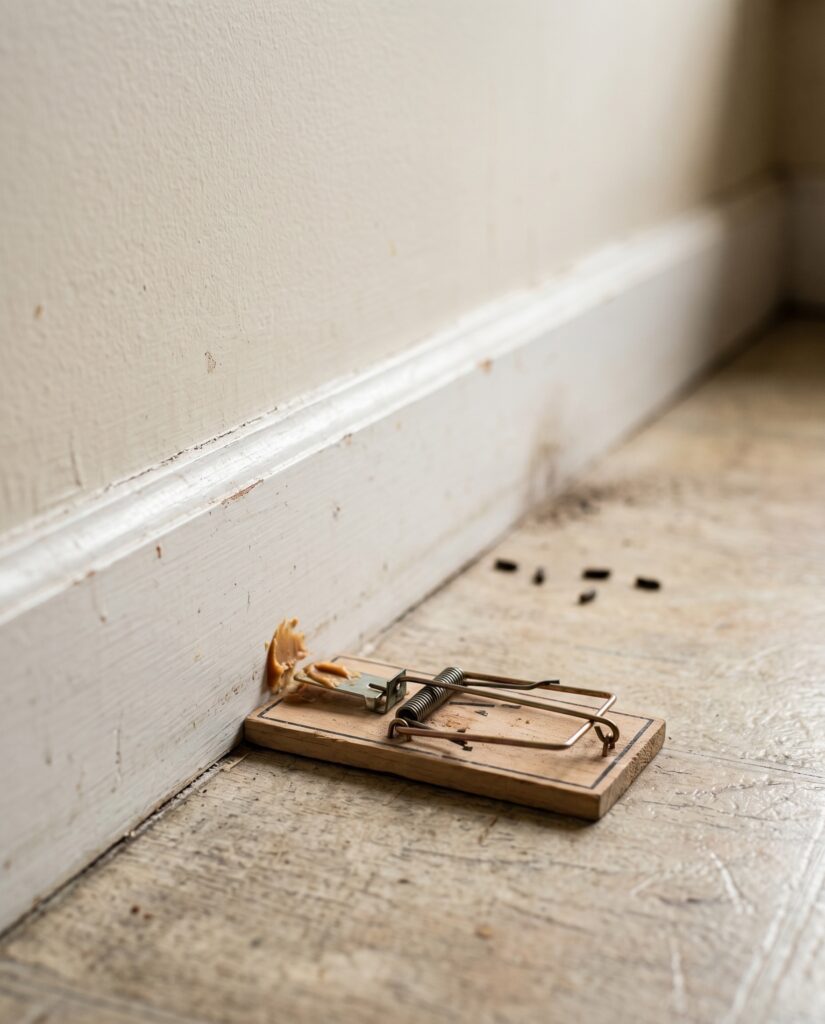
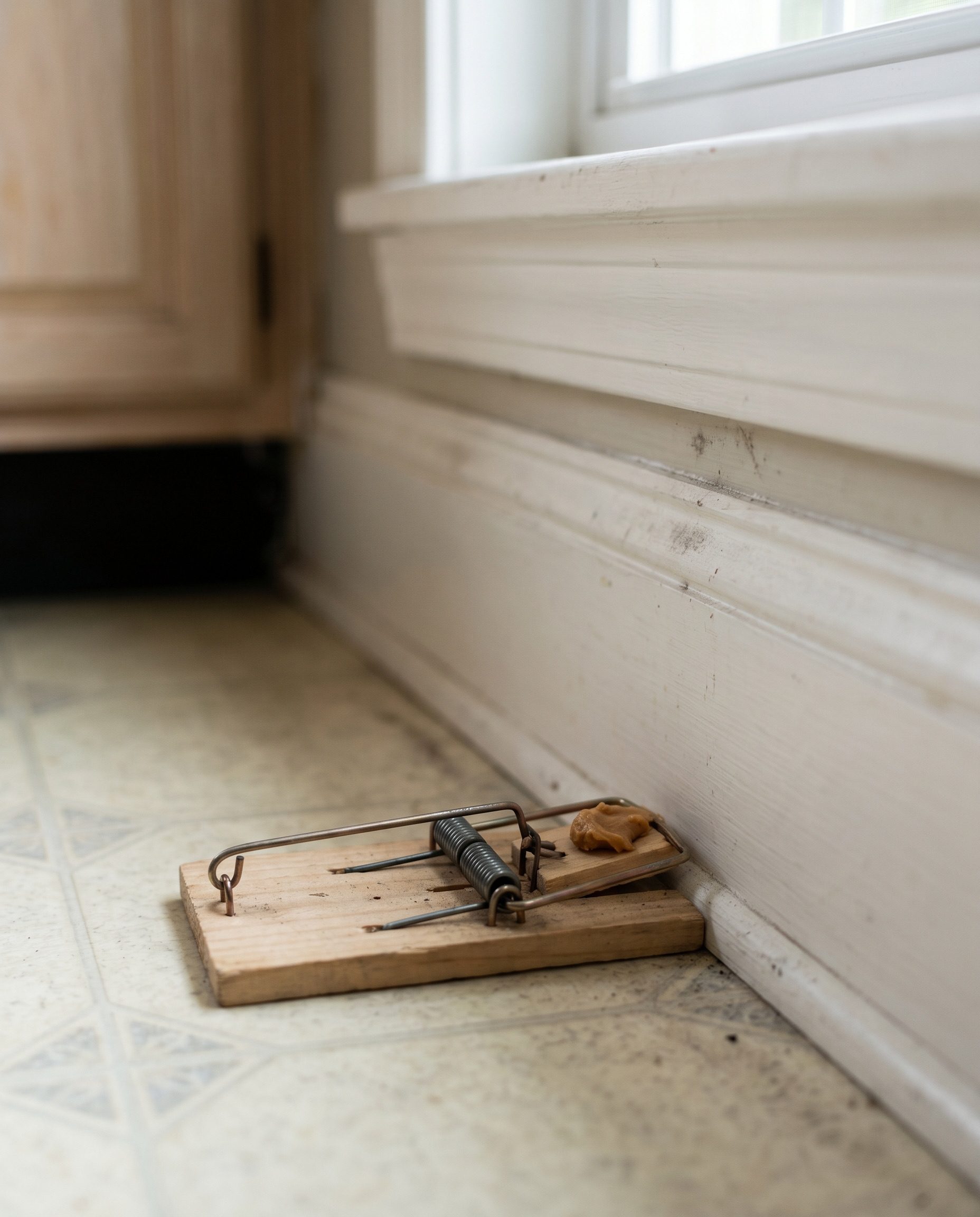
Sealing locks new mice out, but it also traps whatever is already in the walls, so you finish the job with traps. Set plain wooden or electronic snap traps along the walls, since mice run with one side against a baseboard and rarely cross open floor. Place the trap perpendicular to the wall with the baited trigger end facing the baseboard, or set them in pairs a few inches apart, and bait with a dab of peanut butter rather than a big glob. Run several traps at once; underdoing the number is the usual reason people stall out. For the full setup and the models worth buying, see our tested mouse traps comparison.
Skip glue boards. They are inhumane, they catch dust and lose their grip, and a mouse can drag itself free, so a snap trap is both kinder and more reliable. Be honest about ultrasonic plug-ins too: UC IPM and other Extension sources find that ultrasonic repellers do not solve an infestation, and mice habituate to the sound within days, so they are not a substitute for sealing and trapping. For a heavier or recurring problem, our main guide to getting rid of mice walks the full removal sequence.
A word on poison bait
Poison bait is a last resort, not a first move, and for most homes you can skip it entirely. A poisoned mouse dies in a wall void where you cannot reach it, which means odor and flies, and worse, rodenticides can cause secondary poisoning of pets and wildlife when a cat, dog, owl, or hawk eats the poisoned animal. If you ever do use bait, use only a locked tamper-resistant station, never loose pellets a child or pet can reach, and follow the product label exactly. Note that the EPA restricts the most hazardous second-generation rodenticides for consumer use, so the strongest products are not meant for the average homeowner. For most houses, sealing plus snap traps clears the problem without any of this risk. If a pet swallows bait, contact your vet or your local poison control center right away.
Common questions
What size gap can a mouse fit through?
About a quarter inch, the width of a standard pencil. A young mouse can manage even less. That is why the inspection step matters so much: if a pencil fits in a gap, a mouse fits too, and you have to seal it. Rats need a slightly larger opening, around a half inch, but the same walk-and-seal approach handles both.
Does steel wool really stop mice?
Yes, when you pack it in tight and cap it with caulk so it cannot be pulled out. Mice will not chew through the abrasive steel fibers the way they chew through foam or wood. Copper mesh does the same job and will not rust, so it is the better pick around damp pipe entries.
Do ultrasonic repellers keep mice away?
No. Ultrasonic plug-in repellers are largely ineffective, and mice habituate to the sound within a few days. They do not drive out an established population and should not replace sealing and trapping. Save your money for steel wool, hardware cloth, and a few good snap traps instead.
Should I use poison or traps?
Traps for most homes. Snap traps are immediate, contained, and let you confirm the catch, while poison kills the mouse out of reach in a wall and risks poisoning pets and wildlife. If you do use bait, only ever in a locked tamper-resistant station, never loose.
How do I keep mice out for good?
Seal the building. Trapping removes the current mice, but only exclusion stops the next ones, so the durable answer is to close every quarter-inch gap with metal and keep up the food and clutter habits that make the house unattractive in the first place.
Final verdict
Mouse-proofing comes down to one idea: you cannot trap your way out of an open house, so seal it. Walk the foundation, the pipe and wire penetrations, the doors, and the garage, mark every gap a pencil could fit through, and close each one with steel wool packed into caulk or with quarter-inch hardware cloth, since those are the materials mice cannot gnaw through. Then run several snap traps along the walls to clear the few already inside, skip the glue boards and the ultrasonic gadgets, and leave poison as a locked-station last resort you probably will not need. Do the sealing once and done right, and the endless trapping finally stops.
Next steps:
– Confirm you are dealing with mice using our signs of mice in the house guide.
– Set up the indoor side correctly with our tested mouse traps comparison.
– For a heavier or recurring problem, follow the full sequence in our guide to getting rid of mice.