Damage names the pest more reliably than a glimpse of the pest does. Round holes in wood with powder falling out means beetles; smooth galleries with coarse shavings outside means carpenter ants; grazed thinning patches in wool means clothes moths; clean scattered holes in the same wool means carpet beetles; paired parallel grooves means rodent teeth. In every case, ask whether the damage is active before deciding what to do, because most of it is historic.
- Material first. Wood, fabric, paper, food and wiring each have a short suspect list.
- Fresh damage is pale. Weathered surfaces darken; new cuts and gnawing do not.
- Powder or frass below a hole means active. A clean hole usually means finished.
A sighting is a second of bad memory. Damage sits there and can be examined twice. It is the better witness, and for several household pests it is the only witness you will get, because the insect doing the eating is a larva living inside something.
The structure below is by material, because that is what you actually have: a jumper with holes, a beam with holes, a packet that has been got into. Within each material, two or three questions separate the candidates.
Wood
Start with the hole, not the wood.
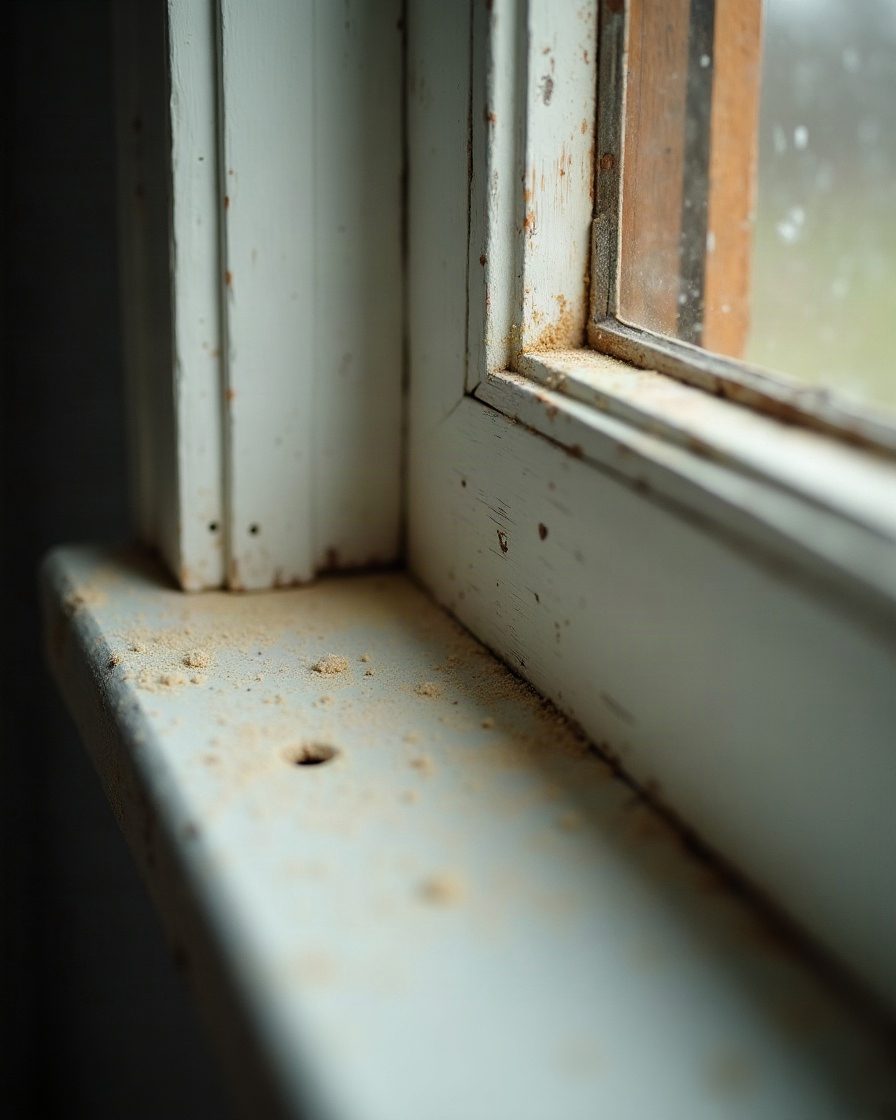
Round holes, 1 to 2 mm, with fine powder below. Powderpost beetles. The powder is talc-fine and drifts; run a finger through it and it feels like flour, not grit. The University of Kentucky’s guide to powderpost beetles covers the distinction between an active and a spent infestation, which is the whole question here. See also what powderpost frass looks like.
Round holes, 3 to 10 mm, in a smooth surface with no powder. Usually old exit holes from wood that was already infested when it was installed, or from a wood-boring beetle that has finished. Furniture bought second hand often arrives with these.
A neat round hole roughly 10 to 12 mm, drilled straight in then turning. Carpenter bee. The tunnel makes a right angle, which nothing else does.
No holes but coarse shavings piling up. Carpenter ants excavate galleries and push the debris out, and it looks like pencil sharpenings mixed with fragments of insect. They do not eat wood. Carpenter ant frass compared with sawdust works through the difference.
Uniform six-sided pellets, poured out of a small hole. Drywood termites. Detailed on the termite frass page, which also covers why subterranean termites leave none.
Any of these deserves the question that decides urgency, and small holes in wood covers the measurement side properly.
Fabric
Two culprits, and they damage differently enough that the garment usually answers it.
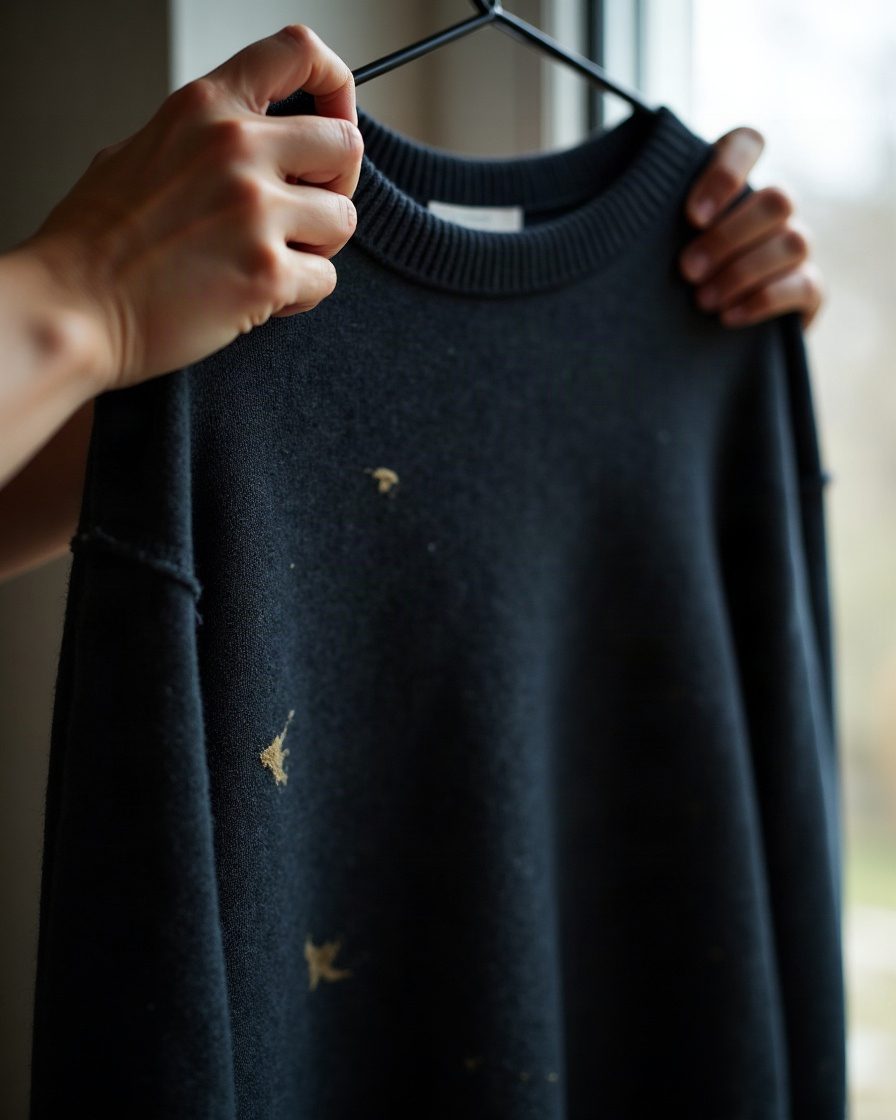
Clothes moths graze. Damage begins as a thinned, bald-looking patch where the surface fibres have been eaten away, and only becomes a hole later. Look for fine silk webbing, sometimes a silken tube, and small pale larvae. It concentrates in undisturbed places: under a collar, in a fold, at the bottom of a wardrobe. The clothes moths guide from Kentucky covers the life cycle behind that.
Carpet beetles cut. The holes are cleaner, more scattered, and often several small ones rather than one grazed area. No webbing. The larvae are bristly and leave shed skins, which are frequently found when the larvae are not.
Where in the garment matters as much as the hole itself: both prefer soiled areas, so damage clusters at cuffs, collars and anywhere food or perspiration reached the fibre. Holes in clothes, moth or beetle works it through, and what lives in a wardrobe covers the search.
Paper and books
Irregular surface grazing along page edges, sometimes with a faint yellowish stain, is silverfish or booklice. Both need humidity to persist, and both stop mattering once the room dries. Neither eats paper efficiently; the damage is superficial and slow.
Chewed, shredded paper removed to somewhere hidden is not damage at all. It is nesting material, covered on shredded paper and nesting material.
Food and packaging
The packet that failed tells you which pest.
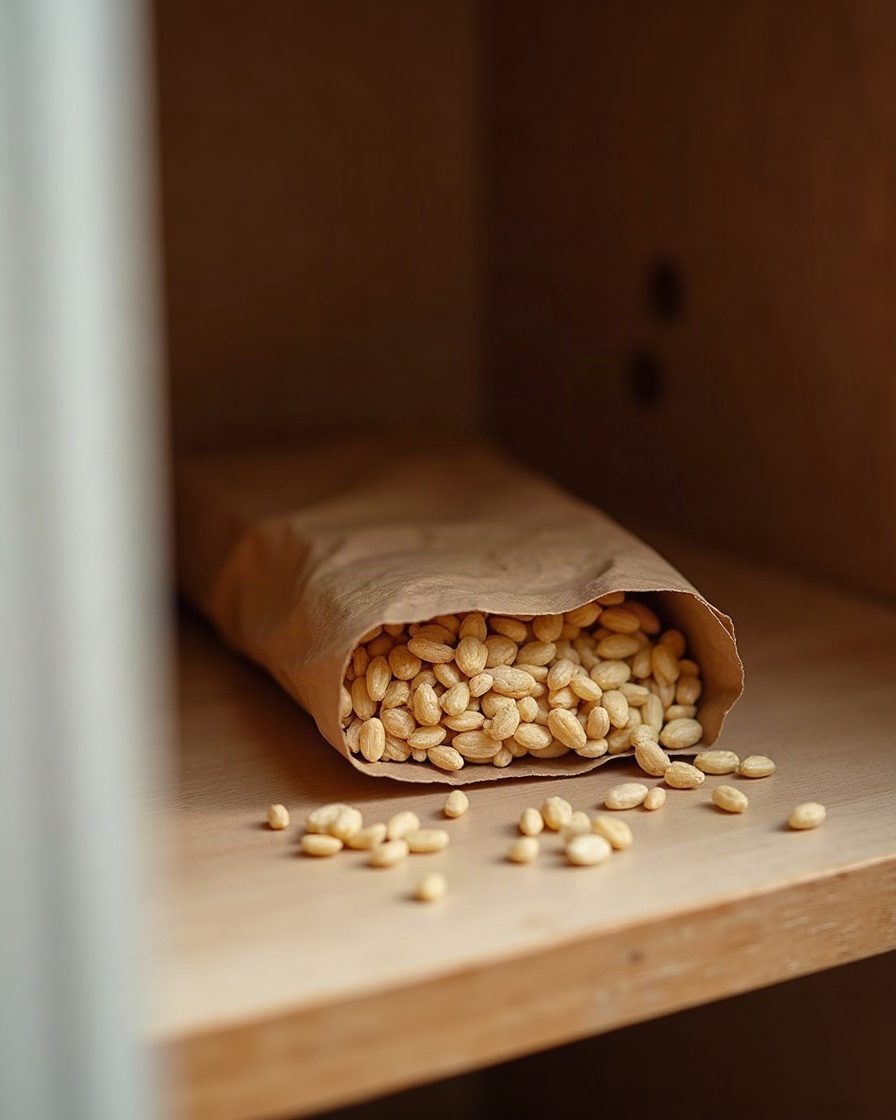
A corner chewed away, with the contents spilling. Rodent.
Pinholes through foil or plastic film. Beetles, chewing out rather than in. This is the finding that means the infestation started inside a sealed packet, which changes the search.
Webbing, clumped grains, or a fine silk mat inside the bag. Pantry moth larvae.
Nothing visibly wrong with the packet, but insects on the shelf. The source is another packet. Damaged food packaging and tiny bugs in kitchen cabinets cover the sweep that follows.
Wiring and plastic
Paired parallel grooves, a couple of millimetres apart, are incisor marks. Rodents gnaw continually because their incisors grow continually, and cable insulation is a convenient hardness. This is the one entry on this page that is a fire risk rather than an inconvenience, and it is handled first: see chewed wires and what to do first.
Dating the damage
Almost every reader who finds damage assumes it is current. Often it is not, and the difference decides whether anything needs doing.
Fresh wood is pale. A new gnaw mark or a new exit hole shows lighter, cleaner wood against a weathered surface. Old ones have dulled and greyed to match.
Fresh powder is loose and drifts. Old powder has compacted, taken on dust, and no longer moves when the timber is tapped.
The clean-and-wait test settles it. Clear the powder or the debris away completely, note the date, and check in a week. Anything new is active. This costs nothing and prevents a great deal of unnecessary treatment, which is the point the EPA makes in its guidance on whether a pesticide is needed at all.
Common questions
Can damage tell me how long they have been here? Roughly. Accumulated frass and multiple generations of exit holes suggest years rather than weeks, particularly in furniture.
I found damage but no insect. That is the normal case for wood borers and fabric pests, because the feeding stage is a larva inside the material. Absence of an adult means very little.
Should I treat on the basis of damage alone? Not before the clean-and-wait test. Historic damage is extremely common and needs no treatment.
What if the damage is structural? Anything affecting joists, beams or load-bearing timber is a survey, not a spray.
The bottom line
Work from the material, then from the shape of the damage, then from whether it is fresh. That order identifies most household pest damage and, more usefully, rules out the large share of it that finished years ago. When you are still unsure, the droppings nearby often settle it: the droppings chart is the companion to this page.