
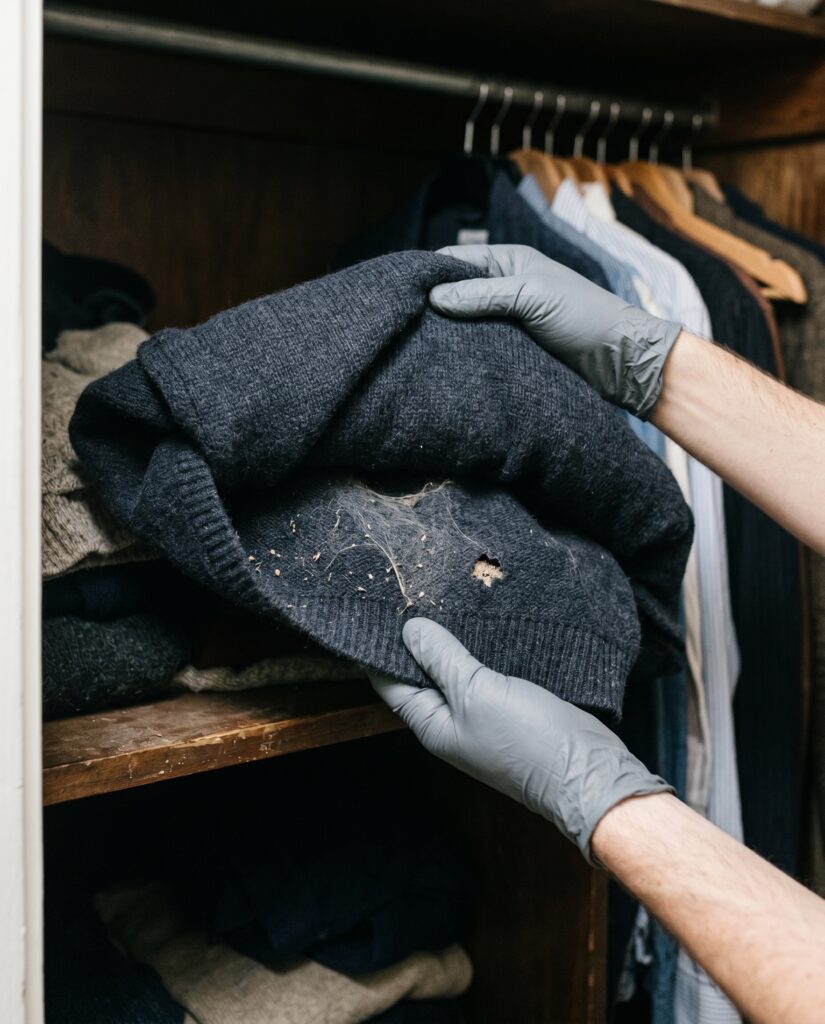
Clothes moths graze. The damage starts as a thinned, bald patch where surface fibres have been eaten away and only becomes a hole later, and there is usually fine silk webbing with it. Carpet beetles cut: several cleaner, scattered holes, no webbing, and shed bristly larval skins nearby instead. In both cases the damage concentrates where the garment was soiled, and in both cases the larva does the eating while the adult does not.
- Webbing means moth. Shed skins mean beetle. That is the fastest single test.
- Grazed patches versus scattered clean holes is the pattern difference.
- Damage follows soiling. Cuffs, collars and anywhere food or sweat reached the fibre.
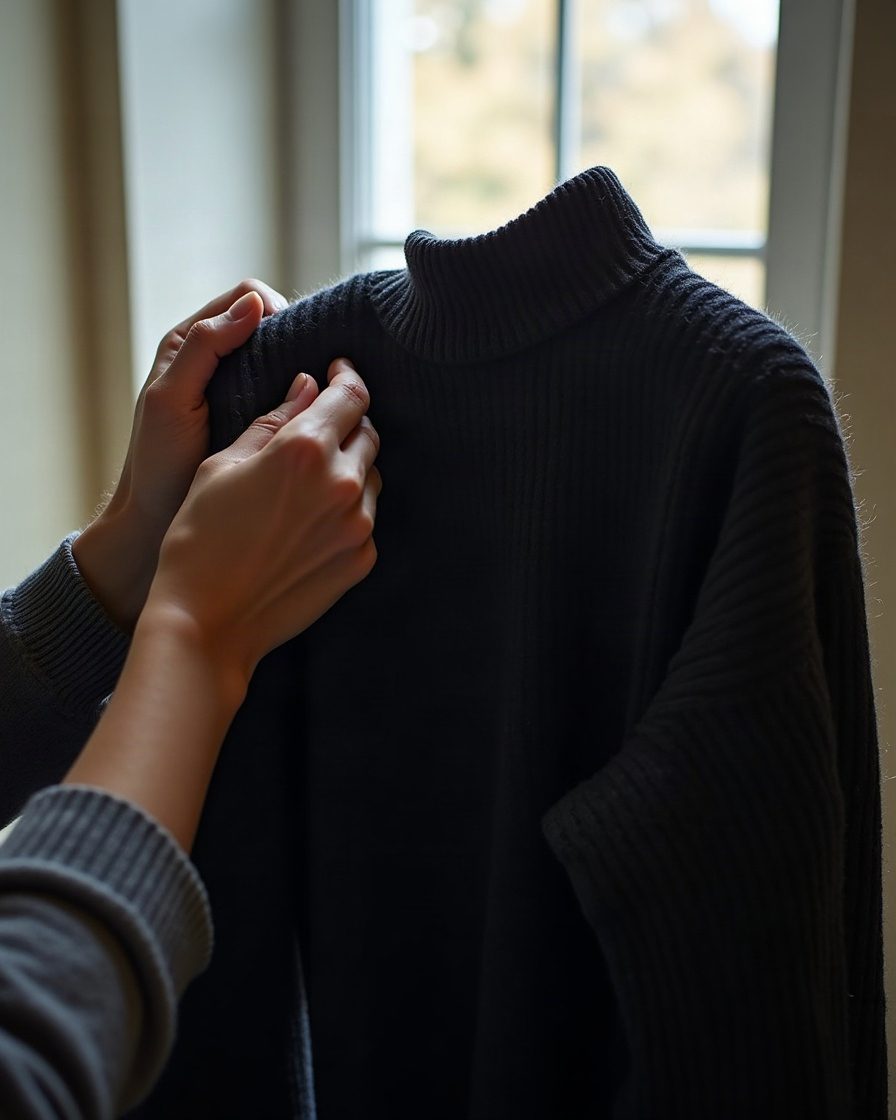
Two insects account for essentially all damage to wool, cashmere, silk and other animal fibres in a house. Telling them apart is worth the two minutes because the search that follows differs, though the treatment overlaps considerably.
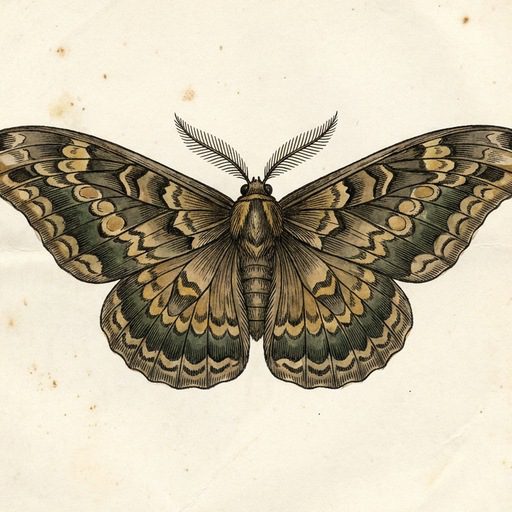
One point applies to both and is worth stating first: the adult does not eat fabric. Adult clothes moths have no functional feeding mouthparts, and adult carpet beetles feed on pollen outdoors. The damage is done entirely by larvae. Killing the moth you saw on the landing changes nothing.
Clothes moths
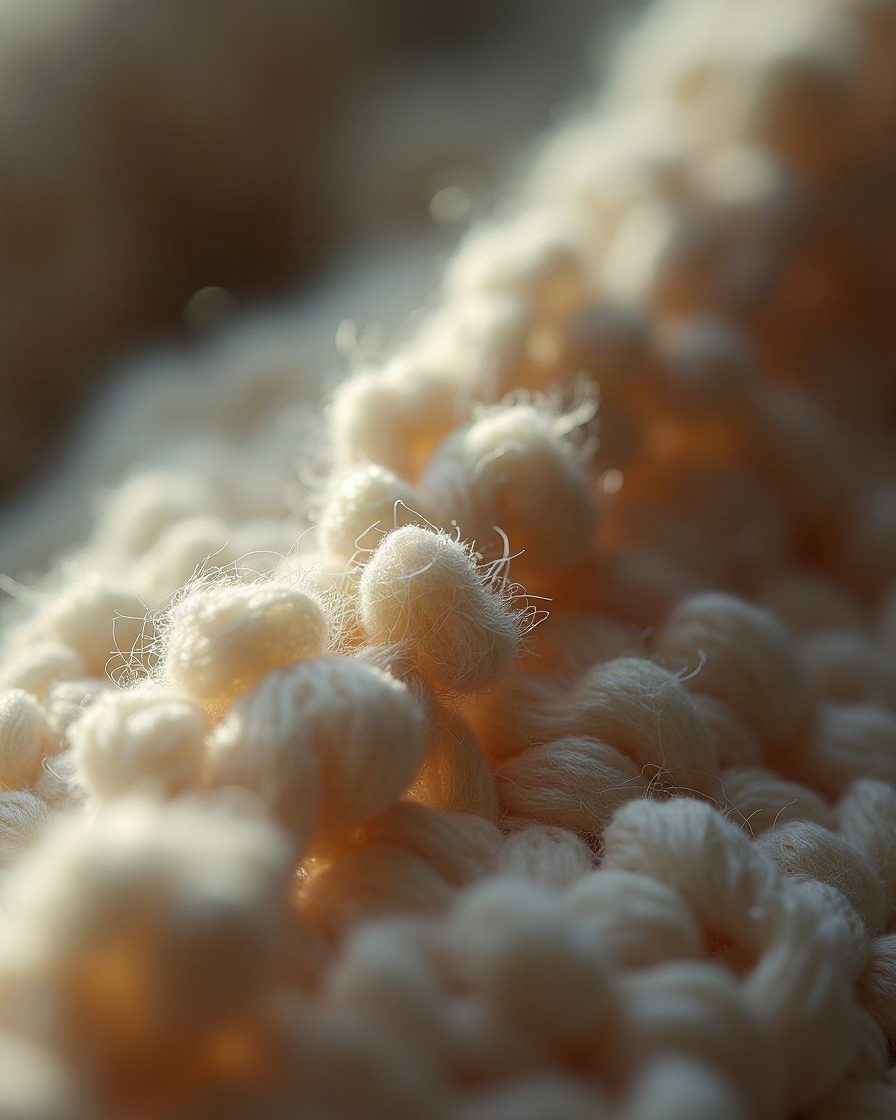
The damage. Irregular, grazed areas rather than punched holes. Surface fibres are eaten away first, producing a thinned, bald-looking patch. Held up to a window, the fabric shows as a translucent area before any hole exists. Holes come later, and they are irregular in outline.
Webbing. The webbing clothes moth spins fine silk as it feeds, so look for gossamer threads across the fabric surface, small silken tubes, or grains of frass caught in silk. The casemaking species carries a small portable case, which looks like a grain of the fabric itself and moves.
The larva. Creamy white, roughly 10 mm when full grown, with a darker head. It avoids light and will be found in folds and undersides.
Where. Undisturbed, dark places: the back of a wardrobe, the bottom of a drawer, under a collar, inside a fold, beneath furniture on a wool rug, and in the fibre and lint that gathers on a wardrobe floor.
The University of Kentucky’s guide to clothes moths covers the two species and the life cycle.
Carpet beetles
The damage. Cleaner-edged holes, often several scattered across an area rather than one grazed patch. On a carpet, wear appears as thinned patches along edges and under furniture.
Shed skins. This is the diagnostic finding, and it is more often noticed than the larva. Carpet beetle larvae moult repeatedly and leave behind bristly, brown, hollow cast skins that look like the larva itself. Finding shed skins with no live larvae is entirely normal.
The larva. Short, stout, densely bristly, brown to golden, and it moves slowly. Very different in appearance from the smooth pale moth larva.
Where. Wider ranging than moths, because the diet is broader: wool, feathers, hair, dried insect remains, and dust containing all three. So carpet beetles turn up along skirting boards, under carpet edges, in air vents, in old bird nests in the eaves, and in accumulated dust as readily as in a wardrobe.
UC IPM’s guide to carpet beetles covers the species. Our page on carpet beetle larvae covers what to look for, and clothes moth larvae does the same on the moth side.
The comparison, in one place
| Clothes moth | Carpet beetle | |
|---|---|---|
| Hole shape | Irregular, grazed first | Cleaner, scattered |
| Webbing | Yes, fine silk | None |
| Cast skins | No | Yes, bristly, common |
| Larva | Smooth, pale, 10 mm | Stout, bristly, brown |
| Diet | Animal fibre chiefly | Fibre, feather, hair, dust |
| Typical site | Wardrobe, folds, undersides | Skirting, carpet edges, vents |
What both have in common
They eat where the garment is dirty. Perspiration, body oils, food residue and urine all make fibre more attractive and more digestible. This is why damage clusters at cuffs, collars, underarms and hems rather than distributing evenly, and it is why a clean garment stored clean is far less likely to be attacked than a worn one.
They avoid disturbance. Things worn and washed regularly are rarely damaged. Things stored for a season are.
The source is often not the garment. A persistent problem in one room can trace to an old bird nest in the eaves, a wool rug underlay, felt in a piano, or the accumulated fibre under a heavy piece of furniture. Bird droppings and nest signs covers the nest route, which is the one most often missed.
What to do
Clean before storing. This is the single most effective measure and it costs nothing extra.
Heat or freeze what is already affected. A hot wash and tumble dry kills all life stages where the fabric allows. Where it does not, a fortnight in a domestic freezer, sealed in a bag, works. The University of Kentucky covers the parameters under thermal deinfestation of household items.
Vacuum the space, not just the garment. Wardrobe floors, skirting junctions, under furniture, carpet edges. Then empty the vacuum outside.
Store sealed. Zip bags or lidded boxes, with the garment clean going in. Cedar and lavender have a modest repellent effect at best and do not kill an established infestation, so they are a supplement rather than a measure.
Tiny bugs in a wardrobe covers the search, and the pest damage chart places fabric damage against the other materials.
Common questions
Holes in cotton or synthetic fabric. Neither insect eats plant or synthetic fibre. Damage there is usually mechanical, chemical, or the result of a blend containing some wool. A garment heavily soiled with food can be grazed regardless of fibre.
One hole only. Very often not an insect at all. Snags, moth-shaped wear at a fold, and acid marks all produce single holes.
I see moths flying but no damage. Check the species. Pantry moths fly in living space and come from the kitchen, and are far commoner than clothes moths on the wing. Bugs that look like moths covers the distinction.
How long has it been going on? A larval stage of several months is normal, and can extend far longer in cool conditions, so damage found now may have started last year.
The bottom line
Look for webbing and for cast skins before looking at the holes. Webbing means moth, bristly shed skins mean beetle, and the two searches then diverge: wardrobe folds for one, skirting boards and dust for the other. Then clean everything before it goes back, because soiling is what made the garment worth eating in the first place.
Pingback: Silk Tubes and Tunnels Indoors: What Spins Them