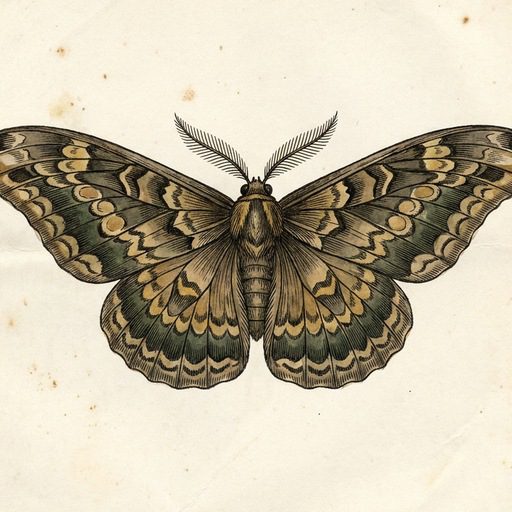
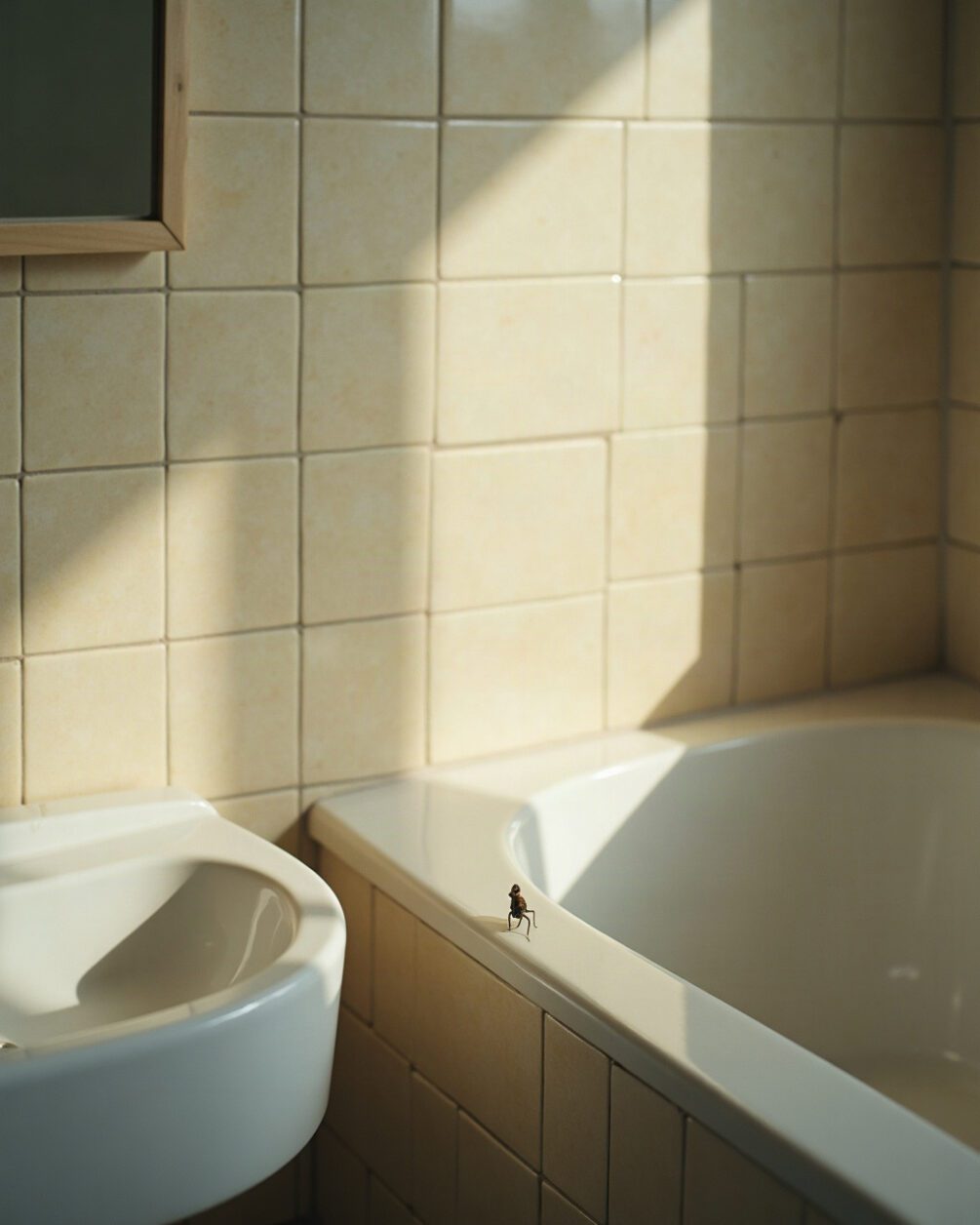
The small fuzzy thing sitting motionless on a bathroom tile is almost certainly a drain fly, not a moth. It has one pair of wings held roof-like over the body, and it runs across a surface before taking off. That single behaviour separates it from every real moth, and the room it is in separates the real moths from each other.
- Bathroom or kitchen, resting flat on a wall, runs before flying: drain fly, and the fix is inside the pipe.
- Kitchen, small and buff, weak flight near cupboards: pantry moth, and the source is a food packet.
- Wardrobe, avoids light, hops across fabric: clothes moth, and the damage is done by the larva.
Most household moth searches start with something that is not a moth. Drain flies are so convincingly moth-like that the common name for them is moth fly, and they occur in exactly the rooms where people are least expecting a fly.
Drain flies, the one you probably have
Two to five millimetres, dark grey to brown, densely hairy, with broad wings held roof-like over the body so the outline is heart-shaped. They sit motionless on tiles, on the underside of a worktop, or on the wall above a shower.
Two things give them away. They have one pair of wings, because they are true flies, while a moth has two pairs. And they run across a surface before taking off, then fly a short weak hop and settle again. A moth flutters off directly.
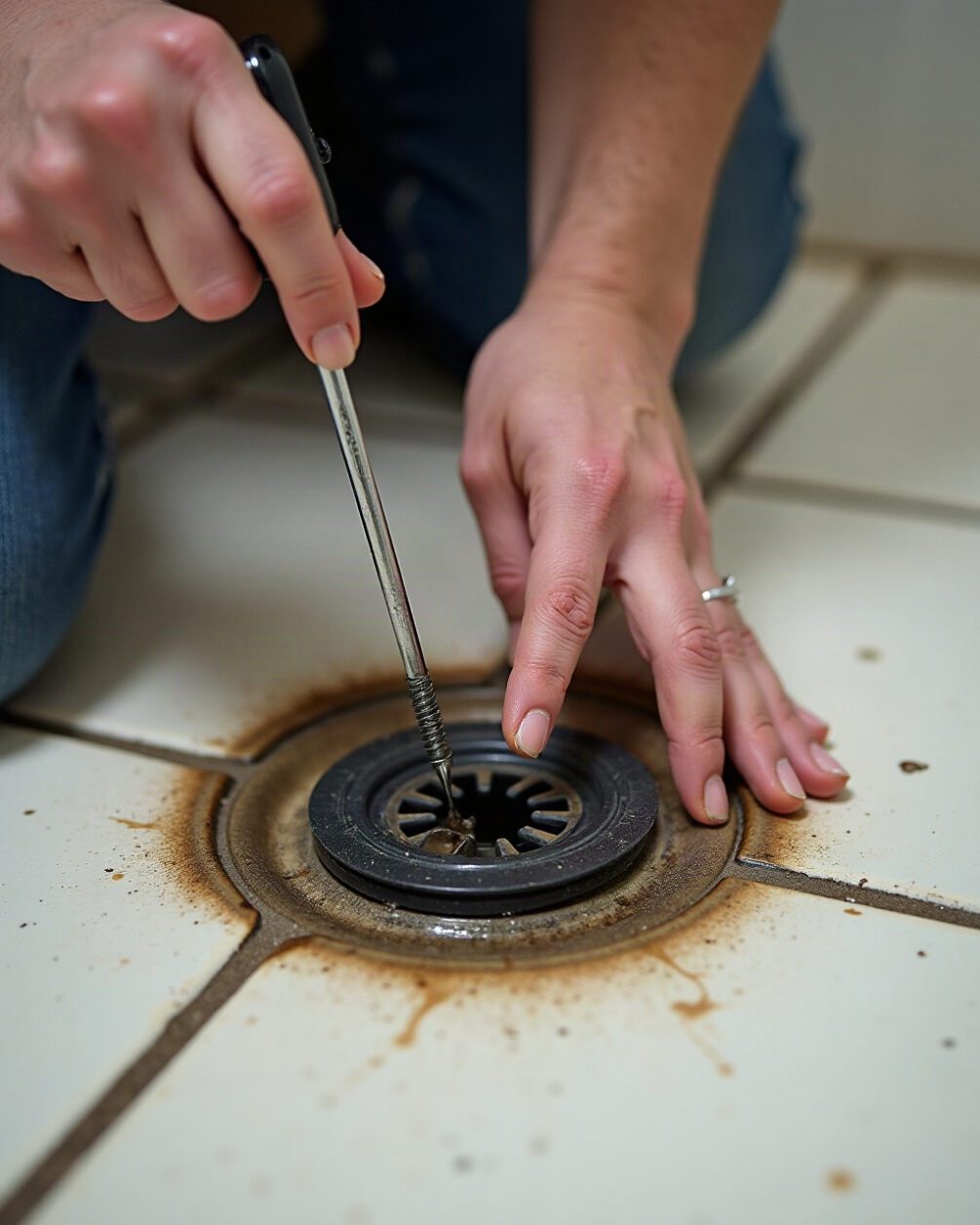
They breed in the gelatinous organic film that coats the inside of a waste pipe, feeding on it as larvae. That is the whole problem and the whole solution: bleach runs straight through the film without removing it, so the fix is mechanical scrubbing plus an enzyme or bacterial treatment that digests it.
Our drain fly guide covers the method, the bathroom guide covers the room, and the under-sink guide covers the other cupboard they use. A rarely used guest shower or a floor drain that has dried out is a common source, and simply running water into it weekly helps.
Fungus gnats and fruit flies, the other small fliers
Neither looks much like a moth, but both get caught by the same search because people describe any small flying insect as a moth when it is indoors.
Fungus gnats are slender, long-legged, and drift around houseplants. The larvae live in wet compost, so the fix is letting the surface dry between waterings rather than treating the adults. Our houseplant soil guide covers them.
Fruit flies are rounder, often with red eyes, and hover near fruit, bins and recycling. Kentucky describes them breeding in fermenting fruit and residues in drains and bins. Our guide to telling the three apart is the page that settles which small flier you have, and it matters because the three need entirely different fixes.
The moths that are actually moths
Two matter indoors, and they live in different rooms.
Pantry moths, chiefly the Indian meal moth, are small with a distinctive two-tone wing: pale at the base, coppery or bronze at the tip. They fly weakly around a kitchen at dusk. The adults do no damage; the larvae are the problem, and they leave silk webbing in packets. Kentucky notes that stored product infestations usually trace to a single contaminated item. Our meal moth guide covers the life cycle, and the removal guide covers the cupboard search.
Clothes moths are smaller, plain buff or golden, and behave nothing like a moth at a lamp: they avoid light, flutter weakly, and often run or hop across fabric rather than fly across a room. Again the larva does the damage, leaving webbing and grazed patches in wool. Our clothes moth guide covers treatment and the pantry versus clothes moth comparison is the fastest way to tell which search you are running.
The rule that saves time: a moth circling a lamp is neither of these. Both indoor pest moths avoid light. Something drawn to a bulb came in from outside and is not eating anything you own.
Caddisflies and plume moths, outdoors
Caddisflies look strikingly like moths, hold their wings roof-like, and gather near water and at lights on summer evenings. They have hairy wings rather than scaled ones, aquatic larvae, and no interest in a house. They are harmless and a good sign for water quality.
Plume moths are the ones that look like a small aeroplane, with wings held out straight and deeply divided into feathery lobes. They are genuine moths, outdoor and harmless, and they get photographed a lot because the shape is so odd.

The quick sort
| Where and how | What it is | What to do |
|---|---|---|
| Bathroom tile, still, runs then hops | Drain fly | Scrub the waste pipe, enzyme treatment |
| Kitchen at dusk, two-tone wings | Pantry moth | Empty and check every dry good |
| Wardrobe, avoids light, plain buff | Clothes moth | Check folds and stored wool for webbing |
| Around plants, slender and long-legged | Fungus gnat | Let the compost surface dry out |
| Circling a lamp, any size | Outdoor moth | Change the bulb to a warm one |
If the last row is the answer, our guide to insects and light at night covers why colour temperature matters more than brightness.
Common questions
It has fuzzy wings but sits completely still. Moth or fly?
Almost certainly a drain fly. Real moths rarely sit motionless on a bathroom wall in daylight for hours, and drain flies do it constantly.
I keep killing them and more appear.
Because the larvae are inside the pipe. Killing adults on the tile does nothing to the population, which is the single most common mistake in this topic.
Do drain flies carry disease?
They are a nuisance rather than a health risk in a domestic setting. What they signal, a pipe with a thick organic film in it, is worth dealing with regardless.
Final verdict
Count the wings and watch the take-off. One pair, held roof-like, and a run before a short weak flight means a drain fly, and the work is inside the waste pipe rather than on the wall. Two-tone wings in a kitchen means a pantry moth and a packet to find. Plain buff and light-avoiding in a wardrobe means a clothes moth and folds to inspect. And anything circling a lamp came from outside, eats nothing you own, and is best handled by changing the bulb.