You noticed a cloud of tiny flies in the kitchen and reached for the word everyone reaches for: gnats. The trouble is that “gnat” lumps three different insects together, and they do not breed in the same place. Fungus gnats come out of damp potting soil, fruit flies come out of fermenting produce and the gunk in drains, and drain flies (the fuzzy “moth flies”) come out of the film lining your pipes. Telling them apart by body shape and, above all, by where they swarm is the whole job, because the ID points you straight at the breeding source you have to destroy.
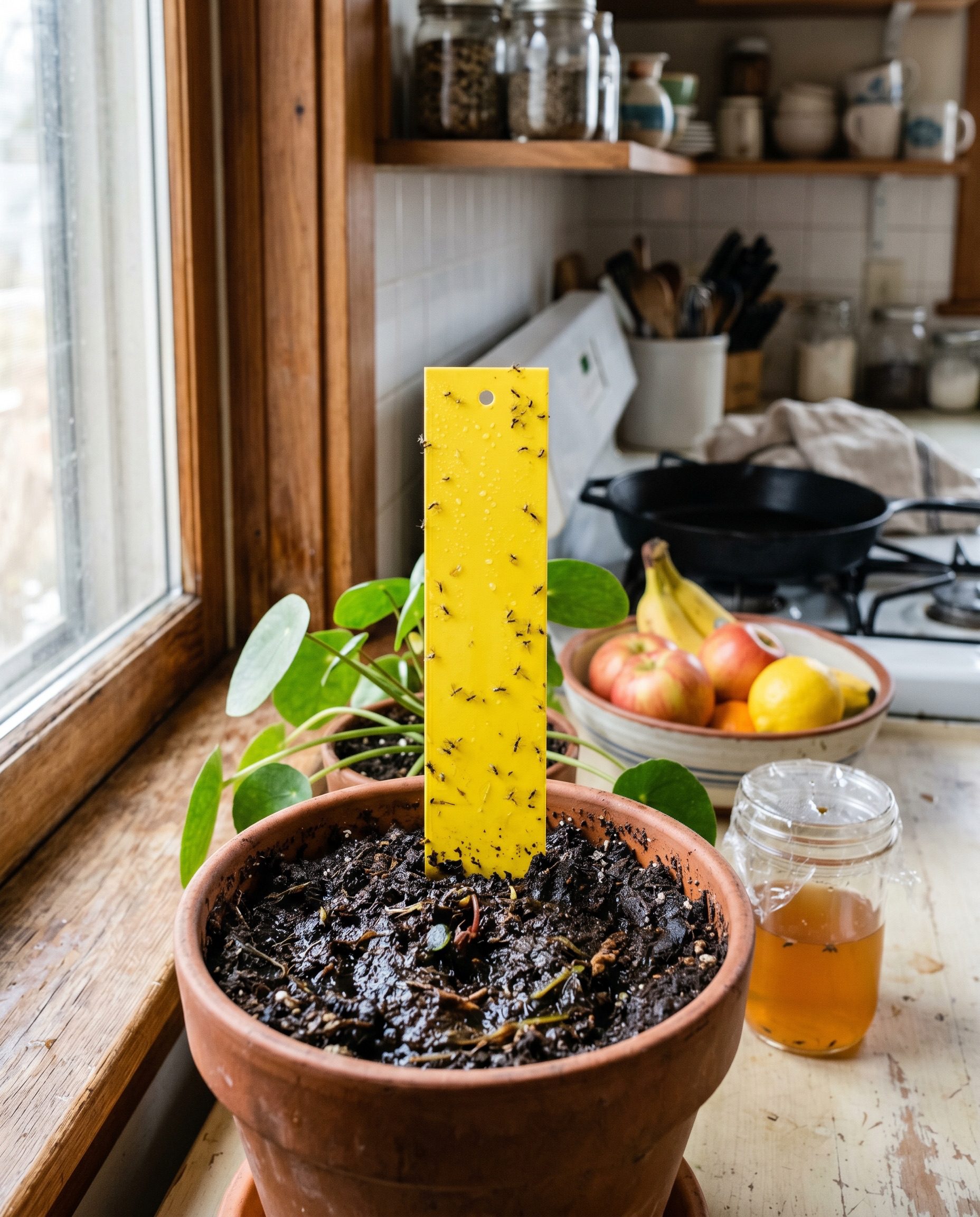
Three different insects hide behind the word “gnats,” and where they swarm tells you which one you have: skinny dark flies on your houseplants are fungus gnats, tan flies on the fruit bowl are fruit flies, and fuzzy moth-like flies on the sink wall are drain flies.
- The confirming feature: where they congregate plus body shape; soil means fungus gnat, fruit bowl means fruit fly, drain wall means drain fly.
- Most-confused pair: fungus gnats and fruit flies, separated by body (skinny dark vs. round tan with red eyes) and breeding site (soil vs. produce).
- What it means: trapping adults never finishes the job; find and kill the breeding source the ID points to.
n
A related guide worth having to hand: Types of Flies: Identification Guide.
n
Quick answer: which gnat is it
Three insects share the “gnat” label, and the fastest split is location. A skinny, dark, mosquito-shaped fly walking on the soil of a houseplant is a fungus gnat (family Sciaridae). A small, rounded, tan-to-brown fly hovering over the fruit bowl or hanging around the kitchen drain, often with red eyes, is a fruit fly (Drosophila melanogaster). A chunky, gray, fuzzy fly that sits flat on the bathroom or sink wall and barely flies is a drain fly, also called a moth fly (family Psychodidae). Get the location and the body shape together and you have the ID, because each one breeds in exactly one kind of place. If you only catch a glimpse, our fruit fly versus gnat comparison walks the two most-confused ones side by side.
The one feature that confirms it
The single most reliable tell is not the fly itself, it is where the fly congregates, because each species breeds in one specific medium and rarely strays far from it. Fungus gnats stay near potted plants because their larvae feed on fungus and organic matter in wet soil. Fruit flies orbit ripening or rotting produce and the food residue in drains because that fermenting sugar is where they lay eggs. Drain flies cling to the wall above a sink or floor drain because their larvae live in the gelatinous biofilm coating the pipe just below.
Body shape backs up the location read. Hold the fly’s silhouette against the three profiles and the genus usually falls out at once. Fungus gnats are slender with long dangling legs and clear wings, like a miniature mosquito. Fruit flies are short and stout with a rounded abdomen and, on the common species, bright red eyes. Drain flies are unmistakable once you have seen one: a fuzzy, moth-like body with broad leaf-shaped wings held roof-like over the back. The UC IPM’s Pest Notes on fungus gnats describes that slender, dark, weak-flying form and ties it directly to overwatered soil, which is the cleanest confirmation you can get without a hand lens.
Full description of each type
Run down the three and the differences get obvious. Size is your first sort: all three are small, but the shape diverges fast. Fungus gnats run about 2 to 4 millimeters, dark gray to black, with a distinct Y-shaped wing vein you can see under magnification, and they tend to run and hop across the soil more than they fly cleanly.
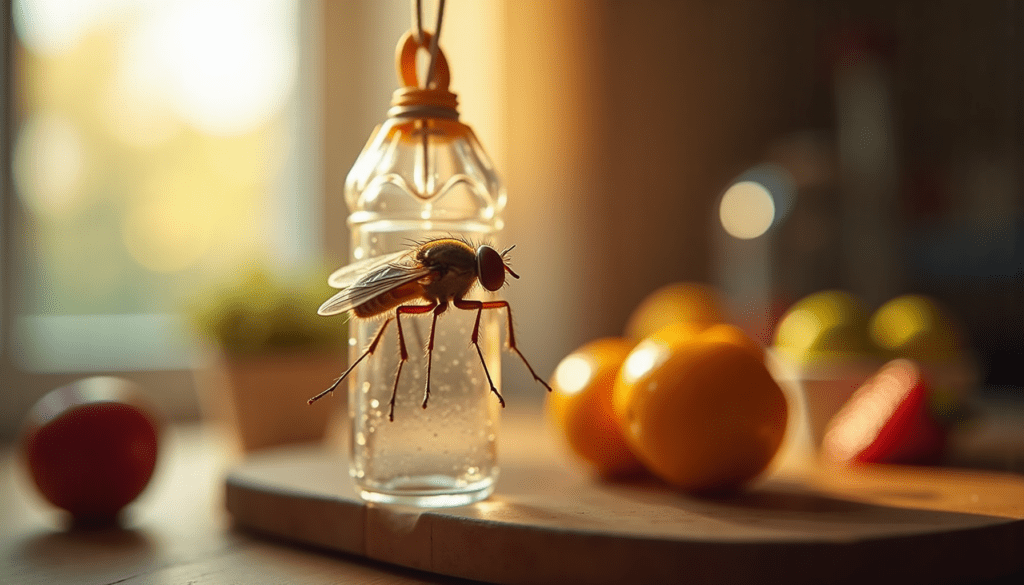
Fruit flies are roughly 3 millimeters, tan to yellow-brown, with a blunt rounded body and the famous red eyes on the most common kitchen species. They are strong, hovering fliers that gather in a loose cloud over anything fermenting. The red eye plus the fruit-bowl location is a near-certain fruit fly. A second small fly, the dark-eyed fruit fly or “phorid” humpbacked fly, can show up at drains too and runs in quick erratic bursts rather than hovering, which is a useful tell if the eyes are not red.
Drain flies are the outlier. At 2 to 5 millimeters they look less like a gnat and more like a tiny moth, with a densely hairy body and rounded wings that give them a soft, dusty outline. They are poor fliers that hop short distances and rest flat against vertical surfaces, which is why you find them parked on the tile above a drain rather than circling the room. Once you register that fuzzy, flat-resting profile you will never mistake it for the other two.
Where each one breeds
This is the part that actually clears the problem, so it gets the most attention. The ID matters only because it names the breeding source, and killing the source is the only thing that ends the swarm. Trapping adults thins the visible cloud but does nothing to the eggs and larvae developing out of sight, so a vinegar trap on its own will fill up and the flies will keep coming.
Fungus gnats breed in consistently damp potting soil, where larvae feed in the top inch or two. The fix is cultural before it is chemical: let the soil dry out between waterings so the larvae starve, then back that up with yellow sticky traps for the adults. The fungus-gnat Pest Notes spell out that drying the soil is the load-bearing step, and our houseplant fungus gnat guide lays out the watering routine and the BTI soil drench that targets the larvae.
The detail on which compost dwellers actually do harm sits in bugs in houseplant compost.
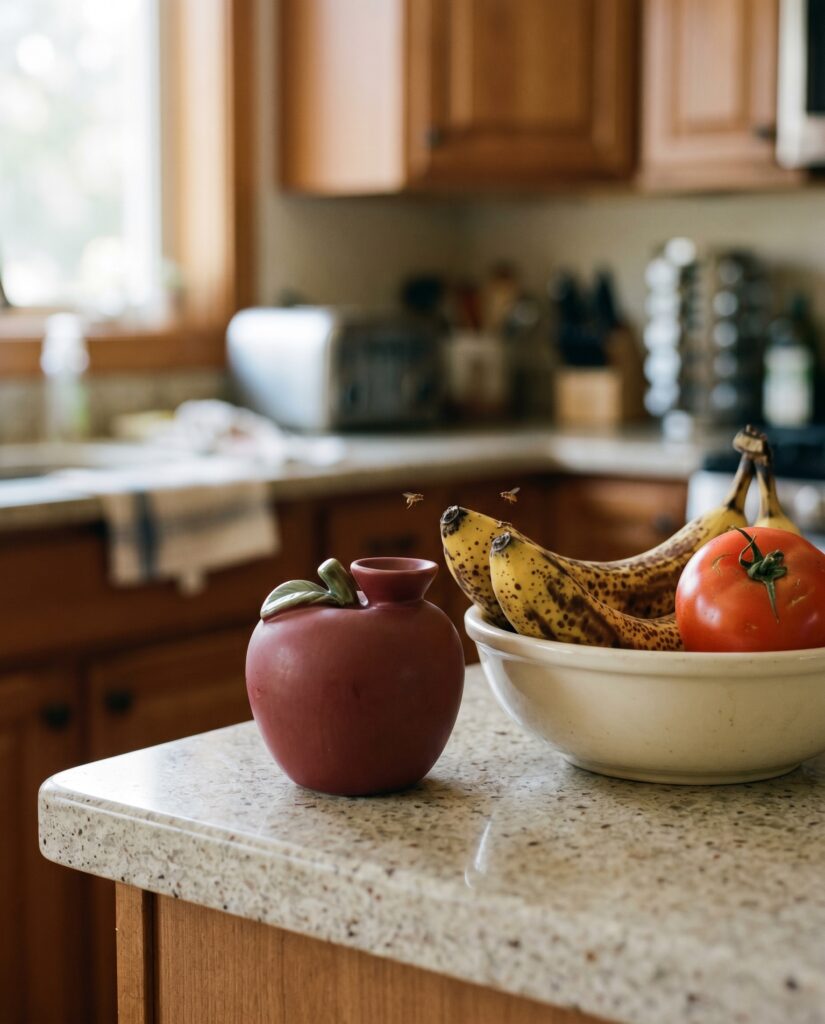
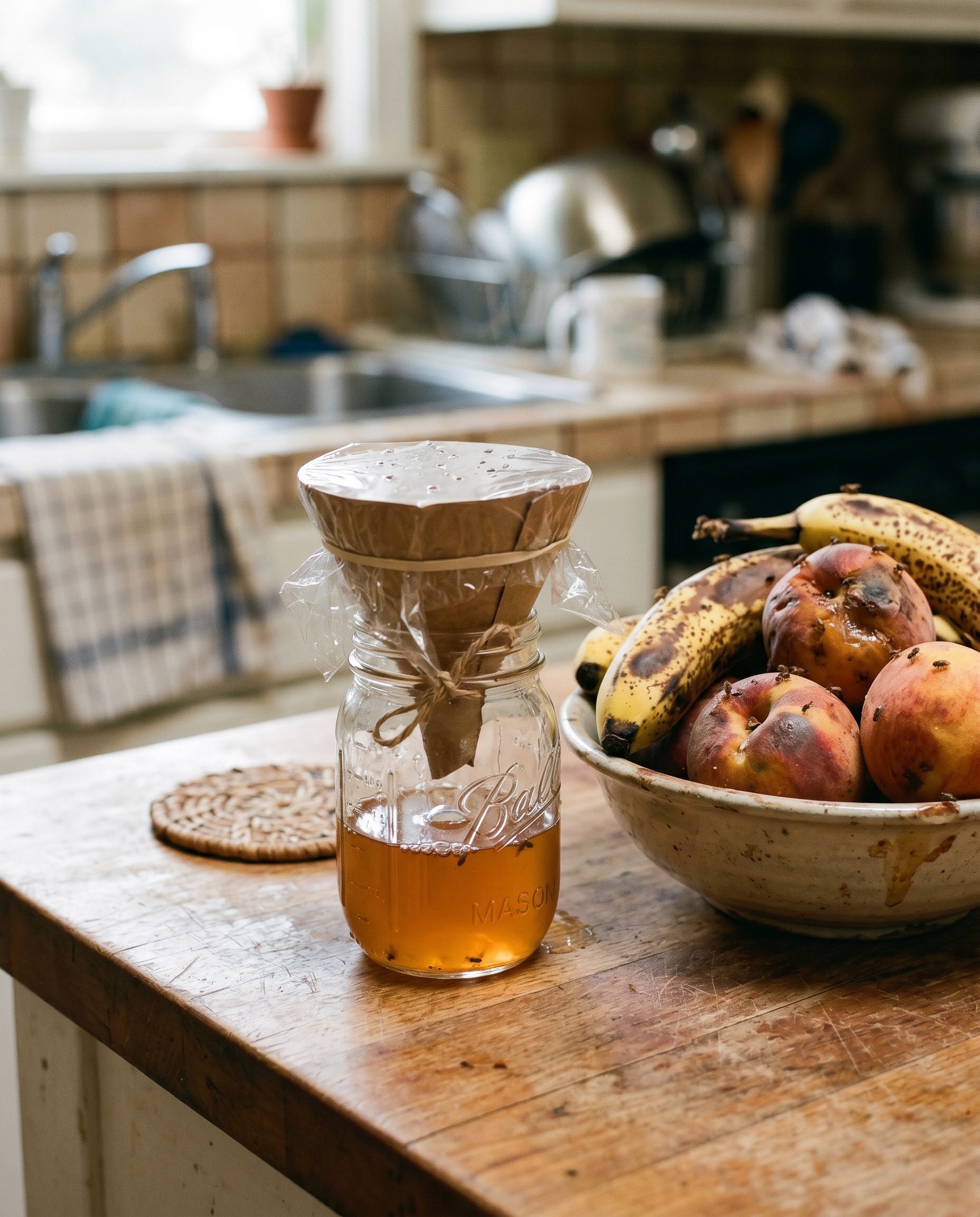
Fruit flies breed in fermenting produce, spills, and the organic film in drains. Sanitation is the whole game here: bin or refrigerate overripe fruit, wipe up juice and beer residue, and clean the recycling bin. The UC IPM guidance on vinegar and fruit flies frames it as a source-reduction problem first and a trapping problem second, which is the right order.
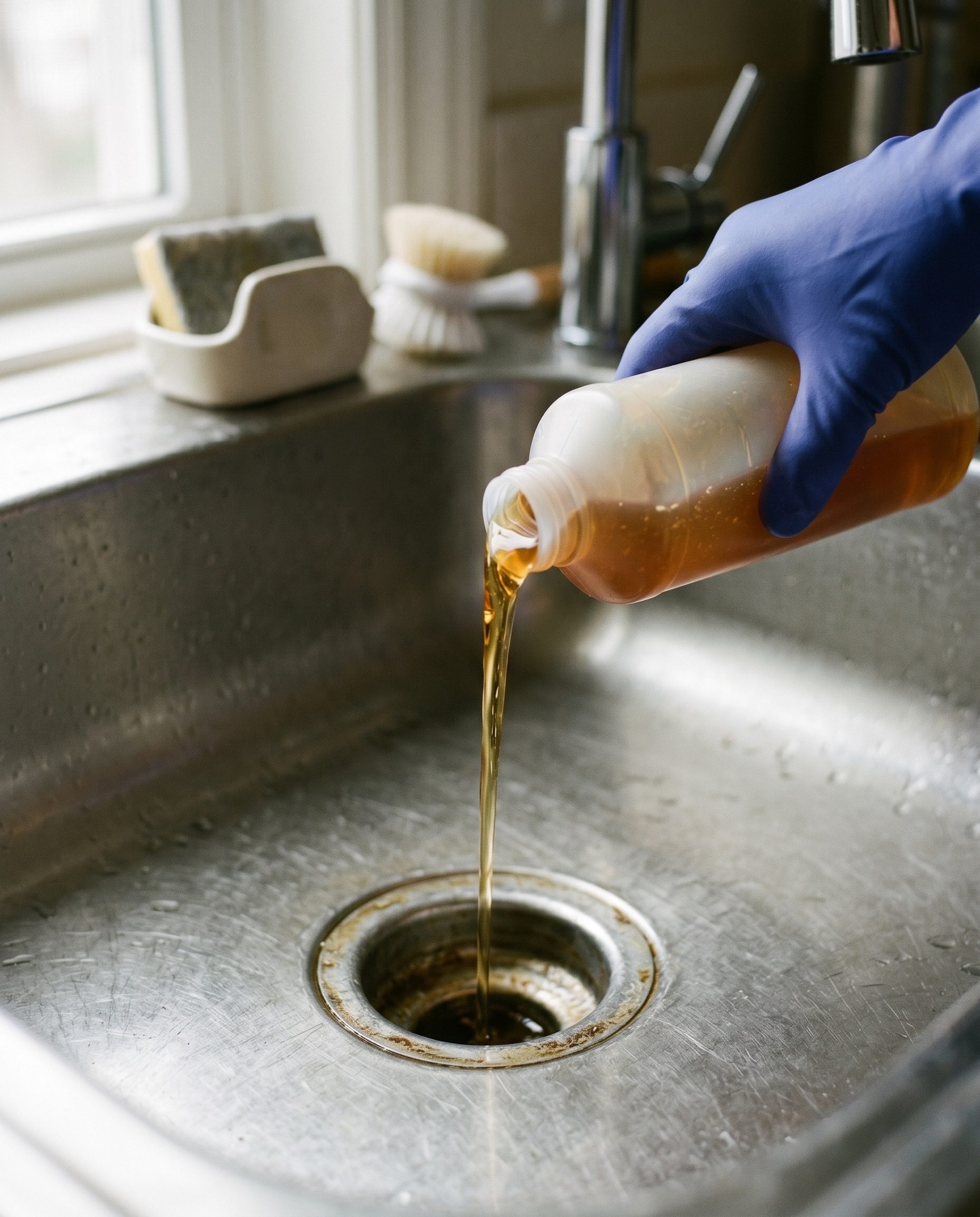
Drain flies breed in the gelatinous biofilm inside slow or unused drains, and this is where most people go wrong. Bleach rinses straight through and does not remove the film the larvae live in, so the flies return within days. You have to physically remove the gunk: a stiff drain brush to scrape the pipe walls, then an enzyme or bacterial drain cleaner that digests the organic film over a few days. UC IPM’s notes on small-fly sanitation and source reduction make the same point that you eliminate the breeding medium, not just the adults you can see.
Tell them apart at a glance
When the fly is too fast to study, use the location and the silhouette together. Short labels in the first column are the species; the other two columns are the tells that settle it.
| Type | Key feature | Where it breeds |
|---|---|---|
| Fungus gnat | Slender, dark, mosquito-like with long legs | Damp potting soil of houseplants |
| Fruit fly | Stout, tan, often red-eyed; hovers in a cloud | Fermenting produce and drain residue |
| Drain fly | Fuzzy, gray, moth-like; rests flat on walls | Biofilm inside sink and floor drains |
A quick field test settles the drain question: tape a clear cup or a sticky note loosely over the drain overnight, sticky side down. If you find flies trapped on it in the morning, that drain is the nursery and the enzyme treatment goes there. For a full walkthrough once you know which one you have, see our guide to getting rid of gnats in the house.
Where and when you see them
These flies are year-round indoor pests rather than seasonal ones, because your kitchen and your houseplants stay warm and damp no matter the weather. Fungus gnats spike in winter when people overwater plants brought inside and the soil never gets a chance to dry. Fruit flies peak in late summer and fall with the harvest and the open fruit bowl, riding in on produce from the store or garden. Drain flies show up whenever a drain goes unused long enough for the biofilm to build, which is why a guest bathroom or a basement floor drain is a classic spot. The EPA’s sanitation-first approach to indoor pests applies cleanly to all three: remove the conditions that let them breed and you rarely need a spray at all. None of these flies bite or transmit disease to people, so this is a nuisance to solve, not a health scare.
If that is where this is heading, bugs that look like moths covers the drain fly that fools everyone.
Common questions
Are gnats and fruit flies the same thing?
No. “Gnat” is a loose catch-all that usually means fungus gnats, while fruit flies are a separate insect. The quick split is location and shape: fungus gnats are skinny and dark and live on houseplant soil, fruit flies are stout and tan with red eyes and live on the fruit bowl. They breed in different places, so the fix differs too.
Why do I have gnats with no fruit out?
Because they are probably not fruit flies. Skinny dark flies near your plants are fungus gnats breeding in wet soil, and fuzzy flies on the sink wall are drain flies breeding in the pipe. Check the soil and the drains before you assume the fruit bowl is the source.
Will a vinegar trap get rid of them?
Only partly. A vinegar trap catches adult fruit flies and gives you a count, but it does nothing to the eggs and larvae in the breeding source. You have to clean out the produce, spills, or drain residue at the same time, or the trap fills and the flies keep emerging.
Does bleach kill drain flies?
Not reliably. Bleach pours straight through the drain without scrubbing off the biofilm the larvae live in, so the flies come back. Scrape the pipe wall with a brush and use an enzyme or bacterial cleaner that digests the film over several days.
How do I know which drain is the problem?
Tape a clear cup or sticky note loosely over each suspect drain overnight. The drain that catches flies is the one breeding them, and that is where the enzyme treatment goes.
Final verdict
The word “gnats” hides three different insects, and the ID is worth getting right because it names the breeding source you have to destroy. Skinny dark flies on the houseplant soil are fungus gnats, so dry out the soil and add sticky traps. Stout tan flies with red eyes on the fruit bowl are fruit flies, so bin the overripe produce and clean the drains. Fuzzy moth-like flies resting on the sink wall are drain flies, so scrub the pipe and digest the biofilm with an enzyme cleaner. In every case the lesson is the same: trapping the adults you can see is the easy half, and you do not win until you find and kill the source the adults came from.
Next steps:
– Compare the two most-confused ones in our fruit fly versus gnat guide.
– Work the source-elimination plan in our guide to getting rid of gnats in the house.
– Fix the soil problem behind fungus gnats with our houseplant fungus gnat guide.
If the thing you found is not on this page, our guide to working out what a bug is from what you saw starts from colour, place and movement instead.