
If you keep swatting little dark flies that drift up off your houseplants, you do not have a fly problem, you have a watering problem wearing wings. Fungus gnats breed only in the top inch of constantly moist potting soil, so the whole fix is to take that habitat away: let the top of the soil dry out hard between waterings, water from the bottom so the surface stays dry, and drench the soil with a BTI treatment to kill the larvae that are already there. Yellow sticky stakes catch the adults while the soil dries. Change how you water and the gnats simply have nowhere to breed.
Fungus gnats breed in the wet top inch of potting soil, so the cure is to dry that layer out between waterings, water from the bottom, and drench the soil with BTI to kill the larvae while sticky stakes catch the adults.
- Free first: Let the top inch of soil dry out completely before you water again, and switch to watering from the bottom so the surface stays dry.
- If that fails in two weeks: Drench the soil with a BTI product (the mosquito-bit bacteria) and stand a yellow sticky stake in each pot.
- Skip: Fogging the room or spraying the leaves; the adults are harmless and the breeding is down in the soil.
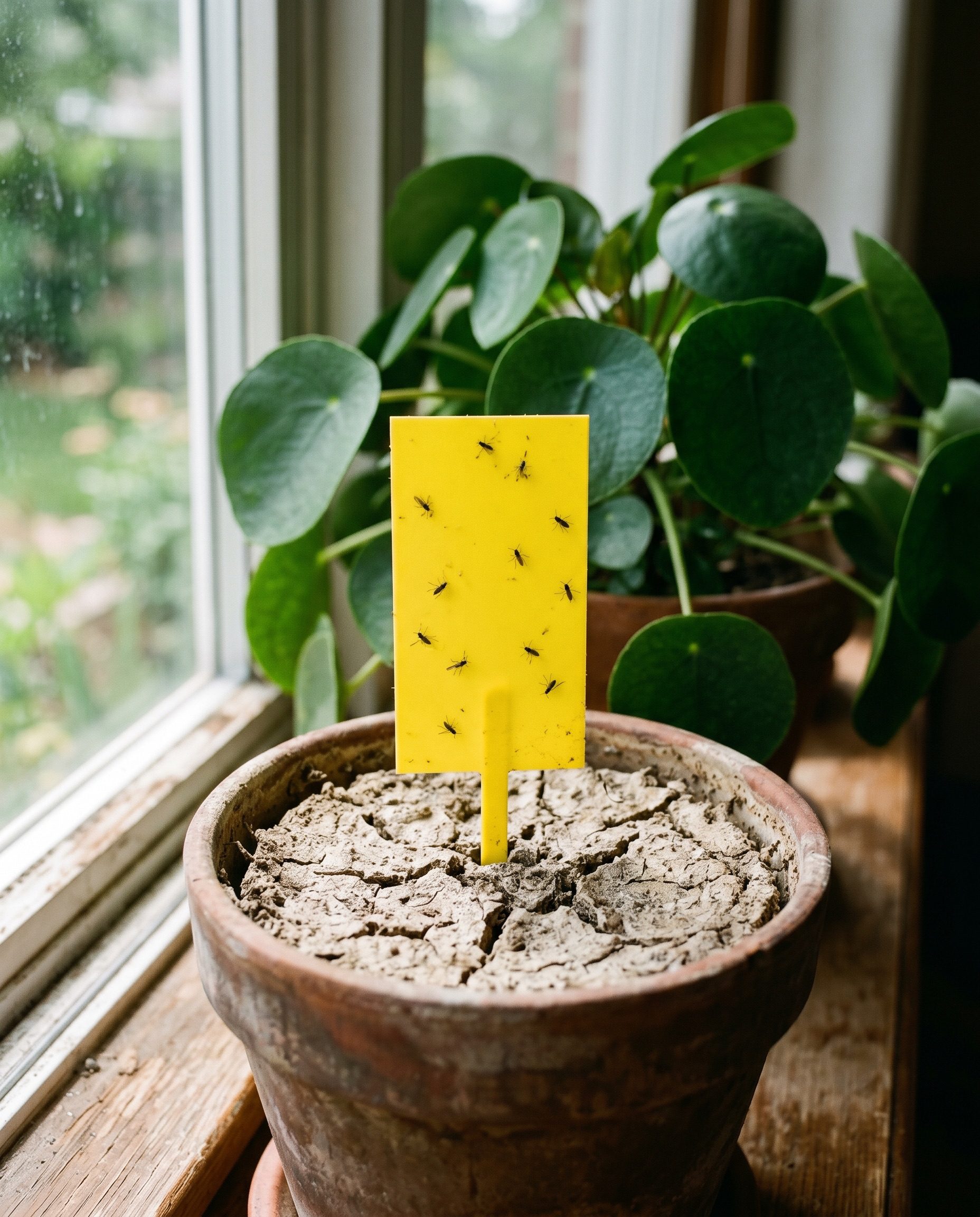
What you are actually seeing
The adults are the dramatic part, but they are also the least important part. Adult fungus gnats are weak fliers, about an eighth of an inch, dark, with long legs, and they do not bite, do not spread disease, and live only about a week. They drift up when you water or brush a leaf, which is why they feel like an infestation when really they are a symptom. The work is happening out of sight.
Down in the wet soil are the larvae, tiny translucent maggots with shiny black heads, and that is the population that actually matters. They feed on fungus, algae, and decaying organic matter in the soil, and in a heavily colonized pot they will start nibbling fine root hairs, which is why a badly infested seedling can stall or yellow. Every adult you swat came from that soil and will lay the next batch right back into it. Knowing which life stage to target is the difference between swatting forever and being done in three weeks, so if you want to be sure these are fungus gnats and not fruit flies or drain flies, our guide to telling fungus, fruit, and drain gnats apart walks the ID before you treat.
Why your plants grow them
Fungus gnats are not a sign of a dirty home or a sick plant. They are a sign of soil that stays wet at the top, and that usually traces back to one habit: watering a little, often, from above. The University of California IPM program is blunt that overwatered potting soil is where fungus gnats breed, because the constantly damp surface grows exactly the fungus and algae the larvae eat.
A few setups make it worse. Peat-heavy and coir-heavy mixes hold moisture at the surface for days, and pots with no drainage or ones sitting in a full saucer keep the bottom swampy. Cool, low-light spots and winter windowsills slow evaporation, which is why this flares up indoors from late fall through spring. The cause and the cure are the same lever: how wet the top inch stays. This is also the honest reason trapping alone never finishes the job. You can paper a room in sticky cards and still lose, because every card only removes adults while the soil keeps minting new ones. It is the same trap that catches people with small kitchen flies, where source removal beats trapping the adults: find and kill the breeding site or the problem just refills.
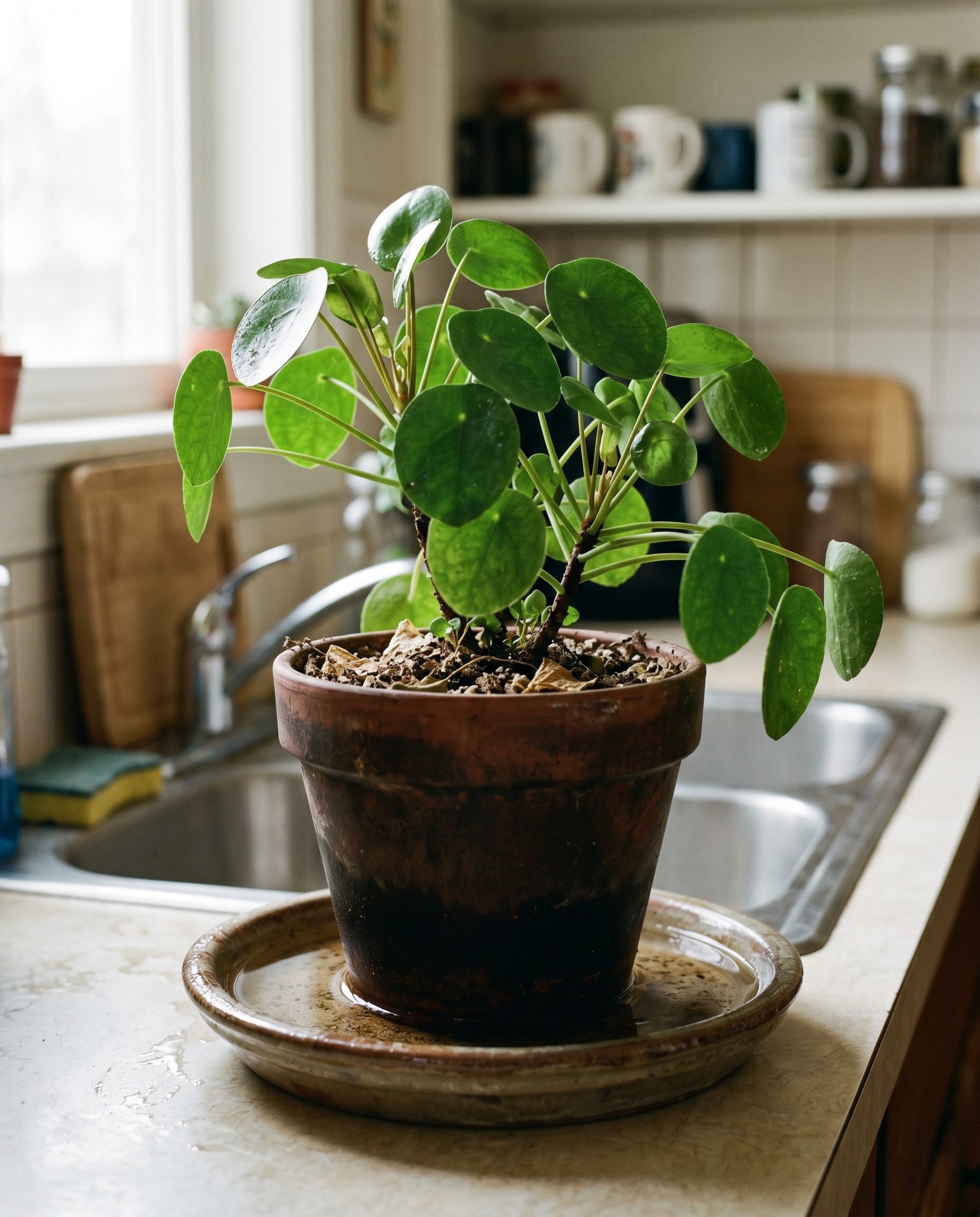
Dry the soil, water from below
Start here, because it costs nothing and it removes the habitat. Let the top inch of soil dry out completely before you water again, and check by pushing a finger in rather than guessing from the surface. Most common houseplants are fine, often happier, with a real dry-down between drinks; the gnat larvae are not, because their food and moisture live in that top layer. A few dry cycles alone will crash a mild population.
Then change how the water gets in. Instead of pouring over the top, set the pot in a saucer or basin of water for twenty to thirty minutes and let the soil wick moisture up from below, then pour off whatever is left so the pot is not standing in it. Bottom watering keeps the surface dry while the roots still drink, which leaves the larvae nowhere comfortable to feed. If you want a belt-and-suspenders move, top the soil with a half-inch of coarse sand, fine gravel, or horticultural grit; the adults will not lay in a dry, gritty surface and emerging gnats struggle to push through it. This single change in watering does most of the work, and it lines up with the EPA’s integrated, prevention-first approach to pest control, which puts removing the conditions a pest needs ahead of reaching for anything to spray.
Kill the larvae, catch the adults
Drying the soil starves the next generation, but it does not instantly clear the larvae already in there, and that is where one targeted, least-toxic step earns its place. The cleanest option is a soil drench of BTI, the bacterium Bacillus thuringiensis israelensis, the same active ingredient sold as mosquito bits or mosquito dunks. Steeped in water and poured through the soil, it is eaten by the larvae and kills them while leaving you, your pets, and pollinators alone. UC IPM specifically points to letting the soil dry and using a BTI soil drench as the homeowner fix, and it is a genuinely good-bug-friendly tool because it targets fly larvae rather than spraying broad-spectrum poison around your home. Whatever BTI product you use, read and follow the label for how much to use and how often, because the label is the rule.
For the adults already flying, stand a yellow sticky stake in each pot. The bright yellow draws them, the glue holds them, and the count on the card is also your scoreboard, showing whether the population is shrinking week to week. The traps are a real part of the plan, just not the whole plan; our roundup of the best fungus gnat sticky traps and stakes covers which formats hold up in soil. Match the tool to the pot rather than blasting the whole room.
| Situation | Best approach | Watch out for |
|---|---|---|
| A few gnats, healthy plant | Dry the top inch, water from the bottom | Do not overwater out of habit |
| Persistent after drying | BTI soil drench plus a yellow sticky stake | Follow the BTI label rate |
| Seedlings or propagation tray | Bottom watering and a grit topdressing | Larvae chew tender roots fastest |
| Many pots, heavy spread | Repot the worst into fresh dry mix | Old soggy mix is the source |
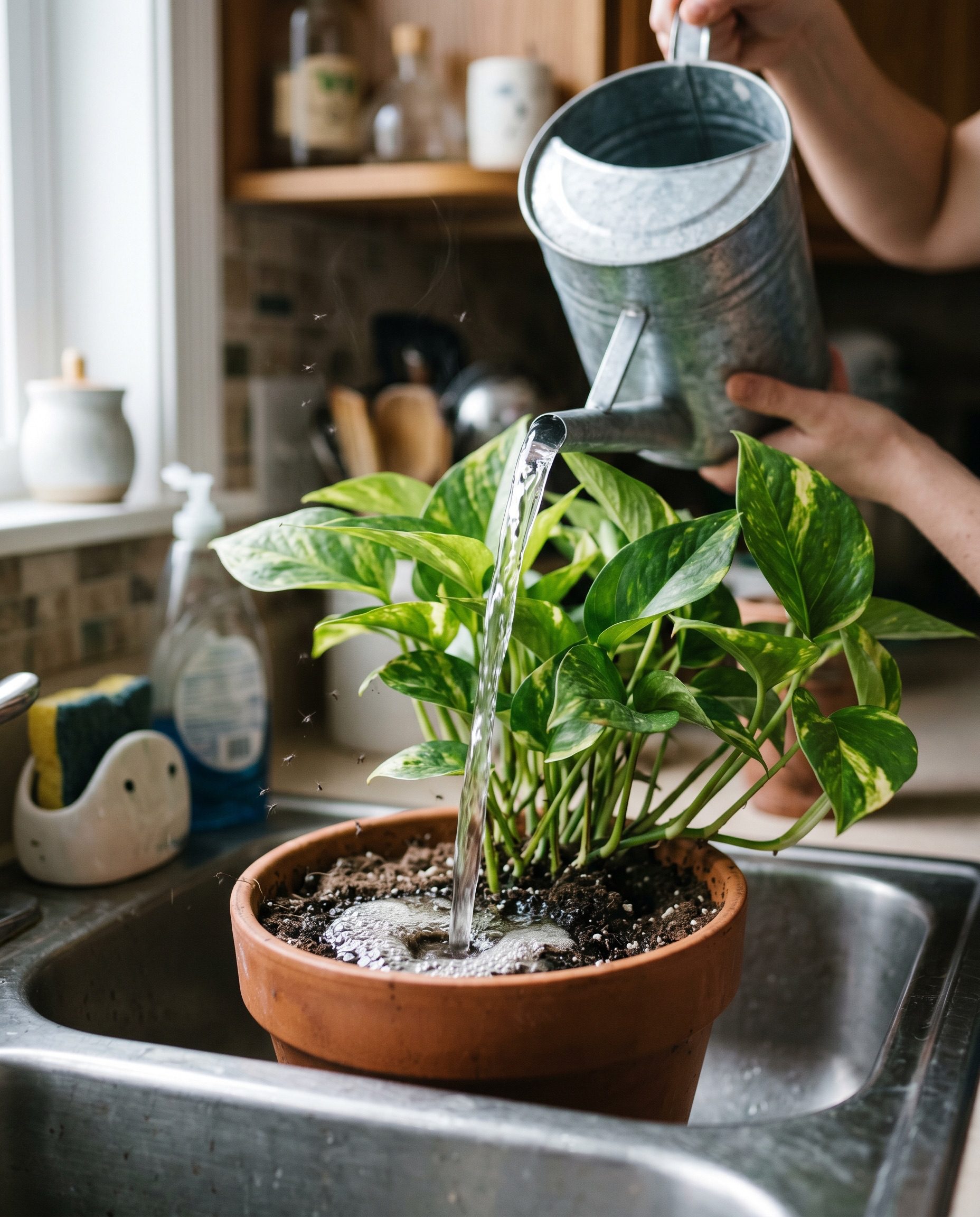
Keep them from coming back
Prevention here is just the dry-down habit made permanent. Keep letting the top inch dry between waterings, keep bottom watering, and empty saucers so no pot sits in a puddle. Let new bags of potting mix dry out before you plant in them, since gnats often ride in on moist commercial soil, and store the bag closed and dry. When you bring a new plant home, isolate it for a couple of weeks and watch for that telltale drift of gnats before it joins the rest of your collection.
If a plant is chronically buggy no matter what you do, repot it into fresh, fast-draining mix and discard the old soggy soil, because that mix is the source. The reason this all holds is the same reason it works elsewhere: it is the same source-reduction logic used for small kitchen flies, find the breeding material and remove it rather than chasing adults. If gnats are also coming from drains or the kitchen rather than your pots, that is a different source, and our broader guide to getting rid of gnats in the house sorts out which is which.
When to call a pro
Fungus gnats almost never need a professional; they are a DIY fix once you change how you water. The honest reason to bring in help is not the gnats but what a stubborn case can signal. If pots stay buggy through a correct dry-down and BTI cycle, suspect a chronic moisture problem or a larger small-fly source you have not found, like a drain or a forgotten saucer under furniture. If small flies keep coming back across the whole home after you have cleared the plants, a licensed pest professional can help trace the real breeding source. For the plants alone, the steps above are the whole job.
Common questions
What kills fungus gnats instantly?
Nothing truly clears them instantly, because the larvae in the soil are the real population and they hatch in waves. A BTI soil drench kills larvae over a few days, sticky stakes pull down adults as they fly, and drying the top inch starves the next batch. Expect about two to three weeks for a full cycle, not an overnight fix.
Do the gnats actually hurt my plants?
The adults are harmless to plants and people; they do not bite. The larvae feed mostly on fungus and decaying matter, but in a heavy infestation they will chew fine root hairs and can stunt seedlings and weak plants. Healthy, established plants usually shrug them off, which is why the urgency is more about your sanity than the plant’s survival.
Does letting the soil dry out really work on its own?
Often, yes, for a mild case. Larvae need the moist top layer to survive, so a real dry-down between waterings breaks the cycle without any product. Pair it with bottom watering so the surface stays dry, and a light population can fade in a couple of weeks. Heavier infestations also need the BTI drench to clear the larvae already in the soil.
Will hydrogen peroxide or dish soap fix it?
A diluted soak can knock back some larvae, but it is easy to overdo and stress roots, and it does not change the wet-soil habit that caused the problem. BTI is more reliable and far gentler on the plant because it targets the larvae specifically. Fix the watering first; reach for a drench second.
Are these the same as fruit flies?
No. Fruit flies hover around ripe produce and breed in rotting fruit and drains, while fungus gnats stay near plants and breed in wet soil. Drain flies are fuzzier and come from the film inside drains, and notably bleach does not remove that film, only an enzyme or bio drain cleaner does. If you are not sure which you have, identify before you treat.
Final verdict
Fungus gnats are a watering problem wearing wings, so treat the soil, not the air. Let the top inch dry out hard between waterings and switch to watering from the bottom, and a mild case fades on its own. If it lingers, drench the soil with BTI to kill the larvae and stand a yellow sticky stake in each pot to clear and count the adults. Skip fogging the room or spraying the leaves, because the harmless adults are not where the problem lives. Be patient through one two-to-three-week cycle, keep the dry-down habit going, and the gnats run out of anywhere to breed.
Next steps:
– Confirm you have fungus gnats and not fruit or drain flies with our gnat identification guide.
– Pick a stake that holds up in soil from the best fungus gnat sticky traps.
– If the flies are coming from more than your plants, trace the source with our whole-house gnat guide.
Pingback: Tiny Bugs in Houseplant Soil: Identification Guide