n
n
n
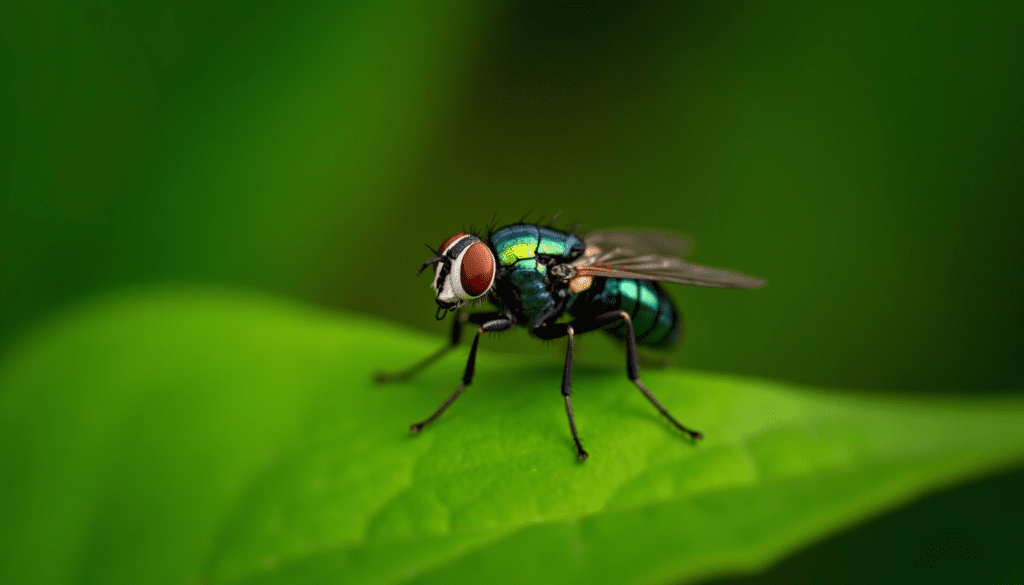
You spot a cloud of tiny flies in the kitchen and the first question is whether they are fruit flies or gnats, because the name changes what you do next. They look alike at a glance, but the difference is easy once you know where to look. Fruit flies are tan-bodied with conspicuous red eyes and they hover around ripe fruit, the recycling bin, and drains. Fungus gnats are smaller, dark, and mosquito-like, and they drift up from the soil of your houseplants. Where you see them, the fruit bowl versus the potted plant, is the fastest tell, and it points you straight at the breeding source you actually need to remove.
nn
n
Red eyes and a tan body around the fruit bowl means a fruit fly; a tiny dark mosquito-like fly rising from plant soil means a fungus gnat. The location is the tell, and it names the source you have to eliminate.
n
- n
- Fruit fly: Tan body, red eyes, hovers at ripe fruit, drains, and trash; breeds in fermenting produce and drain gunk.
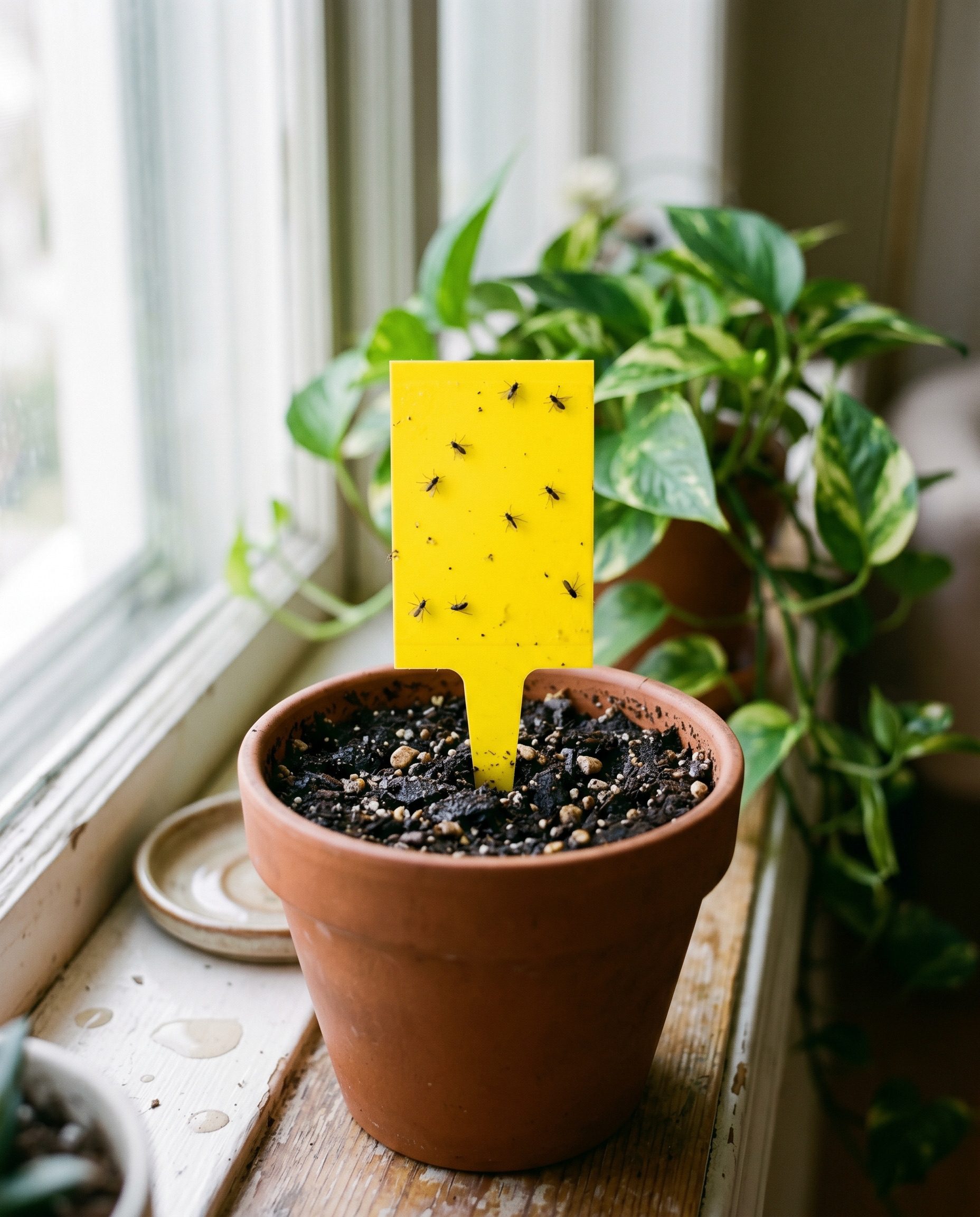
- Fungus gnat: Small, dark, delicate and mosquito-like; walks and drifts over houseplant soil; breeds in wet potting mix.
- The real fix: Trapping adults alone never clears either one; find and remove the breeding source.
n
n
n
n
nn
nn
Quick answer
nn
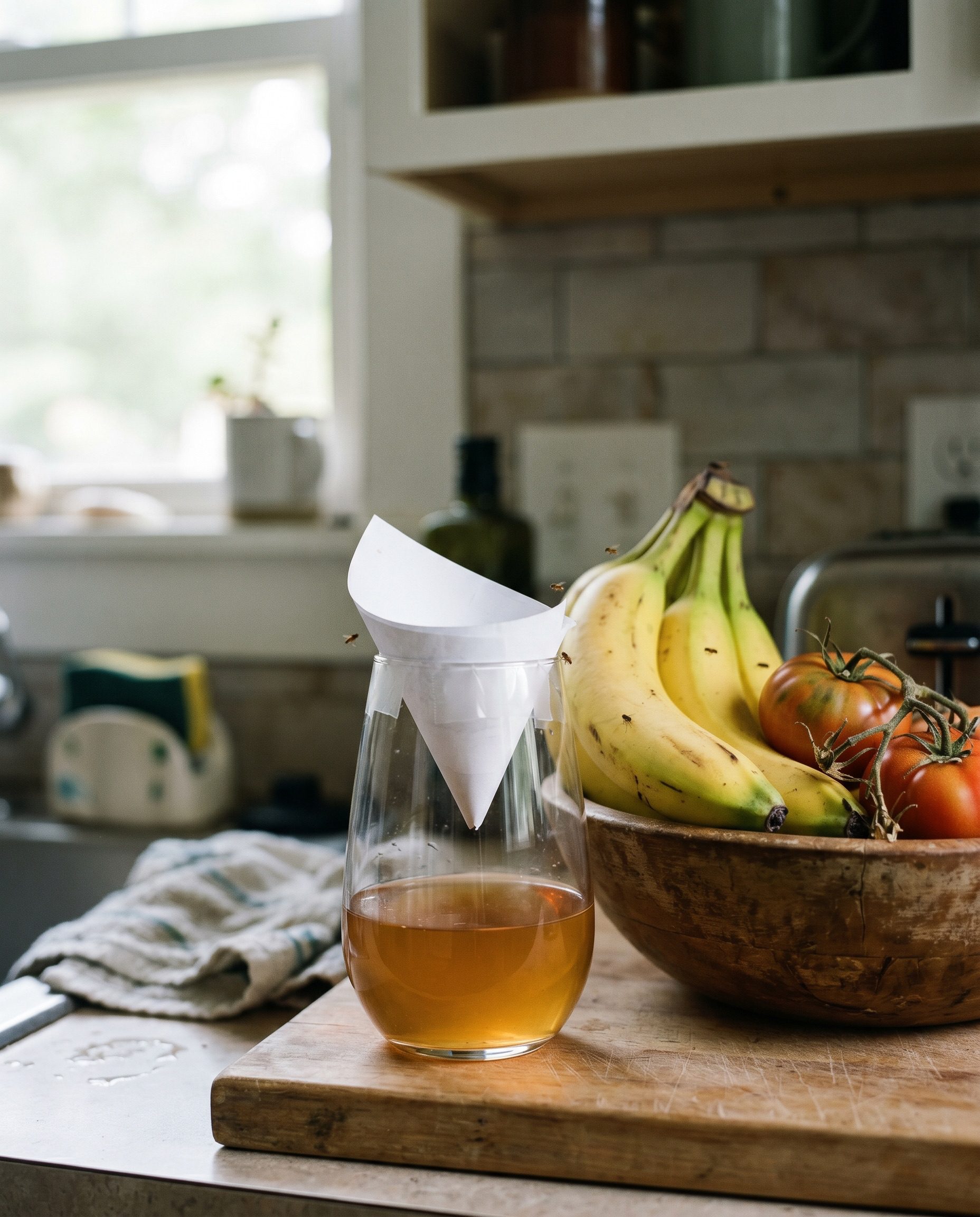
The fastest way to tell these two apart is to watch where they gather, then confirm with a close look. A fruit fly (_Drosophila_) clusters at ripe or rotting fruit, juice spills, and drains, and up close it has a stout tan body and bright red eyes. A fungus gnat (family Sciaridae) hangs around your houseplants and looks like a miniature mosquito, dark and long-legged, with clear wings. People also confuse both with drain flies, the fuzzy, moth-like flies that sit on bathroom walls. Get the location right and the ID usually follows, because each fly is tied to a different food source. That source, not the adult you swat, is what you are really fighting.
nn
The one feature that confirms it
nn
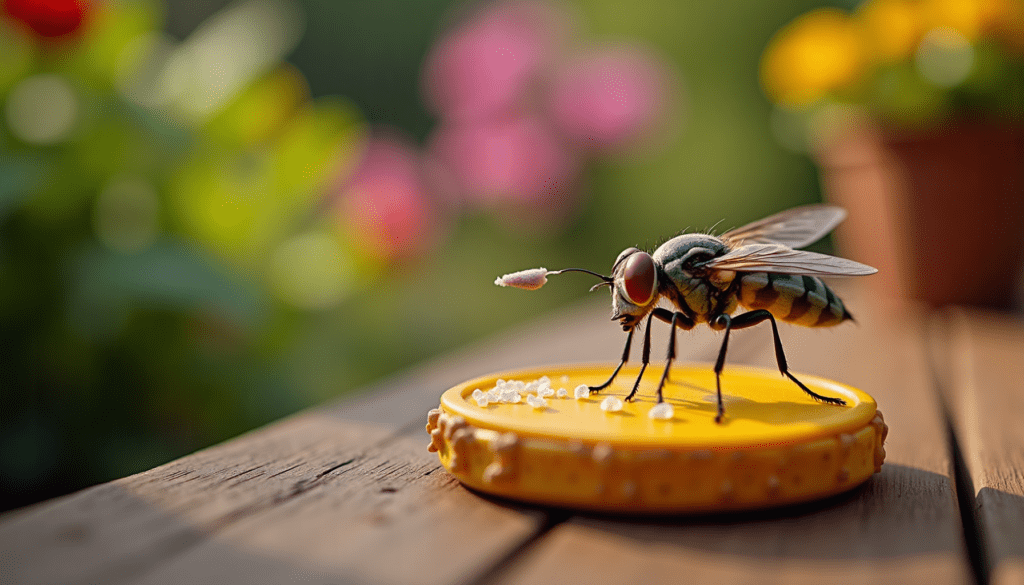
If you can get close enough for a good look, the eyes settle it for a fruit fly. The common fruit fly has large, vivid red eyes set against a dull tan-to-amber body, and at roughly 3 mm it is noticeably chunkier than a gnat. A fungus gnat shows none of that: it is darker, more slender, and shaped like a tiny mosquito with longer legs and antennae, usually 2 to 3 mm and far more delicate in flight. Fruit flies tend to hover and dart over food; fungus gnats run across the soil surface and make weak, drifting little flights when you disturb a pot. The biology behind this is well documented, and the breeding sources fruit flies use, from rotting produce to drains are exactly what draws the red-eyed adults into the open where you notice them.
nn
Why where you see them matters
nn
Location is not just a clue to the name, it is a clue to the source, and the source is the whole game. Fruit flies appear in the kitchen because that is where fermenting sugars live: an overripe banana, a forgotten potato, a splash of beer or wine in the bottom of a can, or the film of organic gunk inside a seldom-used drain. Fungus gnats appear at your plants because their larvae feed on fungi and organic matter in consistently wet potting soil, which is why overwatered potting soil is where fungus gnats develop. If the flies follow you to the fruit bowl, think kitchen sanitation. If they puff up every time you water a pot, think soil moisture. Our breakdown of fungus, fruit, and drain gnats lines up all three side by side if you want a closer comparison.
nn
nn
Why trapping the adults never finishes it
nn
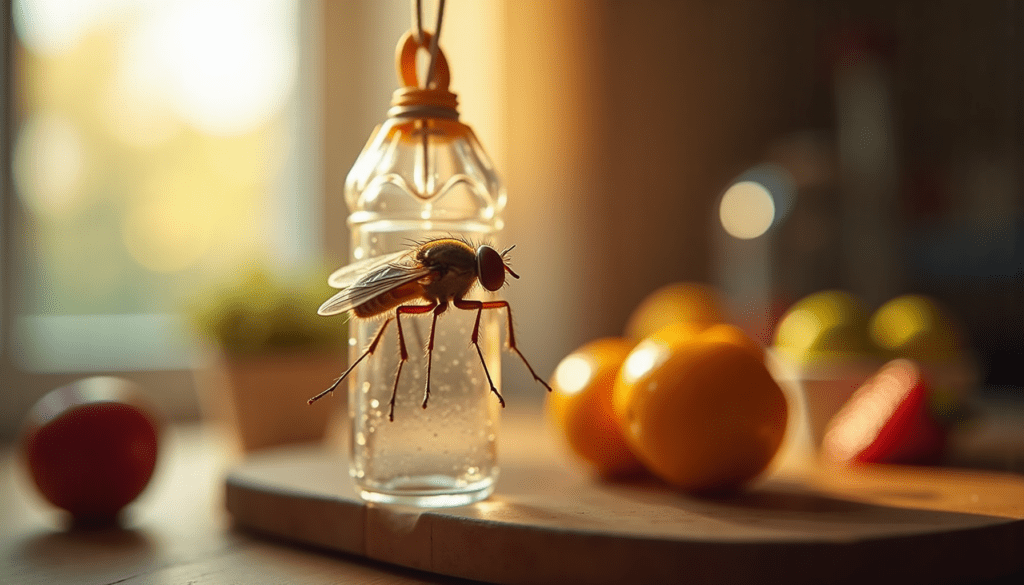
Here is the part most people get wrong: a vinegar cup or a sticky stake catches the adults you can see, but the next generation is already developing out of sight. A single female lays dozens to hundreds of eggs in the food source, and the cycle from egg to flying adult runs only about a week to ten days in a warm home. So you can empty a trap every morning and still face a fresh cloud, because small-fly control comes down to sanitation and source reduction, not body count. Traps are a thermometer, not a cure. They tell you the problem is shrinking or growing, and they knock down adults while you do the real work, but the same fly biology that explains why trapping adults alone falls short means the breeding site has to go or the flies come right back.
nn
How to find and kill the source
nn
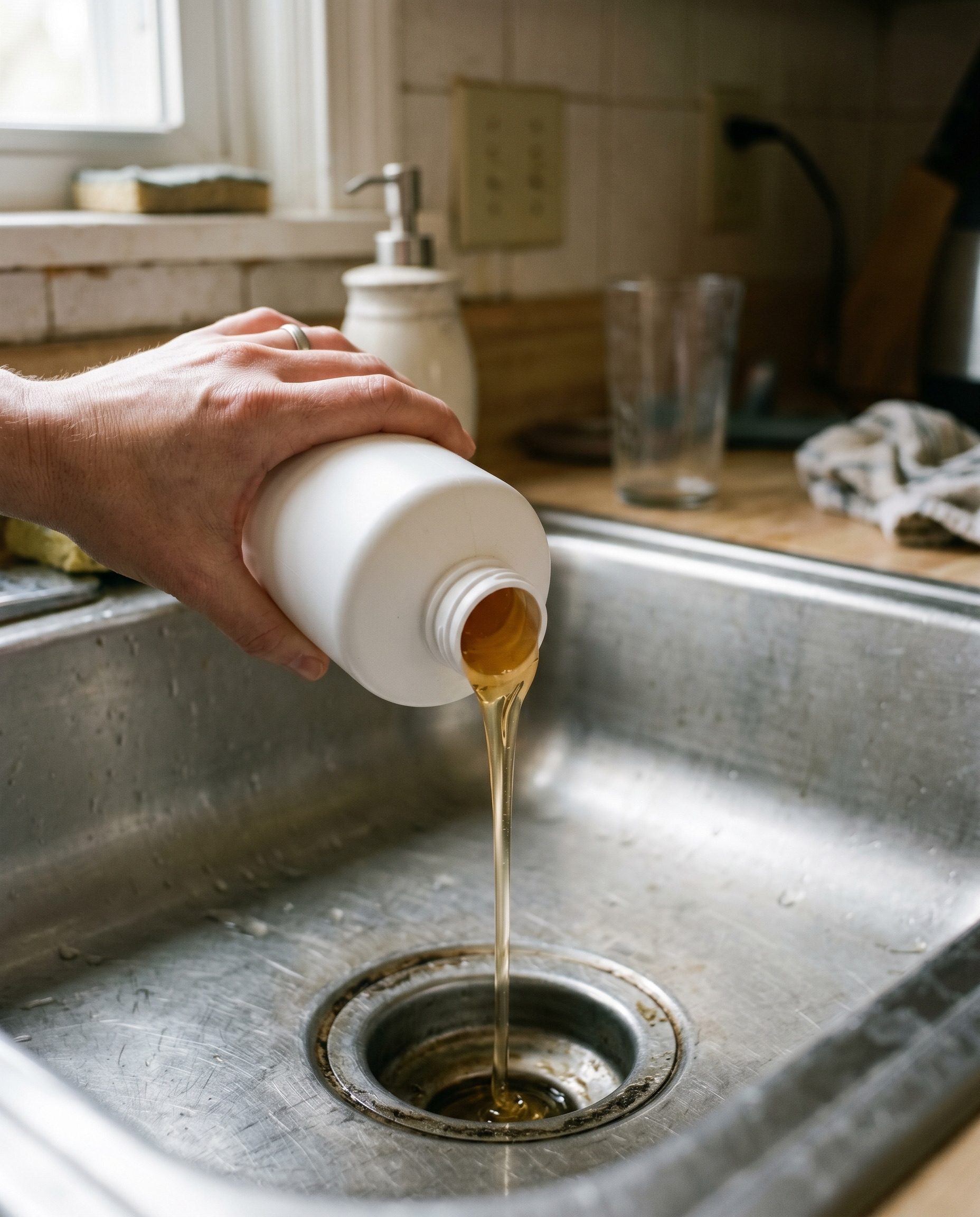
Once you know which fly you have, the cleanup is specific. The table below maps each one to where it breeds and what actually removes it. Across all three, the EPA’s sanitation-first, integrated approach is the right order: take away the food and moisture first, and reach for anything stronger only after that.
nn
| Small fly | Breeds in | What removes the source |
|---|---|---|
| Fruit fly | Fermenting fruit, trash, recycling, drain film | Bin or refrigerate ripe produce, clean the bin, scrub drains |
| Fungus gnat | Wet houseplant potting soil | Let the top inch of soil dry out; treat soil with BTI; yellow sticky stakes |
| Drain fly | Biofilm slime inside the drain | Mechanically scrub the pipe, then an enzyme or bio drain cleaner |
nn
For fruit flies, find every fermenting item: ripe fruit on the counter, the bottom of the trash and recycling, spilled liquid under appliances, and any drain that smells off. A vinegar trap helps you confirm and thin the swarm, but the source removal is what ends it. For fungus gnats, stop overwatering: let the top inch of soil dry between waterings, add yellow sticky stakes at the pots to catch the adults, and treat the soil with a BTI product if the larvae persist. For drain flies, one thing matters most, and people miss it: bleach does not remove the biofilm the larvae live in. Bleach just rinses through the slime layer. You have to physically scrub the pipe with a brush and then use an enzyme or bio drain cleaner that digests the film. If you want the step-by-step, our guide to getting rid of gnats in the house walks the full routine.
nn
nn
Common questions
nnAre fruit flies and gnats the same thing?n
No. “Gnat” is a loose word people use for almost any tiny fly, but a fruit fly is a specific insect (_Drosophila_) with red eyes that breeds in fermenting food, while a fungus gnat is a different fly that breeds in wet plant soil. They need different fixes, which is why getting the ID right saves you weeks of swatting the wrong target.
nnWhy do I have gnats but no plants?n
If small flies appear with no houseplants around, you are probably looking at fruit flies or drain flies, not fungus gnats. Check the kitchen for overripe produce, the trash and recycling, and the drains. The flies are telling you where their food is, so follow them to the source.
nnDo fruit flies come from the fruit I buy?n
Often, yes. Fruit fly eggs and tiny larvae can ride in on produce, and they explode in numbers once the fruit ripens at home. That is also why where fruit flies come from usually traces back to the kitchen rather than an open window. Washing and refrigerating ripe produce cuts the supply.
nnWill a vinegar trap fix the problem?n
It helps, but not on its own. A cider-vinegar trap catches adult fruit flies and shows you whether the population is shrinking, yet it does nothing about the eggs and larvae in the source. Treat the trap as a monitor and a knockdown, then remove the breeding material to actually end it.
nnHow do I get rid of gnats in houseplants?n
Let the top inch of soil dry between waterings, since the larvae need constant moisture to survive. Add yellow sticky stakes to catch flying adults and, if needed, treat the soil with a BTI product labeled for fungus gnat larvae. Bottom-watering also keeps the surface drier and less inviting.
nn
Final verdict
nn
The split is simple once you anchor on location. Red eyes at the fruit bowl, drain, or trash means a fruit fly; a tiny dark mosquito-like fly rising off plant soil means a fungus gnat, and the fuzzy moth-like flies on the bathroom wall are drain flies. Naming the fly names the source, and the source is the only thing that ends the problem, because trapping the adults you can see never reaches the eggs you cannot. Pull the fermenting produce and scrub the drains for fruit flies, dry out the soil and add BTI for fungus gnats, and physically clean the pipe before an enzyme cleaner for drain flies. Use traps to measure your progress, not to declare victory.
For the drain fly that fools everyone, see our guide to bugs that look like moths.
nn
Next steps:
nn
– Compare all three small flies side by side in our fungus, fruit, and drain gnat identification guide.
n
– Trace a kitchen outbreak to its origin with where fruit flies come from.
n
– Run the full cleanup routine in our guide to getting rid of gnats in the house.
nn