
n
n
n
If you keep finding holes in your wool and the odd small moth fluttering out of the closet, here is the thing to understand first: the fluttering adult is not what is eating your clothes. Clothes moths do their damage only as larvae, and the larvae feed in the dark, undisturbed spots you never look at, like closet corners, the backs of drawers, under furniture, and inside boxed-away wool. The fix is not to spray the air, it is to find the larvae. Pull everything out, identify the infested items, then kill the larvae by hot-washing, dry cleaning, or freezing, and vacuum the closet thoroughly, especially the edges and baseboards. Then store the clean items sealed, because moths target wool that carries sweat, food, or body-oil stains.
The detail on reading the damage rather than the insect sits in our guide to what eats clothes in a wardrobe.
nn
n
The larvae do the damage, not the moths in the air, so the fix is finding and cleaning the infested items, not spraying. Empty the closet, hot-wash or dry clean or freeze the wool, vacuum every edge and baseboard, then store the clean items sealed.
n
- n
- Do first (free): Empty the closet or drawer, find the items with silk webbing or holes, and run the washable wool through a hot wash and dryer.
- Best for the common case: Dry clean or freeze what cannot be hot-washed, vacuum the closet edges and baseboards, then store clean items in sealed bags or bins.
- Skip: Spraying the air, foggers, and relying on cedar or a pheromone trap alone; none of those reach larvae already feeding in your clothes.
n
n
n
n
nn
nn
Why spraying the air does nothing
nn
People reach for an aerosol because they can see the moth flying, and that instinct sends them after the wrong target. The adult is just the part you notice. Adult clothes moths do not even eat fabric; they have no functional mouthparts, so all an adult does is mate and lay eggs. The eggs hatch into small cream-colored caterpillars, and those caterpillars are what chew the holes. Spraying the room kills a few harmless adults and leaves every larva untouched inside the wool.
nn
That is why the only control that matters is the one aimed at the larvae, and the larvae are in the items, not in the air. University of California’s Pest Notes confirm that the larvae feed on wool, fur, and other keratin fibers hidden in dark, still places, which is exactly where a room spray cannot reach. Find the food source and clean it and the infestation collapses; chase the adults and it just keeps going.
nn
It also helps to know what they will and will not eat. Clothes moth larvae feed on keratin, which means wool, silk, fur, feathers, and felt are at risk, while cotton, linen, and synthetics like polyester are not, unless those are stained with food or sweat. If you want the full fabric breakdown before you start sorting, our guide on whether moths actually eat clothes and which fabrics they target lays it out.
nn
Make sure it is clothes moths
nn
Do not tear the closet apart over the wrong bug. The first thing to rule out is that you are not dealing with a pantry moth that wandered in from the kitchen, because the two are controlled completely differently and their traps are not interchangeable. Clothes moths are small, plain, buff to golden in color, and they tend to run or flutter weakly rather than fly toward a light. Pantry moths are larger with a banded, two-tone wing, and they breed inside dry food, not in fabric. If you are unsure which you have, our pantry moth versus clothes moth identification guide shows the difference side by side.
nn
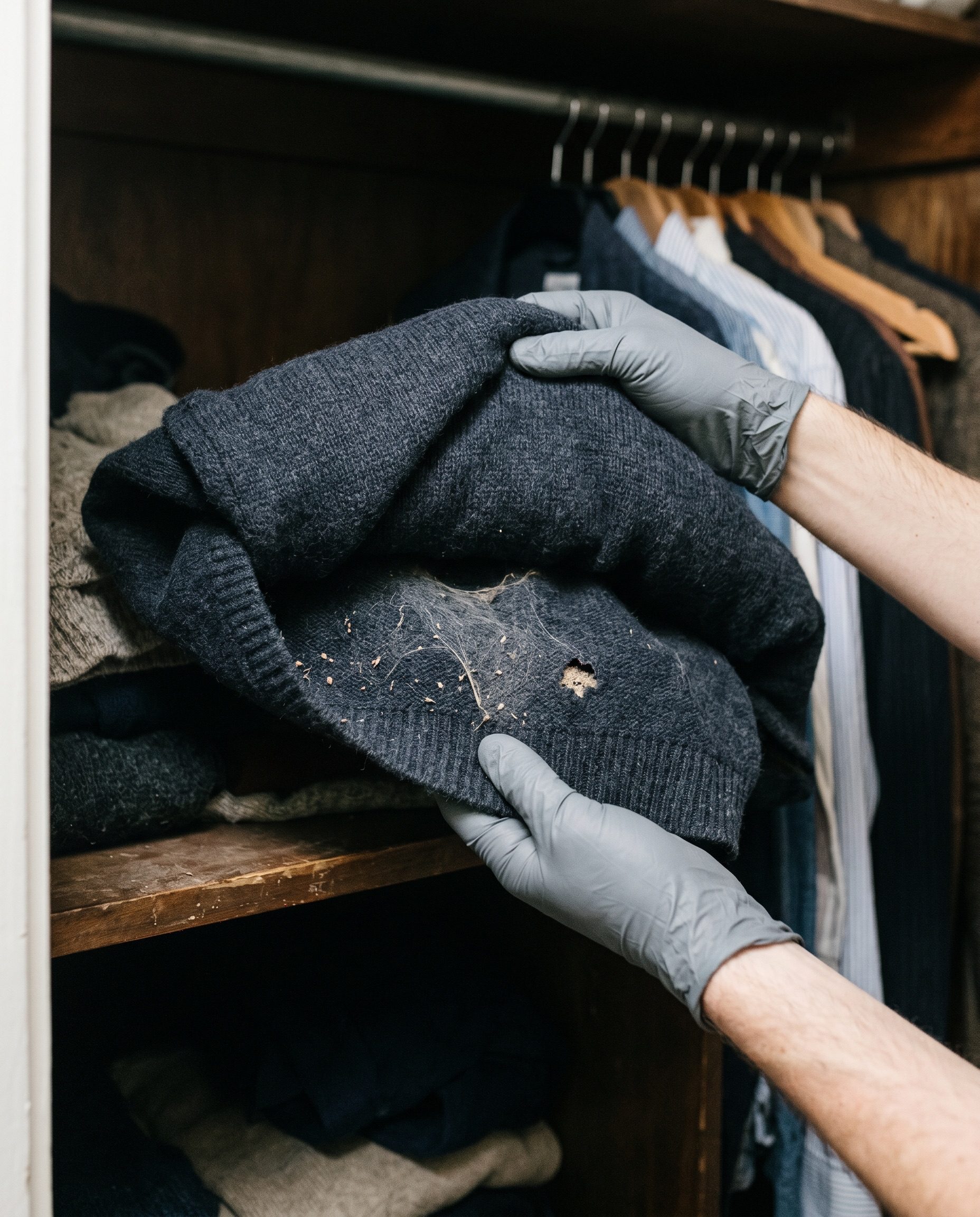
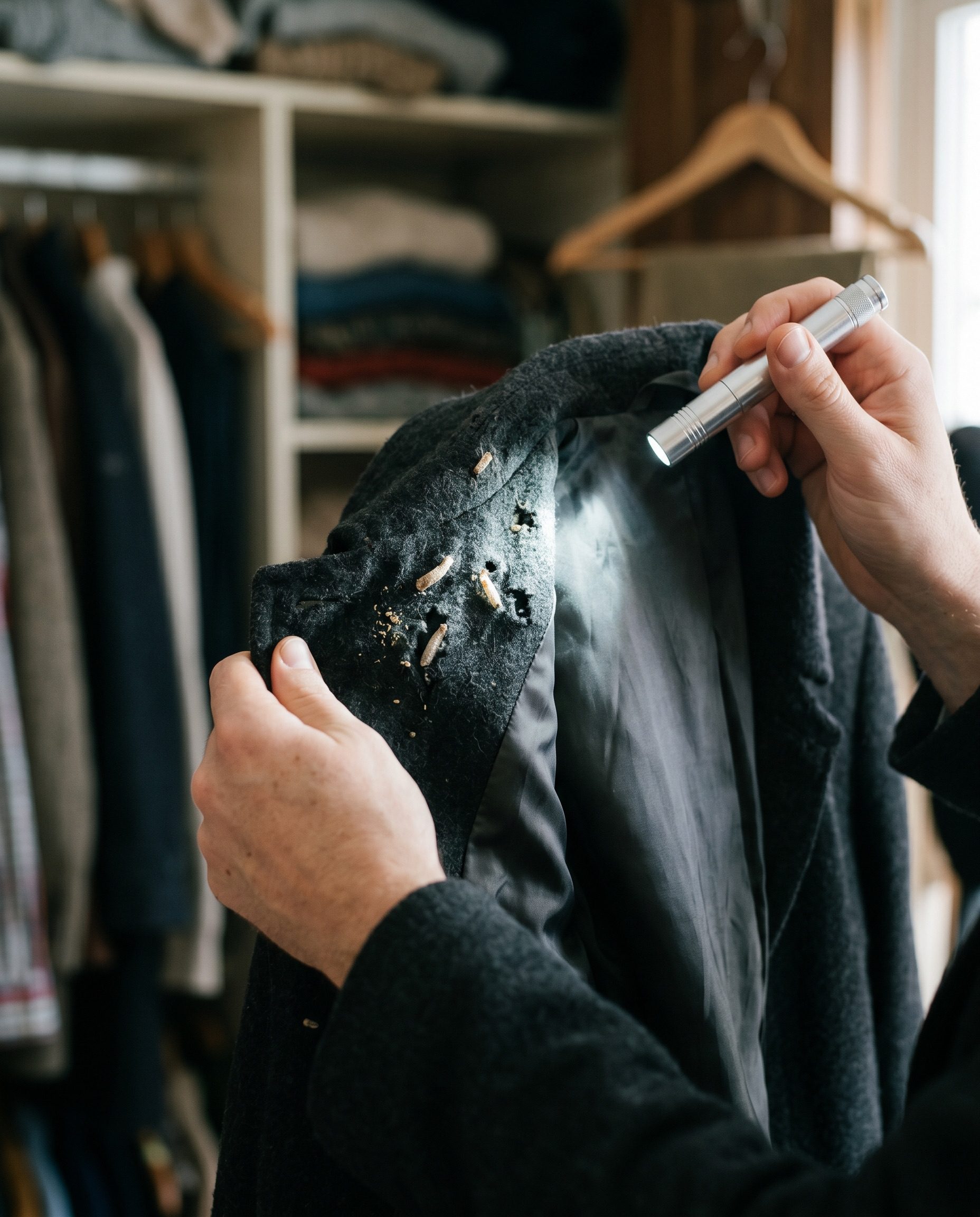
The clearest sign of clothes moths is on the fabric itself: irregular holes in wool, surface grazing where the nap looks worn thin, and silk left behind. The two common species give themselves away here, since webbing and casemaking clothes moths both leave silk behind, either as loose webbing tufted into the fibers or as a small tube-shaped case the larva drags around with it. One more look-alike worth catching: carpet beetles damage the same fabrics and are easy to confuse with moths, but they leave shed bristly skins instead of silk, and the fix for them is the same deep clean, so you lose nothing by treating thoroughly either way.
nn
nn
Pull everything out and find the source
nn
This is the step that actually clears the problem, and it costs nothing but an afternoon. Empty the entire closet or drawer; do not treat around things still hanging. Larvae feed where it is dark and undisturbed, so the worst damage is usually on the items you wear least: the boxed-away winter coats, the suit at the back, the wool blanket on the top shelf. Check seams, cuffs, collars, and folds, because larvae avoid light and burrow into the tightest spots.
nn
As you go, sort items into infested and clean, and pay attention to which pieces are worst. Iowa State Extension makes the point that thorough cleaning and sealed storage are the real control for clothes moths, not chemistry, and that starts with knowing which items are actually feeding the population. Look hardest at anything stained, because larvae go for wool that carries sweat, food, or body oils first; a clean sweater is far less attractive to them than the one you wore all winter without washing.
nn
Once items are sorted, you have a simple choice per piece. Anything that is washable wool and labeled for hot water goes in the hot pile. Anything delicate or dry-clean-only goes in the dry-clean or freeze pile. Anything cotton or synthetic with no stains can usually go straight back, since it was never on the menu.
nn
How to kill the larvae
nn
Heat, dry cleaning, and cold all kill clothes moth larvae and eggs, and you pick the method by what the garment can survive. UC IPM notes that dry cleaning, hot laundering, or freezing kills every life stage, which is the whole toolkit right there. Here is how each option lines up.
nn
| Method | Best for | How to do it |
|---|---|---|
| Hot wash and dryer | Washable wool, blankets, scarves | Wash hot per the care label, then a full hot dryer cycle |
| Dry cleaning | Suits, coats, delicate wool and silk | Tell the cleaner it is a moth issue so they handle it |
| Freezing | Items that cannot take heat or solvent | Seal in a bag, freeze at 0 F for about two weeks |
nn
A couple of details make or break it. For freezing, the item needs to actually reach a deep-freeze temperature and hold it, so a packed home freezer that barely hits zero is unreliable; give it the full two weeks and bag the item tight first. For hot laundering, the dryer heat does more than the wash, so do not skip the hot dryer cycle on anything that can take it.
nn
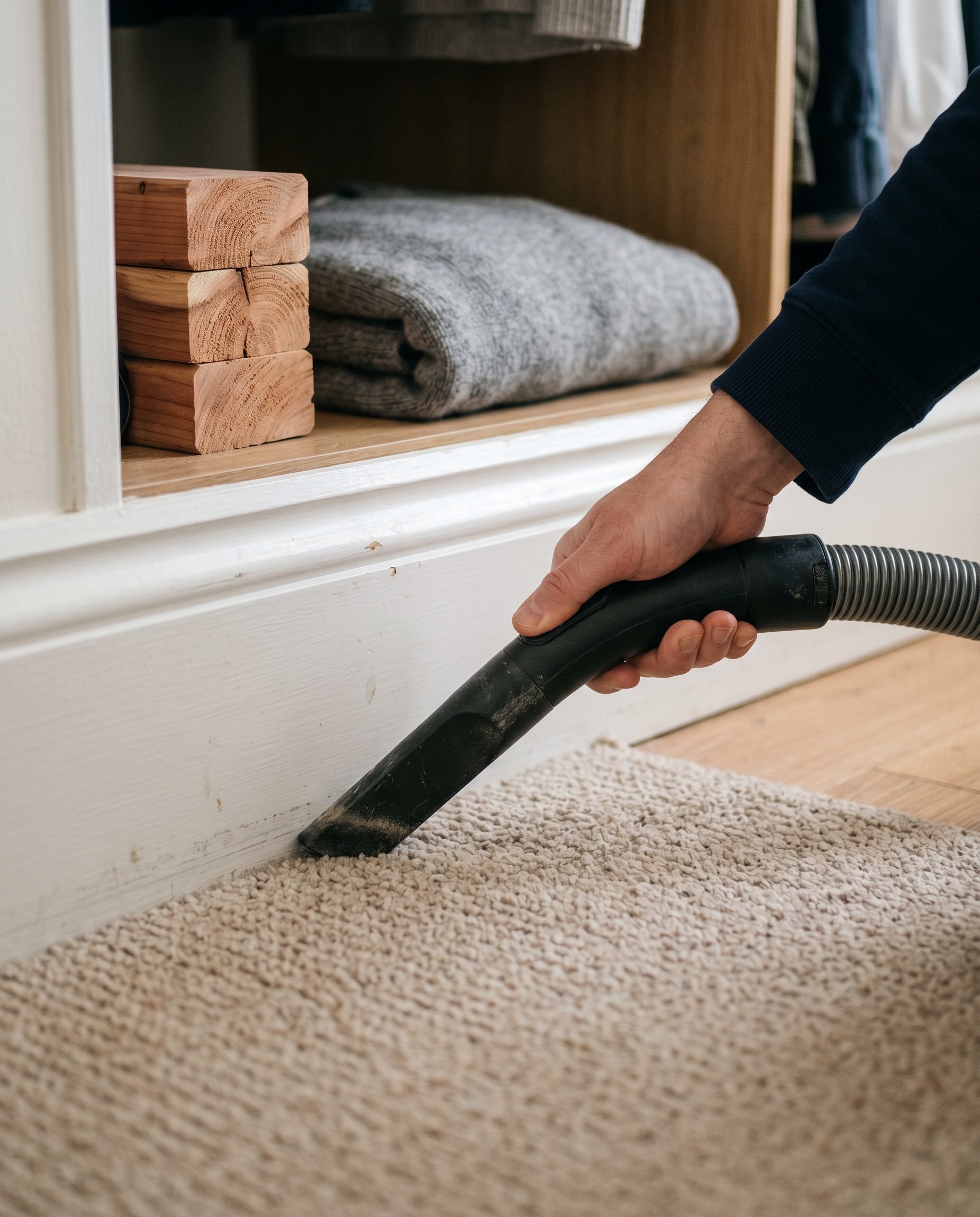
Then comes the part people forget: vacuum the empty closet itself. Larvae and eggs are not only on the clothes; they drop into the carpet, lodge in floor cracks, and sit along the edges where dust collects. Run the crevice tool slowly along the closet floor, the corners, and the baseboards, then wipe shelves down. Empty the vacuum outside right after, so nothing you collected crawls back out indoors.
nn
nn
Where cedar and traps actually fit
nn
Cedar and pheromone traps both have a place, but neither is the cure, and selling them as one is how people stay infested for months. Cedar and herbal sachets repel adult moths through their oils, but those oils fade within a few months and have to be refreshed, and crucially they do nothing to larvae already feeding in the fibers. A cedar block in a closet full of infested wool is just a nicer-smelling infestation.
nn
Pheromone traps are a monitor, not a weapon. The sticky trap is baited with a scent that draws in male adults only, which can interrupt some mating and, more usefully, tells you whether moths are still active and where. Remember the species rule: clothes moth and pantry moth traps use different pheromones and are not interchangeable, so buy the one made for clothes moths. If you want the honest rundown of which products help and which are theater, our roundup of clothes moth killers and cedar repellents sorts it out. The EPA’s case for sanitation-first, least-toxic control is exactly right here: clean the source first, then use repellents and traps to hold the line, never the other way around.
nn
Stop them coming back
nn
Prevention is mostly about denying them food and a quiet place to feed. Store seasonal wool clean, because stored dirty wool is what restarts an infestation; a stain you cannot even see is a meal to a larva. Wash or dry clean items before they go into storage, never after a season of wear straight into a bin.
nn
Seal the clean items. Airtight bins, zippered garment bags, or vacuum bags keep egg-laying adults off your wool entirely, which matters because an adult that cannot reach the fabric cannot start the next generation. Keep a clothes moth pheromone trap in the closet as an early-warning system and check it seasonally; a fresh catch tells you to inspect before holes appear. Air out and rotate stored woolens now and then, since the larvae specifically want darkness and stillness, and our guide on keeping moths out of the pantry and closet covers the routine in full.
nn
Common questions
nnWhat kills clothes moths instantly?n
Heat and cold kill the larvae and eggs reliably: a hot dryer cycle, professional dry cleaning, or two weeks in a deep freeze. “Instantly” really only applies to the larvae you actually treat, though, and most are hidden in the fibers, so the lasting fix is cleaning every infested item plus vacuuming the closet, not a quick spray.
nnDo clothes moths only eat wool?n
They eat keratin, so wool, silk, fur, feathers, and felt are the targets, while cotton, linen, and polyester are safe unless those are stained with food, sweat, or body oils. Larvae actually prefer dirty natural fibers, which is why clean, sealed storage protects clothes so well.
nnWill cedar get rid of clothes moths I already have?n
No. Cedar repels some adults while its oils are fresh, and those oils fade within months, but it does not kill larvae that are already feeding in your clothes. Use cedar only as a backup after you have cleaned out the infested items, never as the main fix.
nnDo pheromone traps get rid of clothes moths?n
Not on their own. The trap catches male adults to monitor activity and disrupt a little mating, but it leaves the larvae, which are the ones doing the damage, completely untouched. Treat the trap as a detector that tells you to go inspect and clean, not as a cure.
nnHow long until the clothes moths are gone?n
If you clean every infested item and vacuum the closet thoroughly, the active damage stops right away because you removed the larvae. Keep a trap up for a few weeks to confirm no new adults are emerging, and re-inspect once more in case you missed a hidden item.
nn
Final verdict
nn
Getting rid of clothes moths comes down to one shift in thinking: chase the larvae, not the moths in the air. Empty the closet and find the infested wool, then kill the larvae by hot-washing, dry cleaning, or freezing each item by what it can survive. Vacuum the whole closet, especially the edges and baseboards, and empty the vacuum outside. After that, store everything clean and sealed, because moths go after wool that carries sweat, food, or body oils. Skip the room spray, and treat cedar and pheromone traps as a backstop and a monitor, never the cure. Do the cleaning right once and the holes stop, because there is nothing left to feed the next generation.
nn
Next steps:
nn
– Confirm you have the right pest before you treat with our pantry moth versus clothes moth identification guide.
n
– Sort your closet faster by knowing which fabrics moths actually eat.
n
– Lock in the routine that keeps them out with our guide to preventing moths in the pantry and closet.
nn


Pingback: Best Clothes Moth Killers and Cedar Repellents