
You found a small moth flying around the house, and the real question is which one it is, because that decides everything you do next. The fastest tell is where it flies and what its wings look like: a moth circling the kitchen with a two-tone wing, pale gray at the base and coppery bronze at the tip, is the Indianmeal (pantry) moth, while a smaller, plain buff-gold or silvery moth that shies away from light and turns up in a closet or drawer is a clothes moth. Get that right first, because the two are after completely different things, and a trap baited for one will not catch the other.
If the wing is two-tone copper-and-gray and the moth is near the kitchen, it is a pantry (Indianmeal) moth after your food; if it is small, plain gold or silver and hiding in a dark closet, it is a clothes moth after your wool, and the traps for the two are not interchangeable.
- The confirming feature: The pantry moth’s wingtip is coppery bronze with a pale-gray base; clothes moths are one plain buff-gold or silver color all over.
- Where each lives: Pantry moth flies openly near food; clothes moth shuns light and stays in closets, drawers, and stored wool.
- What it means: The damage is from larvae, not the adults, so the real fix is finding and removing the food or fabric they are feeding in, not just hanging a trap.
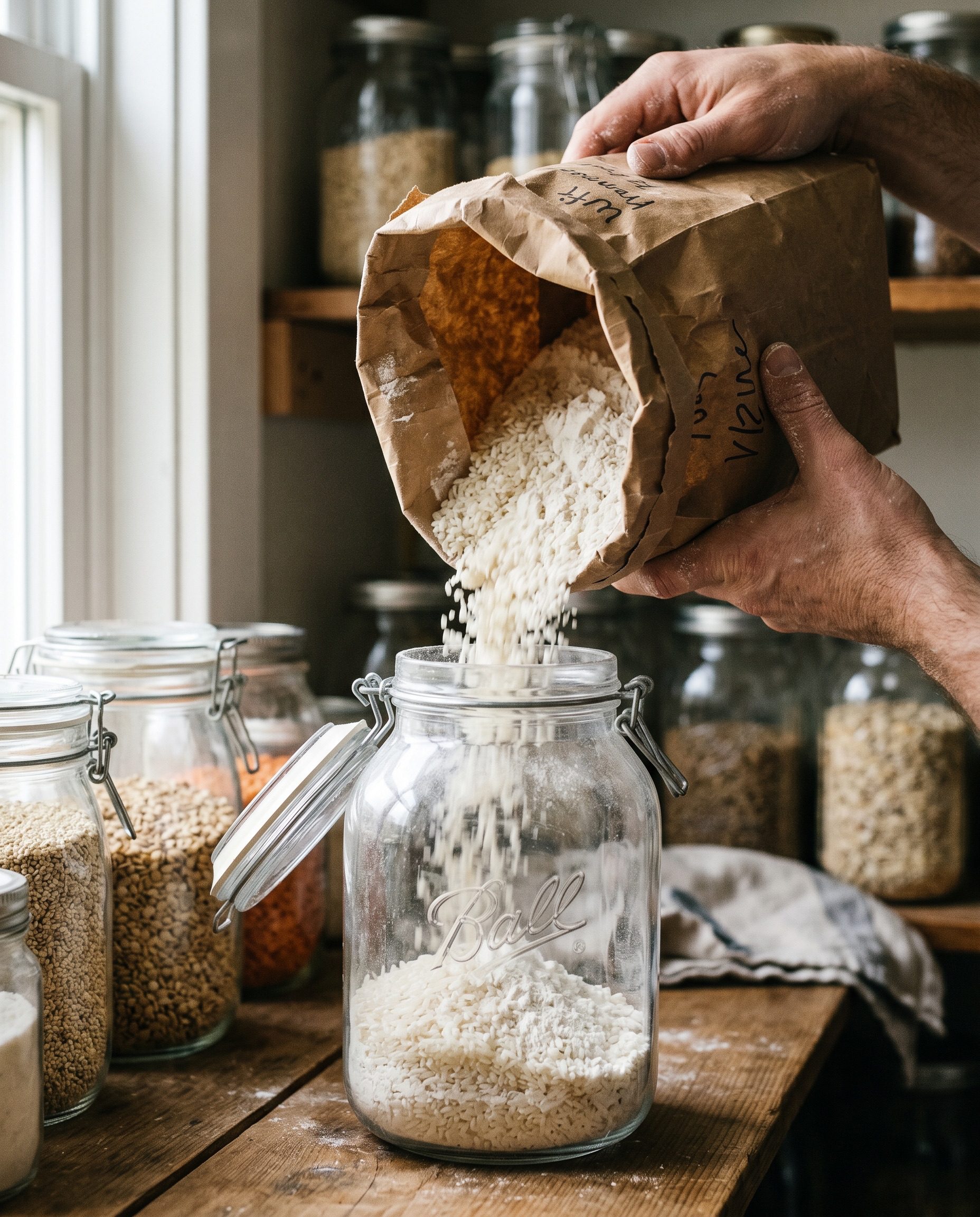
Quick answer: which moth is it
Two small moths invade US homes, and they almost never overlap. The pantry moth you are seeing is the Indianmeal moth (Plodia interpunctella), and its wing is the giveaway: hold still and look, and you will see the inner half is dull pale gray while the outer half is a coppery, reddish-bronze sheen. It flies in a lazy zigzag out in the open, usually near the kitchen or wherever dry food is stored.
The clothes moth is smaller and far more secretive. The two US species are the webbing clothes moth (Tineola bisselliella) and the casemaking clothes moth (Tinea pellionella), both a plain straw-gold to silvery color with no contrasting tip. A clothes moth runs from light and would rather scuttle into a fold of fabric than fly across a lit room, which is why people find the larvae before they ever see the adult.
The one feature that confirms it
When you are unsure, the wing color settles it. The Indianmeal moth carries a sharp two-tone wing that no clothes moth has: the base near the body is plain gray, then a dark band crosses the wing, and the outer third turns coppery bronze, almost metallic in good light. Penn State Extension’s profile of the Indian meal moth describes that bronze outer band as the standout field mark, and once you have seen it you will not mistake it again.
Clothes moths fail that test on purpose, because they have no contrasting band at all. A webbing clothes moth is uniform buff-gold with a small tuft of reddish hairs on the head and no spots; the casemaking species is a touch grayer with three faint dark dots. They are also noticeably smaller, with a wingspan around half an inch against the pantry moth’s roughly two-thirds of an inch. Size plus the missing copper tip, taken together, is the cleanest separation, and Iowa State Extension’s Indianmeal moth page and the clothes-moth descriptions line up on those marks.
Where each one lives and feeds
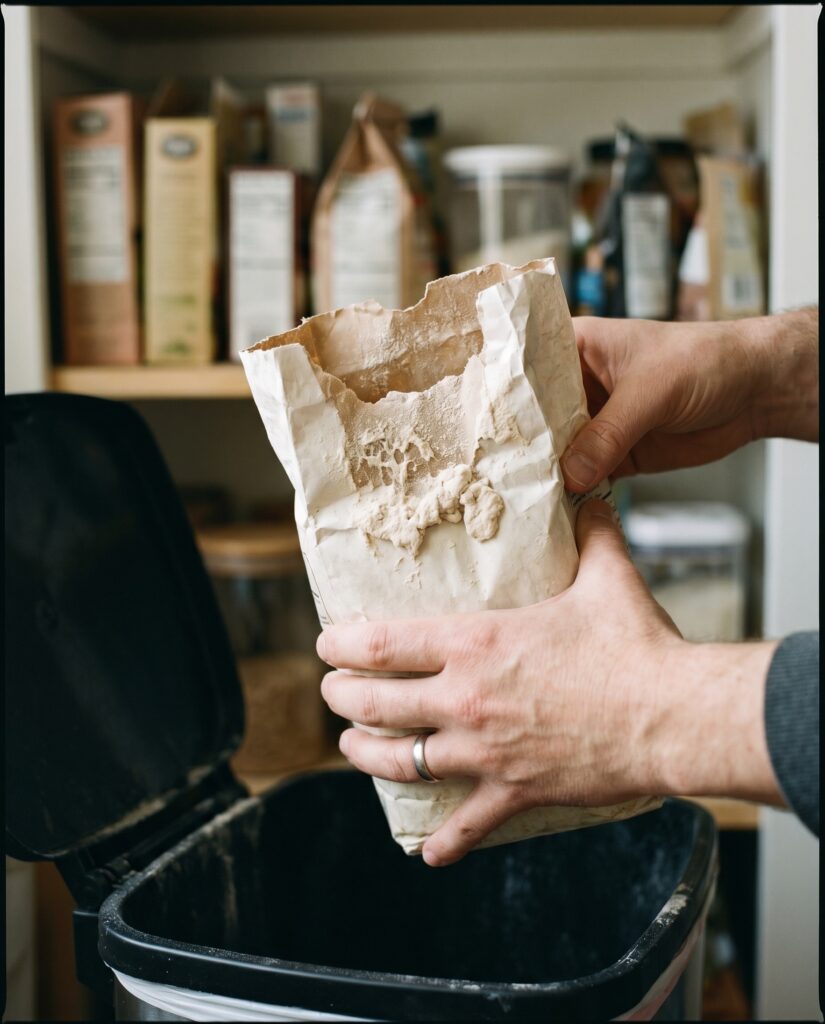
Behavior tells you as much as anatomy here, and the two could not be more different. The pantry moth lives where you eat. Its larvae develop inside dry stored food, so the adults fly in the kitchen, the pantry, and around cabinets, often in the evening. You will see this one most often in flour, cereal, rice, dried fruit, nuts, birdseed, and pet food, which is itself a clue: a moth fluttering above the toaster is almost certainly Indianmeal.
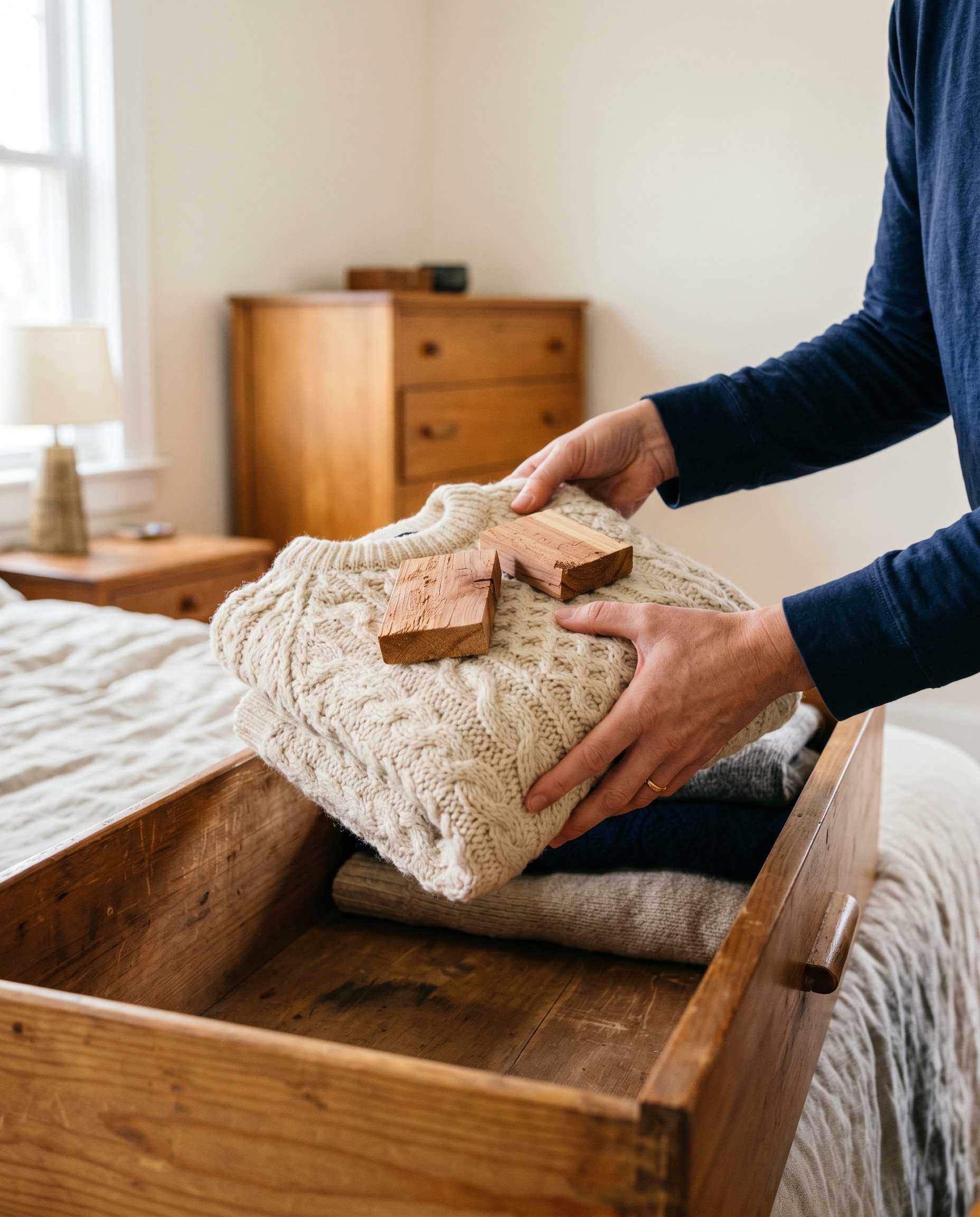
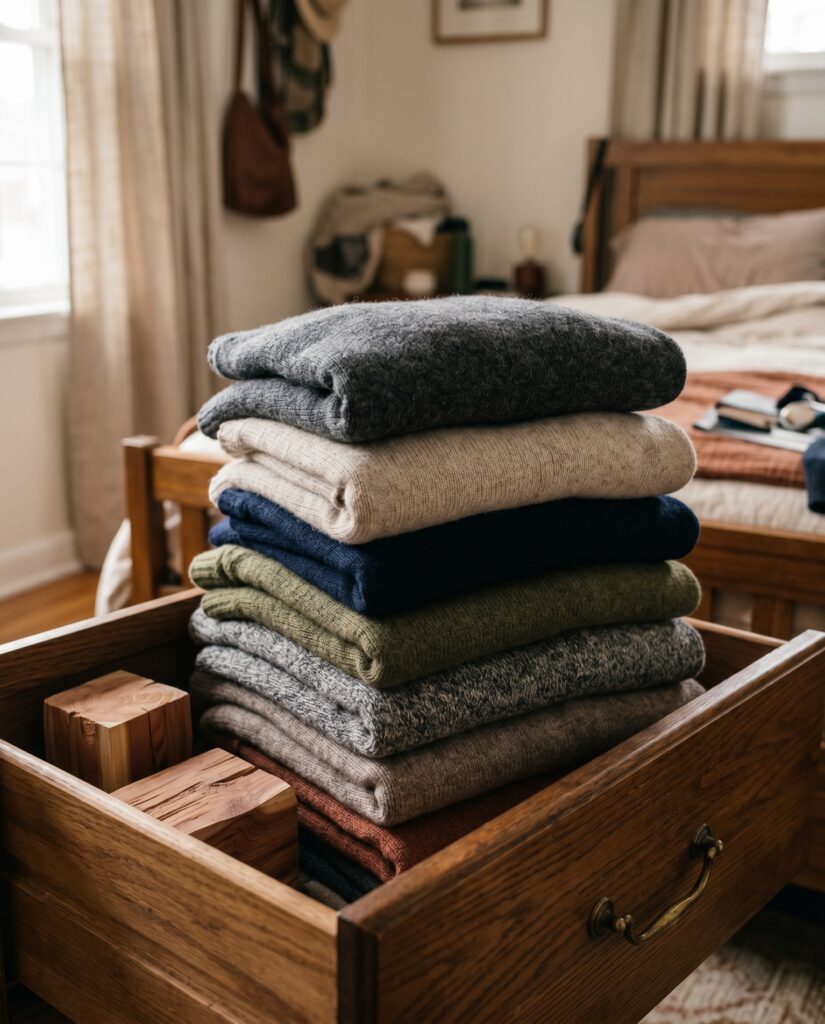
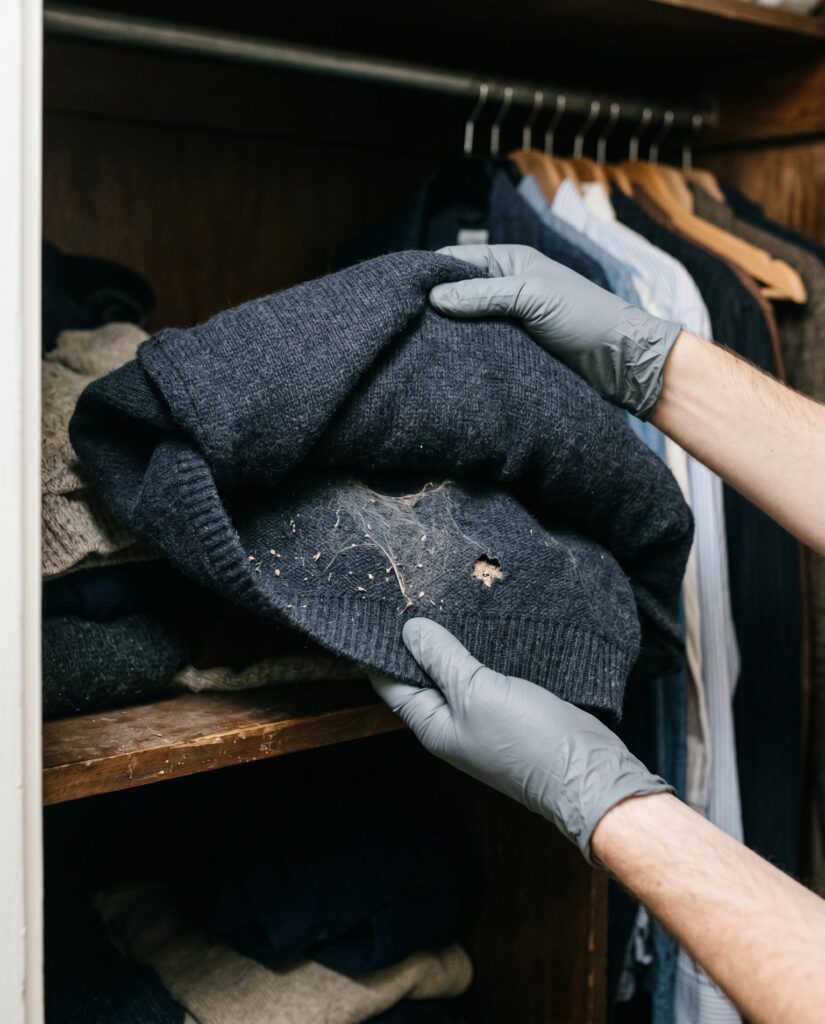
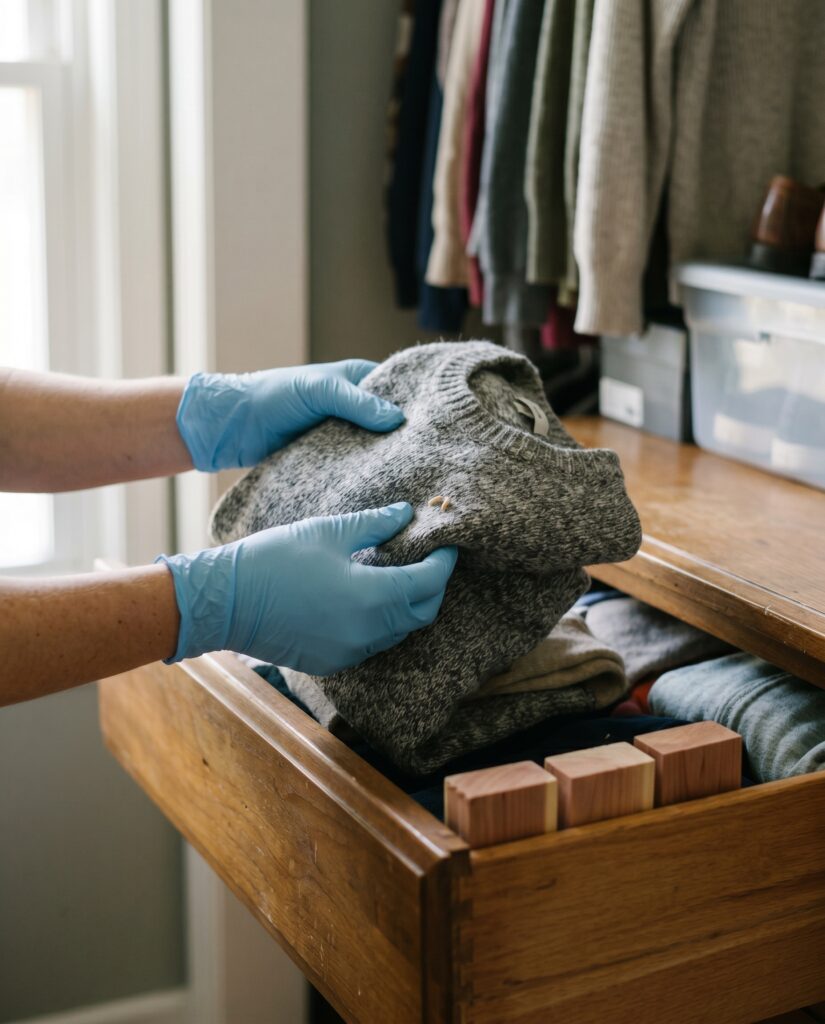
The clothes moth lives where you store fabric, in the dark. Its larvae feed on animal-fiber materials only, the keratin in wool, silk, fur, feathers, and felt, so the adults stay close to the closet, the dresser, the wool rug, or a box of stored sweaters. They avoid light and disturbance, so a quiet, undisturbed back corner is exactly where you find them. University of Kentucky’s breakdown of webbing and casemaking clothes moths notes the larvae leave silk webbing or a portable case on the fabric they are eating, which is often the first sign you get. For more on which fabrics are actually at risk, our guide to do moths eat clothes and which fabrics walks through why cotton, linen, and polyester are usually spared.
Look-alikes and how they differ
A few honest sources of confusion are worth clearing up. People mix the two moths with each other, and they also mistake fabric damage from a clothes moth for damage from carpet beetles, which is a completely different insect. The table below sorts the three by the feature that actually separates them.
| Insect | Key feature | Where found |
|---|---|---|
| Pantry (Indianmeal) moth | Two-tone wing, gray base and coppery bronze tip | Kitchen and pantry, in dry stored food |
| Clothes moth | Small, plain buff-gold or silver, no band, shuns light | Closets, drawers, stored wool and silk |
| Carpet beetle | Hard rounded beetle, not a moth; bristly larva | Closets and rugs, also feeds on keratin |
That last row matters because carpet beetles chew the same wool and silk a clothes moth does, so the holes look similar. The tell is the insect itself: a clothes-moth larva is a smooth cream caterpillar that leaves silk, while a carpet beetle larva is a short bristly grub. Carpet beetles, the look-alike fabric pest leave shed skins rather than webbing, and spotting which one you have changes where you look. If your moth is the kitchen kind, our Indian meal moth identification and lifecycle page covers it in more depth.
Why the larvae, not the adults, do the damage
Here is the point most people get backwards: the fluttering adult moth does no harm at all. It is the larvae, the small caterpillars, that eat. A pantry-moth larva chews through dry food and leaves behind webbing and clumped grain; an adult clothes moth has no functional mouthparts and does not even feed, so by the time you see it flying, the eating was done by its young. Iowa State’s note that larvae do the damage to fabric makes the same point for closets.
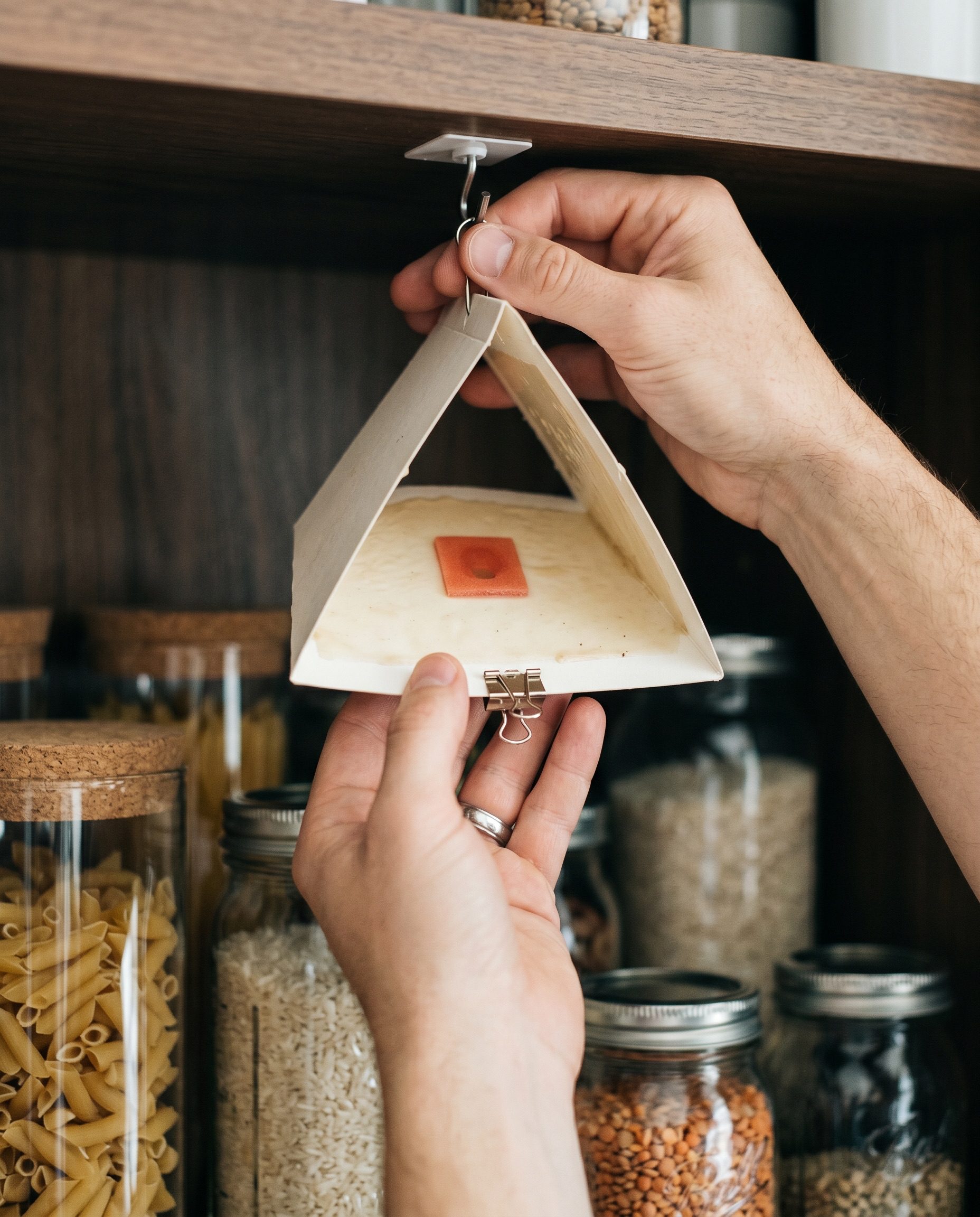
This is why a trap alone never solves it. Pheromone traps catch only male adults to disrupt mating and tell you the problem is present, which makes them a monitor and a finishing touch, not a cure. For a pantry moth, the real fix is to hunt down the infested package and throw it out, then vacuum the shelf seams where larvae crawl to pupate. For a clothes moth, you clean, hot-wash, or freeze the infested wool and vacuum the closet. Cedar blocks and herbal sachets only repel adults and fade within months, so they do not kill larvae already feeding, and the EPA’s sanitation-first approach to pest control puts that source removal ahead of any spray. One more thing worth saying plainly: the two traps use different pheromones and are not interchangeable, so a pantry trap will not catch a clothes moth no matter where you hang it.
Common questions
Can a pantry moth move into my closet, or a clothes moth into my food?
Generally no, and that is what makes the ID reliable. The pantry moth’s larvae need starchy stored food and the clothes moth’s larvae need animal fiber, so each stays where its food is. A moth in your wardrobe is a clothes moth; a moth over your cereal is a pantry moth.
Will one moth trap catch both kinds?
No. Each trap is baited with a species-specific pheromone, so a pantry-moth lure will not draw a clothes moth and vice versa. Match the trap to the moth you identified, and treat the trap as a monitor, not the solution. Our tested rundown of pantry and clothes moth traps sorts which lure goes with which pest.
I only see the moths flying, not any larvae. Where are they?
The larvae are hidden in the source. For a pantry moth, check inside flour, rice, cereal, dried fruit, nuts, birdseed, and pet food for webbing and clumping. For a clothes moth, check the folds, cuffs, and undersides of stored wool and silk for silk webbing or small cases.
Do clothes moths eat cotton or polyester clothes?
Not as a rule. Clothes-moth larvae feed on keratin, so wool, silk, fur, feathers, and felt are the targets, while cotton, linen, and synthetics are usually safe unless they are heavily soiled with food or sweat. The damage clusters on animal-fiber items.
Are these moths harmful to eat or to touch?
They are a nuisance rather than a health hazard. Finding pantry-moth larvae in food is unappetizing, but the fix is to discard the infested package and clean the shelf; clothes moths do not bite or sting. The real cost is ruined food and damaged wool, not illness.
Final verdict
Tell these two apart by the wing and the room. A two-tone moth with a coppery bronze wingtip flying near your food is the pantry (Indianmeal) moth; a small, plain gold or silver moth hiding from light in a closet or drawer is a clothes moth. The ID is worth getting right because the cures diverge completely: one is after your dry food and the other your wool, the larvae do all the damage while the adults are just the signal, and a pheromone trap only monitors. Find and remove the infested food package or the affected wool, vacuum the seams and corners, and use the matching trap to confirm you are winning, not to do the work for you.
Next steps:
– Confirm the kitchen kind with our Indian meal moth identification and lifecycle guide.
– Check which fabrics are actually at risk in our guide to whether moths eat clothes and which fabrics.
– Match the right lure to the right moth with our tested pantry and clothes moth traps.
Pingback: Bugs That Look Like Moths: Drain Flies and Four Others