If you have pantry moths, here is the part that changes how you fight them: you cannot trap your way out of them, because the damage is done by larvae living inside your dry goods, not by the moths fluttering at the ceiling. By the time you see those moths flying, eggs and caterpillars are already in the flour, cereal, pet food, nuts, or birdseed. The cure is a full pantry purge. Inspect every package, including sealed bags, throw out anything with webbing or grubs, vacuum the shelf seams and corners where larvae crawl off to pupate, wipe everything down, and only then hang a pheromone trap to catch the survivors. A trap alone never clears an active infestation; it just tells you it is still going.
The moths you see are adults; the damage is done by larvae inside your dry goods, so the fix is a full pantry purge, not a trap. Find and discard every infested package, vacuum the shelf seams where larvae pupate, wipe everything down, then hang a trap for stragglers.
- Do first (free): Empty the cabinet, open and inspect every package, and toss anything with webbing, clumping, or grubs.
- Best for the common case: Vacuum the shelf seams and corners, wipe with soapy water, then store the survivors in airtight glass or hard plastic.
- Skip: Hanging a pheromone trap and calling it done; it catches only male moths and never reaches the larvae in the food.
Why a trap alone never wins
People hang a trap because they want one easy move, and a pantry moth trap is genuinely useful, just not for the job most people give it. The trap is baited with a pheromone that lures male moths only, so it can knock down mating and tell you whether the problem is still active. What it cannot do is touch the caterpillars chewing through your cereal, because they never go near it. As the Indianmeal moth larva does all the feeding inside stored food, the population you actually have is buried in packages, not circling the bulb.
The adult is the tail end of the life cycle, not the cause. A female lays eggs on or near a food source, the eggs hatch into tiny larvae that bore into the product, and those larvae feed for weeks before they crawl out to spin cocoons in a ceiling corner or a cabinet seam. So when you see a moth, the next generation is already eating. That is why this is a search-and-discard job: you have to find the infested package and remove it, then deny the next moths anywhere to lay. If you want a closer look at the stages, our Indian meal moth identification and lifecycle guide walks the egg-to-adult timeline.
How to spot the infested package
Do not guess which box it is, because the wrong guess leaves the source feeding. The clearest tell is fine silk webbing clumping the food together, almost like a spiderweb laced through the flour, oats, or pet kibble. Run a finger through a suspect package and you will feel grains stuck in little clusters, sometimes with small cream-colored caterpillars or their dark droppings mixed in. Birdseed, dried fruit, nuts, spices, and pet food are the most-missed hiding spots, so check them even if your flour looks clean.
Open everything, including sealed bags, because thin packaging does not stop them. The eggs often arrive already inside a product from the store, and larvae chew straight through paper, cardboard, and thin plastic film to get in or out. Iowa State Extension’s rundown of where the caterpillars feed and how to discard and clean infested goods confirms the fix is to throw the infested item out, not to sift it and keep it. When in doubt, toss it; a few dollars of cereal is cheaper than restarting the cycle.

The full pantry purge, step by step
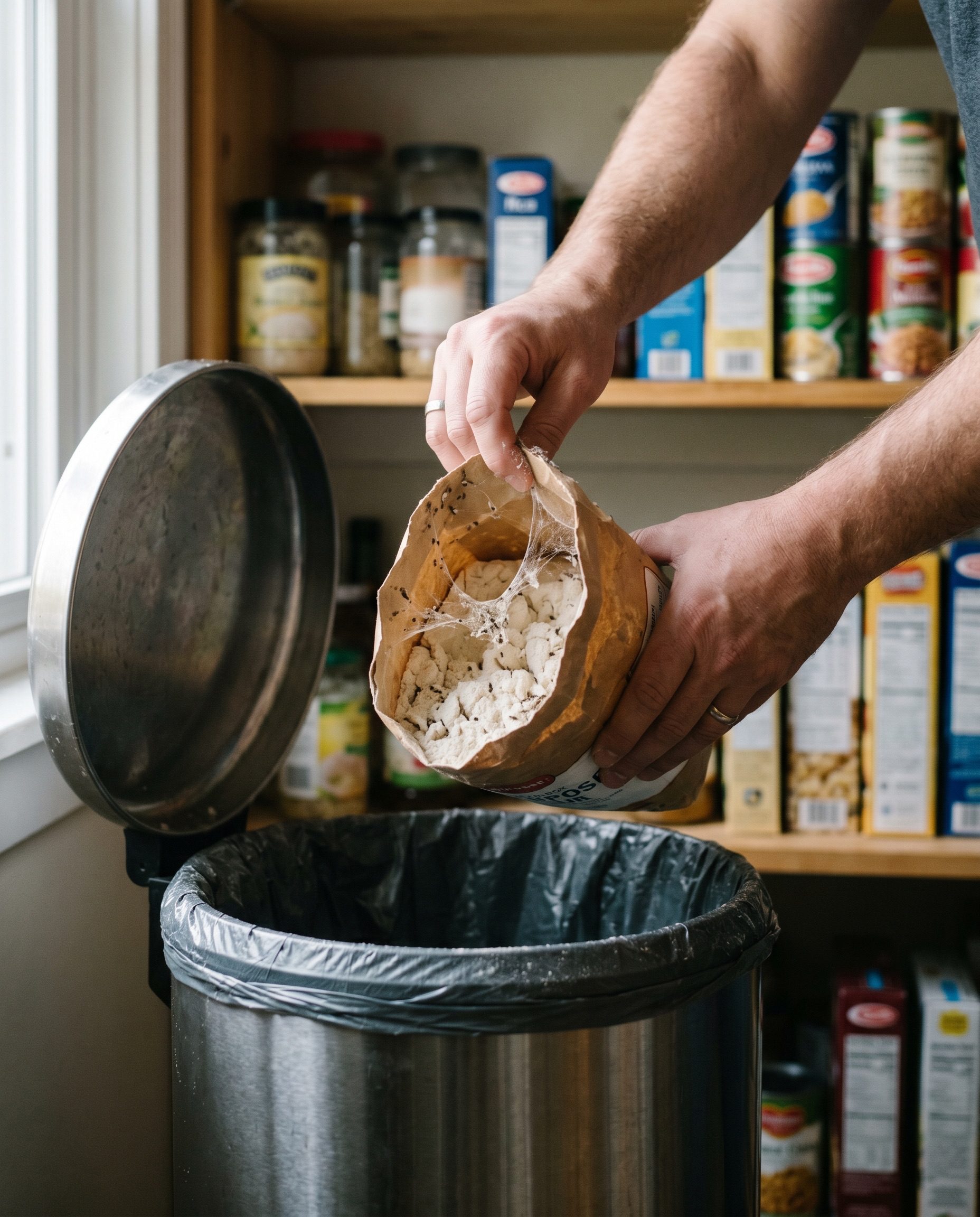
This is the part that actually clears them, and it costs almost nothing. Pull every single item off the shelves so the cabinet is bare. As you go, open and inspect each package over a trash bag, and the moment you find webbing, clumping, or grubs, that item goes straight into the bag. Tie the bag off and carry it outside to the bin right away, because larvae will keep crawling if you leave it by the door.
Now the step people skip: the larvae crawl off to pupate in the shelf seams, the corners, the screw holes, and the lip under the shelf edge, so an empty cabinet is still seeded. Vacuum the whole interior, working the crevice tool hard into every seam, corner, and crack, then empty the vacuum outside. After vacuuming, wipe the shelves down with warm soapy water and let them dry fully. Skip the impulse to spray a pesticide in here; food cabinets are exactly where chemicals do not belong, and the EPA’s guidance leans on the EPA’s sanitation-first approach to controlling pests at home for cases like this where cleaning, not spraying, is the real control.
Once the cabinet is clean and dry, return only the food you have cleared. Move anything that came in paper or cardboard into airtight glass or hard plastic with a tight lid, since that is the single change that stops a stray survivor from starting over. If you are not sure a borderline package is clean, you can freeze it at 0 degrees Fahrenheit for about a week to kill any eggs before it goes back on the shelf. University of Kentucky Entomology notes that airtight storage and freezing keep stored-food insects out, which is why this one habit does more than any trap.

Match the move to the food
Not every item gets the same treatment, so here is the quick map for the common cases in a kitchen cabinet.
| What you found | Best move | Watch out for |
|---|---|---|
| Webbing or grubs in the package | Bag it and take it to the outdoor bin | Do not sift and keep it |
| Clean-looking flour, grain, or pet food | Freeze a week, then store airtight | Paper and thin film do not seal them out |
| Empty shelves and seams | Vacuum crevices, then wipe with soapy water | Larvae pupate in corners and screw holes |
| A few moths still flying after | Hang one pheromone trap to monitor | A trap is a monitor, never the cure |
That last row is where the trap finally earns its place. After the purge, hang a single pantry moth trap inside or near the cabinet, set it where moths fly rather than down low, and replace it on the schedule the package gives, usually every few weeks. A steady catch of a stray moth or two over the following weeks is normal as the last hidden pupae emerge; a rising catch means you missed a package and need to hunt again. For picking a trap that uses the right lure, our pantry moth trap and killer comparison sorts the monitors from the products that overpromise.
Keep them from coming back
Prevention here is mostly storage discipline, and it is the durable win. Keep your staples, especially flour, cornmeal, oats, rice, nuts, and pet food, in sealed glass or hard plastic rather than the bag they came in, so an egg that hitchhikes home from the store has nothing to hatch into and spread from. Buy these dry goods in amounts you will actually use within a couple of months, since the longer a package sits open, the more chances a moth gets.
Do a quick shelf check every month or two, wipe up spills and crumbs that collect in the back corners, and keep one monitoring trap up so you catch a new arrival before it becomes a generation. Birdseed and bulk grain stored in a garage or basement deserve the same airtight treatment, because they are a common source that re-seeds the kitchen. For a full routine you can repeat, see our guide to preventing moths in the pantry and closet.
When clothes moths are the real culprit
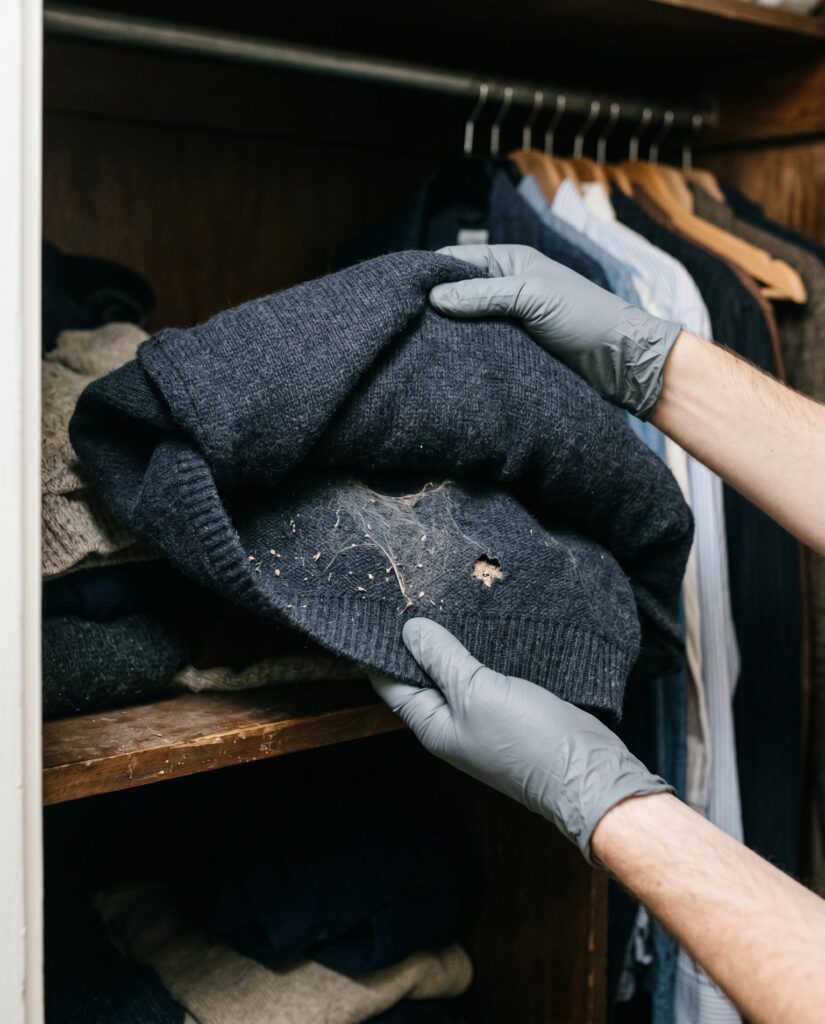
If the moths are coming out of a closet or a drawer instead of the kitchen, you are likely dealing with clothes moths, not pantry moths, and the fix is different. Clothes moth larvae feed on keratin, which means wool, silk, fur, and feathers, not cotton, linen, or polyester, so the damage shows up as holes in a sweater rather than webbing in your flour. The adults do not even eat; they have no working mouthparts, so traps and repellents aimed at adults do almost nothing to the larvae doing the chewing.
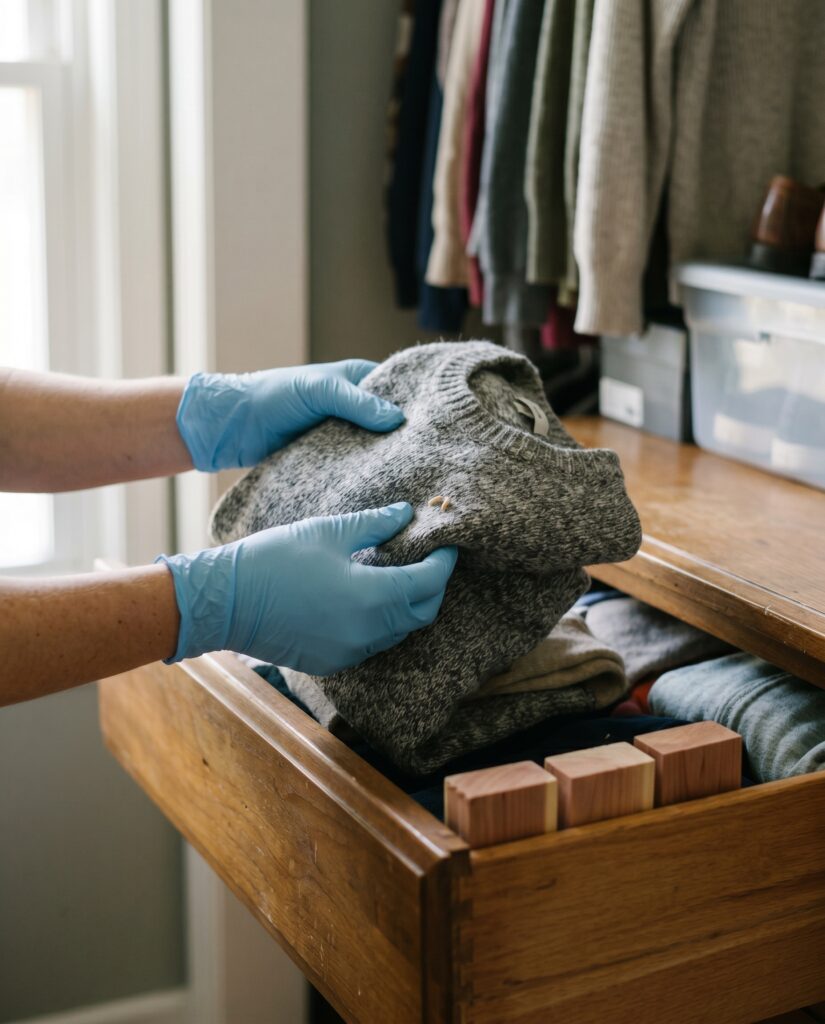
The cure mirrors the pantry one: find the infested wool or fur item, clean it, hot-wash or dry-clean it, or freeze it to kill the larvae, then vacuum the closet edges and floor where debris collects. Cedar blocks and herbal sachets repel adults and fade within months, so they are a backup, not a treatment for an active infestation. And the two pests need different pheromone lures, so a pantry moth trap will not catch clothes moths and vice versa. If you are not sure which moth you have, our overview of getting rid of pantry pests helps you sort the kitchen invaders from the closet ones.
Common questions
What kills pantry moths instantly?
Nothing you spray on a flying moth fixes the problem, because the moth is the last stage, not the source. The fastest real result comes from finding and bagging the infested package, since that removes the entire breeding pocket in one move. Vacuuming the shelf seams afterward catches the larvae that crawled off to pupate, and that combination is what actually drops the count fast.
Do pantry moth traps get rid of them?
On their own, no. The trap is baited to lure male moths to disrupt mating, so it is a useful monitor and a finishing touch, but it never reaches the larvae feeding inside your food. Use a trap after the purge to confirm the problem is shrinking, not as your first or only move.
Can pantry moths get into sealed packages?
Yes, more often than people expect. The larvae chew through paper, cardboard, and thin plastic film, and the eggs frequently arrive already inside a product from the store. Only rigid, truly airtight glass or hard plastic with a tight lid reliably keeps them out, which is why repackaging your staples is the core prevention step.
Are pantry moths harmful to eat?
They are a contamination and waste problem, not a known disease threat, but you should still discard infested food rather than eat around the webbing and droppings. Throw out anything with grubs or silk, and freeze borderline clean items for a week before trusting them.
How long until they are gone?
For a contained case handled correctly, expect a few weeks. You purge and clean once, then watch the monitoring trap; a stray moth or two as the last hidden pupae emerge is normal, and the count should fall toward zero. A rising catch means a package was missed and the hunt is not finished.
Final verdict
Getting rid of pantry moths is a purge, not a purchase. The moths you see are adults; the real population is larvae living inside your dry goods, so you have to empty the cabinet, open and inspect every package including sealed bags, and throw out anything with webbing or grubs. Vacuum the shelf seams and corners where larvae crawl off to pupate, wipe everything down with soapy water, and return only food you have cleared into airtight glass or hard plastic. Then, and only then, hang a single pheromone trap to catch and monitor the stragglers. Skip the idea that a trap alone solves it; it catches male moths and never touches the food. Do the purge once, store your staples sealed, and the cabinet stays quiet.
Next steps:
– Confirm which moth you have with our Indian meal moth identification and lifecycle guide.
– Lock in the storage habit that prevents a repeat with our guide to preventing moths in the pantry and closet.
– Sort the wider kitchen invaders with our overview of getting rid of pantry pests.