
If something small is crawling or flying out of your dry goods, here is the thing nobody tells you up front: “pantry pests” is not one bug, it is an umbrella for several stored-food insects, mainly Indianmeal moths, flour and grain beetles, and weevils. They all share one weakness, which is that they breed inside your food, so the cure is the same no matter which one you have. Find the infested source package, which is almost always one forgotten bag of old flour, birdseed, or pet food, throw it out, vacuum and wash the shelves, then move everything else into airtight glass or hard plastic. The reason this works and a can of spray does not is simple: the insects are sealed inside the food itself, where no spray and no fogger can reach them.
Whatever the bug, the fix is the same because they all breed inside your dry goods: find and toss the one infested package, vacuum and wash the shelf, and seal everything else in airtight glass or hard plastic. Spraying is pointless when the insects live inside the food.
- Do first (free): Hunt down the infested source, usually old flour, birdseed, or pet food, bag it, and throw it out.
- Best for the common case: Vacuum the shelf seams, wash with soap and water, and move every dry good into airtight glass or hard plastic.
- Skip: Aerosol sprays and foggers; they cannot reach larvae sealed inside the food and only coat surfaces you eat off.

Why one bug name fits many insects
When people say pantry pests they usually mean whatever is wriggling in the flour, and that vague name is actually good news for you. The common culprits, Indianmeal moths, sawtoothed grain beetles, flour beetles, and weevils, look different but live the same way: the adults lay eggs in or on dry food, and the next generation grows up eating it from the inside. So you do not need a precise ID to start fixing the problem. You need to find which package they are living in.
The damage is done by the larvae, not the adults you notice first. With the Indianmeal moth, the Indianmeal moth’s larvae do all the feeding inside stored food while the small bronze-and-gray moth you see fluttering near the ceiling is just the adult looking to mate. That distinction matters because killing the adults you can see does nothing about the eggs and larvae you can’t. If you do want to confirm exactly which insect you have, our Indianmeal moth identification and lifecycle guide walks the telltale features, but for control it changes nothing.
The other tell is webbing. Moth larvae spin fine silk that mats grains together and trails along the inside of a bag or jar lid, while beetles and weevils just leave a powdery, slightly moving look to the flour. Iowa State’s profile of the Indianmeal moth and where its larvae feed describes the same webbing and clumping as the clearest sign you have found the source. Either way, the bug you can see is a symptom; the food is the problem.
Find and toss the source package
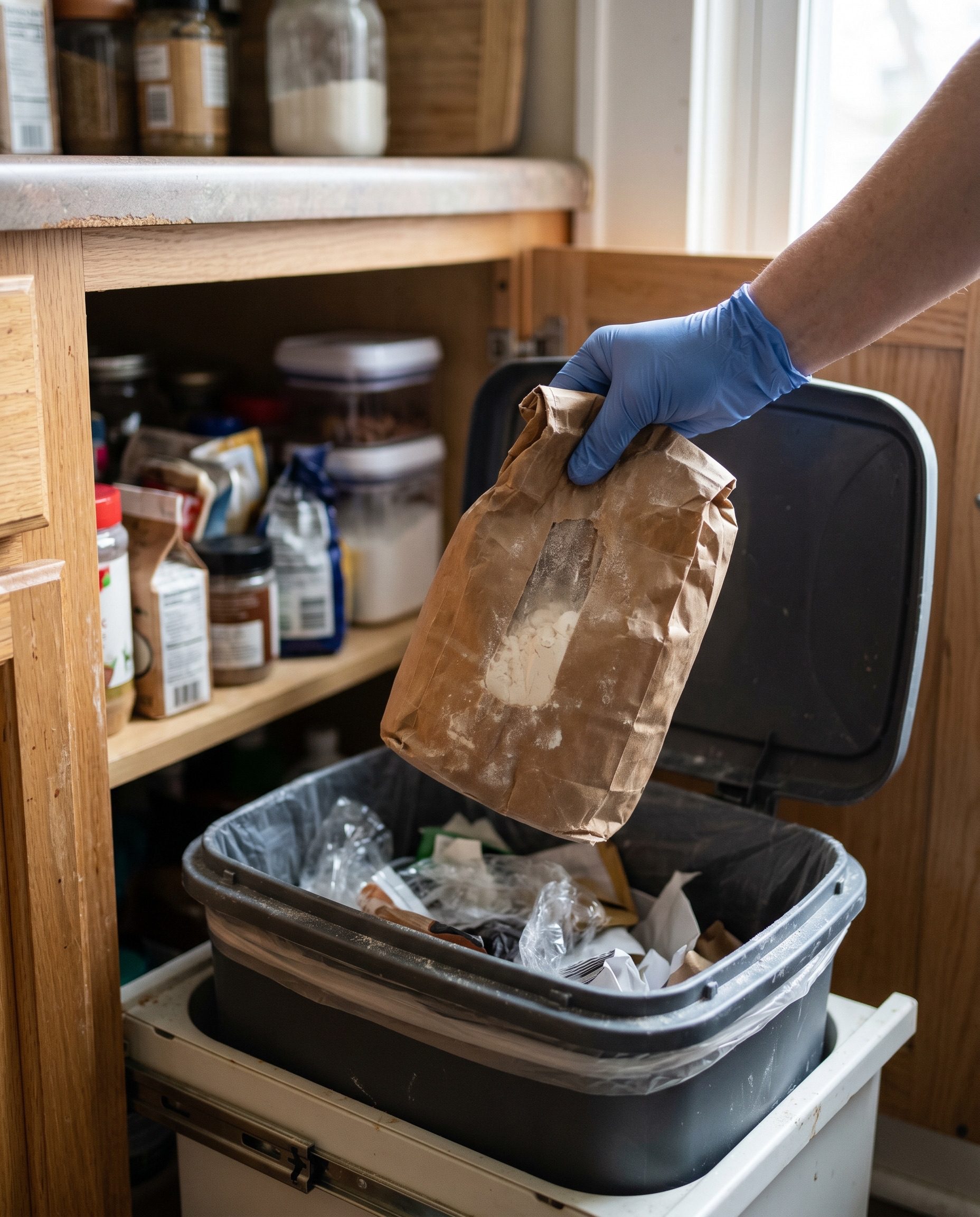
This is the whole ballgame, and it costs nothing. Pull every dry good off the shelf and inspect it, because one infested package is feeding the entire outbreak. The usual suspects are the things that sit unopened the longest: old flour and cornmeal, birdseed, dry pet food, rice, oats, nuts, dried fruit, spices, and decorative items like ornamental corn or seed wreaths. Open anything you cannot see through and look for webbing, clumping, fine powder, or larvae.
When you find it, do not just close the bag and set it aside. Bag the infested package in a sealed plastic bag and put it in an outdoor trash bin, not the kitchen can, so the larvae cannot crawl back out into the pantry. If you found it fast and it was one bag, you may be nearly done already. Most light infestations trace back to a single source, and removing it removes the breeding ground.
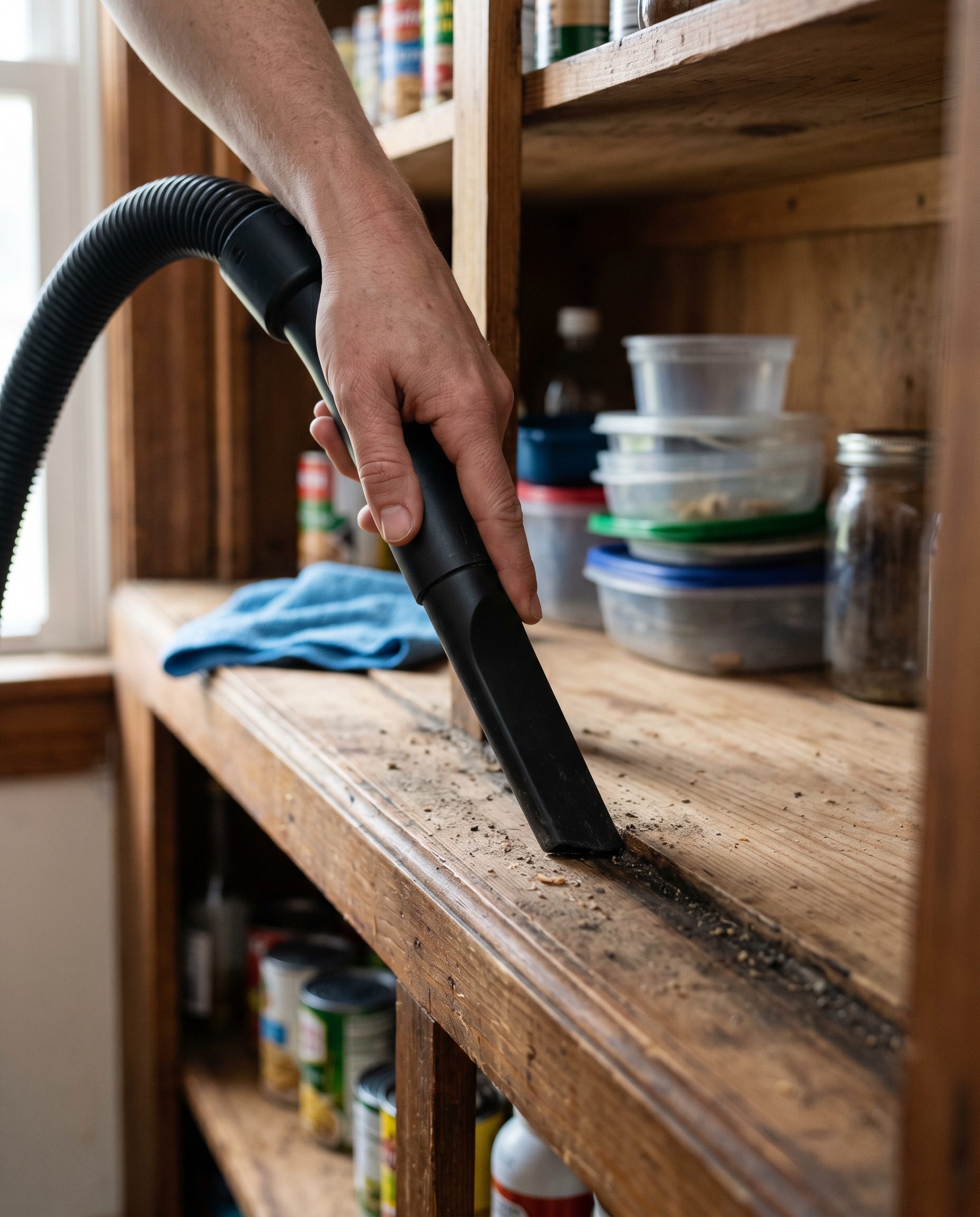
Check the upper corners and shelf undersides too, because mature larvae crawl away from the food to pupate. They will tuck into the gap where the shelf meets the wall, under the lip of a shelf, or into the threads of a jar lid, sometimes several feet from the package they grew up in. That wandering habit is exactly why cleaning the shelf comes next.
Vacuum, wash, then seal everything
With the source gone, the goal is to remove the strays and shut off every future meal. Work in this order.
First, vacuum the empty shelves, paying close attention to the seams and corners where larvae hide to pupate and where eggs collect. Get the front edge, the back corners, the underside lip, and any cracks in the shelf. Then empty the vacuum or take the bag straight outside so nothing crawls back. After vacuuming, wash the shelves with hot soapy water and dry them; the EPA’s sanitation-first, least-toxic approach to pest control puts cleaning and removing food sources ahead of any chemical, which is exactly right here. Skip the bleach and vinegar fogging rituals you will read about, since soap and water plus a vacuum does the actual work.
Now the part that keeps them from coming back: move every dry good into airtight glass or hard plastic with a sealing lid. Cardboard boxes, paper bags, and the original plastic film do not stop these insects, because the larvae chew through them and the adults walk in around loose folds. Glass canning jars, thick screw-top plastic canisters, and clamp-lid jars all work. The University of Kentucky’s guidance on controlling insects in stored grain makes the same point: tight, sealed containers are the single most effective home defense against stored-product insects. As a bonus, sealed jars contain any eggs you didn’t know were already in a product, so a future hatch stays trapped in one jar instead of spreading.
One quiet trick the experts use: if you suspect a new bag of flour or grain but cannot see anything, freeze it for at least a week before it goes in the pantry. A few days at freezer temperature kills eggs and larvae hiding in the product, which is the cleanest way to be sure a fresh purchase isn’t seeding round two.
Where the bug is decides your move
The right action shifts a little depending on what you found and where. This is the quick map for a typical kitchen.
| Where the problem is | Best move | Watch out for |
|---|---|---|
| One infested bag or box | Bag it sealed, toss in an outdoor bin | Strays may have already wandered to the shelf |
| Emptied shelves and corners | Vacuum seams, then wash with hot soapy water | Empty the vacuum outside right after |
| Everything else in the pantry | Move into airtight glass or hard plastic | Paper, cardboard, and film don’t stop them |
A pheromone moth trap fits in here as a monitor, not a cure. The sticky traps you can buy catch only male Indianmeal moths and tell you whether the problem is shrinking after you clean. A trap never clears an infestation on its own, because it does nothing about the larvae and eggs in the food, which is where the real population lives. Used right, a trap confirms your cleanup worked or warns you the source is still hiding. Our pantry moth trap comparison sorts the monitors that are worth it from the gimmicks, and our broader guide to getting rid of pantry moths covers the moth-specific version of this same plan.
Common questions
Should I spray my pantry to kill them?
No. Sprays and foggers coat surfaces, but the larvae and eggs are sealed inside the food where no spray reaches, so you would poison the shelf you eat off and leave the actual population untouched. The fix is mechanical: remove the source, vacuum, wash, and seal the rest. Save your money and skip the aerosol.
Do pantry moth traps get rid of the problem?
They do not. A pheromone trap catches only adult male moths and works as a monitor, telling you whether your cleanup is working. The breeding is happening in the food itself, so the trap can confirm progress but never replaces finding and tossing the infested package.
Can I just eat around the bugs or freeze the food and keep it?
Freezing for a week kills the insects in a product, and the food is not toxic afterward, so technically you can keep frozen-treated grain if you want to. Most people throw out anything visibly infested with webbing or larvae for the obvious reasons, but freezing is a real option for a borderline bag you’d rather not waste.
How long until they’re gone?
If you find the one source and clean and seal properly, the visible problem usually drops within a couple of weeks as the last adults die off. Stray larvae that pupated in shelf corners can hatch for a few weeks after, which is why you keep a monitor trap up and recheck. No new moths across a couple of weeks means it’s over.
Why do they keep coming back?
They come back because a second infested package was missed or because new ones walk in through paper and cardboard. Inspect anything you buy in bulk, store everything in airtight containers, and check decorative seed or grain items, since those are a common overlooked source.
Final verdict
Whatever is in your dry goods, the move is the same because every common pantry pest breeds inside the food. Find the one infested package, almost always old flour, birdseed, or pet food, bag it sealed, and put it in an outdoor bin; that single step removes the breeding ground for free. Then vacuum the shelf seams, wash with hot soapy water, and move every remaining dry good into airtight glass or hard plastic so nothing new can start. Keep a pheromone trap up as a monitor to confirm the count is dropping, and freeze any suspect new purchases for a week before they go on the shelf. Skip the sprays and foggers entirely, because chemistry cannot reach insects sealed inside the food, and the simple cleanup beats it every time.
Next steps:
– Confirm exactly what you’re dealing with in our Indianmeal moth identification and lifecycle guide.
– Lock in the airtight-storage habit with our guide to preventing moths in the pantry and closet.
– If moths are your specific culprit, follow the full plan in our guide to getting rid of pantry moths.
Pingback: Tiny Bugs in Kitchen Cabinets: Identification Guide
Pingback: Small Brown Bugs in the House: Identification Guide
Pingback: Hard-Shelled Bugs in the House: Which Beetle Is It?
Pingback: Types of Weevils: Pantry, Garden and the Snout