
Three things damage clothes and each leaves a different mark. Clothes moth larvae eat in patches and leave silk webbing. Carpet beetle larvae leave scattered irregular holes and bristly shed skins. Silverfish graze the surface and go for starched cotton and paper rather than wool. In all three cases the adult you saw is not what did the damage.
- Webbing, silk cases and patchy grazing: clothes moth larvae.
- Scattered holes plus bristly husks: carpet beetle larvae, the more common of the two.
- Surface grazing on cotton or paper, no holes right through: silverfish, which means the wardrobe is damp.
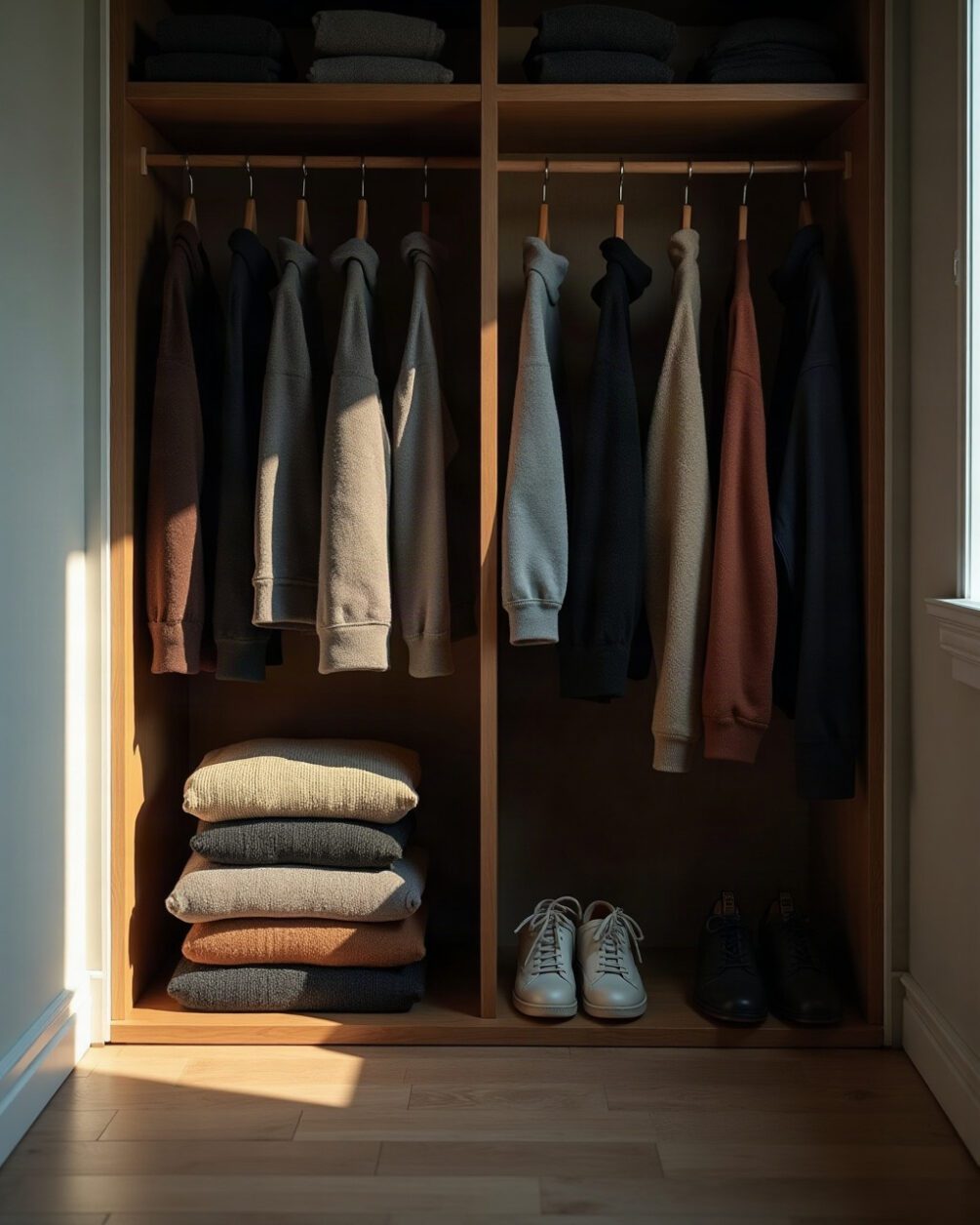
The insect flying out when you open the door is almost never the one causing the problem. Adult clothes moths do not feed on fabric at all, and adult carpet beetles feed on pollen outdoors. Both are the mobile stage whose only job is to lay eggs. The damage is done by larvae, in the dark, in things that have not moved for months.
That is why the useful evidence is the damage itself.
Reading the damage
| What you see | Culprit | Where it concentrates |
|---|---|---|
| Patchy grazing with silk webbing | Clothes moth larvae | Folds, collars, under arms, stored items |
| Scattered irregular holes, bristly husks nearby | Carpet beetle larvae | Wardrobe floor, shelf corners, under piles |
| Surface grazing, thinned but not holed | Silverfish | Starched cotton, paper, cardboard boxes |
| Neat round holes in a folded stack, aligned | One larva, one fold | Folded knitwear stored flat |
The aligned-holes pattern is worth knowing because it looks alarming and is not. A single larva feeding in a folded garment produces holes that line up when you unfold it, which people read as many insects. It is one.
Carpet beetle larvae, the more common of the two
Kentucky notes that carpet beetle larvae feed on wool, felt, fur, feathers and other animal products. In a wardrobe that means wool, cashmere, silk, a fur collar, a feather-filled item, and felt in hat linings.
They are three to five millimetres, tapered, bristly, and slow. The shed skins are usually easier to find than the larvae, and they outnumber them: bristly empty husks along a shelf edge, in seams of stored bags, or in the fluff at the back of the wardrobe floor.
They avoid light, so damage sits in folds, under piles and inside things rather than on exposed surfaces. Our carpet beetle identification guide covers the species and the removal guide covers what actually works.
One thing worth ruling out: the adults you find dead on a windowsill in early summer are the same insect, and they mean it is time to search the wardrobe rather than that the sill is the problem. Our guide to bugs that play dead covers why those specks are often alive.
Clothes moths, and the webbing tell
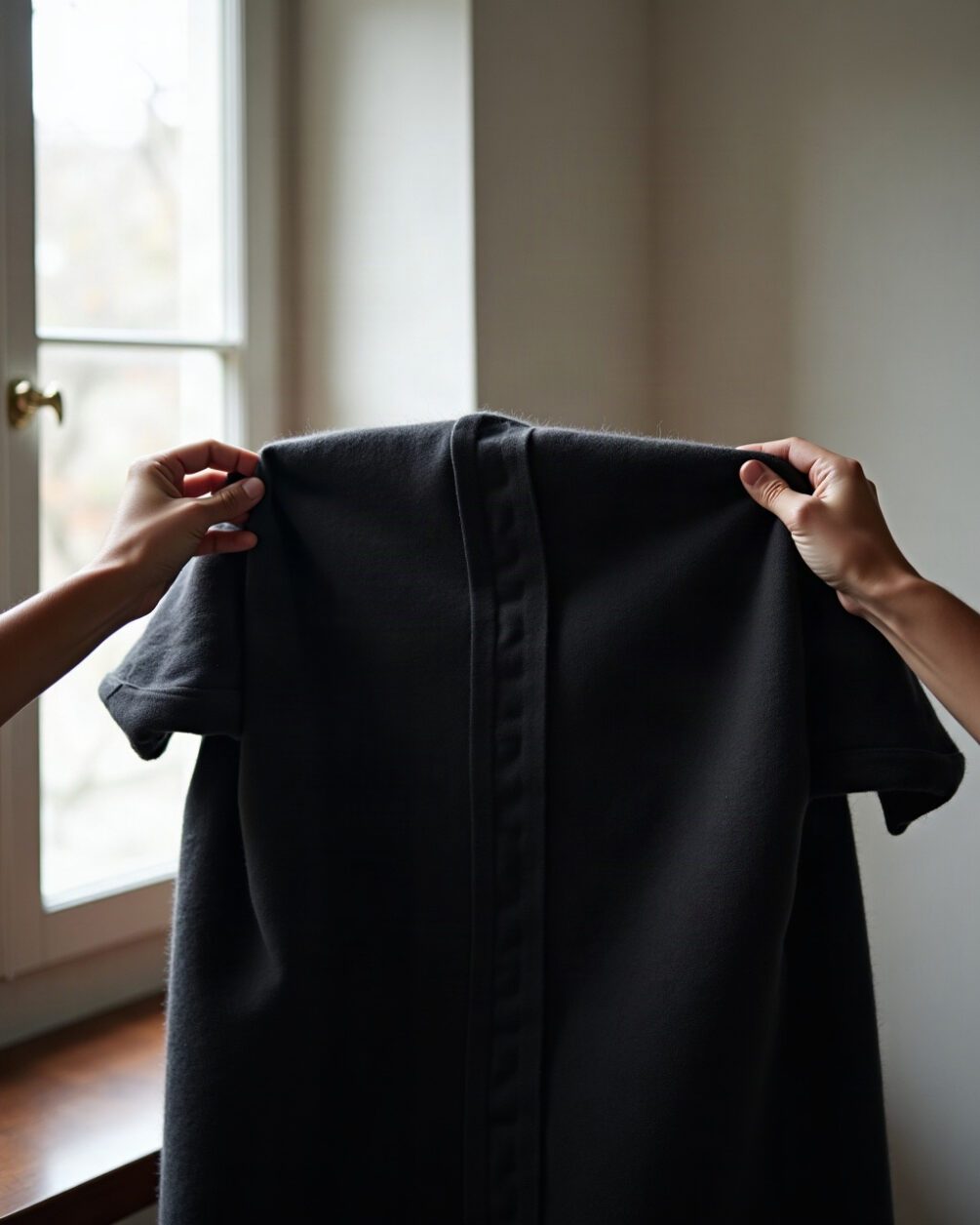
Clothes moth larvae are small, pale, and build silk as they feed, which is the diagnostic. Look for fine webbing in a fold, silk tubes stuck to fabric, or a small case the larva drags with it depending on the species.
The adult is small, buff or golden, and behaves nothing like the moths that come to a lamp: it avoids light, flutters weakly, and tends to run or hop across fabric rather than fly across a room. If a moth is circling a bulb, it came in from outside and is not your problem.
Our clothes moth guide covers treatment, which fabrics they actually eat covers what is at risk, and the pantry versus clothes moth comparison matters because the two need different searches. Kentucky’s guidance on stored product pests tracing to a single infested item applies to the pantry species, which is a kitchen problem rather than a wardrobe one.
Silverfish and booklice, if the wardrobe is damp
Silverfish do not eat wool. They eat starch and polysaccharides, so in a wardrobe they go for starched cotton, paper, cardboard boxes and the glue in bindings. The damage is surface grazing that thins fabric rather than holes through it.
Their presence is a humidity reading. A wardrobe against a cold external wall, or one in a room that never ventilates, will hold enough moisture to sustain them. Our guide to what attracts silverfish covers the conditions, and protecting paper and books covers storage.
Booklice turn up in the same conditions, are smaller and paler, and damage nothing. Our guide to tiny white bugs covers them.
What actually protects clothes
Clean before storing. This is the single highest-value habit. Larvae are drawn to sweat, skin oils and food traces far more than to clean fibre. A worn jumper put away unwashed is the item that gets eaten.
Store sealed, not just covered. A zipped bag or a lidded box excludes egg-laying adults. A garment bag left open at the bottom does not.
Move things. Both larvae need stillness. Anything worn or handled regularly is rarely damaged; the casualties are always at the back.
Vacuum the wardrobe itself. Corners, the shelf edges, the floor, and the track if there is one. That is where the fluff, shed skins and eggs accumulate.
Cedar and lavender are weak. They may repel slightly at high concentration in a sealed space, and they do not kill larvae already present. Treat them as pleasant rather than as protection.
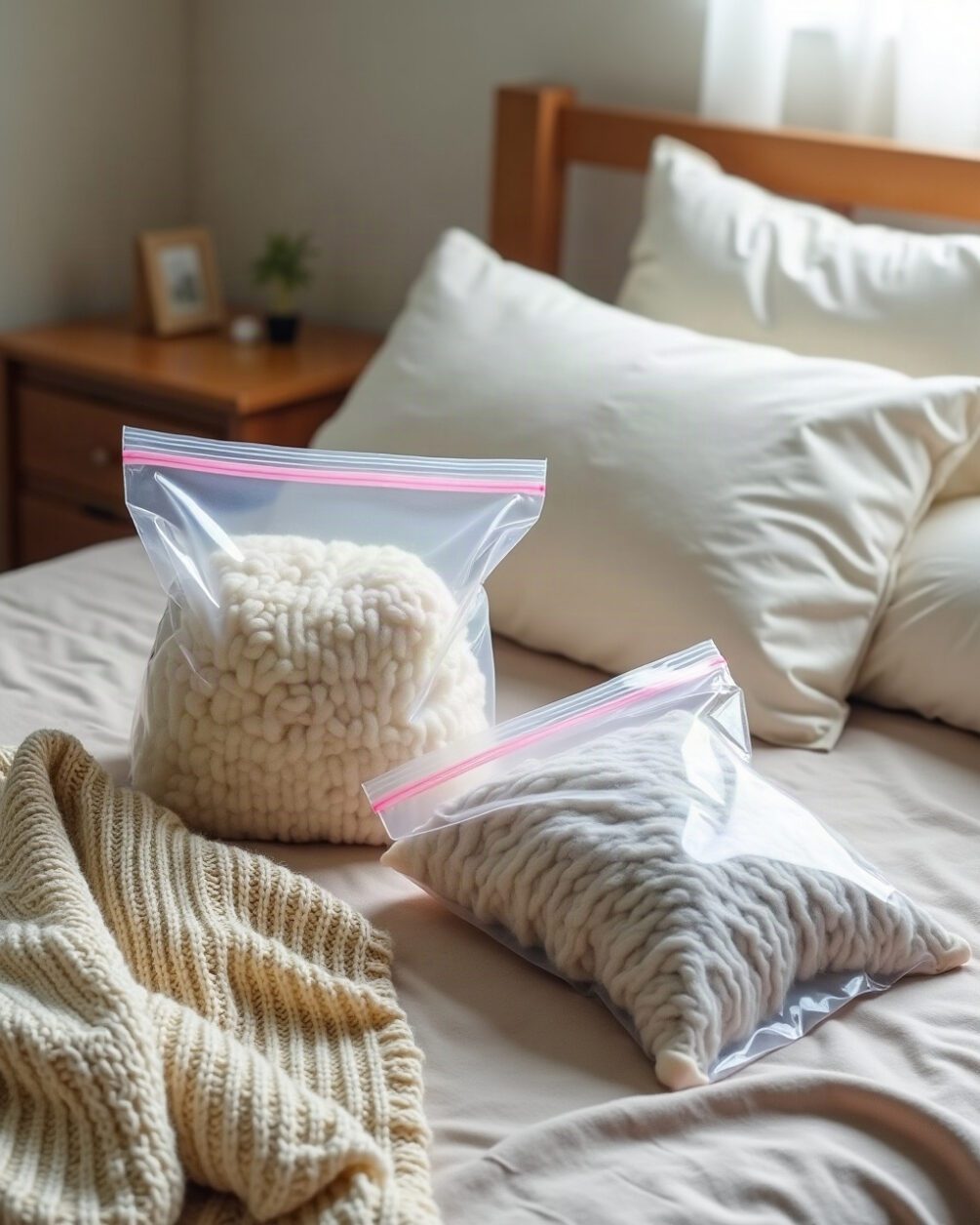
Freezing works for a small item: sealed in a bag, at household freezer temperature, for several days. Useful for a single garment, impractical for a wardrobe.
Common questions
I found holes but no insects.
Normal, and it does not mean the problem is over. Larvae are small, avoid light and hide inside folds. Check the shed skins and the fluff at the back before concluding anything.
Are they in the wardrobe or the carpet?
Often both, because carpet beetles move between a carpet edge and stored wool. Treating one and not the other is why people find the problem returns.
Do they bite?
Neither clothes moths nor silverfish bite. Carpet beetle larvae do not bite either, though their bristles irritate skin on contact, which we cover in carpet beetle rashes explained.
Final verdict
Look at the damage rather than the insect. Webbing and patchy grazing means clothes moth larvae. Scattered holes with bristly husks nearby means carpet beetles, which is the more likely of the two. Surface grazing on cotton and paper means silverfish and a damp wardrobe. In every case the fix is the same shape: clean everything before it goes away, store it sealed, vacuum the wardrobe itself, and accept that cedar blocks are a nice smell rather than a defence.

Pingback: Pest Damage Identification: Reading What Was Left Behind