n
n
n
If you keep finding small beetles on the windowsill, the adults are not your problem. Carpet beetles are a larvae problem, and the larvae do not live out in the open. They feed in the quiet places where wool, lint, pet hair, and dead insects pile up, under furniture, along carpet edges, in closets, and inside vents and wall voids. You get rid of them by hunting down those food caches and clearing them out, with deep, repeated vacuuming as the single most effective step. Launder or freeze infested fabrics, treat the cracks and carpet margins, and only then worry about the beetles you see at the glass.
nn
n
Carpet beetles are a larvae problem hiding where lint, wool, and pet hair collect, so find and remove that food source and deep-vacuum the edges and under furniture; sprays are a follow-up, never the fix.
n
- n
- Do first (free): Find the larval food cache, throw it out, and deep-vacuum carpet edges, under heavy furniture, closets, and vents, then empty the canister outside.
- Best for the common case: Launder or hot-dry infested wool and fabrics, freeze what cannot be washed, and store clean knits in sealed bins.
- Skip: Fogging the whole room or chasing the adults at the window; the mist never reaches the hidden larvae doing the damage.
n
n
n
n
nn
nn
Why the larvae are the real pest
nn
The adult carpet beetle is a small, rounded, mottled beetle that mostly wants outside, where it feeds on flower pollen. The damage to your sweaters and rugs is done entirely by the larvae, the bristly little “woolly bears” that look like tiny moving brushes. Knowing this flips the whole job, because spraying the adults you see does nothing about the larvae you do not. The reason fabrics get holes is that the larvae feed on keratin in wool, lint, pet hair, and dead insects, the protein-rich debris that builds up in places nobody cleans.
nn
That is why infestations cluster in the same spots: the dusty strip under a bed, the back of a closet, the lint behind a floor vent, a forgotten wool blanket, even a window channel full of dead flies the larvae are quietly eating. If you are not certain the larvae are carpet beetles versus clothes moths or something else, our guide to identifying carpet beetle types shows the larvae and adults side by side so you can be sure before you start tearing the house apart.
nn
Find the food source first
nn
This is the step that actually clears the infestation, and it costs nothing. The larvae are tied to a food cache, so your job is to find it and remove it. Start where keratin and debris collect: under and behind heavy furniture, along the tack strip at carpet edges, in closet corners, inside heating and return-air vents, and around the seldom-moved boxes in storage. The University of Kentucky entomology on carpet beetle larvae and their food sources points to the same hidden harborage, including accumulated lint, shed pet hair, and dead insects in light fixtures and wall voids.
nn
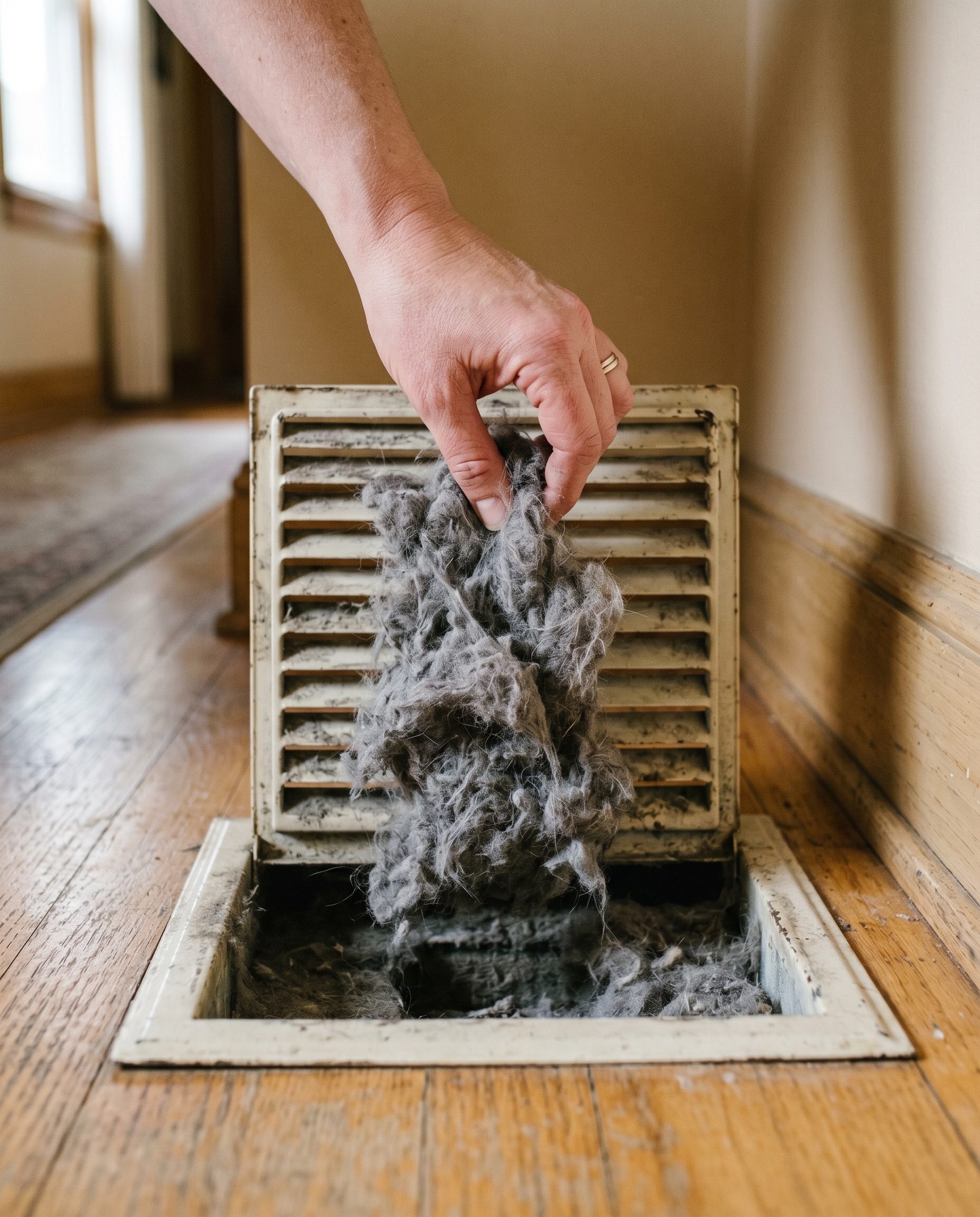
Pull the vent covers and clear the matted lint behind them, because a vent run is a buffet the larvae return to. Check stored wool, felt, and silk; a single moth-eaten blanket can feed a population for months. When you find the cache, the debris itself is what you throw away. Bag it, take it outside, and you have removed the colony’s pantry, which does more than any spray on the floor.
nn
nn
Deep-vacuum like it’s the treatment
nn
Vacuuming is not tidying here; it is the main control tool, and thorough, repeated vacuuming is the most effective step you can take. It physically removes larvae, eggs, shed skins, and the lint they eat, all at once. According to UC IPM, thorough cleaning and vacuuming is the heart of carpet beetle control, and the value is in the spots people skip, not the open middle of the floor.
nn
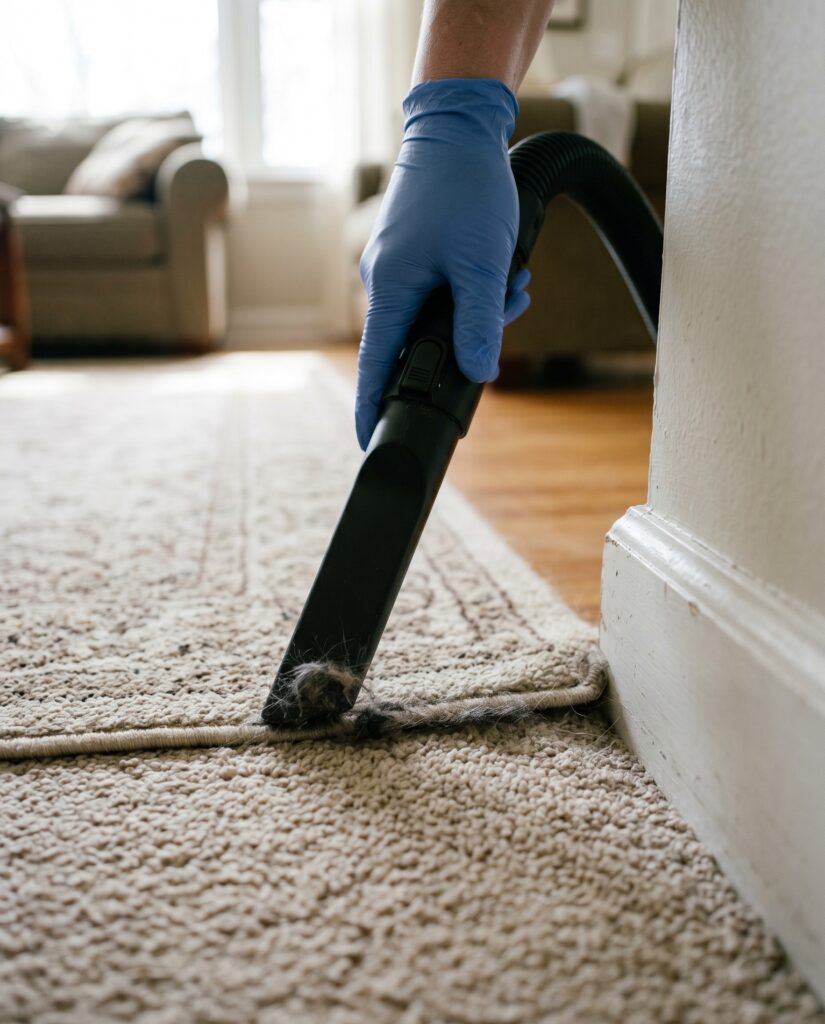
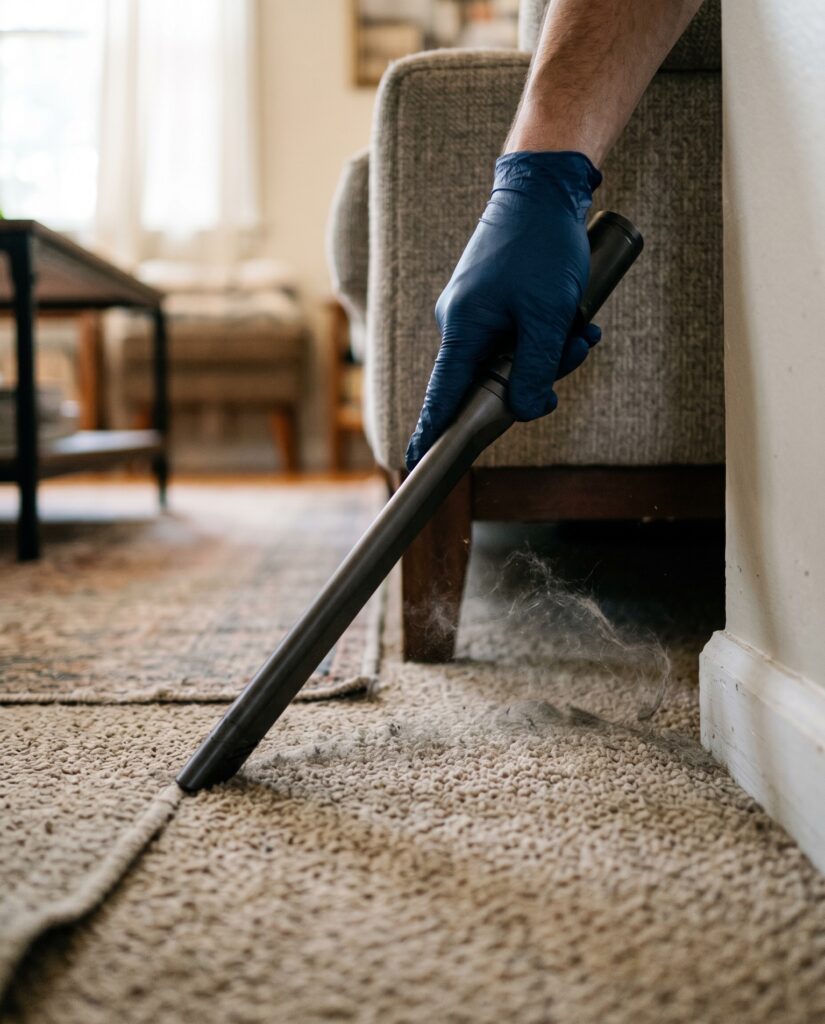
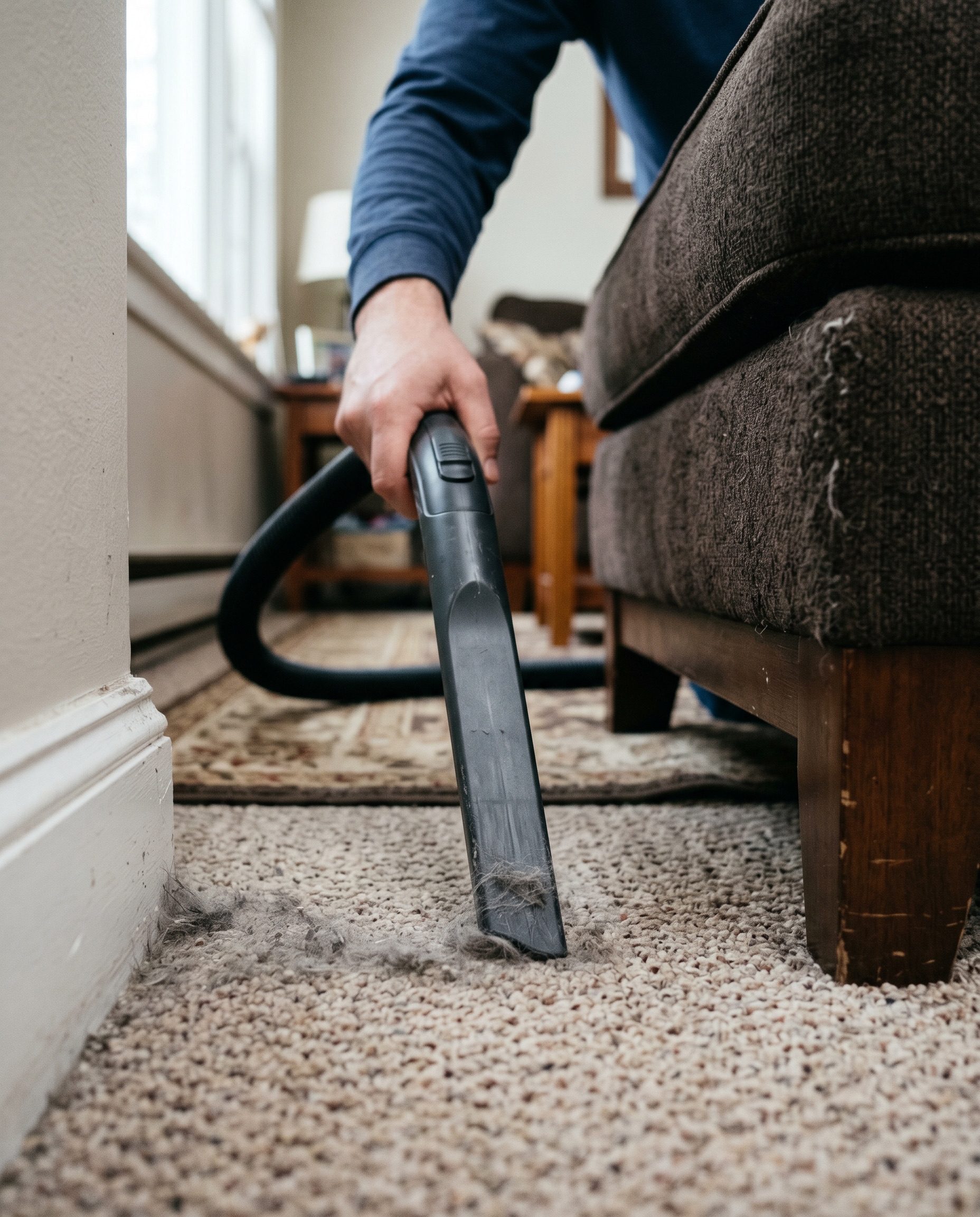
Run a crevice tool slowly along every carpet edge where it meets the baseboard, because that quarter-inch margin holds most of the action. Get under the sofa, the bed, the dresser, anything heavy that does not move on cleaning day. Hit closet floors and corners, the edges of area rugs, upholstered furniture seams, and inside the vents you just cleared. When you finish, empty the canister or bag straight into an outdoor trash bin so nothing crawls back out. Then do it again in a few days, and keep it up weekly for several weeks, because eggs you missed will hatch on their own schedule.
nn
Launder, freeze, then treat the margins
nn
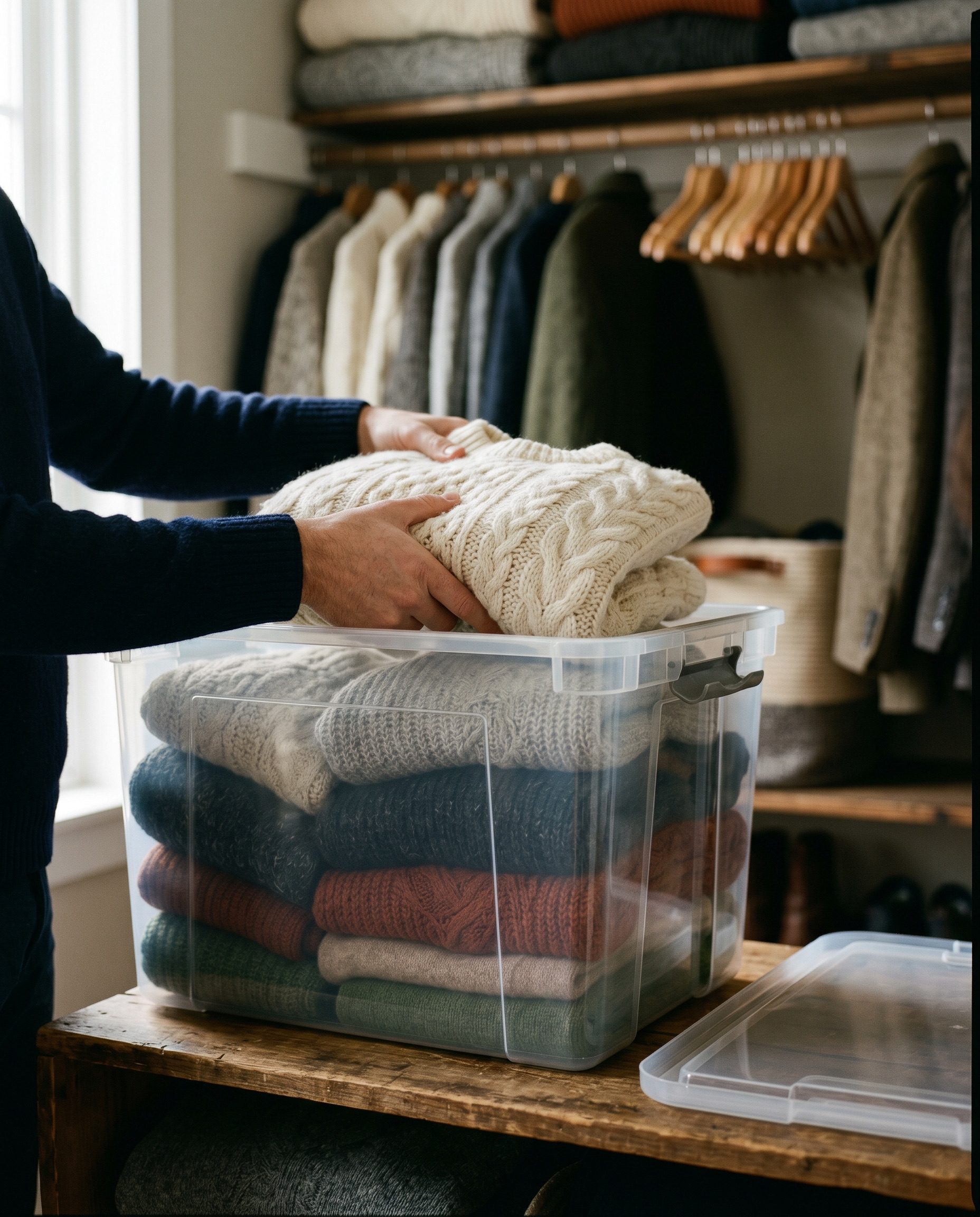
Once the cache is gone and the floor is vacuumed, deal with the fabrics themselves. Anything washable that was infested or stored near the cache goes through a hot wash and, more to the point, a hot dryer cycle, since heat is what kills larvae and eggs. Dry-clean-only wool can go to the cleaner, and small items that cannot take heat can go the other direction: sealed in a bag in a home freezer for about two weeks kills the larvae cold. The honest reason this matters is that the bristly larvae, not the harmless adults, are what survive in your knits, so the fabrics have to be handled directly.
nn
Only after the source is gone and the cleaning is done does a residual product earn a place, and even then it is a spot treatment, not a fog. Apply a labeled crack-and-crevice insecticide along carpet edges, under the tack strip, and into baseboard gaps where larvae travel, never broadcast across open carpet or onto clothing. Treat the margins, not the middle. Whenever you reach for any registered product, follow the product label and treat only where the larvae travel, because under federal law the label is the law. Keep children and pets off treated areas until everything is dry, never apply to surfaces that touch food or skin, and use only a product labeled for indoor crack-and-crevice use. For exposure questions, contact a doctor or your local poison control center. If you want to compare the category options, our breakdown of carpet beetle sprays and killers sorts the contact products from the residuals.
nn
nn
Match the fix to where they are
nn
The right move changes with the spot, so here is the quick map for the common zones in a home.
nn
| Where they are | Best approach | Watch out for |
|---|---|---|
| Carpet edges and under furniture | Slow crevice-tool vacuuming, repeated weekly | The open middle is not where they hide |
| Wool, knits, and stored fabric | Hot dryer, dry-clean, or freeze for two weeks | Adults at the window are a distraction |
| Vents, closets, wall voids | Clear the lint cache, then a labeled crack-and-crevice spot treatment | No broadcast spraying or fogging |
nn
A few things genuinely are not worth your money. Sticky “carpet beetle traps” are glue monitors, not cures; carpet beetles have no strong pheromone lure the way clothes moths do, so a monitor only tells you where activity is highest. Use it to locate the source, then go clean that spot. Diatomaceous earth and sprays are follow-ups for the cracks, not a substitute for finding the food cache. And a whole-room fogger is the classic waste here, because the mist settles on open surfaces while the larvae stay buried in lint the fog never touches.
nn
Keep them from coming back
nn
Prevention is just the maintenance version of what cleared them. Keep up the vacuuming on the edges and under furniture, because every removed bit of lint is one less meal. Store clean wool, felt, and silk in sealed bins or garment bags rather than open shelves, and put items away clean, since body oil and food stains are what draw larvae to a sweater in the first place. Our guide to preventing carpet beetles and other fabric pests covers the closet and storage routine in detail.
nn
Keep vents and light fixtures clear of dead insects and lint on a schedule, and check window channels in spring, when adults drift in from outside looking to lay eggs near a food source. Catching that seasonal entry early is the difference between wiping a windowsill and stripping a closet in August.
nn
Common questions
nnWhat kills carpet beetles instantly?n
Heat does the most immediate work: a hot dryer cycle kills larvae and eggs in fabric, and a vacuum removes them physically on the spot. The catch is that “instant” only applies to what you actually reach, and the larvae you cannot see in vents and lint are the ones that repopulate. The lasting fix is removing the food source plus repeated vacuuming, not a single quick treatment.
nnDo carpet beetles bite?n
No. Carpet beetles do not bite. If you have itchy red bumps, they are usually an allergic contact reaction to the larval hairs, not bites, which is a common mix-up. Our explainer on carpet beetles, bites, and rashes walks through why the reaction happens and how to tell it apart from a true bite.
Where the three things that live in carpet is the actual question, what lives in carpet answers it.
nnDoes diatomaceous earth get rid of carpet beetles?n
It can help in cracks and voids as a follow-up, but it is not the main fix. Diatomaceous earth only works on larvae that crawl through it while it stays dry, so it does nothing about the food cache feeding them. Find and remove the source and deep-vacuum first, then use a thin dust in the gaps the larvae travel.
nnHow long does it take to get rid of carpet beetles?n
For a contained case handled correctly, expect several weeks of repeated vacuuming and laundering, because eggs keep hatching on their own timeline. You will know it is working when you stop finding larvae and shed skins. Heavier or recurring cases take longer and mean a food source is still hidden somewhere.
nnWhy do I keep seeing the adult beetles at the window?n
Adults are drawn to light and want outside to feed on pollen, so the window is where you notice them, not where the damage starts. Seeing adults indoors is a signal that larvae may be feeding somewhere nearby, so treat it as a prompt to go find the cache rather than something to spray.
nn
Final verdict
nn
Carpet beetles are a larvae problem, so beat them where the larvae actually live, not at the window. The free first move clears most cases: find the food cache of wool, lint, pet hair, and dead insects, throw it out, and deep-vacuum the carpet edges, under heavy furniture, closets, and vents, again and again. Launder or hot-dry infested fabrics, freeze what you cannot wash, and store clean knits in sealed bins. Save any spray for a labeled spot treatment in the cracks and carpet margins after the source is gone, and skip the foggers and the chase for adults entirely. Be patient through a few cycles, because that is what outlasts the hatching eggs.
nn
Next steps:
nn
– Confirm what you are dealing with with our carpet beetle identification guide.
n
– Lock in the storage and closet routine with the carpet beetle prevention guide.
n
– If you decide on a spot treatment, compare options in our carpet beetle sprays breakdown.
nn