
If you woke up with itchy red bumps and the internet pointed you at carpet beetles, here is the correction that saves you a lot of wasted spray: carpet beetles do not bite. They have no biting mouthparts aimed at people, so the welts blamed on them are not bites at all. What you are reacting to is an allergic contact reaction to the tiny barbed hairs on the larvae and on the skins they shed. That is why the rash lands on skin that touched an infested bed, couch, or sweater rather than in the neat lines bed bugs leave, and why it keeps coming back until you find and remove the larvae. A rash that is severe, spreading, or will not settle is a question for a clinician, not a bug spray.
Carpet beetles do not bite. The itchy bumps are an allergic reaction to the barbed hairs on the larvae and their shed skins, so they appear where your skin touched an infested surface, not in rows, and they stop when you remove the larvae.
- The confirming sign: Bristly tan “woolly bear” larvae or their shed skins near beds, closets, and rugs, not a flying beetle on the windowsill.
- Most-confused look-alike: Bed bug bites, which line up in rows on covered skin and come with rust-colored spotting on the mattress seam.
- What it means: Harmless to your health but the cure is removing the larval food source, not spraying. If the rash worsens, see a clinician.
Quick answer: no bite, an allergy
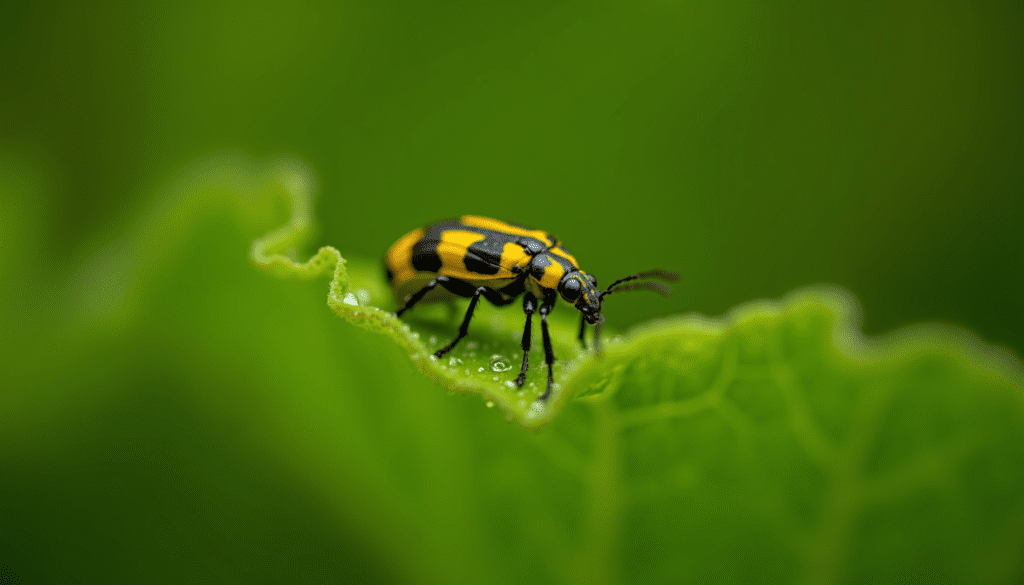
Carpet beetles, the small oval beetles in the genus Anthrenus and Attagenus, simply are not built to bite people. The adults you see on a windowsill feed on flower pollen and nectar outdoors, not on you. The damage indoors is done entirely by the larvae, the bristly tan “woolly bears,” which chew keratin in wool, fur, feathers, and lint. The reaction people call a bite is an allergic and irritant response to those larval hairs, called hastisetae, and to the skins the larvae shed as they grow. Get that one fact straight and the whole problem reframes itself: you are not hunting a biting bug, you are removing the larvae whose hairs are irritating your skin.
Why the rash is not a bite
The single feature that settles this is where the bristly larvae live versus where the rash appears. A bite is a wound a mouthpart makes. A carpet beetle larva has no mouthpart that pierces skin, so it cannot leave a bite. What it does have is a coat of short, barbed defensive hairs. When those hairs and the larva’s shed skins work into bedding or clothing, contact with skin can trigger an itchy, raised, sometimes blistering reaction in people who are sensitive to them, an effect UC IPM’s Pest Notes on carpet beetles describes as a dermatitis rather than a bite. That distinction is not pedantic. It changes the whole response, because no insecticide aimed at “the biter” will help when the trigger is loose hairs in your laundry.
The tell that gives it away is the pattern on your skin. Allergic contact reactions show up where the fabric touched you, often a diffuse patch on the back, an arm, or a thigh that pressed into an infested couch or sweater. They do not march in the tidy rows or clusters that bed bugs leave on exposed skin, and they are not centered on a puncture. If you can connect the rash to a specific item of bedding or clothing, you have most of your answer already.
Finding the larvae, not the beetle
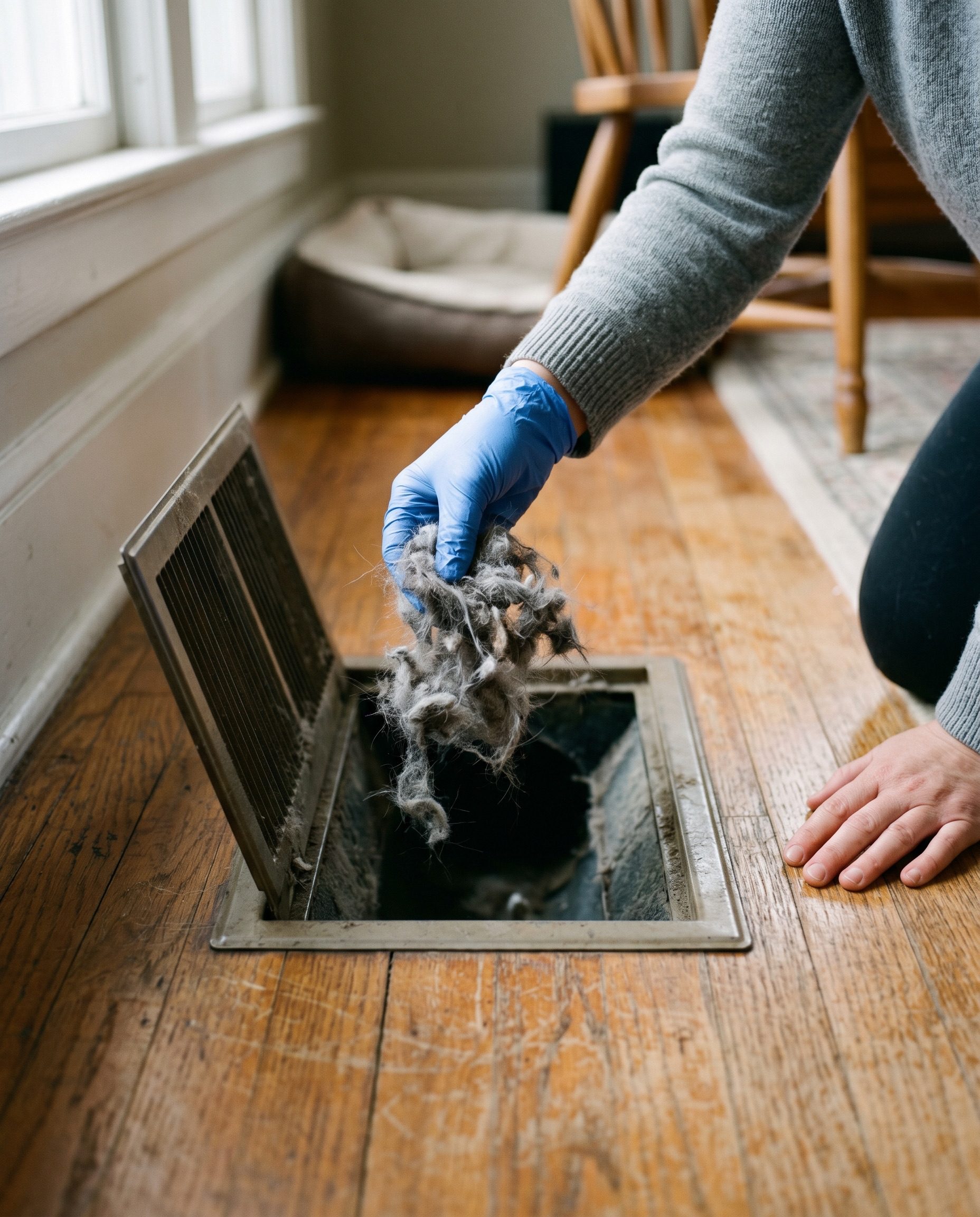
Here is the part most people get backwards: the adult beetle is the easy decoy, the larva is the real target. Adults drift to windows because they are heading outside to flowers, so a beetle on the sill tells you little about where the trouble is. The larvae hide in dark, undisturbed places where their food collects: under and behind furniture, along carpet edges and under rugs, inside closets among wool and silk, in dresser drawers, behind baseboards, and in floor vents thick with lint and pet hair. The University of Kentucky entomology profile of carpet beetles lists lint, pet hair, dead insects, and stored wool as the classic larval food, which is exactly where you should be looking.
Run your search by the trail of cast skins, because larvae molt repeatedly and leave behind a scatter of empty bristly husks that look like tiny hairy shells. Find those, plus chewed wool or thinning spots in a rug, and you have located a feeding site. Pull the lint and pet hair out of floor vents, check the back of the closet, and look under the bed where dust and hair drift. If you also want help telling a varied carpet beetle from a black one, our guide to carpet beetle types and identification lays out the markings side by side.
Carpet beetles vs the bugs people blame
People reach for “carpet beetle bites” because the rash arrives overnight and they assume something bit them in bed. Two suspects get confused with carpet beetles more than any others, and the separators are clean. The table below sorts them by the one feature that tells them apart.
| Suspect | What gives it away | Skin pattern |
|---|---|---|
| Carpet beetle larva | Bristly tan “woolly bear” and shed skins near fabric and lint | Diffuse itchy patch where skin touched an infested surface, no puncture |
| Bed bug | Reddish apple-seed bug, rust-colored spotting on mattress seams | Rows or clusters of welts on exposed skin, each a bite |
| Scabies mite | Microscopic, needs a clinician to confirm | Intense night itch with thin burrow lines, often between fingers |
The high-stakes confusion is bed bugs, because the treatment is completely different. If you find rust-colored spotting and reddish bugs on the mattress seam, you have a biting problem, not a carpet beetle allergy. Our carpet beetle vs bed bug identification guide walks the evidence on each so you do not treat the wrong one. Scabies is the third possibility and it is a medical condition, not a household pest, so a persistent burrowing itch belongs with a clinician.

Stopping the rash for good
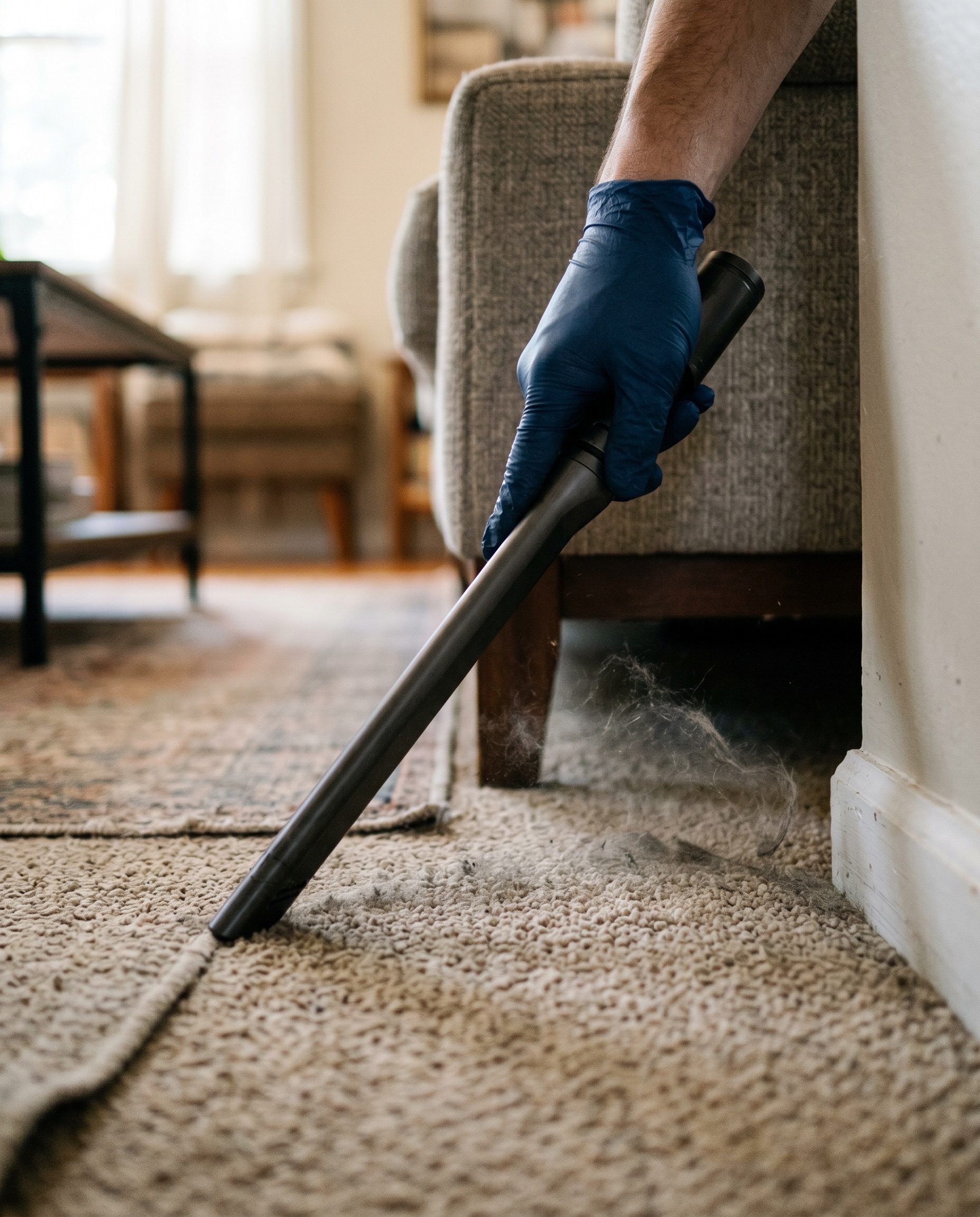
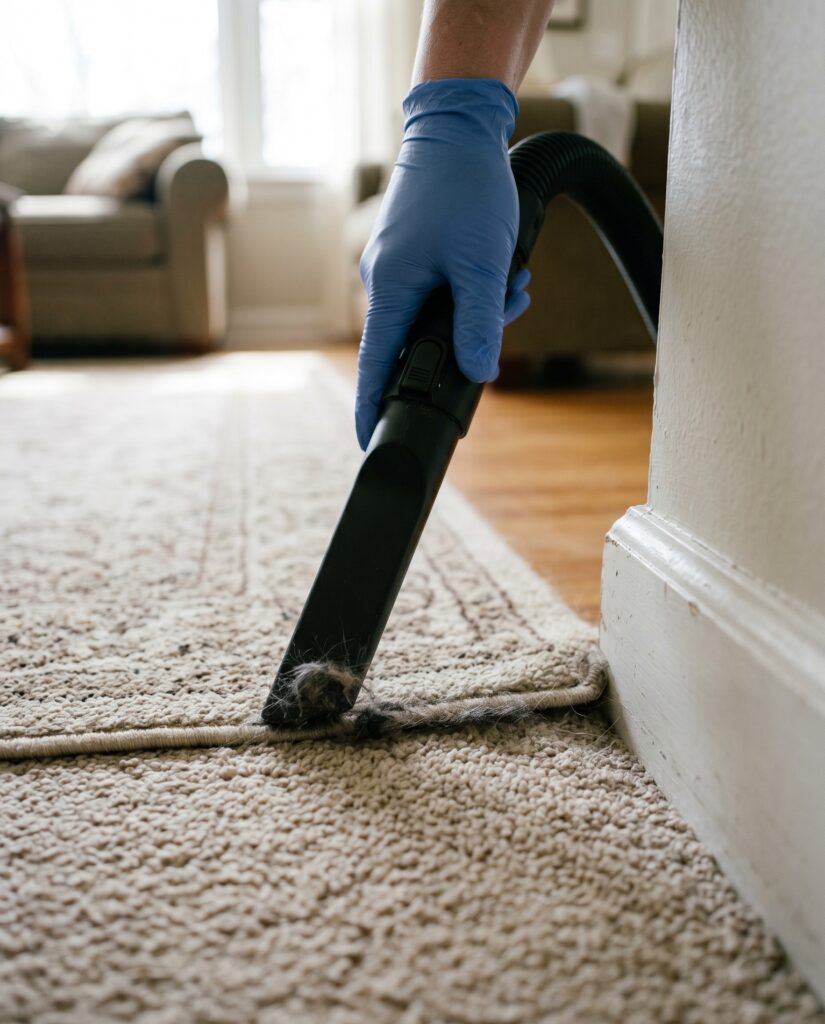
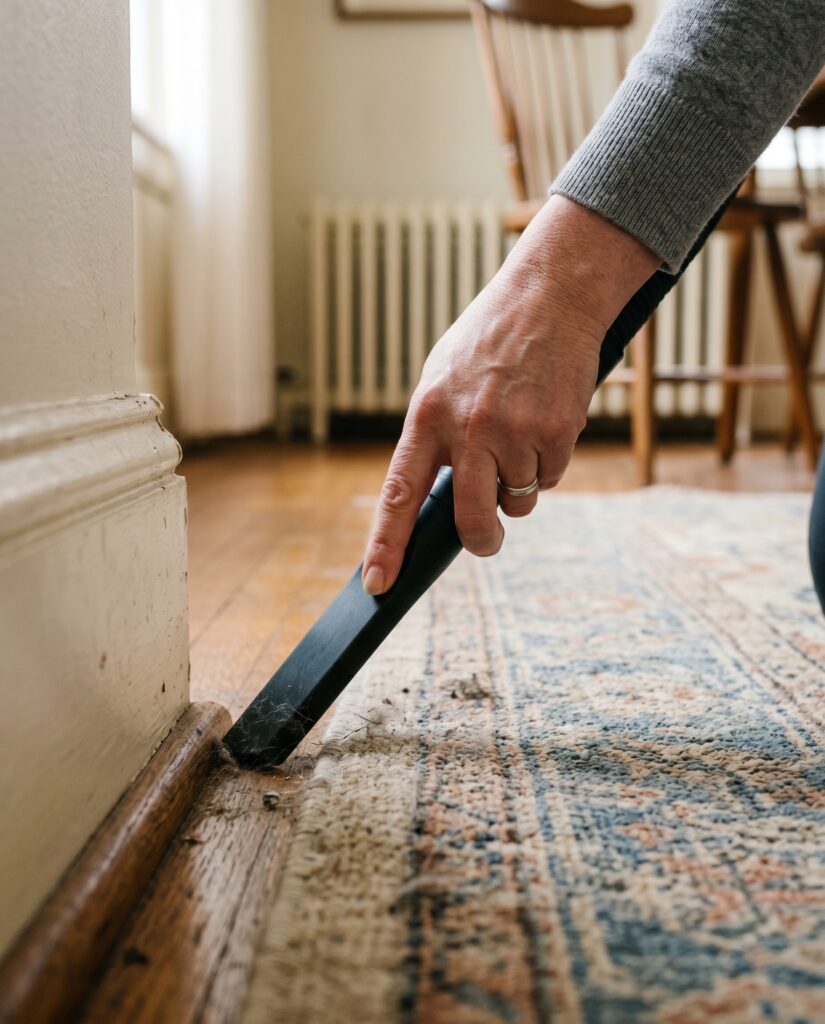
Because the rash is driven by larval hairs, the fix is removal and cleaning, not chemistry. Deep vacuuming is the main tool: work the crevice tool along carpet edges, under furniture, into closet corners, and through floor vents, then empty the canister or bag outside so you are not redepositing hairs. Launder the affected bedding and clothing on the hottest setting the fabric allows and dry it hot, since heat handles both the larvae and the loose hairs at once. The EPA’s sanitation-first, least-toxic approach treats this kind of cleaning and source removal as the first line, with chemicals only as a follow-up where they are actually warranted.
Protect what the larvae feed on. Store clean wool, fur, and silk in sealed bins or garment bags, because larvae cannot reach food they cannot get to, and clean items before storage since body oils and food stains draw them in. Colorado State Extension’s breakdown of dermestid (carpet) beetles frames control the same way: find and eliminate the source, clean thoroughly, and treat only the edges and cracks if anything remains. Sticky traps are useful as monitors, not a cure, since carpet beetles have no strong pheromone lure like clothes moths, so a glue board placed in a closet corner helps you locate activity but will not clear an infestation on its own. If you want the full removal walkthrough, see our guide on how to get rid of carpet beetles.
Common questions
Do carpet beetles bite humans?
No. Carpet beetles have no biting mouthparts that target people, and the adults feed on outdoor pollen. The itchy bumps people blame on bites are an allergic contact reaction to the barbed hairs on the larvae and their shed skins, which is why a doctor would call it a dermatitis, not a bite.
Why do I have a rash if they don’t bite?
Because the larvae carry short barbed hairs and shed their bristly skins as they grow. When those hairs work into bedding or clothing, skin contact can trigger an itchy, raised reaction in sensitive people. The rash appears where your skin touched the infested fabric, not where a bug landed.
How do I tell carpet beetle rash from bed bug bites?
Look at the pattern and the room. Carpet beetle reactions are diffuse patches where skin met an infested surface. Bed bug bites come in rows or clusters on exposed skin, with reddish bugs and rust-colored spotting on the mattress seam. The mattress evidence is the clincher.
Will bug spray stop the itching?
Not really, because the trigger is loose hairs and shed skins, not a living biter on your skin. Spraying the room does nothing about the hairs already in your laundry. Vacuuming, hot laundering, and removing the larval food source are what actually end the reaction.
When should I see a doctor about the rash?
If the rash is severe, spreading, blistering badly, or simply will not settle after you clean up the source, see a clinician. Carpet beetle reactions are not dangerous, but only a healthcare provider can confirm what a stubborn rash actually is and treat it.
Final verdict
Carpet beetles do not bite. The welts you noticed are an allergic contact reaction to the barbed hairs on the larvae and the skins they shed, which is why they show up where your skin pressed into an infested bed, couch, or sweater instead of in the neat rows a bed bug leaves. That reframes the whole job. You are not hunting a biting bug, you are finding the bristly “woolly bear” larvae and their feeding sites in lint, wool, pet hair, and dead insects, then removing that food with deep vacuuming, hot laundering, and sealed storage. Sprays and glue boards are a follow-up and a monitor, never the cure. And if the rash is severe or it will not settle once the source is gone, that is a question for a clinician, not for another can of insecticide.
Next steps:
– Rule out the biting suspect with our carpet beetle vs bed bug identification guide.
– Clear the larvae for good with our walkthrough on how to get rid of carpet beetles.
– Pin down which species you found with our carpet beetle types and identification guide.
Pingback: Tiny Black Bugs in the House: What They Usually Are