
n
n
n
You found bugs near the bed, or a crop of itchy bumps, and the two names that come up first are carpet beetle and bed bug. The fastest way to separate them is to check the mattress seam: bed bugs are flat, reddish-brown, wingless insects that bite you for blood at night and cluster right there on the seams and box spring, while carpet beetles are tiny rounded beetles whose bristly larvae eat fabric and never bite at all. The marks people blame on carpet beetles are not bites; they are an allergic skin reaction to the larval hairs. Get the ID right first, because one is a blood-feeder you treat at the bed and the other is a fabric pest you fix in the closet.
nn
n
Bed bugs bite you for blood and live in the mattress seams; carpet beetles never bite, and their larvae eat wool, silk, and other fabrics. Check the seams for live bugs and dark fecal spots to tell which one you have in a few minutes.
n
- n
- The confirming check: Live reddish-brown bugs and dark fecal spotting on the mattress seam mean bed bugs, not carpet beetles.
- The skin clue: Carpet beetles do not bite. Itchy bumps near them are an allergic reaction to the larval hairs, while bed bug bites come in clusters or rows on exposed skin.
- What it means: Bed bugs are a bed treatment, carpet beetles are a fabric and lint cleanup, so confirm before you spend a dollar.
n
n
n
n
nn
nn
Quick answer: which one is it
nn
Carpet beetles and bed bugs are not even close relatives. The carpet beetle is a small dermestid beetle (genus Anthrenus or Attagenus), oval and hard-shelled and about the size of a pinhead to a sesame seed, and it has wings. The bed bug (Cimex lectularius) is flat, oval, the color of a dried apple seed, and wingless. The single fastest tell is what is on the mattress seam. Bed bugs harbor there in numbers and leave a trail of evidence; carpet beetles do not live on the bed and leave none.
Our guide to hard-shelled bugs in the house goes further into the seam down a beetle’s back.
nn
The second tell is the skin. Bed bugs bite, carpet beetles do not. If you have bites in little clusters or rows on skin that was exposed while you slept, that pattern points to a blood-feeder, not a beetle.
nn
The one check that confirms it
nn
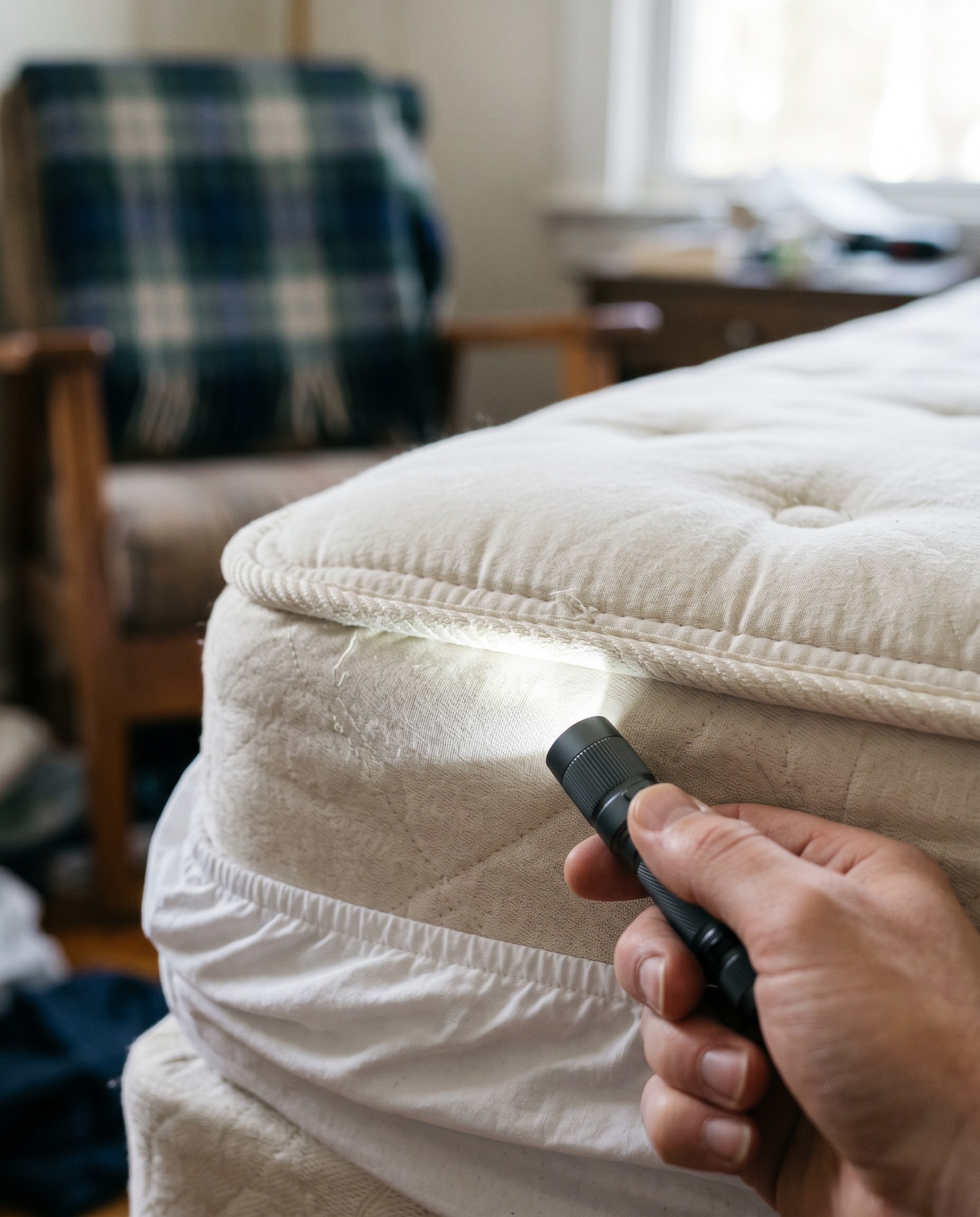
Take a flashlight to the mattress and rake the beam sideways across the piping, the seams, and the box spring corners. You are looking for three things: live flat reddish-brown bugs, pale shed skins, and small rust-colored or dark fecal spots that smear if you wipe them with a damp cloth. The University of Kentucky’s profile, which explains that bed bugs feed on blood at night, harbor in mattress seams, and leave dark fecal spotting, describes the same evidence you should find on the bed. Fecal spotting on the seam is the confirming feature for bed bugs.
nn
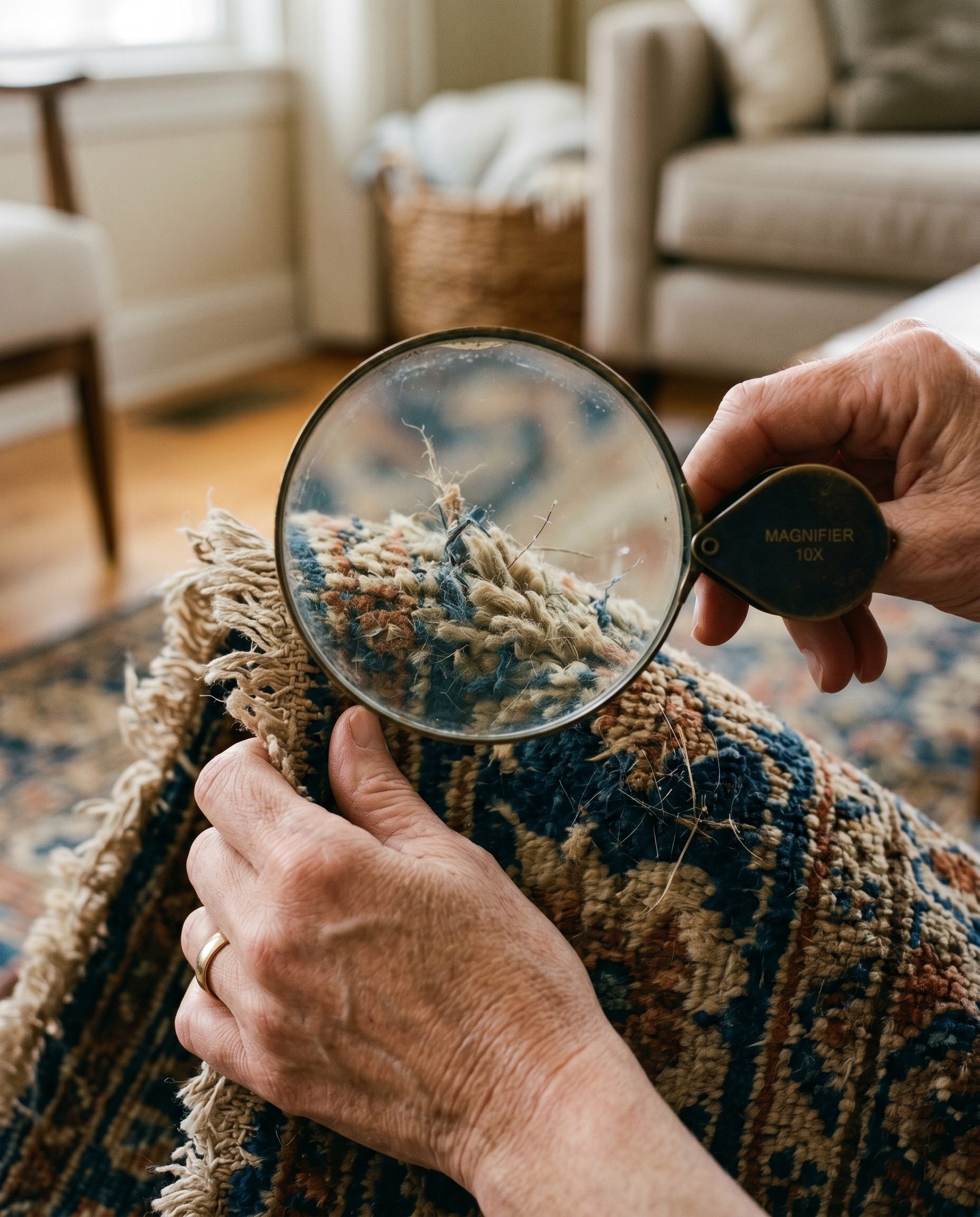
Carpet beetles fail this check completely, and that is the point. They do not feed on you and do not gather on the bed, so a clean seam with no spotting and no live bugs steers you away from bed bugs and toward a fabric problem. Where you do find carpet beetle activity is in fabric: thinning patches in a wool rug, irregular holes in a stored sweater, and the larvae themselves, which are tan, carrot-shaped, and covered in stiff bristles. Run the seam check first, then look at your textiles.
nn
nn
What they look like up close
nn
Get the body plan right and the confusion ends. An adult carpet beetle is a rounded, domed beetle, often mottled with white, brown, and yellowish scales, and it flies, which is why you sometimes find them at sunny windowsills trying to get back outside. Its larva is the destructive stage: a small, fuzzy, brown caterpillar-like grub that moves along baseboards and feeds in dark, undisturbed spots. For the differences between the black, varied, and furniture species, our carpet beetle identification guide breaks each one down.
nn
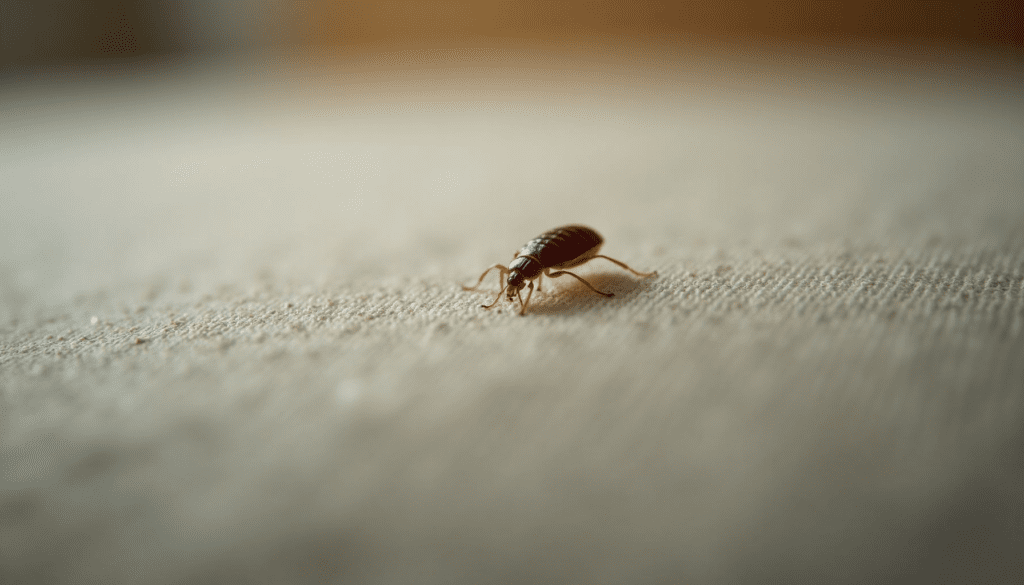
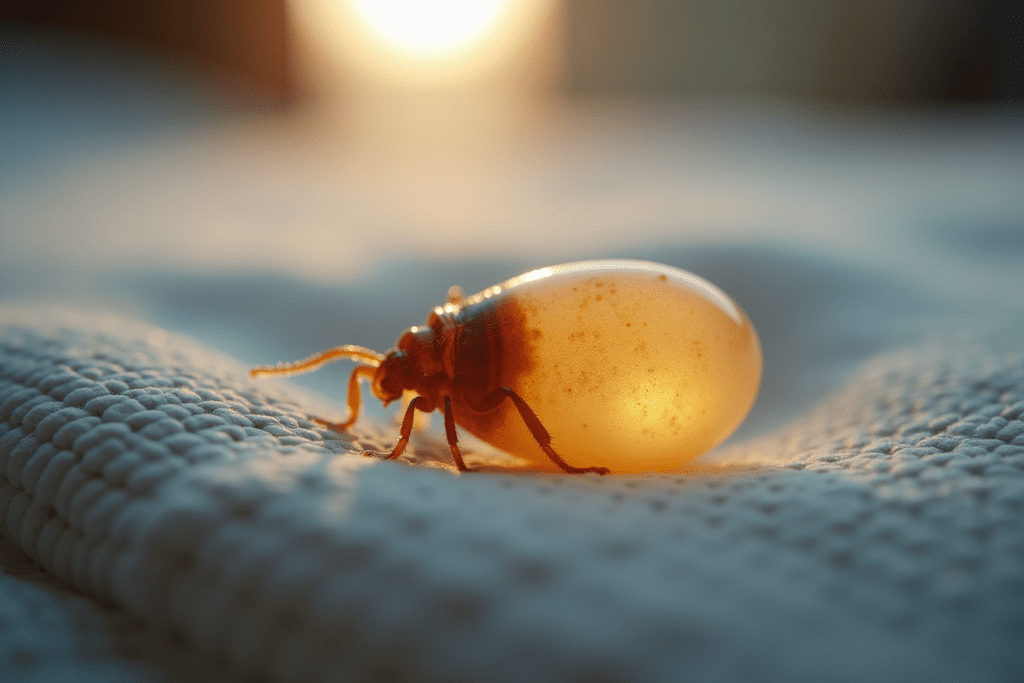
A bed bug is built differently. It is flat top to bottom, which lets it slip into seams and cracks, broadly oval, wingless, and reddish-brown, turning darker and more swollen after a blood meal. There is no fuzz and no domed shell, and you will never find one flying at a window. A flat wingless body that hides in cracks is the bed bug; a domed winged shell is the beetle. Nymphs of both are smaller and paler, but the flat shape of a young bed bug still separates it from a round young beetle.
nn
Why the bites are the trap
nn
This is where most people go wrong, so it is worth being precise. Carpet beetles do not have biting or piercing mouthparts aimed at people. According to UC IPM, carpet beetle larvae feed on keratin in wool, silk, fur, and feathers and do not bite people. When someone gets an itchy rash in a room with carpet beetles, the cause is usually contact with the larval hairs, called hastisetae. University of Kentucky entomology notes that the itchy welts blamed on carpet beetles are an allergic reaction to the larval hairs, not bites. The reaction can look enough like bites to send people hunting for bed bugs that are not there.
nn
Bed bug marks are genuine bites. They tend to show up in lines or loose clusters on skin that was uncovered overnight, and they often appear over several days as the bug feeds again. We go deeper on the skin question in our explainer on whether carpet beetles bite and what those rashes really are. A skin reaction alone never confirms which insect you have; the physical evidence does. If a rash is severe, spreading, or persistent, that is a question for a clinician, not a pest ID.
nn
Side-by-side comparison
nn
When you set them next to each other, the practical differences line up cleanly.
nn
| Trait | Carpet beetle | Bed bug |
|---|---|---|
| Appearance | Tiny rounded winged beetle; bristly carrot-shaped larva | Flat, wingless, reddish-brown, apple-seed sized |
| Where found | Wool rugs, stored fabrics, closets, lint, windowsills | Mattress seams, box spring, headboard, cracks near the bed |
| Do they bite? | No; rash is an allergic reaction to larval hairs | Yes; feeds on blood at night, leaves fecal spotting |
nn
The damage signature is just as different. Colorado State Extension explains that the damage is done by the bristly larvae while the adult beetles feed on outdoor pollen, so beetle harm shows up as eaten fabric, not as bites or bedding stains. Bed bugs leave no fabric damage at all; their signature is blood specks on the sheets and fecal spotting on the seams.
nn

nn
Where each one lives
nn
Habitat is itself an ID clue. Carpet beetle larvae want dark, still places with animal-fiber food: under and along the edges of wool rugs, inside boxes of stored sweaters, in closet corners, behind baseboards where pet hair and lint collect, and in old wasp or bird nests in the attic. Adults drift to windows because they fly outdoors to feed on pollen. If you keep finding the bugs away from the bed and near textiles, you are looking at a beetle.
nn
Bed bugs do the opposite. They stay close to where you sleep so they can feed at night, which means the mattress, the box spring, the headboard, the bed frame joints, and the cracks within a few feet of the bed. Distance from the bed is a reliable divider: beetles roam to fabric and windows, bed bugs hug the sleeping area. If you are unsure what you are seeing on the bed, our step-by-step bed bug guide shows the evidence and the treatment sequence.
nn
Common questions
nnCan carpet beetles be mistaken for bed bugs?n
Yes, and it happens constantly because both can leave itchy skin marks. The insects look and behave nothing alike, though. A flat wingless bug on the mattress seam with dark spotting is a bed bug; a small round winged beetle near fabric or a window is a carpet beetle. The seam check settles it fast.
nnDo carpet beetles bite at night like bed bugs?n
No. Carpet beetles do not bite at any time, day or night, because their mouthparts are built for chewing fabric, not piercing skin. The bumps people notice are an allergic reaction to the larval bristles. Bites that arrive overnight in clusters point to bed bugs instead.
nnHow do I know if I have carpet beetles or bed bugs?n
Inspect the mattress seams and box spring first. Live reddish-brown bugs plus rust-colored fecal spots mean bed bugs. If the bed is clean but you find thinning wool, holes in stored clothing, or small fuzzy larvae along baseboards, you have carpet beetles.
nnAre the rashes dangerous?n
The skin reactions from either source are usually minor irritation, and bed bugs are not known to spread disease. Carpet beetle rashes are an allergic response that fades once the larval hairs are gone. If a reaction is severe, spreading, or will not settle, see a clinician rather than trying to diagnose it from the insect.
nn
Final verdict
nn
The names sound interchangeable, but these two pests could not be more different, and the ID decides everything you do next. Bed bugs are flat, wingless, reddish-brown insects that bite for blood, live in the mattress seams, and leave dark fecal spotting you can find with a flashlight in minutes. Carpet beetles are tiny rounded beetles whose bristly larvae eat wool and other fabrics and never bite you; the itch blamed on them is an allergic reaction to the larval hairs. Run the seam check first. A spotted, occupied seam is a bed bug problem you treat at the bed, while a clean seam plus damaged fabric is a carpet beetle problem you solve with cleaning and fabric protection. When chemical control enters the picture for either one, lean on integrated pest management and registered control products and follow the label.
nn
Next steps:
nn
– Pin down the species with our carpet beetle identification guide.
n
– Sort out the skin question in our explainer on carpet beetle bites and rashes.
n
– If the evidence points to the bed, follow our step-by-step bed bug guide.
nnn
Pingback: Tiny Black Bugs in Bed That Are Not Bed Bugs
Pingback: Bugs That Look Like Bed Bugs: The Full Comparison