Before you spray anything, find out whether the powderpost beetles are still active, because most of what people panic over is old damage from beetles that left the wood years ago. An active infestation drops fresh, flour-fine frass that sifts out of round exit holes, and new holes keep appearing over time, so mark the holes you see and check them again in a few weeks. If it really is active, the fix is a borate soaked into the bare wood the larvae are eating, plus drying the wood out, since these beetles depend on moisture to survive. Badly weakened structural timber is a job for a licensed professional, not a spray can.
Confirm the infestation is active before you treat, because old exit holes alone mean the beetles are long gone; if it is active, soak the bare wood with a borate and lower the wood moisture, and call a pro for weakened structural timber.
- Do first (free): Circle every exit hole, brush them clean, and check in a few weeks for fresh flour-fine frass or new holes.
- If it is active: Apply a borate solution to the bare, unfinished wood and dry the wood out below the moisture these beetles need.
- Skip: Surface foggers and a quick spray on finished wood; the larvae are deep inside and borate cannot get through paint or sealer.
Are they even still active
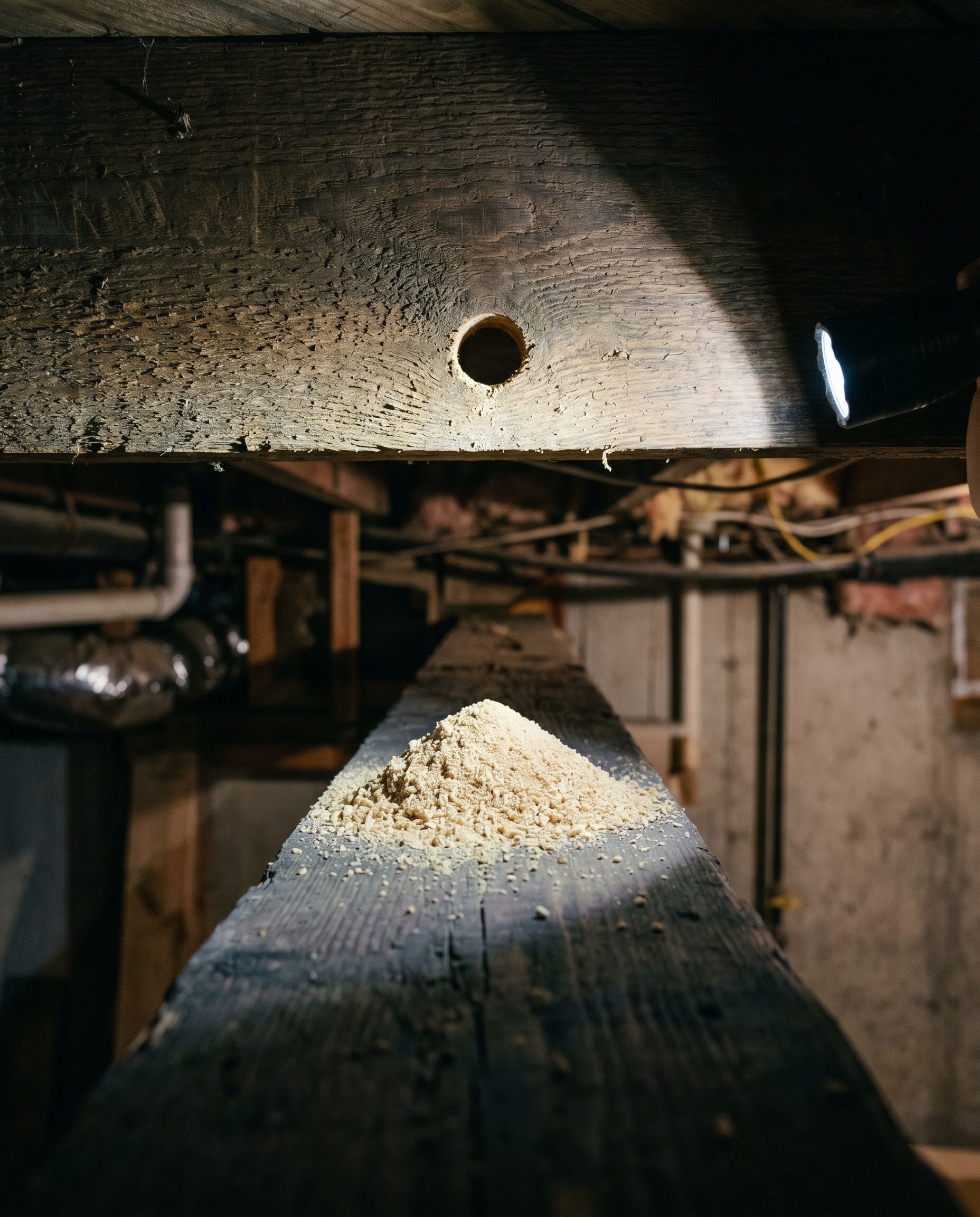
This is the question that decides everything, and almost no one asks it first. Powderpost beetle holes can sit in a piece of wood for decades after the beetles that made them are dead and gone, so the round holes by themselves prove nothing about whether you have a live problem right now. People rip out perfectly sound joists over damage that finished happening before they bought the house. The thing you are actually hunting for is evidence of current activity, not holes.
Active infestations give themselves away with fresh frass. According to Iowa State Extension, active infestations leave fresh, flour-fine frass and new exit holes that keep showing up, and that powder is the tell. It is fine like talc or flour, pale and clean, and it sifts down into little cones below the holes. Old frass is yellowed, packed, and stuck in place. If you see clean powder today, something is alive in there.
Run your eye down this side-by-side before you decide to treat.
| Sign | Active infestation | Old damage (gone) |
|---|---|---|
| Frass | Fresh, flour-fine, pale, in loose cones | Yellowed, packed, crusted in place |
| Exit holes | New holes appear over weeks | No new holes after the mark-and-wait test |
| Wood moisture | Damp wood, often above the mid-teens | Dry, stable wood |
The mark-and-wait test that costs nothing
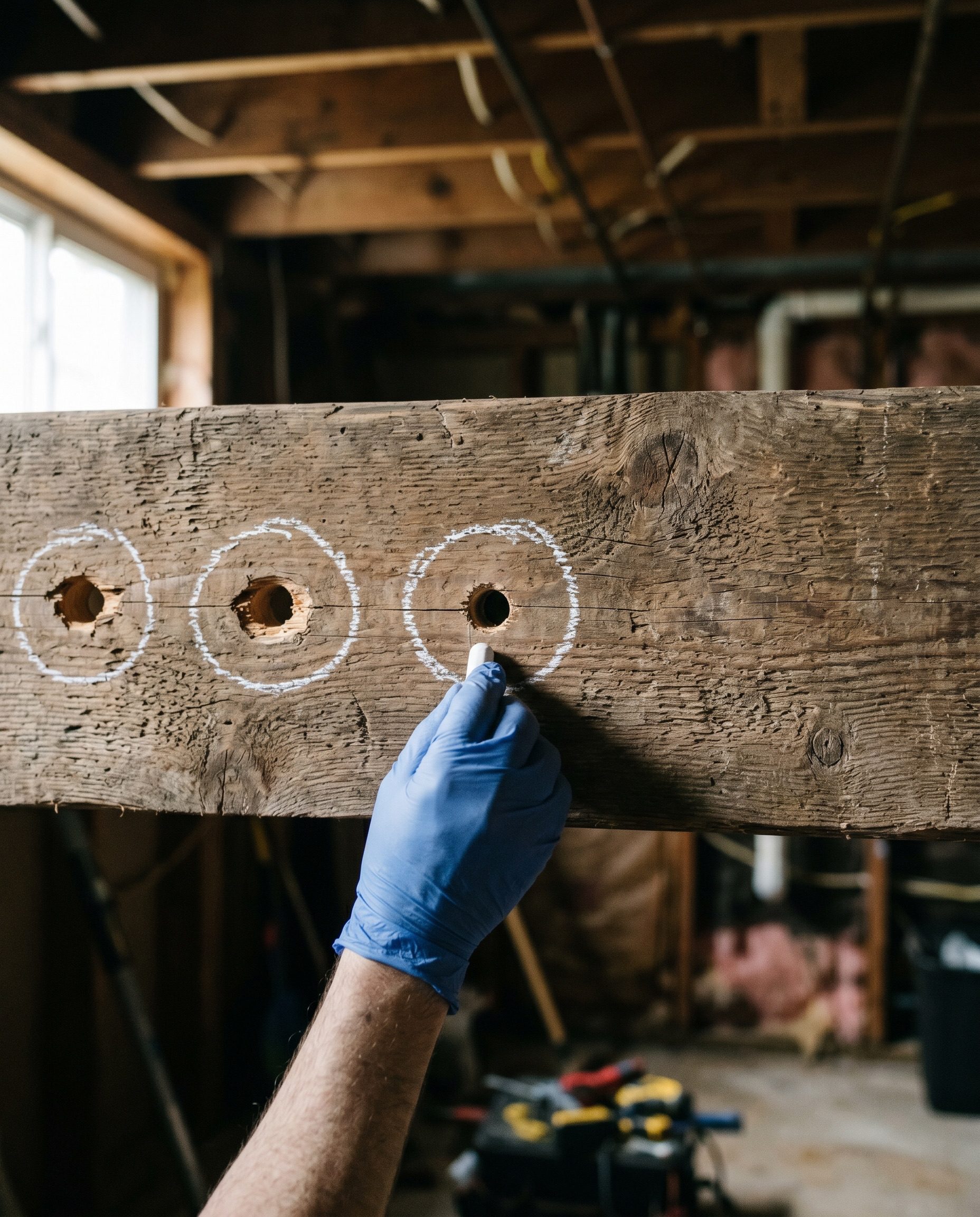
What to do first costs nothing: confirm activity before you spend a dollar on product. Sweep or vacuum up all the existing powder so the slate is clean, then go around with chalk or a marker and draw a ring around every exit hole you can find. Note the date. You have just turned a confusing wall of old holes into a simple before-and-after test.
Now wait. Give it two to four weeks, longer if you can stretch into the spring and early summer when adults emerge, and come back to look. New cones of fresh, flour-fine powder, or any hole that appears outside your chalk rings, means the infestation is active and worth treating. A clean surface with no new powder means the beetles are gone and the holes are just scars. The University of Kentucky’s entomology guide to powderpost beetles leans on this same logic, because emergence is seasonal and a single glance can fool you. Skip the impulse to fog the whole basement on day one; you would be treating ghosts.
While you wait, rule out the lookalike that actually matters. Termites also tunnel wood, but they leave mud, not loose powder, and they almost never make clean round exit holes. If anything looks off, our powderpost beetle vs termite identification guide walks the differences so you treat the right pest.
Why surface sprays miss
Here is the part the spray-can aisle will not tell you. The damage is done by the larvae, and the larvae live and feed deep inside the wood for months or years, not on the surface where your spray lands. A quick mist on the outside hits nothing that is actually eating your joists, which is why a fresh round of holes shows up the next season after people think they handled it.
The round holes you see are exit holes, made by adults chewing their way out to mate, not entry points you can plug. By the time a hole appears, that beetle has already left. UC IPM’s notes on wood-boring beetles in homes and how borate treatments work explain why a treatment has to get into the wood itself, and why a topical fogger or a perimeter spray is the wrong tool for a pest living a quarter inch under the surface.
Borate on bare wood is the real fix
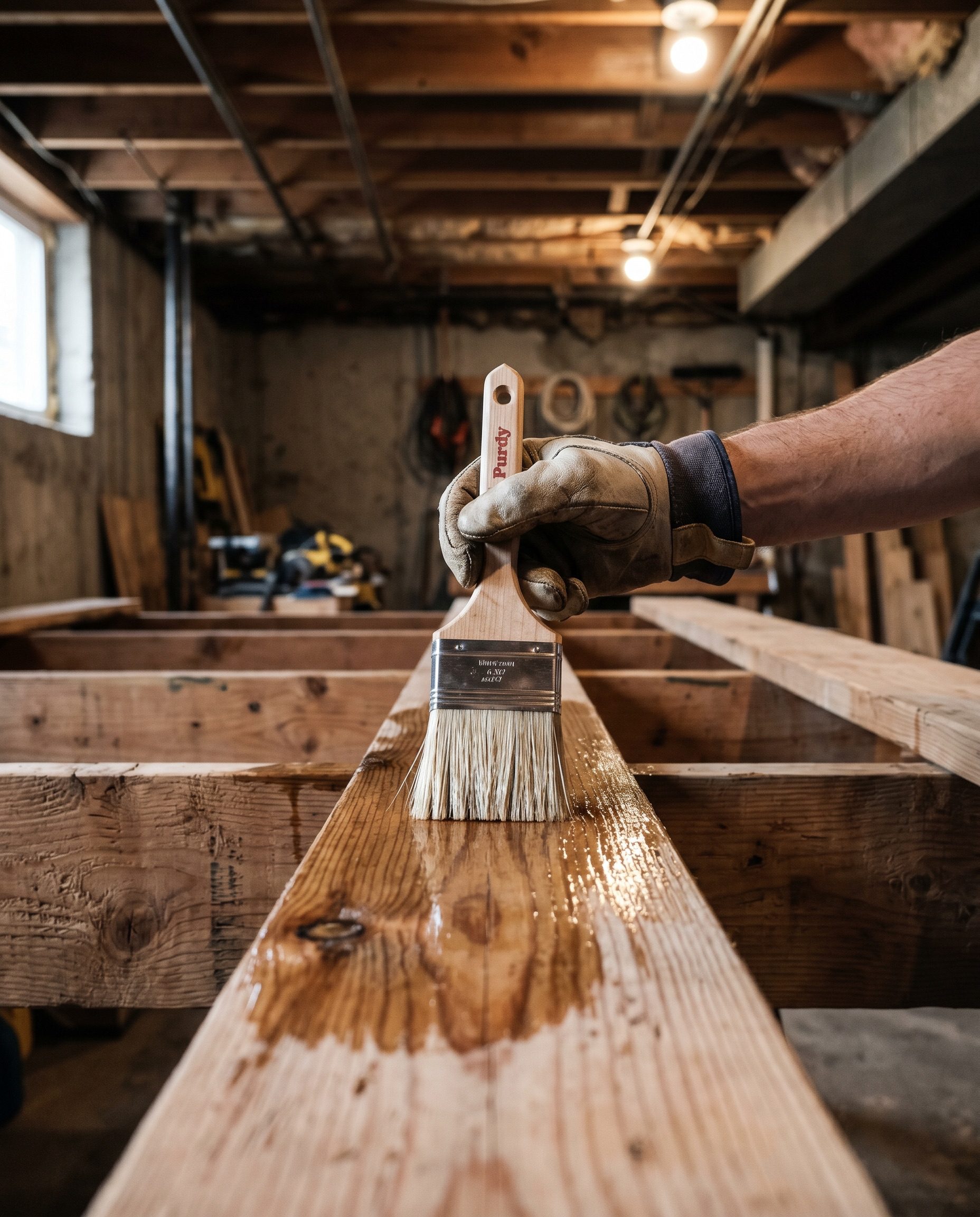
When you have confirmed activity, the workhorse treatment is a borate, sold as disodium octaborate or a similar borate salt and mixed with water per the label. Borate soaks into wood and stays there, so when a larva feeds on the treated layer it picks up a lethal dose, and any new adult laying eggs on the surface treats the next generation too. The catch that makes or breaks it: borate only penetrates bare, unfinished wood.
That is the rule people miss. A borate solution will not get through paint, varnish, polyurethane, or any sealer, so a treatment on finished furniture or a painted beam just beads up and does nothing. Treat raw joists, subfloor, sill plates, and unfinished framing, and if a finished piece is infested you have to strip it back to bare wood first or hand it to a pro. Brush or spray the solution generously onto the bare surface, let it soak, and follow the directions on the container, because under federal law the label is the law. Whenever you use any registered product indoors, read and follow the product label from the EPA, keep children and pets off treated wood until it is fully dry, and never apply it to food-prep surfaces or anywhere it is not labeled for.
Dry the wood and they leave
Borate kills what is in the wood now, but moisture is what invited the beetles in the first place and what will invite the next ones. Most powderpost beetles that infest homes need wood above a certain moisture level to thrive, and damp crawlspaces, leaky basements, and unventilated additions are exactly where they set up. Drop the moisture and you make the wood a poor host.
Get a cheap moisture meter and check your at-risk wood. Below roughly the mid-teens in percent moisture, most infestations stall out on their own. Fix the leaks, add a vapor barrier over bare crawlspace soil, improve ventilation, and run a dehumidifier in a damp basement through the humid months. This is the layer that makes the win durable, and it is the one most quick-fix guides skip entirely.
When to call a pro
Be honest about the limit of a brush and a jug of borate. If the beetles have been working a structural member long enough that it sounds hollow, crumbles under a screwdriver, or flexes where it should be solid, you are past a DIY treatment and into a structural repair and assessment question. A licensed pest professional can probe the timber, decide what needs treating versus replacing, and reach interior wood you cannot, sometimes with fumigation that homeowners cannot legally do. Recurring activity that survives a correct borate treatment is another signal to bring one in. There is no shame in it; weakened framing is a safety issue, not a stubborn chore.
Common questions
How do I know if powderpost beetles are active or old?
Look for fresh frass, not holes. Active beetles drop clean, flour-fine powder in little cones below the exit holes, while old damage leaves yellowed, packed frass and bare holes. The reliable test is to clean up all the powder, circle the holes, and check back in a few weeks for new powder or new holes.
Do I need to throw out the infested wood?
Usually not. If the wood is still structurally sound, a borate treatment on the bare surface plus drying it out handles most cases without replacement. Only badly weakened framing that has lost its strength needs to be repaired or replaced, and that call is best made with a professional.
Will a regular bug spray or fogger get rid of them?
No. The larvae feed deep inside the wood where a surface spray or a fogger never reaches, so those products waste money and leave the real population untouched. The treatment has to penetrate the wood, which is why borate on bare wood is the standard approach.
Can I treat painted or finished wood?
Not effectively. Borate cannot soak through paint, varnish, or sealer, so finished surfaces have to be stripped to bare wood before treatment, or handed to a pro. This is the single most common reason a home treatment fails.
How long until they are gone?
Plan on patience across a full season. Borate stops larvae as they feed and treats new eggs, but you confirm success by going a full emergence period, often into the next spring and summer, with no fresh frass or new holes inside your marked area.
Final verdict
Getting rid of powderpost beetles starts with a question, not a purchase: are they still active. Clean up the powder, circle the holes, and wait a few weeks, because fresh flour-fine frass and new holes are the only proof worth acting on, and old holes alone mean the beetles left long ago. If it is active, soak the bare, unfinished wood with a borate, since the larvae live deep inside where surface sprays never reach, and remember borate will not get through paint or sealer. Then dry the wood out below the moisture these beetles depend on, because that is what keeps them from coming back. Skip the foggers and the quick perimeter spray; they treat nothing that matters here. And if the timber is badly weakened, stop and bring in a licensed pro, because that is a structural call, not a spray-can one.
Next steps:
– Make sure it is not termites first with our powderpost beetle vs termite identification guide.
– Compare the borate products that actually penetrate bare wood in our best powderpost beetle treatment guide.
– Keep other wood and fabric beetles out of the house with our guide to preventing carpet beetles and fabric pests.