
You found small holes and a dusting of powder in a wooden beam, and the first question is whether you are looking at a cosmetic nuisance or a structural emergency. Here is the fast way to settle it. Powderpost beetles and termites both tunnel in wood, but they leave very different evidence: powderpost beetles bore clean round exit holes and push out fine, flour-like frass you can rub between your fingers, while termites make no exit holes, leave no loose sawdust, and instead build mud tubes and hollow the wood from the inside with soil packed into the galleries. Flour-fine powder means beetles; mud tubes and a thin, papery wood surface mean termites and a call to a professional.
Round exit holes plus flour-fine sawdust you can feel means powderpost beetles; mud tubes and hollow, papery wood with no clean powder means termites, which is the structural emergency that needs a licensed pro.
- The confirming feature: Flour-fine frass under round exit holes equals beetles; soil-packed galleries and mud tubes equal termites.
- Most-confused look-alike: Termites versus powderpost beetles, separated by whether the wood leaves exit holes and loose powder at all.
- What it means: Beetle damage is often surface-treatable with borate; suspected termites mean stop and call a licensed pest professional.
Quick answer: powder or tubes
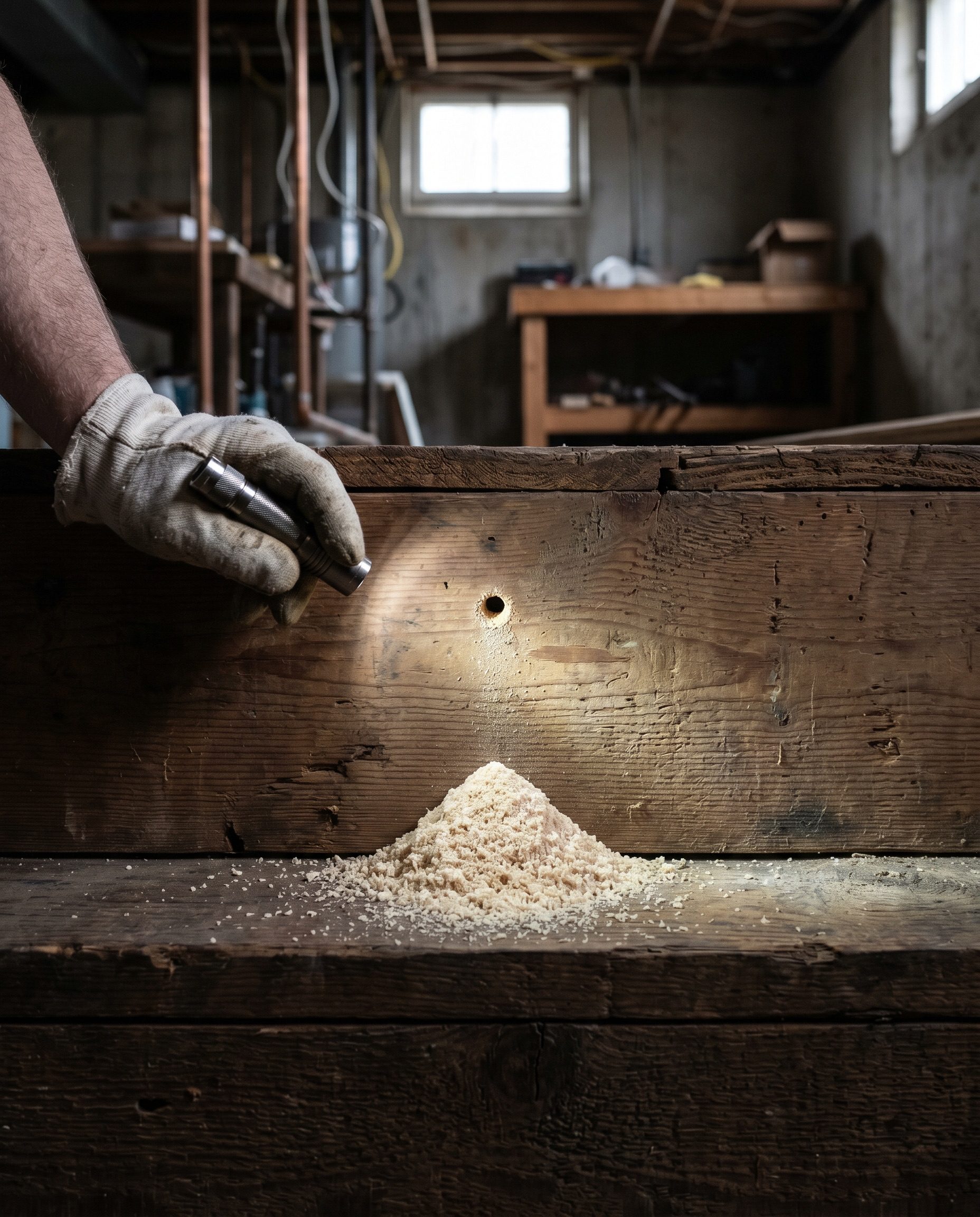
Start with the two things you can see without tools. Powderpost beetles (several species in the family Bostrichidae, most commonly the genus Lyctus) announce themselves with neat round exit holes, roughly the diameter of a pin to a pencil lead, and a sprinkle of pale powder beneath them. That powder is the tell. Termites (subterranean species in the genus Reticulitermes across most of the US) never leave that. They do not chew their way out into the open, so you get no exit holes and no loose sawdust at all.
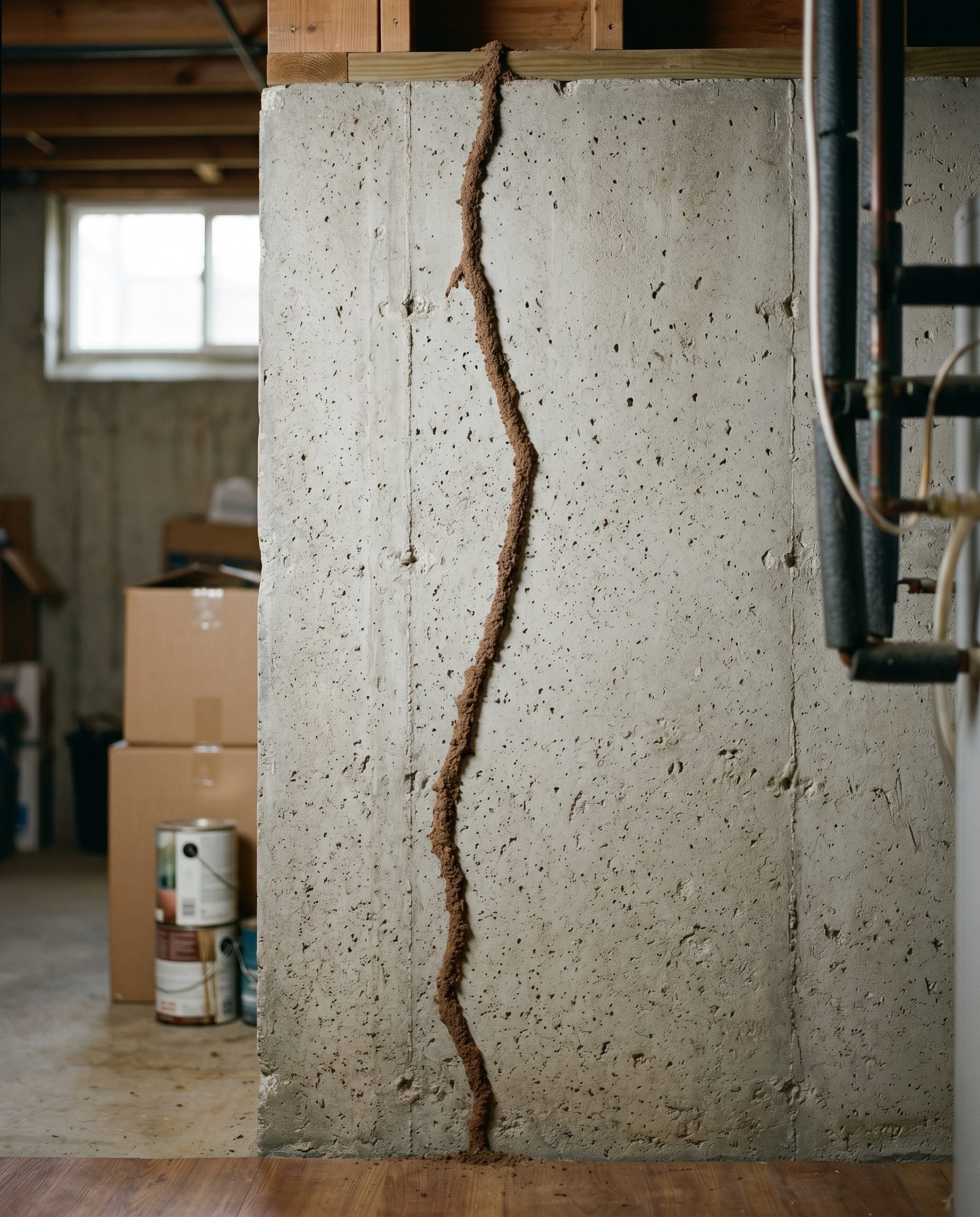
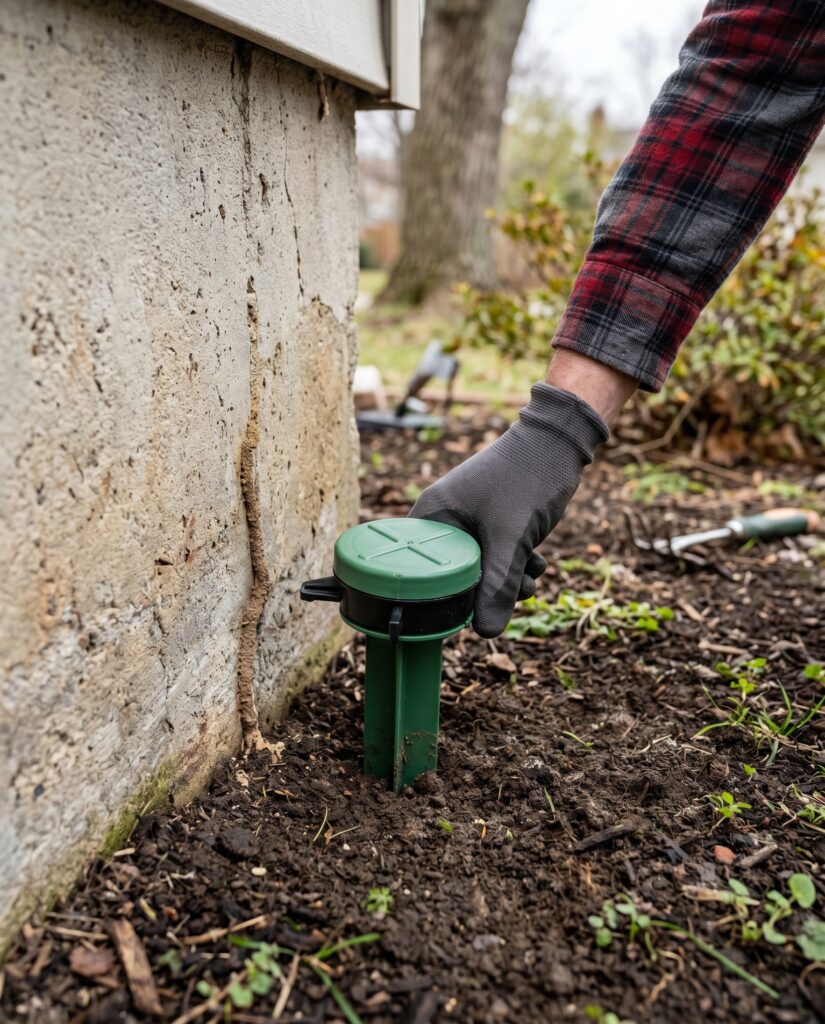
Instead, termites travel inside earthen highways. If you see a pencil-thick mud tube climbing a foundation wall or running up a basement post, you are almost certainly looking at termites, not beetles. The single fastest field test: if there is dry, flour-fine powder you can pinch, think beetles; if there is mud and no powder, think termites and stop poking at it yourself.
How powderpost beetle damage looks
Powderpost beetle damage is the more photogenic of the two, because the insect leaves a clean record of itself. The adult female lays eggs in the open pores of bare wood, the larvae feed inside for months or even years, and when they finally mature they chew straight out, leaving the round exit holes people notice. The frass is the diagnostic feature here. Iowa State Extension describes the round exit holes and powder-fine frass that point to powderpost beetles, and the texture matters: true Lyctus frass is as fine and loose as talcum or flour, not gritty, and it sifts out of the holes into little cone-shaped piles.
Run your fingers through it. If it feels like flour and packs softly, that is beetle work. Termite material, by contrast, is never clean powder; it is soil and chewed wood cemented together. One caution from the field: old holes alone prove nothing. Wood can carry exit holes from an infestation that died out years ago. Before you treat anything, the University of Kentucky guidance notes that fresh flour-fine frass and new round exit holes mark an active infestation worth acting on, while clean, empty holes with no new powder usually mean the beetles are long gone.
How termite damage looks
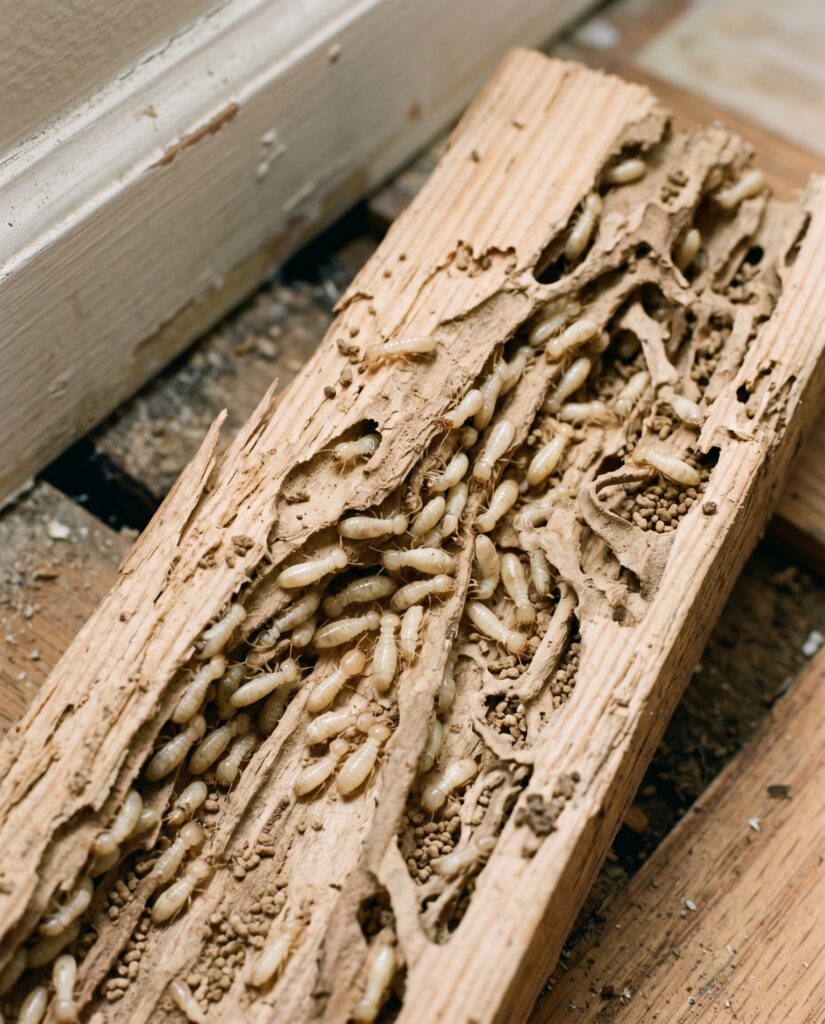
Termite damage hides, which is exactly why it is dangerous. Subterranean termites live in the soil and need moisture, so they build mud tubes to bridge from the ground to the wood without exposing themselves to dry air. Those tubes, the absence of exit holes, and a wood surface that looks intact but sounds hollow are the giveaways. Tap a suspect beam and it may thud like cardboard; press it and the surface can crumble into a thin, papery skin over empty galleries.
Look inside the galleries and you will see the second tell: they are lined and packed with soil and a mud-like material, not left clean and open. UC IPM explains that termites build mud tubes and leave no clean exit holes, and the University of Kentucky has a useful guide to distinguishing termite damage from other wood damage that hammers the same point. No powder, plus soil in the wood, equals termites. If you also see a spring swarm of dark, equal-winged insects near a window, that is reproductive termites leaving the colony, another reason to call a professional rather than reach for a can.
Side-by-side: the deciding features
You rarely need every trait. Usually one or two features settle it. The table below lines up the differences that actually do the deciding, so you can match what is in front of you.
| What you see | Powderpost beetle | Termite |
|---|---|---|
| Exit holes | Clean, round, pin to pencil-lead size | None; insects stay hidden inside |
| Powder or frass | Flour-fine, loose, sifts into small piles | No loose powder; soil packed in galleries |
| Mud tubes | Never | Pencil-thick earthen tubes on walls or posts |
The practical upshot of that table is the difference between a weekend job and a professional one. Beetle damage is usually slow and localized, so confirming it is active and treating the wood is often within reach for a homeowner. A real termite finding is a structural and financial problem that justifies an inspection, and trying to surface-treat it wastes time the colony uses to keep eating.
What each finding means for treatment
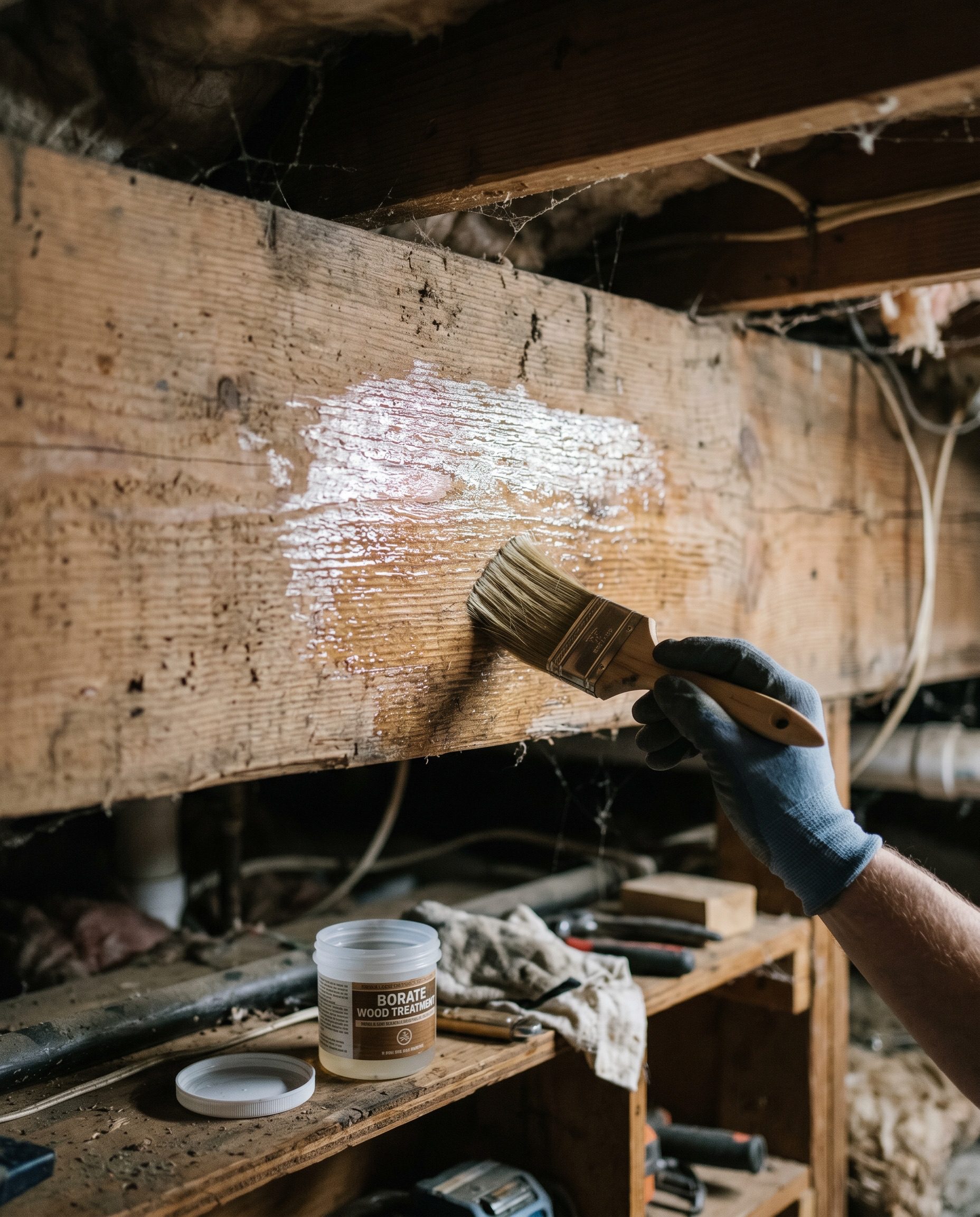
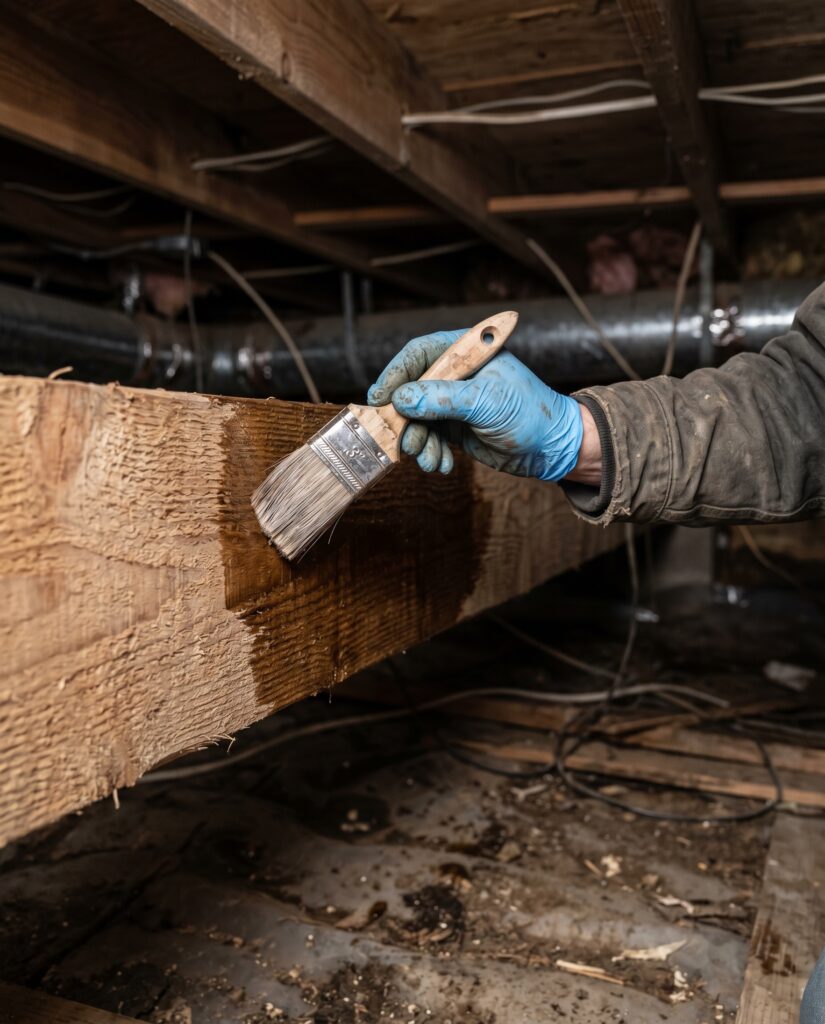
The ID changes the entire plan, which is the whole reason to get it right before spending a dollar. For powderpost beetles, surface sprays fail by design, because the larvae feed deep inside the wood for months or years where a topical product never reaches. The standard fix is a borate solution soaked into bare, unfinished wood, which the larvae ingest as they tunnel. UC IPM covers how to confirm an active wood-boring beetle infestation before treating, and the key limit is that borate will not penetrate finished or painted wood, so sealed surfaces have to be stripped first or handled another way. If that is your situation, our guide to getting rid of powderpost beetles walks the steps, and the powderpost beetle treatment comparison sorts the borate products from the things that do not work.
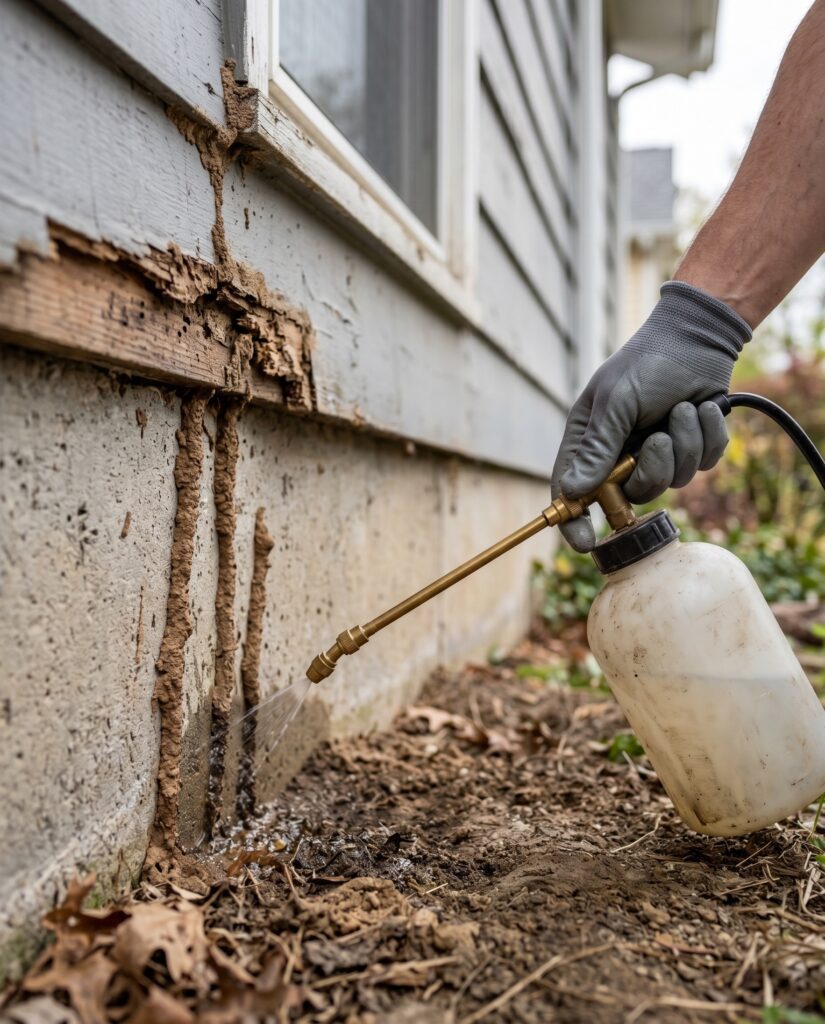
Termites are not a DIY identification you act on alone. Because subterranean colonies live in the soil and number in the thousands, real control means soil treatments, baiting systems, or both, applied by a licensed professional who can find the colony’s path. Whatever the pest, the least-toxic, IPM-first principles for any control step from the EPA still apply: confirm the problem, fix the moisture and wood-to-soil contact that invited it, and treat only what needs treating. If your evidence points to termites, start with our overview on getting rid of termites and book an inspection rather than guessing.
Common questions
Can powderpost beetles cause structural damage like termites?
They can over a long time, especially in flooring, framing, and hardwood, but the timeline is slower and the spread is more localized than an active termite colony. The bigger risk is ignoring an active beetle infestation for years. Confirm fresh powder and new holes, then treat the bare wood rather than waiting.
Do termites leave any sawdust at all?
No. That is one of the cleanest ways to tell the two apart. Termites do not push out loose, flour-fine powder; they pack soil and chewed wood into their galleries instead. A pile of dry powder under a hole points to beetles. A different wood pest, the carpenter ant, does kick out coarse shavings, but those are gritty and contain insect parts, not flour-fine frass.
How do I know if the infestation is still active?
Look for fresh frass and new exit holes. Sweep away any existing powder, mark the holes, and check back in a few weeks. New powder or new holes means it is active. Clean, empty, sometimes yellowed holes with no fresh powder usually mean the beetles finished long ago and there is nothing to treat.
Why will not a regular spray fix powderpost beetles?
Because the damage is done by larvae feeding deep inside the wood for months or years, where a surface spray never reaches. The treatment that works is a borate soaked into bare wood so the larvae take it in as they tunnel, and even that will not penetrate finished or painted surfaces.
Should I call a professional for either one?
Always for suspected termites, since structural timber damage and soil-dwelling colonies are a licensed professional’s job. For powderpost beetles you can often handle a confirmed, accessible, active infestation yourself with a borate, but widespread or load-bearing damage is also worth a professional inspection.
Final verdict
Get the name right before you reach for anything, because the ID decides whether you have a weekend project or a structural emergency. Flour-fine powder you can pinch, sitting under clean round holes, means powderpost beetles, a slower problem you can often treat by soaking bare wood with a borate once you confirm it is active. Mud tubes, no loose powder, and hollow wood with a papery surface mean termites, which is the call-a-pro situation every time. Sweep away old powder and watch for fresh frass to prove the beetles are still working, and never surface-spray your way out of either one. When the evidence says termites, stop and get a licensed inspection.
Next steps:
– Match your evidence and treat confirmed beetles with our guide to getting rid of powderpost beetles.
– Compare what actually penetrates wood in the powderpost beetle treatment comparison.
– If the signs point to termites, read the termite control overview and book an inspection.

Pingback: Termite Eggs and Larvae: Why You Will Not See Them