Termites are the one pest where do-it-yourself has a real ceiling, and pretending otherwise is how people lose a house. You can spot-treat termites you can physically see, monitor the perimeter with in-ground bait stakes, and brush borate on bare wood to keep them out, but a confirmed structural subterranean colony is not a hardware-store job. Clearing one needs a professional soil-applied barrier or a whole-structure bait system that no over-the-counter can replaces. So the honest plan is simple: identify which termite you have, treat what you can safely reach, and get a professional inspection the moment you see mud tubes, swarmers, or damaged wood.
DIY handles the edges of a termite problem, not the colony. Identify the type, spot-treat and monitor what you can reach, treat bare wood to prevent them, and bring in a licensed pro for any structural or subterranean infestation, because clearing one takes a soil barrier or a whole-structure bait system.
- Do first (free): Confirm it is termites and which type, then cut wood-to-soil contact and fix the moisture feeding them.
- What DIY can do: Spot-treat exposed termites, install in-ground bait stakes to monitor, and brush borate on bare or new wood.
- Skip: Trusting any over-the-counter spray to clear a structural subterranean colony; that needs a professional barrier or bait system.
Why DIY hits a wall
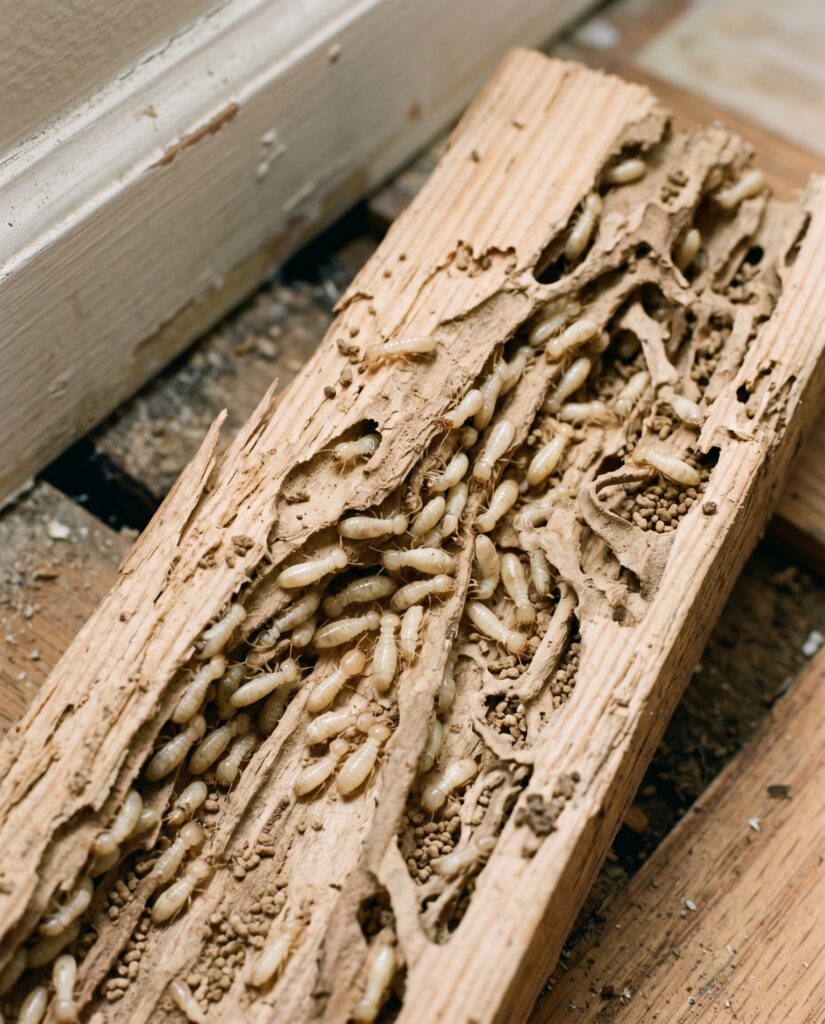
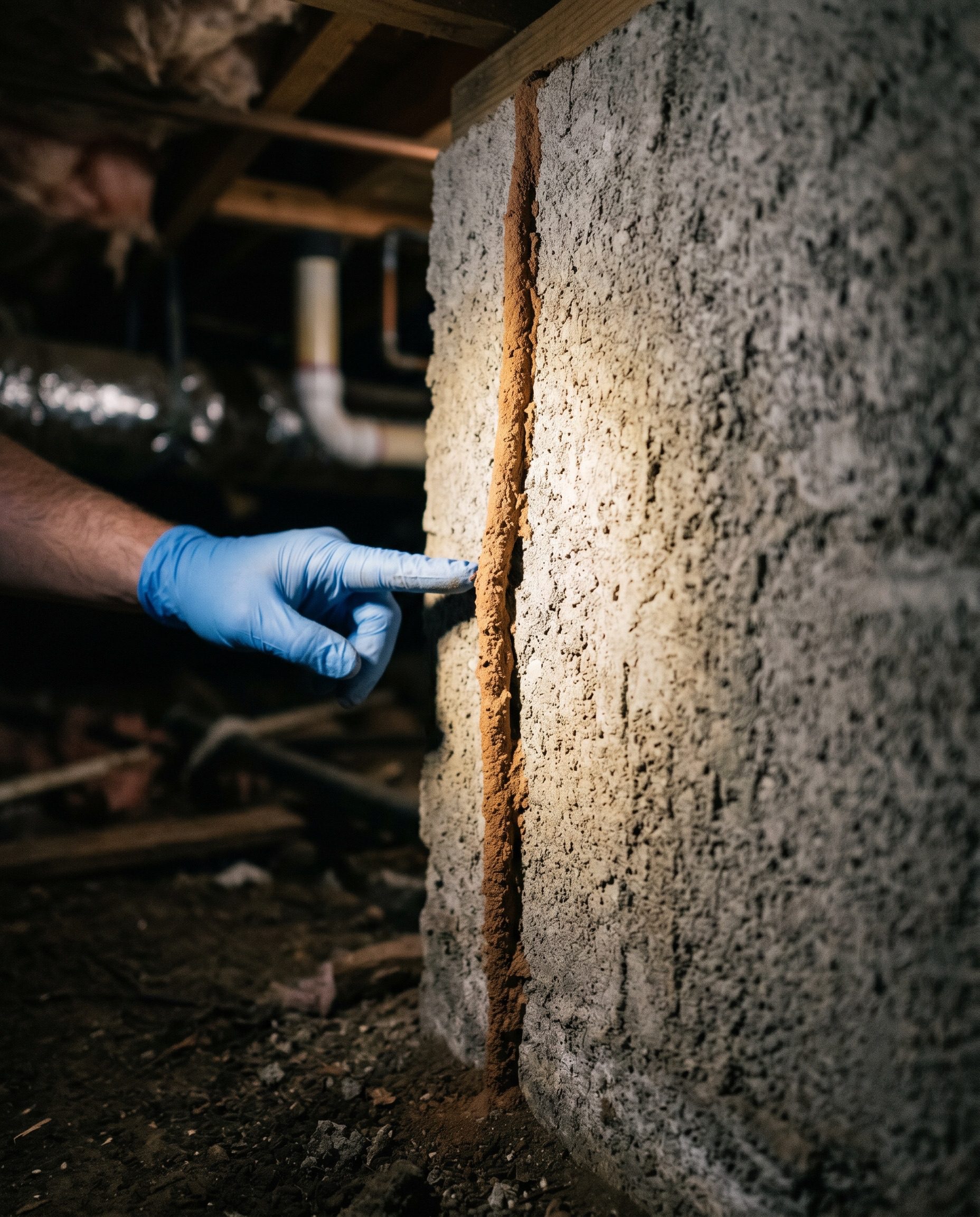
The reason termites are different from ants or roaches comes down to where the colony actually lives. With subterranean termites, the nest sits in the soil, often many feet from your house, and the workers travel underground or through mud tubes to feed on your framing. You never see most of them. A can of spray reaches the few foragers in the open and does nothing to the tens of thousands underground, which is exactly why a confirmed structural job is professional work. The UC IPM guidance on why subterranean termite jobs need a soil-applied barrier or a baiting system is blunt about this: surface treatments do not solve an active structural infestation.
That does not mean you are helpless. There is real, legitimate DIY in termite control, it just sits at the edges of the problem. You can kill termites you physically expose, you can put monitoring and baiting stakes in the ground to catch and chip away at a colony, and you can make bare wood unappetizing before they ever find it. The mistake is buying a bottle and believing it cleared a colony you cannot see. Treat the part you can reach, and treat the part you cannot as a job for a pro.
Confirm it is termites and which type
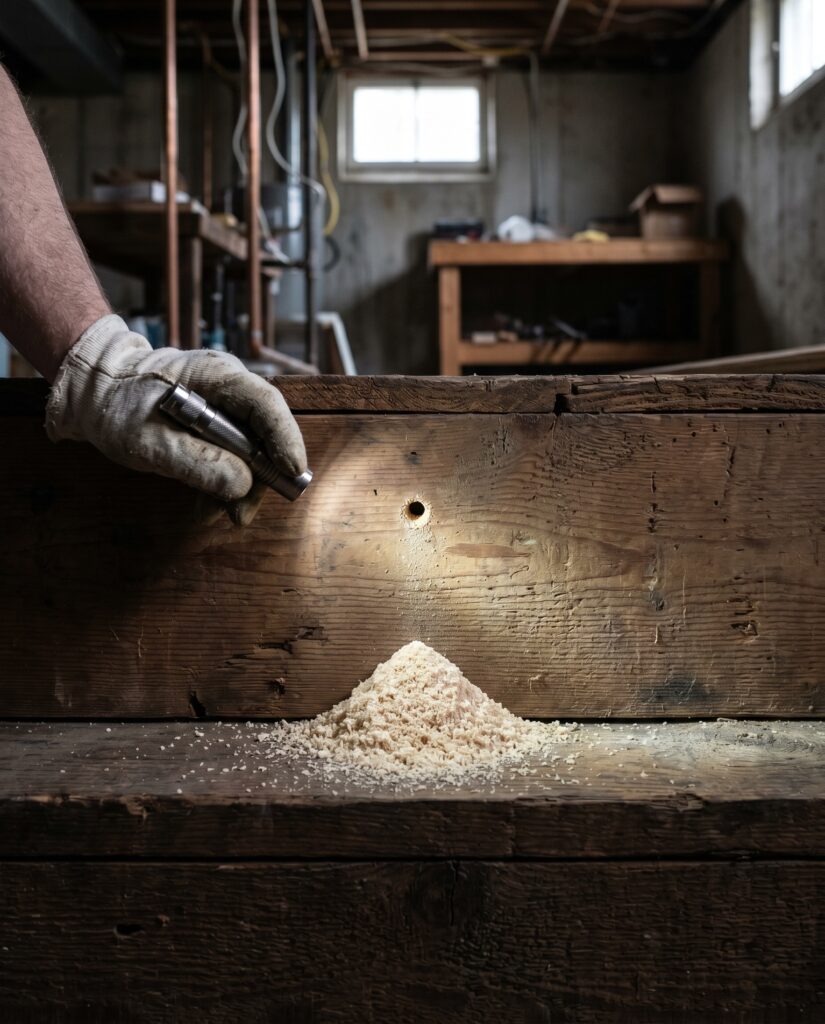
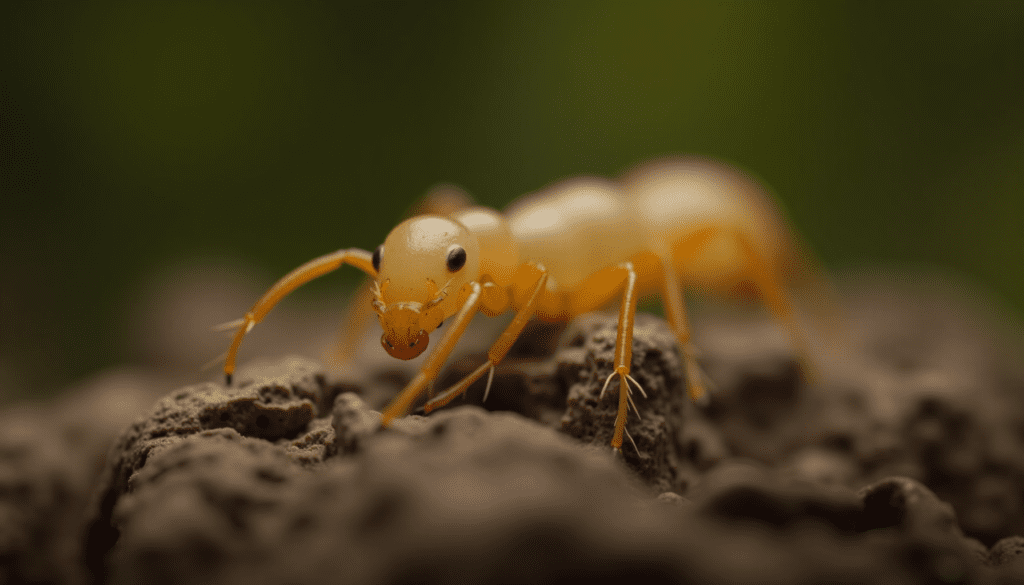
Do not start treating until you know what you have, because the right move changes completely between the two common house termites. The first decision is subterranean versus drywood, and our subterranean vs drywood termites comparison lays out the tells side by side. Subterranean termites need contact with soil moisture and build pencil-width mud tubes up foundations and piers; drywood termites live entirely inside the wood and kick out small piles of hard, six-sided fecal pellets that look like coarse sand or sawdust.
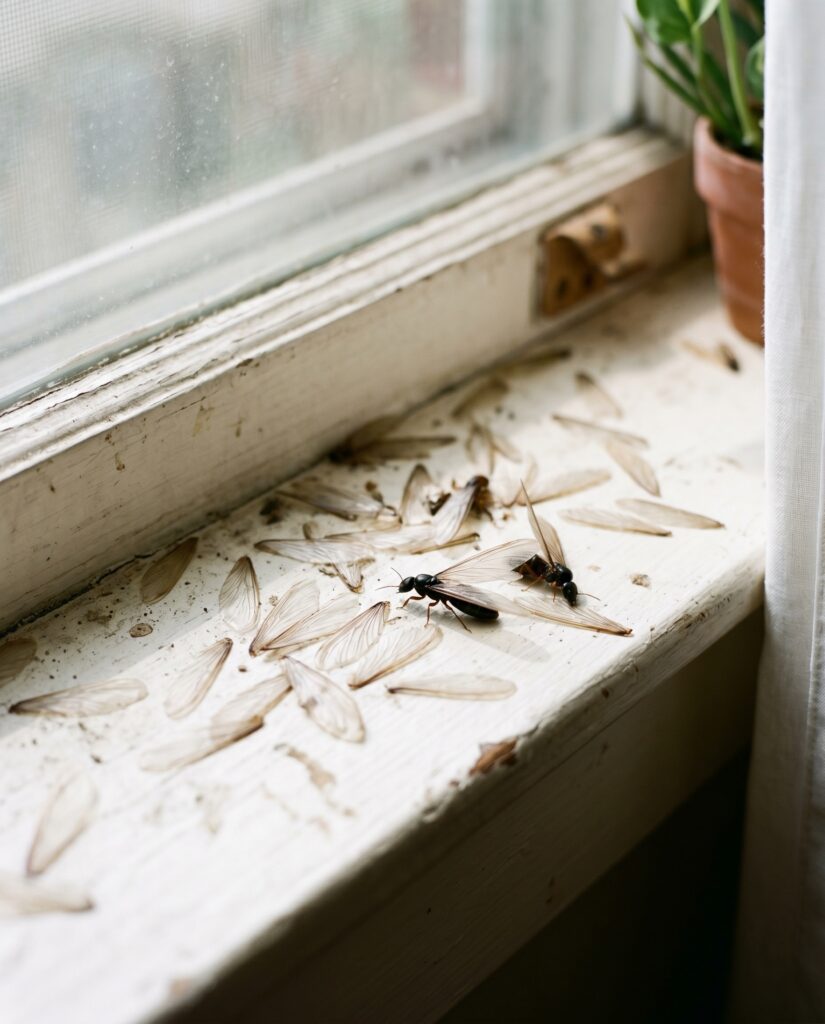
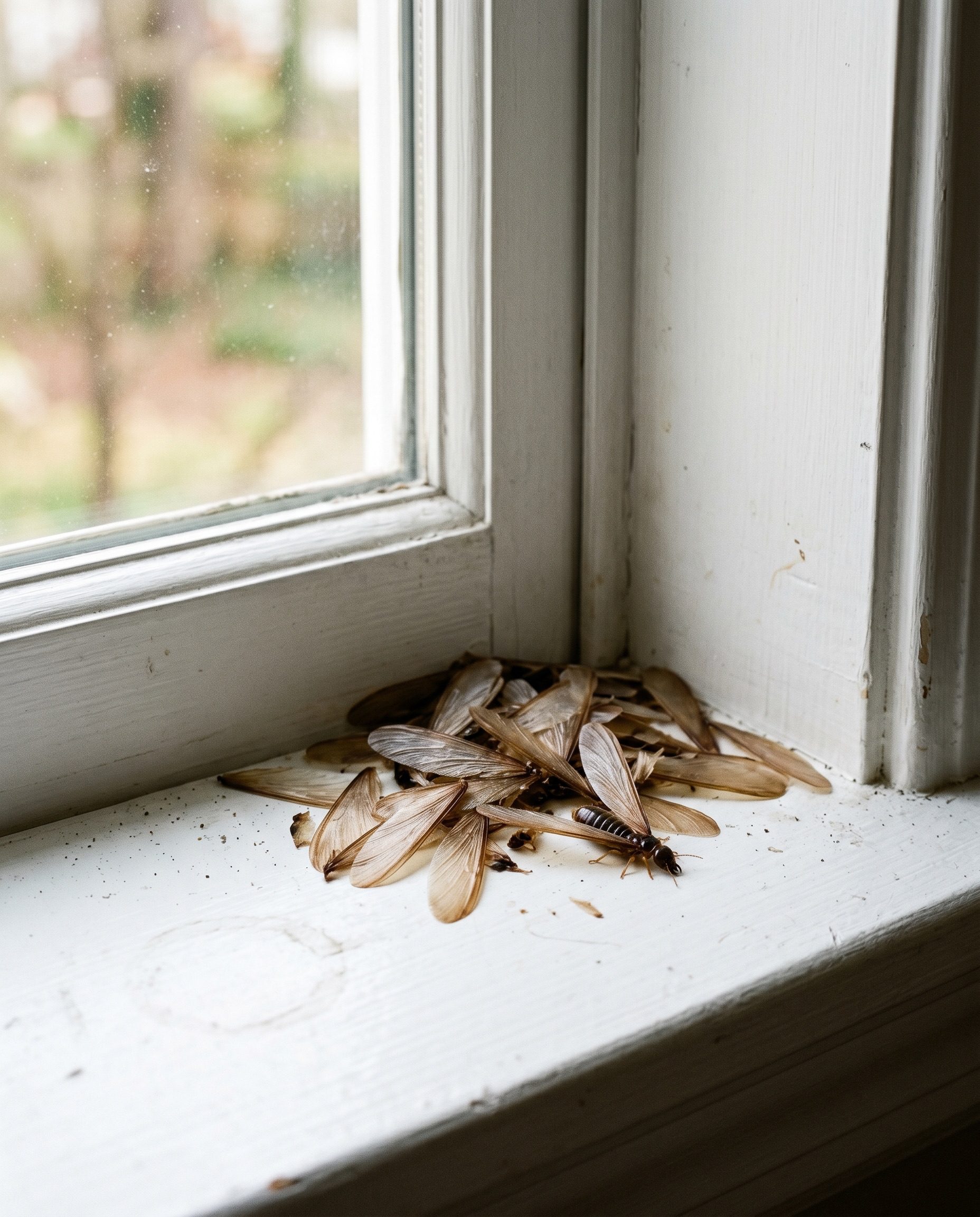
The three pieces of evidence that matter most are mud tubes, swarmers, and damaged or hollow-sounding wood. Swarmers are the winged reproductives that leave the colony to start new ones, and a pile of shed, equal-length wings on a windowsill is a classic sign you have an established colony nearby, not a passing visitor. Tap suspect framing with a screwdriver handle; sound wood thuds, infested wood sounds hollow and may give way. If you want to match what you are seeing before you commit to a plan, our guide to the signs of termites in a house walks the same evidence up close.
What to do first costs nothing
Before any product, take away what termites need: wood and moisture in contact with each other near your foundation. This layer is free, it is the part of the job pros wish more homeowners did, and it makes everything that follows work better. Subterranean termites in particular live and die by moisture, so a damp crawlspace or a leaking spigot is an open invitation.
Start with wood-to-soil contact, which is the single biggest invitation you can remove. Pull mulch, soil, and dead leaves back several inches from the foundation so you can actually see the wall, move firewood and lumber off the ground and away from the house, and fix any spot where siding or framing meets dirt. Then chase the moisture: redirect downspouts away from the foundation, grade soil so water runs off rather than pooling, fix plumbing drips, and ventilate a damp crawlspace. The EPA’s overview of integrated pest management and safe pesticide use frames this correctly, removing the conditions a pest needs comes before reaching for chemistry. None of this clears an existing colony, but it stops feeding one and keeps new ones from settling in.
What DIY can actually do
Here is the honest map of where a homeowner can do real work and where the line is. The treatments below are legitimate, they just have a defined ceiling.
| Situation | What DIY can do | When to call a pro |
|---|---|---|
| A few exposed termites in a tube or board | Spot-treat the area you can reach with a labeled product | If mud tubes keep returning after treatment |
| No confirmed infestation, want monitoring | Install in-ground bait stakes around the foundation | If a station shows active feeding or hits |
| Bare or newly exposed wood | Brush or spray a borate wood treatment | Already-painted, finished, or enclosed framing |
| Confirmed structural subterranean colony | Nothing over the counter clears it | Always, for a soil barrier or whole-structure baiting |
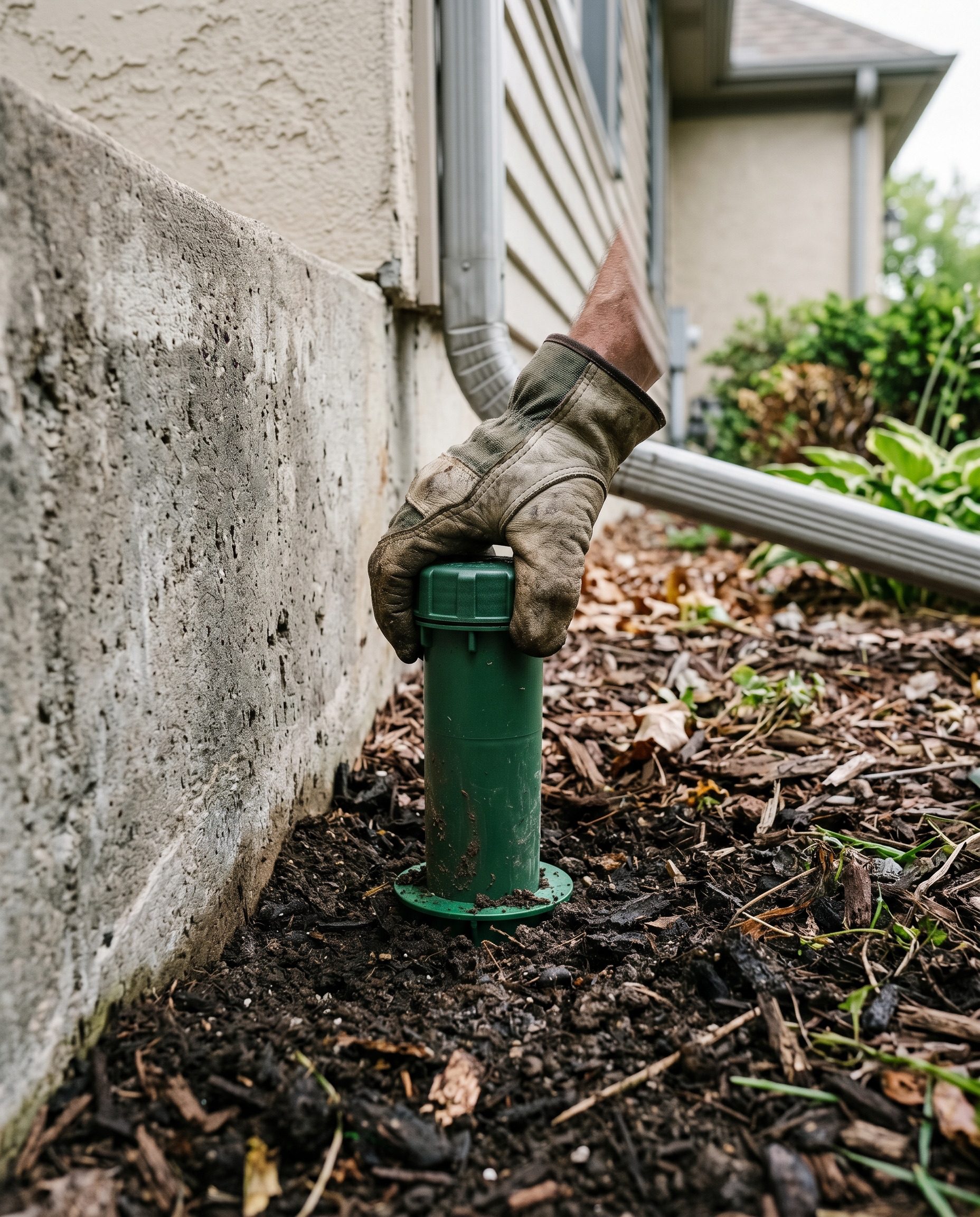
The first legitimate DIY move is spot-treating what you can see. If you crack open a mud tube or a damaged board and find live termites, a product labeled for termites applied to that exposed area will kill the ones you reach. It does not touch the colony, but it buys time and confirms activity. The second is monitoring and baiting with in-ground stakes, which you push into the soil every few feet around the foundation. Bait works differently from a quick spray: workers carry the slow-acting active back to the nest, and over weeks to months that is what can eliminate a colony instead of just killing foragers. Our best termite bait stations roundup covers the systems homeowners can install and check themselves.
The third is prevention on bare wood with a borate treatment, brushed or sprayed onto unfinished framing, a fence, or a deck before it is sealed. Borate soaks into raw wood and makes it toxic to termites without being a contact poison for you, which is why it is a homeowner-friendly preventive. It cannot penetrate painted or finished surfaces, so it is a build-time or repair-time tool, not a fix for wood already in your walls. For category logic on these products, our termite killers and treatments comparison sorts the foams and the borates from the professional-only soil termiticides.
Whenever you use any registered termite product, the label is the rule. Use only products labeled for termites and for the exact site you are treating, keep children and pets off treated areas until everything is dry, and never apply an outdoor soil product indoors or stretch the rate past what the label allows. For an exposure question, contact a doctor or your local poison control center, and you can treat the label as the rule and know when to hire a professional using the NPIC termite page. Under federal law the label is the law, so do not improvise a stronger mix or a different use site.
Where the pro line really is
A confirmed structural or subterranean infestation is where DIY stops and a licensed professional starts, and this is not me being cautious for liability. Clearing an active colony in a house takes one of two things a homeowner cannot do well: a continuous soil-applied liquid barrier trenched and injected around the entire foundation, or a professionally managed whole-structure bait system monitored over time. As University of Kentucky Extension explains, the two professional approaches to subterranean termites are liquid soil treatments and bait systems, and both require equipment, product access, and placement know-how that off-the-shelf cans do not give you.
Call a pro the moment you find mud tubes climbing the foundation, swarmers or shed wings indoors, or wood that sounds hollow and gives way. Also call if your DIY spot-treating and baiting has not stopped fresh activity, if a colony has reached finished or enclosed framing, or if you are buying or selling and need a clearance inspection. Most reputable companies inspect for free or cheap, and a written report tells you whether you are dealing with a few scouts or a real structural problem. There is no shame in DIY at the edges and a pro for the colony; that combination is what actually protects the house.
Common questions
What kills termites instantly?
Direct contact products kill the termites you physically reach, like the ones inside a cracked-open tube or board, on the spot. The catch is that the ones you can see are a tiny fraction of the colony, which lives in the soil or deep in the wood where a quick spray never lands. Spot-treating is useful, but it is not the same as clearing the colony, which is slower work.
Do over-the-counter sprays get rid of a termite infestation?
Not a structural one. A can off the shelf handles exposed termites and bare-wood prevention, but it cannot create the continuous soil barrier or run the baiting program needed to wipe out a subterranean colony feeding on your framing. For a confirmed infestation, that is a licensed professional’s job, not a bottle’s.
How do termite bait stations work?
You install stakes in the soil around the foundation, and foraging workers find the bait and carry the slow-acting active ingredient back to the nest, where it spreads through the colony. Because it relies on the termites doing the delivery, it works over weeks to months rather than overnight, which is also why it can reach the colony a spray cannot.
Does borate treatment stop termites?
On bare wood, yes, as a preventive. Borate soaks into unfinished framing, decking, or fencing and makes the wood toxic to termites that try to eat it. It will not penetrate painted or sealed wood and does not clear an active infestation already inside your walls, so think of it as a build-time and repair-time defense, not a cure.
Will termites come back after treatment?
They can, which is why prevention is permanent, not one-and-done. Keep wood and mulch off the soil line, keep the foundation dry, and keep monitoring stations in the ground so a new colony gets caught early. Professional treatments usually come with a renewable warranty for exactly this reason.
Final verdict
Getting rid of termites is about knowing your half of the job from the pro’s half. Start free: confirm it is termites and which type, then strip wood-to-soil contact and dry out the foundation, because removing the conditions is half the battle. Do the DIY that genuinely works, spot-treat termites you can reach, run in-ground bait stakes to monitor and chip at the colony, and brush borate on bare wood to keep them out. But draw the line honestly. A confirmed structural or subterranean infestation needs a professional soil barrier or whole-structure baiting, so the day you find mud tubes, swarmers, or hollow wood is the day you book an inspection. Treat the edges yourself, hand the colony to a pro, and you protect the house instead of gambling with it.
Next steps:
– Match what you are seeing before you treat with our signs of termites in a house guide.
– Pin down which termite you have using the subterranean vs drywood termites comparison.
– For the monitoring layer you can install yourself, see the best termite bait stations roundup.