
n
n
n
You found a small beetle on a windowsill, or a fuzzy little crawler in a drawer, and you want to know which carpet beetle you have. Here is the honest answer that saves you a lot of squinting: the three common US species, black, varied, and furniture carpet beetles, look different as adults, with one solid black and the others mottled like buckshot, but they eat the same things and call for the same response. The species ID is interesting, not decisive. What actually matters is recognizing the larva, because the larva is the life stage doing the eating. If you find a small, carrot- or oval-shaped, bristly little woolly-bear that crawls away from the light, you have your culprit, whatever the adult turns out to be.
nn
n
If you find a tiny bristly woolly-bear larva that backs away from light, it is a carpet beetle, and which of the three species barely matters because they all damage the same way and respond to the same cleanup.
n
- n
- The confirming feature: the larva, a 4 to 5 mm carrot- or oval-shaped grub covered in stiff hairs or bristle tufts, not the adult.
- Most-confused look-alike: a young bed bug, but a bed bug is smooth, flat, and oval, while a carpet beetle larva is fuzzy and bristled.
- What it means: a fabric and pantry pest, not a biter; find and remove the larval food source, then read our guide to getting rid of carpet beetles.
n
n
n
n
nn
nn
Quick answer
nn
Carpet beetles in US homes are almost always one of three species: the black carpet beetle (Attagenus unicolor), the varied carpet beetle (Anthrenus verbasci), and the furniture carpet beetle (Anthrenus flavipes). The adults are tiny, between roughly 2 and 5 mm, and harmless: they feed on flower pollen outdoors and only wander inside to lay eggs or to leave through a window. The damage is done entirely by the larvae. That single fact reorganizes the whole identification job, because the bug you most need to recognize is the fuzzy grub in the closet, not the beetle on the glass.
nn
So when you ask which carpet beetle you have, the better question is whether you are even looking at the right life stage. Find the larva and you have confirmed the problem; find only an adult and you have a clue that larvae are somewhere nearby, feeding on something made of wool, hair, or lint.
nn
The larva is the feature that confirms it
nn
The diagnostic feature for a carpet beetle is the larva, not the adult, and it is unmistakable once you know it. A carpet beetle larva is small, about 4 to 5 mm, shaped like a tiny carrot or a stubby grain of rice, and covered in stiff bristly hairs, which is why people call it a woolly-bear. Black carpet beetle larvae are longer and more carrot-shaped with a tail tuft; the varied and furniture larvae are shorter, rounder, and shaggier with bands of bristle. All of them shy away from light and tuck into dark folds, seams, and corners.
nn
That light-avoiding behavior is itself a tell. According to UC IPM’s Pest Notes on carpet beetles, the larvae feed in undisturbed, dark places and shed bristly cast skins as they grow, so you often find the translucent shed skins before you find a live larva. If you are seeing those papery husks in a drawer or along a closet baseboard, that is active feeding, and Colorado State’s guide to telling the larvae from the adults walks the same distinction: the adult is a clue, the larva is the confirmation.
nn
How the three adults differ
nn
Once you do find an adult, telling the three apart is straightforward, and it comes down to color and pattern. This is the part most other guides spend all their effort on, but remember it changes almost nothing about what you do next.
nn
The black carpet beetle is the easy one: a uniform shiny dark brown to black oval, with no pattern, the largest of the three. The varied carpet beetle and the furniture carpet beetle are the mottled ones, with a scaled pattern of white, brown, and yellowish patches that looks like buckshot or a tiny tortoiseshell. Varied and furniture adults are rounder and patterned; the black is solid and elongated. The varied carpet beetle is the one people most often mistake for a tiny ladybug because of its rounded, patchy shell.
The detail on the seam down a beetle’s back sits in hard-shelled bugs in the house.
If that is where this is heading, our guide to shiny and metallic bugs indoors covers what a glossy shell rules out.
nn
nn
What carpet beetles actually eat
nn
This is where identification turns into a plan, because the larvae eat a specific menu and finding that menu is how you find the larvae. Carpet beetle larvae digest keratin, the protein in animal fibers, which is why they target wool, silk, fur, feathers, leather, and pet hair, plus the lint and dead insects that collect in quiet spots. The University of Kentucky notes that larvae feed on keratin in wool, lint, pet hair, and dead insects, and that last item matters more than people expect: a windowsill full of dead flies or a light fixture full of dead moths is a reliable larval buffet.
nn
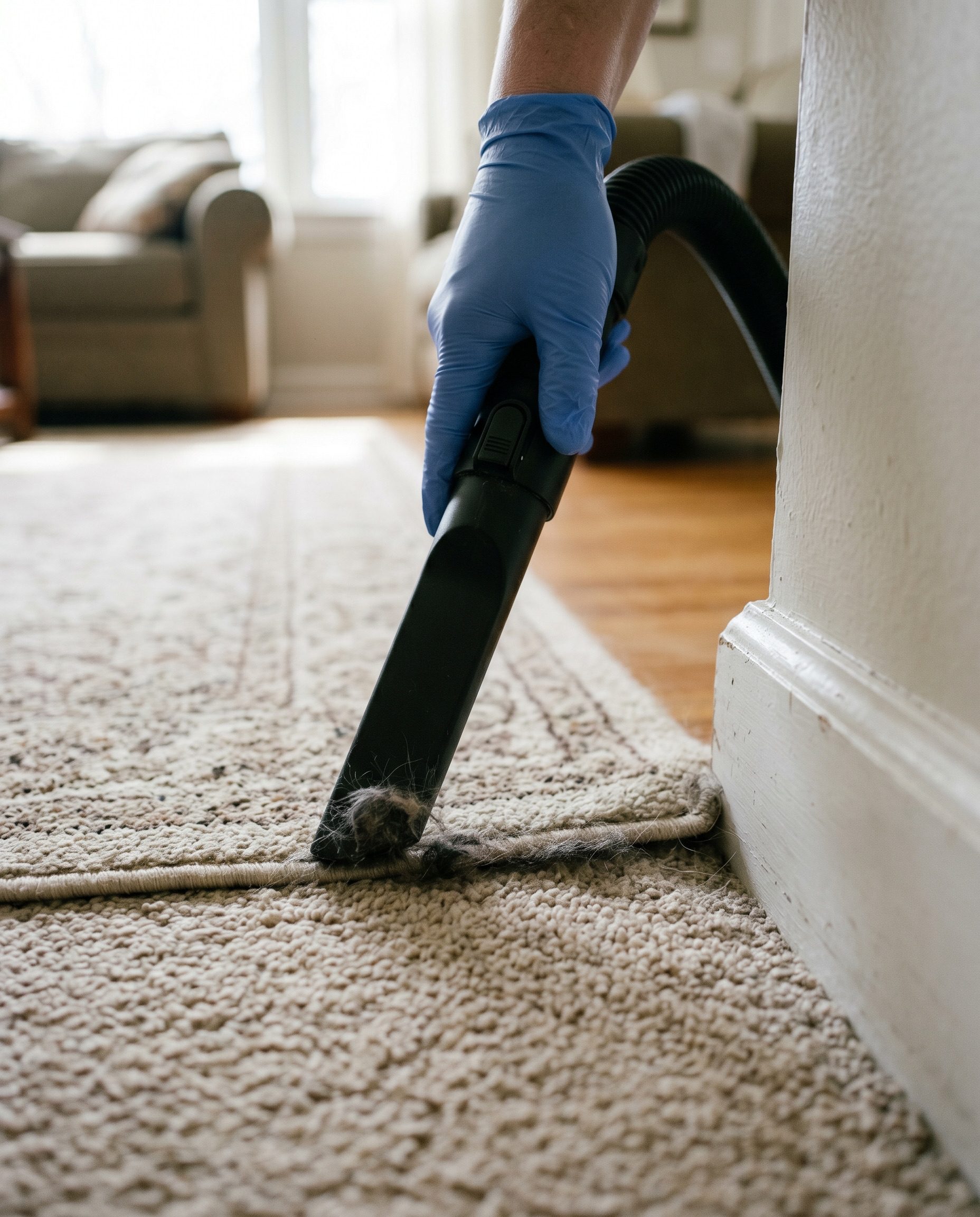
Synthetic carpet and clothing are mostly safe, which is the irony in the name. The classic damage sites are wool rugs (especially the undisturbed edges under furniture), stored sweaters, felt, taxidermy, and the lint trapped in floor vents and along baseboards. Follow the keratin and you find the larvae, which is the whole reason the species ID is secondary to locating the food source.
nn
Carpet beetle vs the bugs people confuse it with
nn
The two confusion calls that come up constantly are the carpet beetle larva versus a young bed bug, and the adult carpet beetle versus other small household beetles. The larva-versus-bed-bug mix-up is the consequential one, because the worry is completely different. A bed bug is smooth, flat, and reddish, with no bristles, and it bites; a carpet beetle larva is fuzzy and bristled and does not bite at all. If you are trying to settle that exact question, our carpet beetle vs bed bug identification guide lines them up side by side.
nn
| What you found | Decisive feature | Where it turns up |
|---|---|---|
| Carpet beetle larva | Fuzzy, bristled, carrot- or oval-shaped, avoids light | Wool rugs, drawers, vents, dark closet corners |
| Carpet beetle adult | Tiny rounded beetle, solid black or mottled buckshot pattern | Windowsills and walls, heading toward light |
| Young bed bug | Smooth, flat, reddish oval, no bristles, bites | Mattress seams, headboard, near where you sleep |
nn
Where and when you find them
nn
You will see adults most in spring and early summer, drifting toward windows on their way outside to flowers, which is itself a seasonal ID clue. Carpet beetles are found across the US, indoors year-round in heated homes, and the larvae are active in the quiet, low-traffic spots people rarely vacuum: under the bed, beneath heavy furniture, inside closets, in heating ducts, and behind baseboards.
nn
Because the adults are drawn to light and the larvae away from it, the two stages show up in different places, which trips people up. Adults at the window, larvae in the dark corner, and the dark corner is where the damage is. The EPA’s sanitation-first approach to household pests reflects why this geography matters: the fix is finding and cleaning the larval harborage, not chasing the adults you can see.
nn

nn
Do they bite or carry disease
nn
No. Carpet beetles do not bite, and they do not spread disease. The itchy welts some people blame on carpet beetles are an allergic contact reaction to the larval bristles (called hastisetae), not bites, and they fade once the larvae are gone. If you are dealing with a rash and want the full picture, our explainer on whether carpet beetles bite and what the rashes really are covers it. Marcus identifies; for a persistent or severe skin reaction, see a clinician rather than guessing from a bug ID.
nn
Common questions
nnHow do I know it is a carpet beetle and not a bed bug?n
Look for bristles. A carpet beetle larva is fuzzy and shaped like a tiny carrot, and it backs away from light into dark folds. A bed bug at any stage is smooth, flat, and oval, has no hairs, and is found near where you sleep. Carpet beetles do not bite; bed bugs do.
nnDoes it matter which of the three species I have?n
Not for what you do about it. Black, varied, and furniture carpet beetles all feed on the same animal fibers as larvae and respond to the same cleanup. The species is worth knowing out of curiosity, but it does not change the treatment, so do not stall on pinning down the exact one.
nnI only see the adults on my windowsill. Is that a problem?n
It can be a signal. Adults heading for the light often mean larvae are feeding somewhere darker in the house. Use the adults as a prompt to check wool rugs under furniture, stored sweaters, and lint in vents for the larvae or their shed skins.
nnAre carpet beetles a sign of a dirty house?n
No. They follow keratin, not mess, so they turn up in clean homes wherever wool, pet hair, lint, or dead insects collect in undisturbed spots. Even a tidy closet with a wool sweater and a quiet corner is enough.
nnWhat are the little hollow shells I keep finding?n
Those are the larvae’s shed skins, the bristly cast husks they leave behind as they grow. Finding them is good evidence of active feeding, and it points you to where the larvae are working even when you cannot spot a live one.
nn
Final verdict
nn
Carpet beetle identification is simpler than the species lists make it look. The three common ones, black, varied, and furniture, differ as adults, with one solid black and the others mottled like buckshot, but they damage the same way and call for the same response, so the species name is the least useful thing you will learn. The feature that actually confirms the problem is the larva: a small, carrot- or oval-shaped, bristly woolly-bear that crawls away from light and leaves papery shed skins behind. Find that larva, follow it to its keratin food source in wool, lint, pet hair, or dead insects, and you have identified both the pest and the place to clean. The adult on the windowsill is just the messenger.
nn
Next steps:
nn
– Settle the most common mix-up with our carpet beetle vs bed bug identification guide.
n
– Once you have confirmed the larva, clean out the food source with our guide to getting rid of carpet beetles.
n
– If a rash sent you here, read what the welts actually are in do carpet beetles bite, rashes explained.
nn

Pingback: How to Get Rid of Carpet Beetles
Pingback: Carpet Beetle vs Bed Bug: How to Tell Them Apart
Pingback: Tiny Bugs in Your Couch: Identification Guide
Pingback: Bugs That Play Dead: What That Behaviour Tells You
Pingback: Shiny Metallic Bugs in the House: What They Are
Pingback: Tiny Bugs in a Wardrobe: What Is Eating Your Clothes