
Very small white or pale bugs indoors are nearly always springtails, booklice, mould mites or mealybugs. All four share one cause: moisture, and the mould or fungal growth that follows it. That makes the insect a reading rather than a problem. Find the damp, fix the damp, and every one of them leaves without treatment.
- Jumps when disturbed: springtail. Harmless, cannot survive dry air.
- Crawls on damp paper, books or plaster: booklouse, feeding on surface mould.
- Fluffy and stuck to a plant stem: mealybug, which is a plant problem rather than a house problem.
InsectoGuide is reader-supported. As an Amazon Associate we earn from qualifying purchases at no extra cost to you.
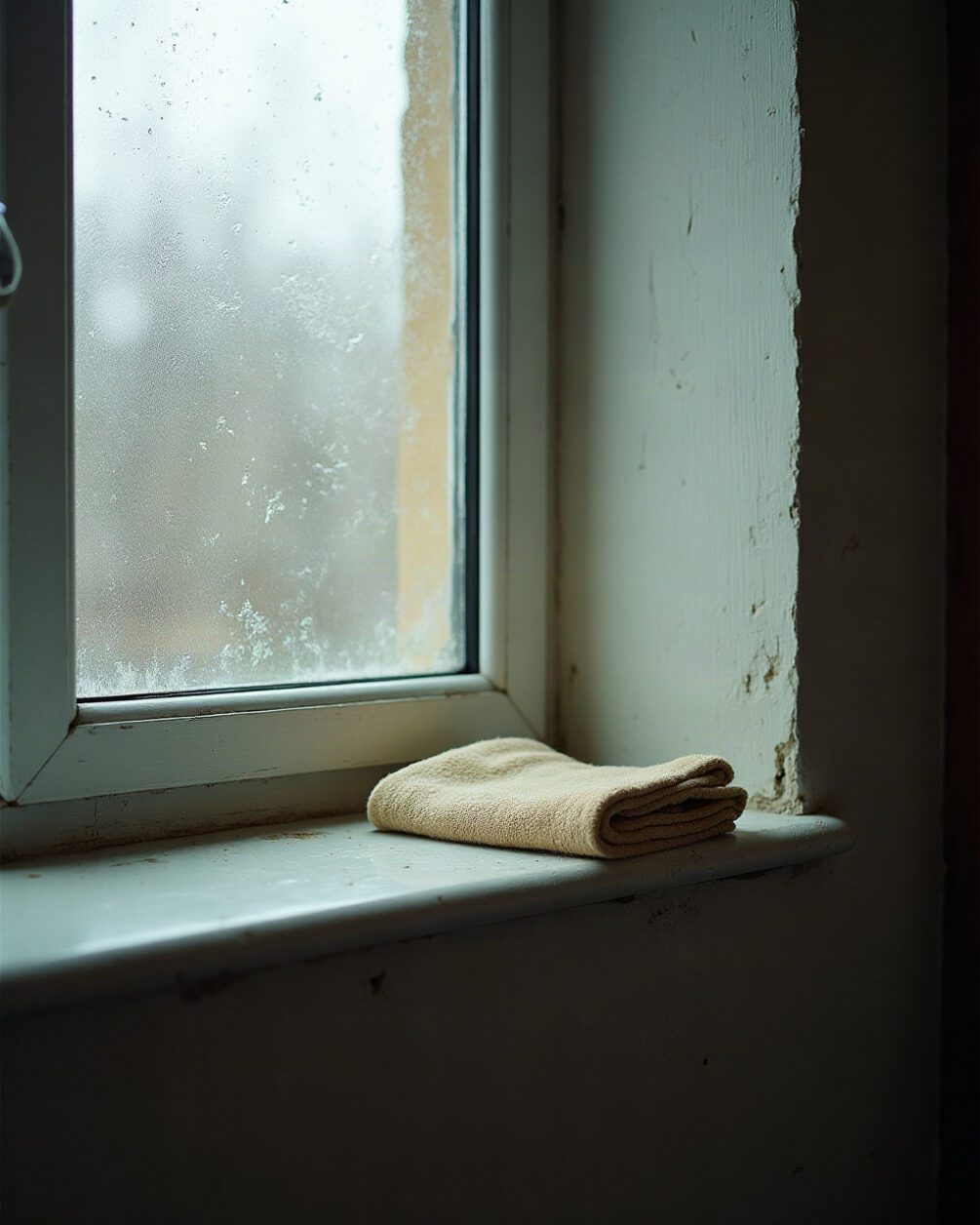
There is a useful shortcut hiding in this question. Insects are mostly not white, because white is a bad colour to be if anything is hunting you. The ones that are white indoors are almost all soft-bodied organisms living somewhere permanently damp and dark, where nothing needs to see them. That single fact does most of the identification.
The moisture rule
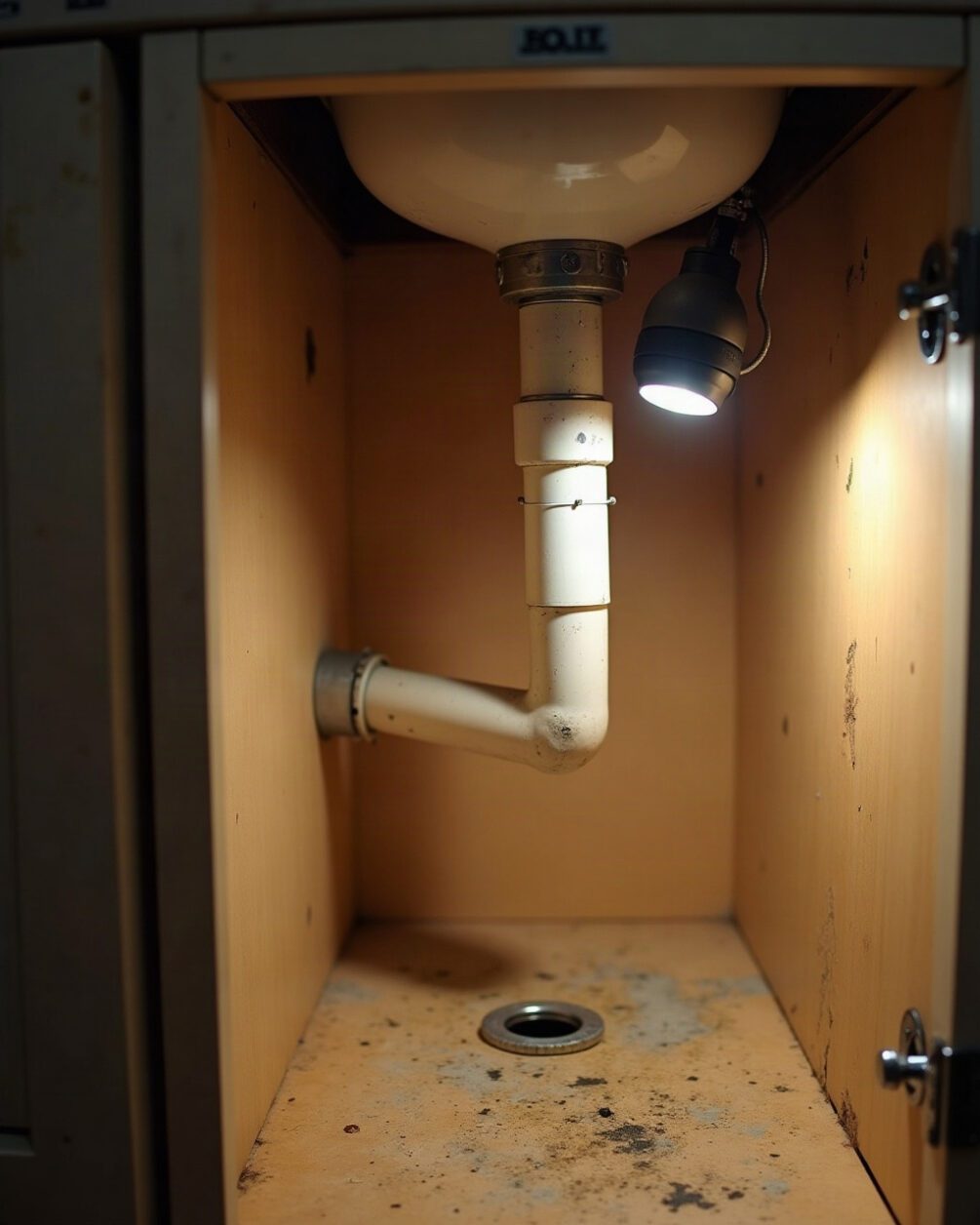
Every common answer here eats mould, fungus, or plant sap, and none of them can live in a dry room. So before naming the species, it is worth finding the water. A bathroom that does not vent, a window that runs with condensation, an overwatered plant, a slow leak under a sink, a cold external wall behind a wardrobe: these are where the population is actually coming from.
This is not a minor point about method. It is the entire treatment. Insecticide against a springtail population in a damp bathroom kills the visible generation and changes nothing, because the conditions producing them are untouched. A dehumidifier or an extractor fan ends the same problem permanently.
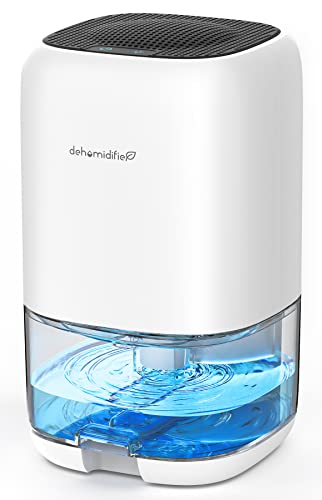
Springtails, booklice and mould mites all need high humidity at the surface they live on. Take that away and the population cannot maintain itself.
Springtails, the most common answer
Springtails are one to two millimetres, soft-bodied, and range from white and grey through to dark. They appear in bathrooms, kitchens, basements, around drains and in plant pots, usually in numbers and often after wet weather.
The diagnostic is the movement. A springtail jumps when disturbed, flicking itself several centimetres using a spring-loaded appendage folded under its abdomen. Nothing else in this size range indoors does that. Penn State Extension describes springtails as moisture-loving organisms that feed on mould, algae and decaying plant material, and UC IPM is equally direct that springtails are harmless and their presence indicates excess moisture.
They do not bite, do not damage buildings, do not carry disease and cannot establish in a dry house. If you have them in quantity, you have a humidity problem worth finding for the sake of the building, not the insect.
Booklice, which are not lice
Booklice, or psocids, are under two millimetres, pale grey to translucent, wingless indoors, and slow-moving. They turn up on damp paper, old books, cardboard, wallpaper paste, plaster in new buildings, and in kitchen cupboards on the surface of packaging.
The name causes real distress, so it is worth stating plainly: booklice are not related to head lice and cannot live on a person. They feed on microscopic mould growing on damp surfaces. If you want the actual comparison, our guide to what head lice look like shows the difference immediately, and telling lice from dandruff covers the check that matters if a scalp is the real worry.
Booklice in a new build or a recently plastered room are extremely common and temporary. The building is still drying. They go when it has.
Mould mites, and why you may only see movement
Mould mites are smaller again, often under half a millimetre, and frequently the first impression is not an insect at all but a patch of dust that appears to be moving. They occur on damp food, in cupboards, on plaster, and around anything with visible mould growth.
They are harmless to touch, although people with allergies can react to large populations in the way they react to dust mites. The parallel is worth drawing: if allergy rather than infestation is the concern, our dust mite allergy guide is the more useful page, because the management is the same and it is about humidity and cleaning rather than pest control.
Mealybugs, which belong to the plant
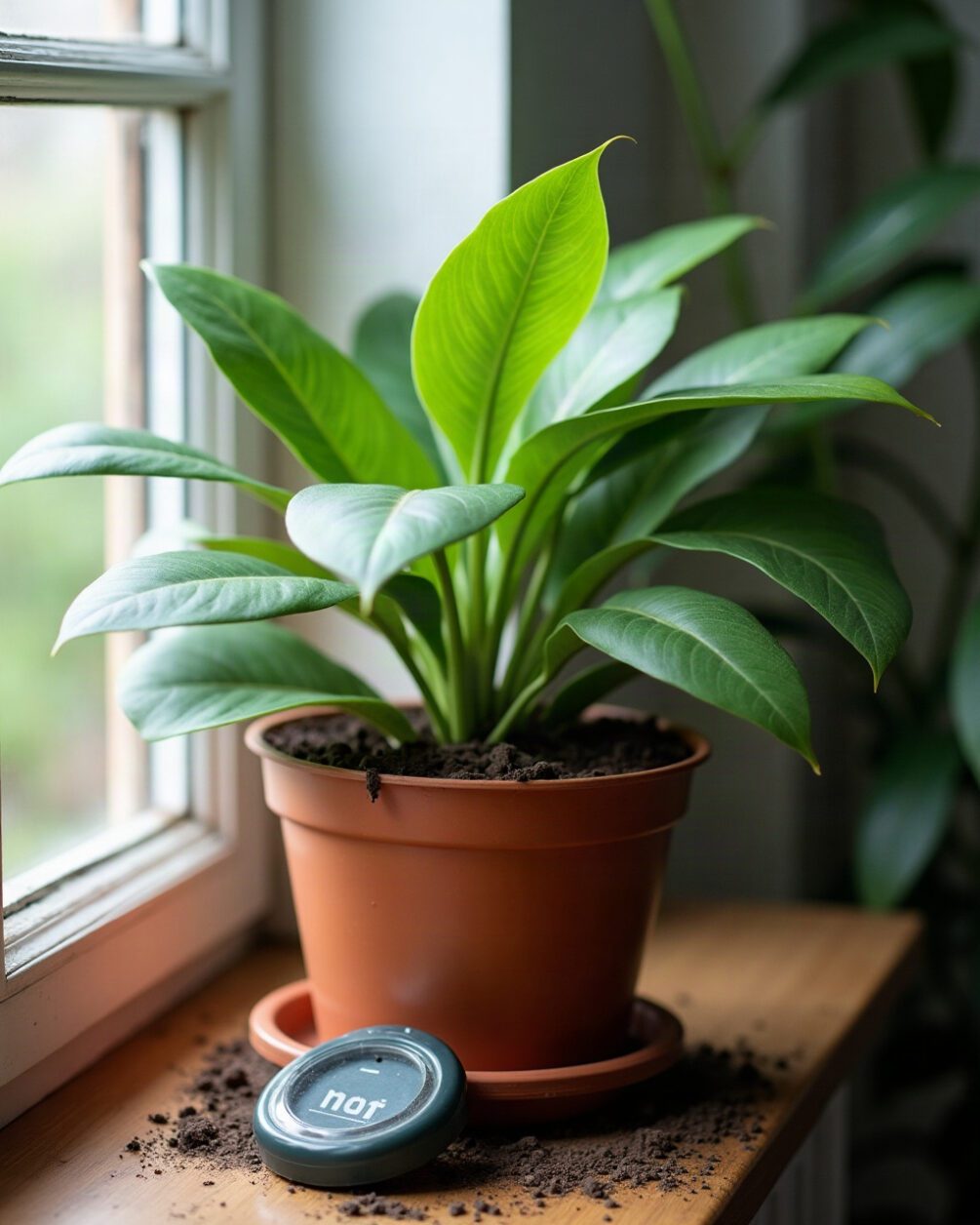
If the white things are on a plant rather than in the room, this is a different problem with a different answer. Mealybugs are soft, oval, and covered in a white waxy powder that makes them look like small tufts of cotton wool. They cluster in leaf joints, on stems and under leaves, and they feed on sap.
They spread between plants readily, so isolation is the first move. Our mealybug guide covers treatment, and if the plant also has fine webbing, the culprit is more likely spider mites, covered in our spider mite guide.
While you are looking at the pot, check the soil surface. Small dark flies drifting up when you water are fungus gnats, and the gnat identification guide covers those. Overwatering produces both problems at once.
The new building exception
One pattern is worth naming separately because it alarms people badly. A new build, an extension, or a room that has been repaired after a leak fills with small pale insects, sometimes in the hundreds, over a few weeks.
That is a drying building, and the insects are eating the surface mould on fresh plaster and damp timber. Booklice and foreign grain beetles are the usual pair. Kentucky’s factsheet on the latter is clear that these beetles are associated with damp conditions and disappear when the moisture resolves. Ventilate, run heating, be patient. Spraying a drying wall achieves nothing.
Common questions
Can any of these bite me?
No. Springtails, booklice, mould mites and mealybugs have no interest in people and no equipment for biting them. Skin irritation in a damp room is far more often the damp itself, or a fabric pest such as a carpet beetle larva, covered in our guide to carpet beetle rashes.
They are on my windowsill in hundreds. Is the house infested?
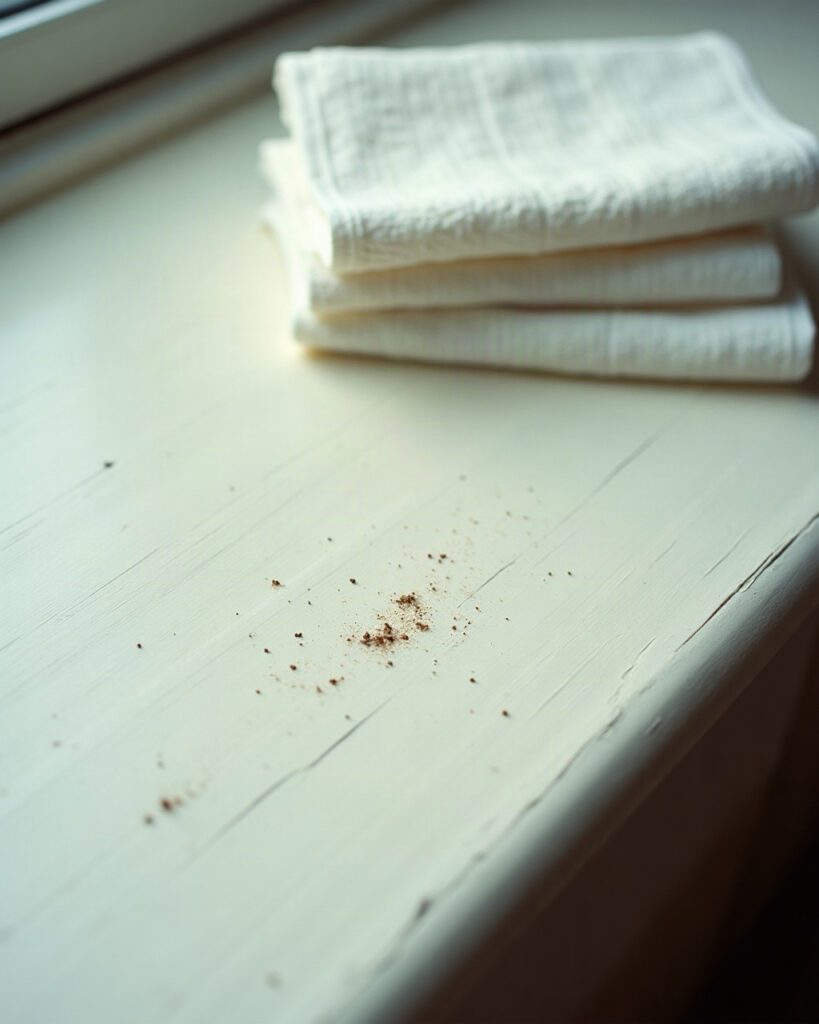
Windowsills concentrate whatever is in the room, because insects move toward light. A sill full of springtails after rain is a condensation reading, not a measure of the population in the walls.
Will a dehumidifier really fix it?
For springtails, booklice and mould mites, yes, and usually faster than people expect. These organisms need high humidity at the surface they live on. Take that away and the population cannot maintain itself.
Final verdict
White means damp. Springtails jump, booklice crawl on paper and plaster, mould mites look like moving dust, and mealybugs sit in cotton wool tufts on plant stems. None of them bites, none damages a building, and none needs an insecticide. Find the moisture, whether that is a fan that does not run, a plant that gets watered twice as often as it needs, or a pipe joint weeping under a sink, and the identification stops mattering.
Pingback: Bugs That Look Like Fleas But Are Not