Paired parallel grooves a couple of millimetres apart are rodent incisor marks, and no insect chews cable. Mice, rats and squirrels all do it, because their incisors grow continuously and must be worn down. Treat this as an electrical fault before treating it as a pest problem: isolate the circuit, have the damage inspected by a qualified electrician, and only then work on identifying and excluding the animal.
- Electrical risk first. Damaged cable in a loft is a recognised fire cause.
- Groove width sizes the animal. Fine and close together is mouse; broad is rat or squirrel.
- Repair without exclusion fails. The replacement cable is the next thing chewed.
This is the one page in this group where the order of operations matters more than the identification. Everything else on the site can wait while you work out what you are looking at. This cannot.
First, before identifying anything
Isolate the circuit. If the damaged cable can be traced to a circuit, switch it off at the consumer unit. If it cannot, and the damage exposes conductors, switch off at the main.
Do not touch exposed conductors, and do not attempt a repair with tape.
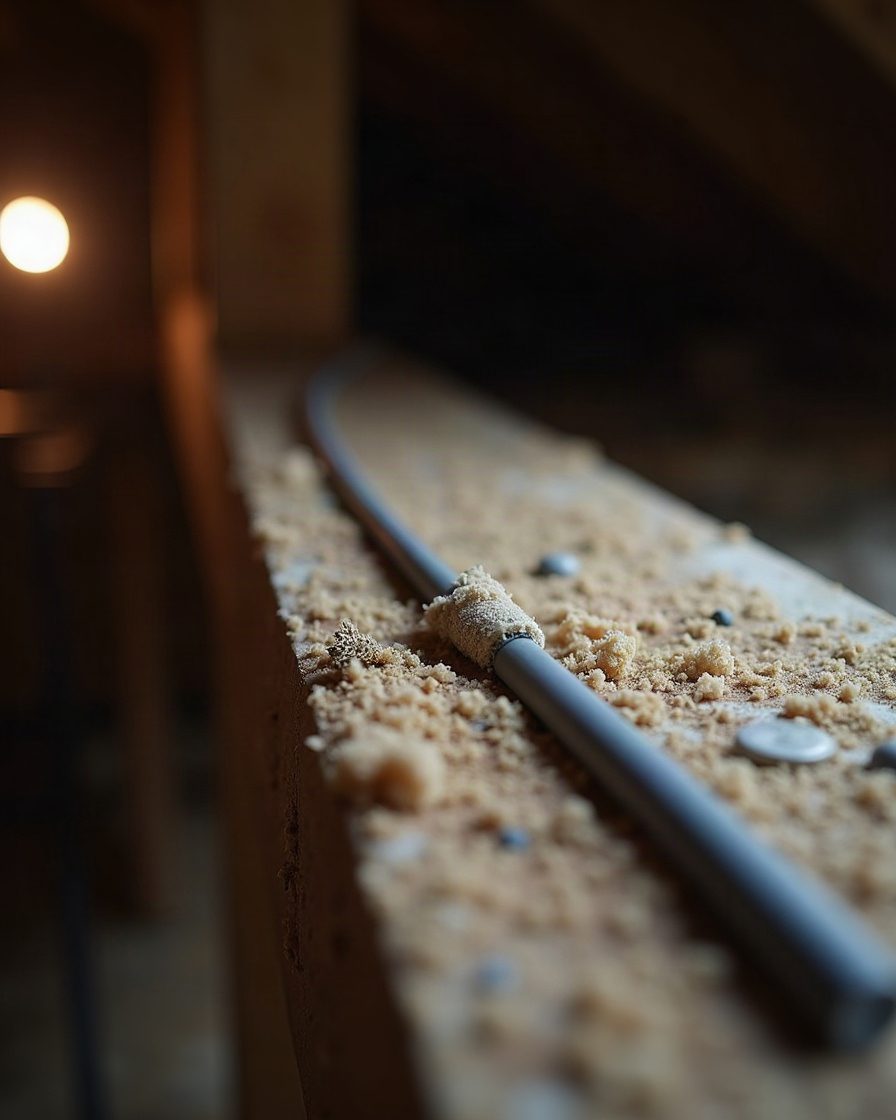
Get a qualified electrician to inspect it. Damaged insulation in a concealed space is a fire risk, and the visible damage is frequently not the only damage. Rodents work along a cable run, so one chewed section usually means several.
Then, and only then, work out what did it and how it got in.
The marks
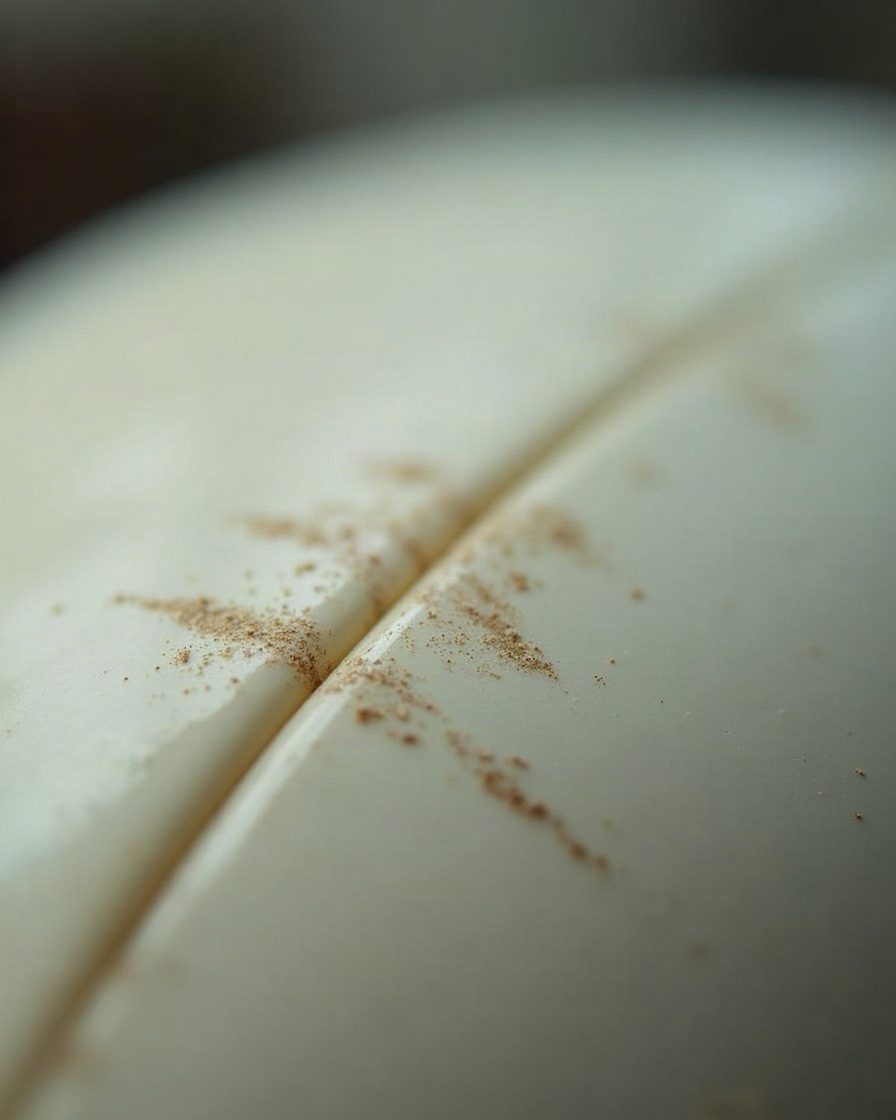
Paired parallel grooves. Rodents have two upper and two lower incisors that work together, so gnawing leaves twin tracks running alongside each other. On cable insulation they show as fine channels; on harder plastic as scrape marks.
Groove width sizes the animal. Mouse incisor marks are fine and roughly 1 mm apart. Rat marks are noticeably broader and deeper. Squirrel damage is broader still and often more destructive, removing whole sections rather than scoring them.
Fresh gnawing is pale. New damage exposes clean bright material against a dust-dulled surface. Old damage has taken on grime and looks weathered. This dates the activity better than droppings do.
No insect does this. Nothing with insect mouthparts can chew cable sheathing. If the damage is on wire, it is a mammal.
Which rodent
The location narrows it before the marks do.
Mice. Any level of the building. Damage tends to be scattered and light, and it comes with 3 to 7 mm tapered droppings and a musky smell. UC IPM’s guide to the house mouse covers the behaviour.
Rats. Heavier damage, often at low level and along wall junctions, with 12 to 19 mm capsule-shaped droppings and dark greasy rub marks at pinch points. See rat droppings.
Squirrels. Loft and roof space, damage that removes material rather than scoring it, torn soffits outside, and daytime noise. See squirrel droppings in the attic. Squirrels are the commonest cause of serious cable damage in a roof space, and the least often suspected because people assume rodent means rat.
Reading gnaw marks covers the marks on wood and plastic more generally, and the droppings chart settles which animal from the other evidence.
Why they do it
Rodent incisors grow continuously throughout life, at a rate that requires constant wearing down. Gnawing is not incidental behaviour; it is a physiological necessity, and the animal will use whatever is available and of the right hardness.
Cable insulation happens to be almost ideal: firm enough to wear the teeth, soft enough to work, and conveniently placed along the routes rodents already travel. This is why cable is chewed even where there is no food value and no nesting motive, and why the behaviour continues after food sources are removed.
It also explains why a repair alone fails. New cable is more attractive than old, not less.
What else gets chewed
Worth checking once you have found one instance, because the same animal will have been working along its routes.
Water and heating pipework in plastic, appliance cables behind and beneath units, vehicle wiring in a garage, irrigation lines, and the insulation on flexible ducting. Vehicle wiring in particular is a common and expensive discovery, and what lives in a car covers the wider set of things that get in.
Exclusion, which is the actual fix
Repair addresses the symptom. The cable will be chewed again unless the animal is excluded.
Find the entry. Gaps around pipe and cable penetrations in exterior walls, damaged air brick mesh, gaps under doors, the junction where an extension meets the original building, and along the roofline for squirrels: soffit and fascia junctions, lifted tiles, and anywhere a branch reaches within jumping distance.
Seal properly. Steel wool or metal mesh packed into a gap and sealed over, rather than filler alone, which gets chewed through. Expanding foam by itself is not a barrier.
Cut the bridges. Overhanging branches within a couple of metres of the roof.
Protect the cable where it is exposed. Rigid conduit over vulnerable runs in a loft is inexpensive and permanent.
On poison, the EPA’s guidance on controlling rodents and regulating rodenticides is worth reading first, particularly on secondary poisoning and on the risk of an animal dying inside a wall cavity, which creates a second problem that lasts weeks.
Common questions
How do I know if there is more damage I cannot see? You do not, which is the reason for the inspection. Rodents work along runs, and the accessible damage is rarely the whole of it.
Is the smell of burning related? Any smell of hot plastic or burning with known rodent damage present is an immediate reason to isolate the supply and call an electrician rather than investigate further.
Squirrels in the loft but no chewed cable found. Check anyway, thoroughly. Cable damage in a roof space is frequently discovered only after a fault develops.
Can I just put the cable in conduit and leave the animal? It protects that run and nothing else. The animal continues, and lofts contain a great deal besides cable.
The bottom line
Paired parallel grooves mean teeth, and teeth on cable mean an electrical inspection before a pest investigation. Isolate, get it looked at, then identify the animal from the droppings and the noise, then seal the way in. Skipping the last step guarantees the repair gets chewed, because gnawing is something the animal has to do rather than something it chooses.