A chewed-away corner with contents spilling is a rodent. Small pinholes through foil or film are beetles chewing outward, which means the infestation began inside a sealed packet before it reached the house. Silk webbing, clumped grains or a fine mat inside a bag is pantry moth larvae. And a packet that looks untouched while insects walk on the shelf means the source is a different packet, not this one.
- Holes made outward change the story. The packet was infested when bought.
- Paper and thin film are not barriers. Most pantry beetles chew straight through.
- Everything comes out onto the worktop. The search is the treatment.
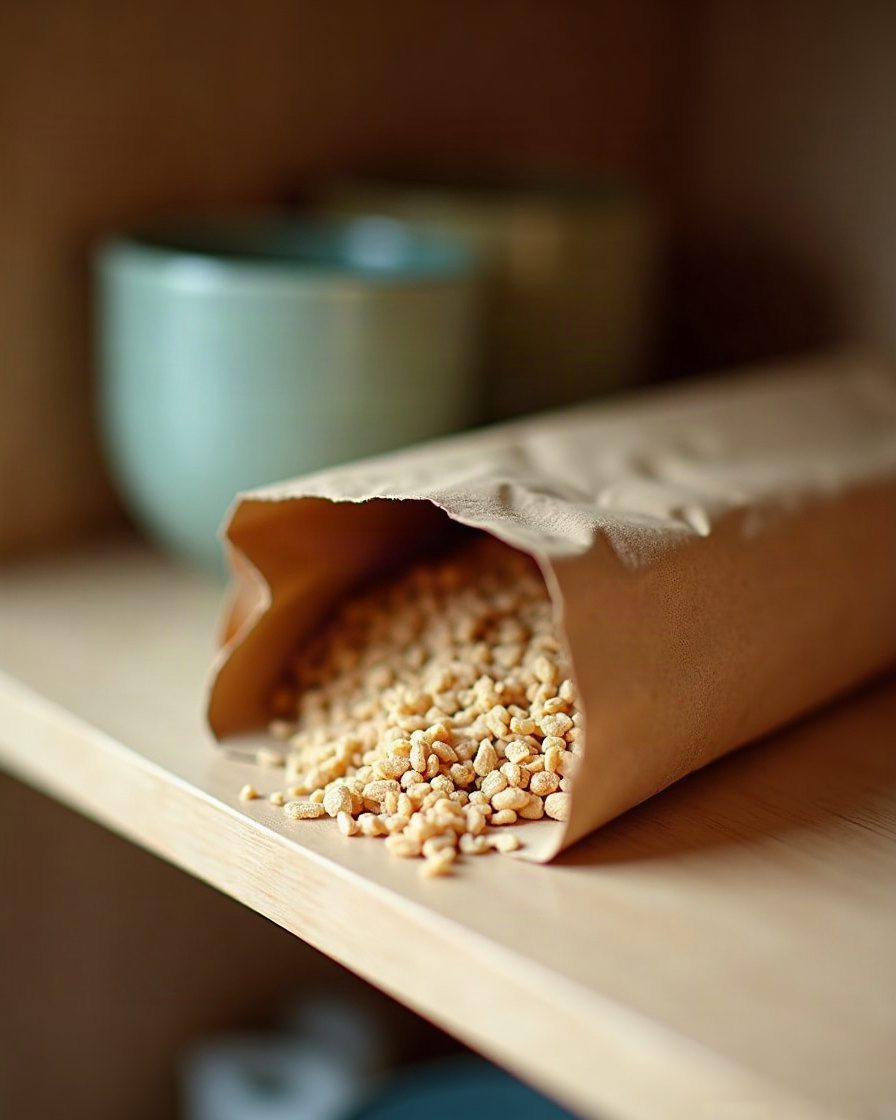
The packet is better evidence than the insect, because it records what happened over weeks while an insect on a shelf records only this moment. Reading it takes a minute and it usually identifies both the pest and where it came from.
Chewed corners and torn packaging
What it looks like. A corner or an edge gone, with ragged margins, and contents spilling onto the shelf. Often accompanied by droppings 3 to 7 mm and tapered, and sometimes by a musky smell.
What it means. A rodent. Mice in particular target the lowest shelf, because they arrive from floor level through the cupboard carcass rather than from above.
What to do. Discard anything opened, and treat the cupboard as a symptom. The entry point matters more: gaps around pipework, the void behind the kickboard, and the gap where the carcass meets the wall. UC IPM’s guide to the house mouse covers the exclusion side, and reading gnaw marks covers dating the activity.
Pinholes through foil and film
What it looks like. Several very small round holes, sometimes only visible when the packet is held up to a window. The packet is otherwise intact and often still sealed.
What it means. This is the most informative finding in a pantry. Grain and flour beetles, and the larvae of several stored-product moths, will chew out of a sealed packet. So pinholes with the seal intact mean the eggs or larvae were inside the packaging when it was bought, which happens at the mill or the packing plant rather than in the house.
What follows from that. It is not a hygiene failure, and cleaning the kitchen will not prevent a recurrence on its own. What prevents it is decanting into containers that a beetle cannot leave or enter.
Tiny bugs in kitchen cabinets covers the species, and bugs with hard shells covers identifying the beetles themselves.

Webbing, clumping and silk
What it looks like. Grains stuck together in clumps, a fine silk mat over the surface of the contents, threads across the inside of a bag, or silk in the folds at the top of a packet.
What it means. Pantry moth larvae, most often the Indian meal moth. The webbing is spun as the larva feeds and it binds the product together.
Where else to look. Larvae leave the food before pupating and crawl upward and outward, so silk cocoons turn up on the underside of the shelf above, in the cupboard’s top corners, on the ceiling of the cupboard, and sometimes in an adjacent room. Finding cocoons at a distance from the food is normal and is not a second infestation. Bugs crawling on the ceiling covers the same behaviour.
An intact packet with insects on the shelf
What it means. The source is another packet, and it is usually one that has been in the cupboard longest: a bag of flour at the back, a decorative jar of grains, birdseed, dried chilli, pet food, or something in a decorative tin that nobody has opened in two years.
Pet food and birdseed are the two most commonly overlooked reservoirs in a domestic kitchen, and dried decorative items such as ornamental corn are the third.
Damage that is not stored-product pests
Cockroaches feed on residue, spillage and the outside of packaging rather than opening it. Damage is minimal and the evidence is droppings in the corners of shelves rather than in the food. See cockroach droppings and UC IPM on cockroaches.
Damp damage softens card and causes staining and mould with no holes and no insects.
Mechanical damage in transit produces splits and tears at seams rather than round holes or chewed corners.
The clearance, which is the whole job
There is no spray that substitutes for this.
Take everything out onto the worktop. Check each item over a white surface, opening anything previously opened. Look for live insects, webbing, clumping, pinholes and fine dust. Sieve anything questionable rather than guessing.
Discard what is infested, sealed in a bag, into an outside bin. Anything you want to keep and are unsure about can be frozen for a fortnight, which kills all stages.
Vacuum the empty cupboard thoroughly: shelf-support holes, hinge recesses, the joint between shelf and carcass, and the gap at the back. Those crevices are where eggs and pupae persist, and skipping them is the usual reason the problem returns a month later. Wipe with detergent afterwards.
Then decant. Glass or rigid plastic with a genuine seal, for everything dry: flour, rice, pasta, cereal, pulses, nuts, spices, pet food and birdseed. This single change ends most recurring pantry problems, because it removes the route both in and out.

Common questions
Is the food safe if I sieve out the insects? It is not harmful in the way people fear, but the product also contains eggs, cast skins and frass. Most people discard it, and that is a reasonable choice.
I froze it. Is that enough? A fortnight at domestic freezer temperature kills all life stages. It does not remove the debris.
It came back after two months. Almost always a missed packet or an uncleaned crevice. Pupae survive in shelf-support holes and hinge recesses.
How did they get into a sealed jar? They did not. Either the seal was imperfect, or they were inside before it was closed.
The bottom line
Read the packet before you look for the insect. Chewed corner means rodent, pinholes mean it arrived with the food, webbing means moth larvae, and an untouched packet means look elsewhere. Then empty the cupboard, clean the crevices, and put everything dry into glass, because packaging is the part of this that keeps failing.