
When there is no insect to look at, five kinds of trace remain. A hollow empty insect is a shed skin and proves something is growing. Silk in a sheet, funnel or tube names the family that spun it. A built structure is a nest, and whether it is packed or layered says mammal or wasp. A stain says what was excreted. A smell says how long something has been there. Each has a short suspect list, and raking light finds all of them faster than overhead light.
- Skins prove breeding. Droppings only prove a visit.
- Silk architecture is diagnostic. Sheet, funnel, orb and tube are different animals.
- Smell dates things. Nothing else on this page tells you how long.
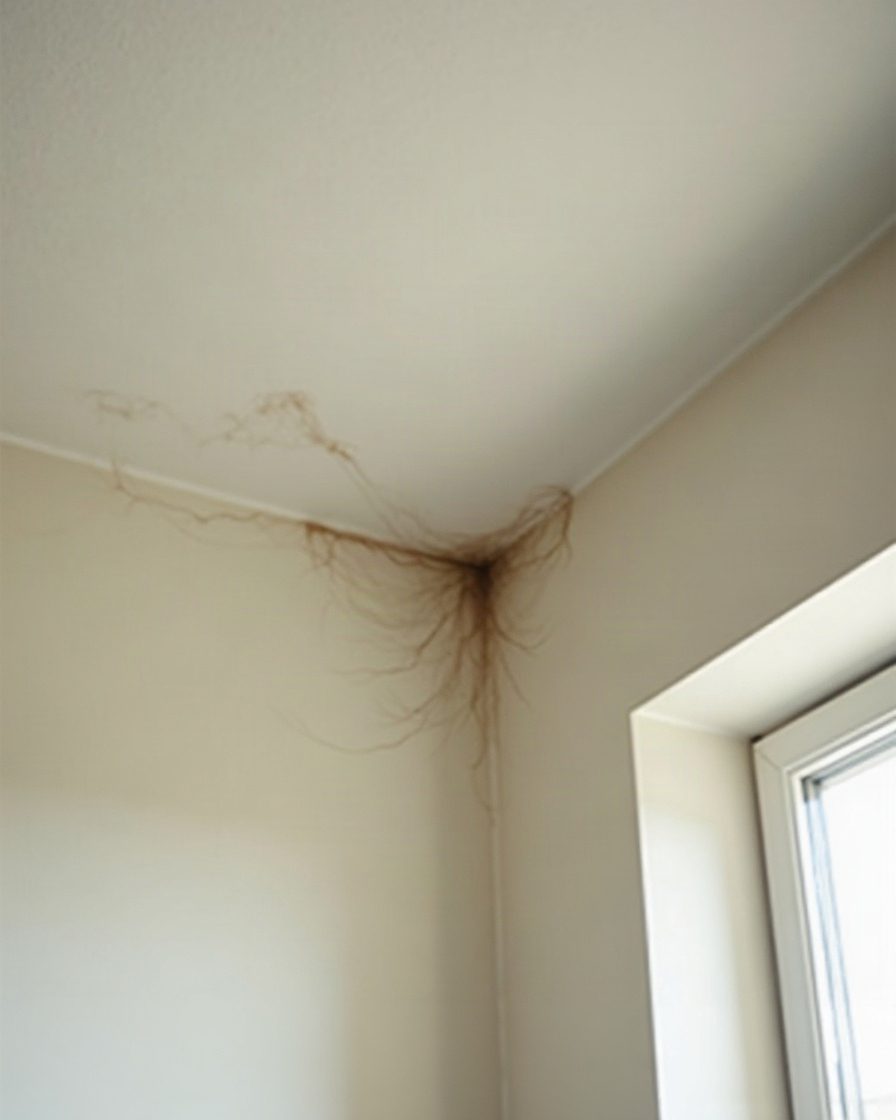
Most pest identification assumes you have an insect. Frequently you do not: the thing was seen once at night, or never, and what remains is a web, an empty shell, a mud tube on the foundation, a mark on the wall, or a smell that was not there last week.
That evidence is often better than a sighting would have been, because it persists and can be examined properly. This page is the index to it. The companion pages are the droppings chart for anything excreted as a pellet, and the damage chart for anything eaten or chewed.
Shed skins
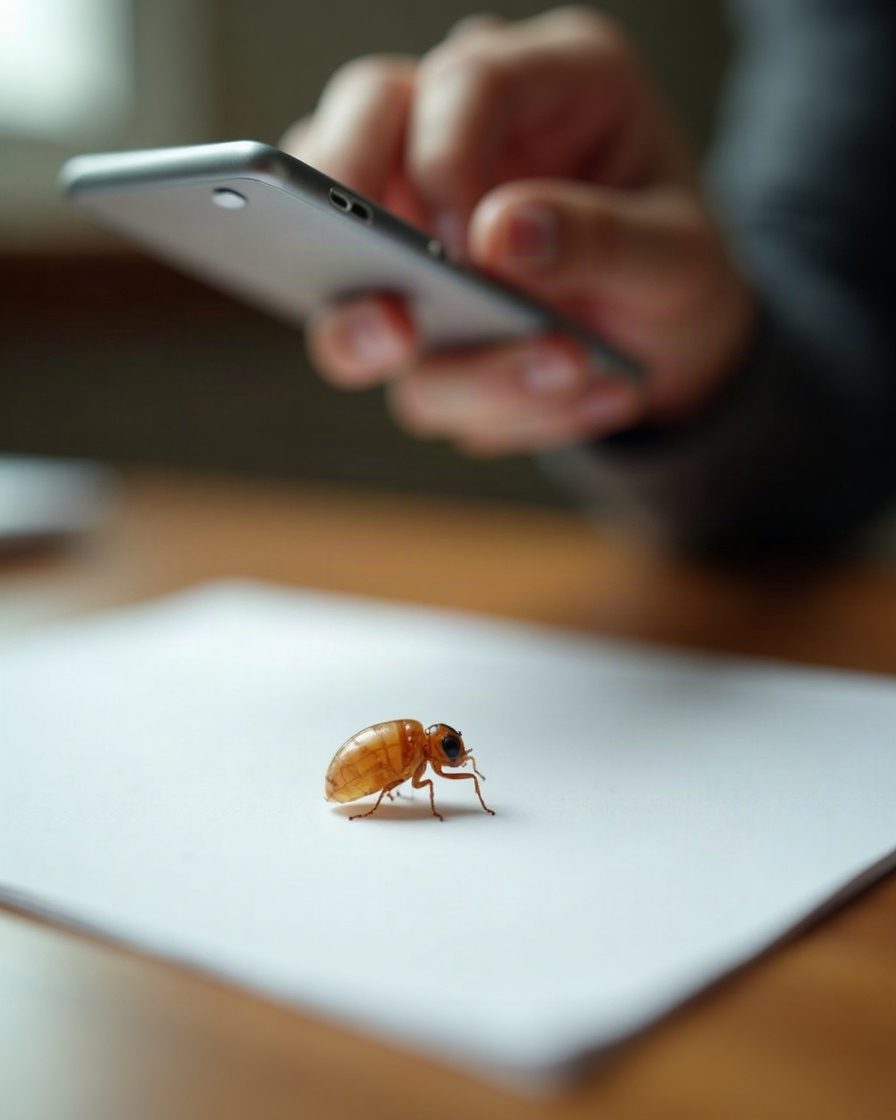
What you are looking at. A complete, hollow, translucent insect with nothing inside it. Insects grow by moulting, and the discarded cuticle keeps the shape of the animal, including the legs and antennae. People mistake them for dead insects constantly; the tell is that a moult is empty and perfect, while a corpse is solid and usually damaged.
Why they matter more than most evidence. A shed skin means something completed a growth stage in that spot. It is evidence of a resident, breeding population rather than of a single insect that wandered in.
Common sources. Bed bugs, in five sizes corresponding to the nymphal stages, along mattress seams and frame joints. Carpet beetle larvae, bristly and brown, in wardrobes and along skirting. Cockroach nymphs. Cicadas, outdoors on trees and fences in summer.
Covered in detail on shed insect skins in the house, with bed bug shed skins and cicada shells handled separately.
Silk
What you are looking at. Silk is produced by spiders and by the larvae of several insect groups, and the structure is diagnostic.
| Structure | Built by |
|---|---|
| Flat sheet with a funnel retreat | Funnel weaver spider |
| Tangled three-dimensional mesh | Cobweb spider |
| Classic wheel with radiating spokes | Orb weaver |
| Fine dusty webbing on plant leaves | Spider mites |
| Silk mat binding grains in a packet | Pantry moth larva |
| Small portable tube carried by the larva | Case-bearing clothes moth |
UC IPM’s guide to spiders covers the web types. Webs in corners, funnel webs compared with sheet and orb webs, silk tubes indoors and moth webbing in a pantry take the branches.
Nests and built structures
What you are looking at. Something assembled rather than left behind.
Packed into a hidden hollow, made of shredded gathered material: a rodent. Hanging in open air, grey, layered and papery: a wasp, which manufactures the paper from chewed wood. Coarse twigs, grass and mud in a vent or a gutter: a bird. Pencil-width earth tubes crossing concrete: subterranean termites, and this is the most serious structure on the page.
The University of Kentucky’s guide to wasps, hornets and yellowjackets covers the seasonal cycle that determines whether a nest can simply be left. See wasp nest identification by shape, mud tubes on a foundation, nests in vents and soffits, and shredded paper and nesting material.
Stains and marks
What you are looking at. Something excreted or transferred onto a surface.
Dark dots that bleed rusty brown into a damp cloth: bed bug faecal marks, which are digested blood. UC IPM’s guide to bed bugs covers the inspection.
Dark greasy smears at pinch points along skirting, under a gap, at a pipe: body oil transferred by a rodent using the same route nightly.
Small yellow or rusty spots on a wall or ceiling: several possibilities, including flies and, in the case of stink bugs and lady beetles, a defensive secretion.
See stains on walls from insects, yellow stains on bedding and greasy rub marks along skirting boards.
Smells
What you are looking at. The only evidence on this page that carries timing information.
Musty and earthy: most often damp rather than an animal, and where an animal is involved it arrived because of the damp. Sweet, oily, faintly like almonds: an established cockroach population. Ammoniacal: accumulated urine, usually rodent, in insulation or a cavity. Sickly and unmistakable, rising over days and fading over weeks: something has died in a void.
See a musty smell in the house, the cockroach smell signature and how long a dead mouse smell lasts.
How to look
Three habits that find far more than searching harder does.
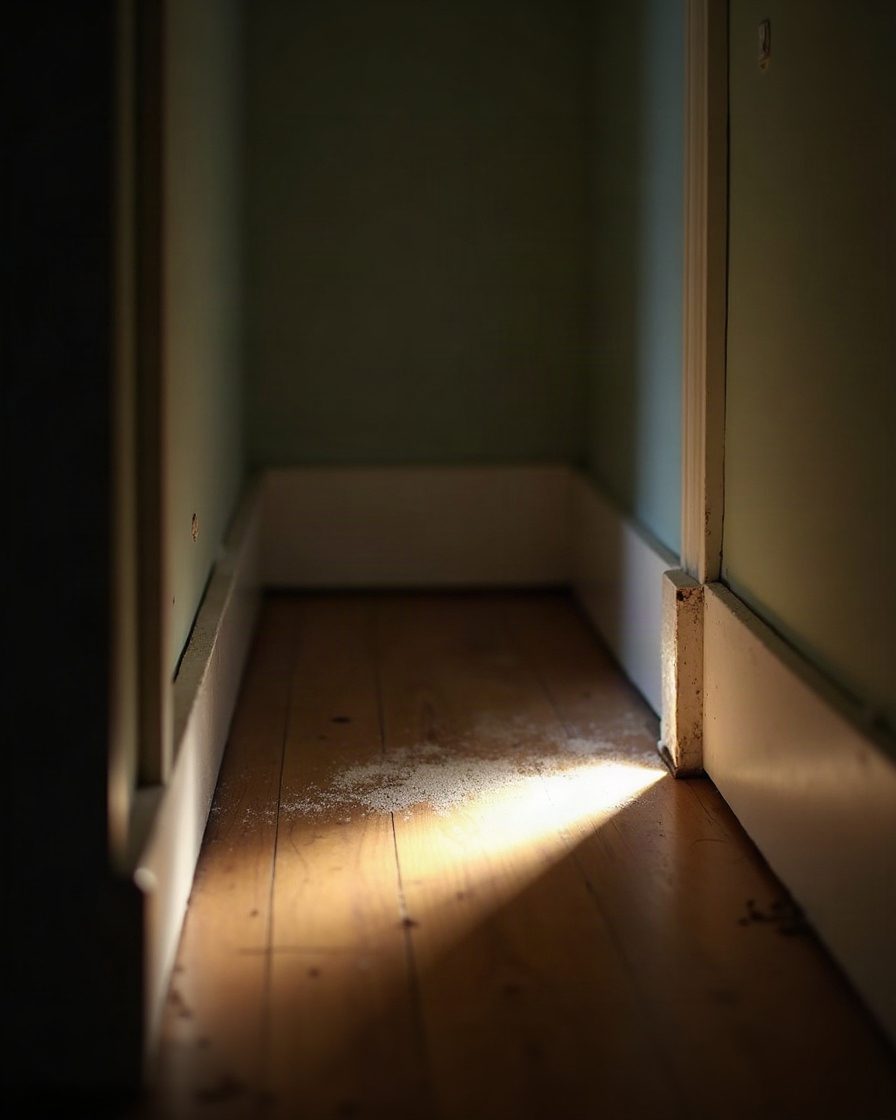
Use raking light. Hold a torch almost parallel to the surface rather than pointing at it. Silk, dust-free tracks, rub marks, faint stains and fine debris all appear in raking light and vanish under an overhead bulb.
Clear it and date it. Nearly every question on this page reduces to whether the trace is current. Remove it completely, note the date, and look again in a week. This is free and it settles more than any amount of further identification.
Photograph before you clean. Cleaning destroys the record, and the second look is often more informative than the first.
Common questions
I have evidence but never see anything. That is the normal case for nocturnal and concealed pests, and it is why this page exists. Absence of a sighting is not evidence of absence.
Which of these is most urgent? Mud tubes on a foundation, and any smell of burning where rodent activity is known. Everything else can wait a week.
How old is this trace? Silk collects dust within days. Stains do not age visibly. Smells are the best clock. Shed skins persist for years.
Nothing here matches. Then look at the general identification guide, or at the droppings and damage charts, since most household evidence falls into one of the three.
The bottom line
Work out which of the five you have before trying to name a species. A hollow shell, a silk structure, something built, a mark or a smell each cut the possibilities to a handful. Then use raking light to look properly, and clear the trace and date it, because whether it is still happening matters more than what made it.
Pingback: Bed Bug Shed Skins: The Evidence That Proves Breeding
Pingback: Webbing on Garden Plants: Mites or Caterpillars
Pingback: Ant Mounds and Hills: Reading the Soil