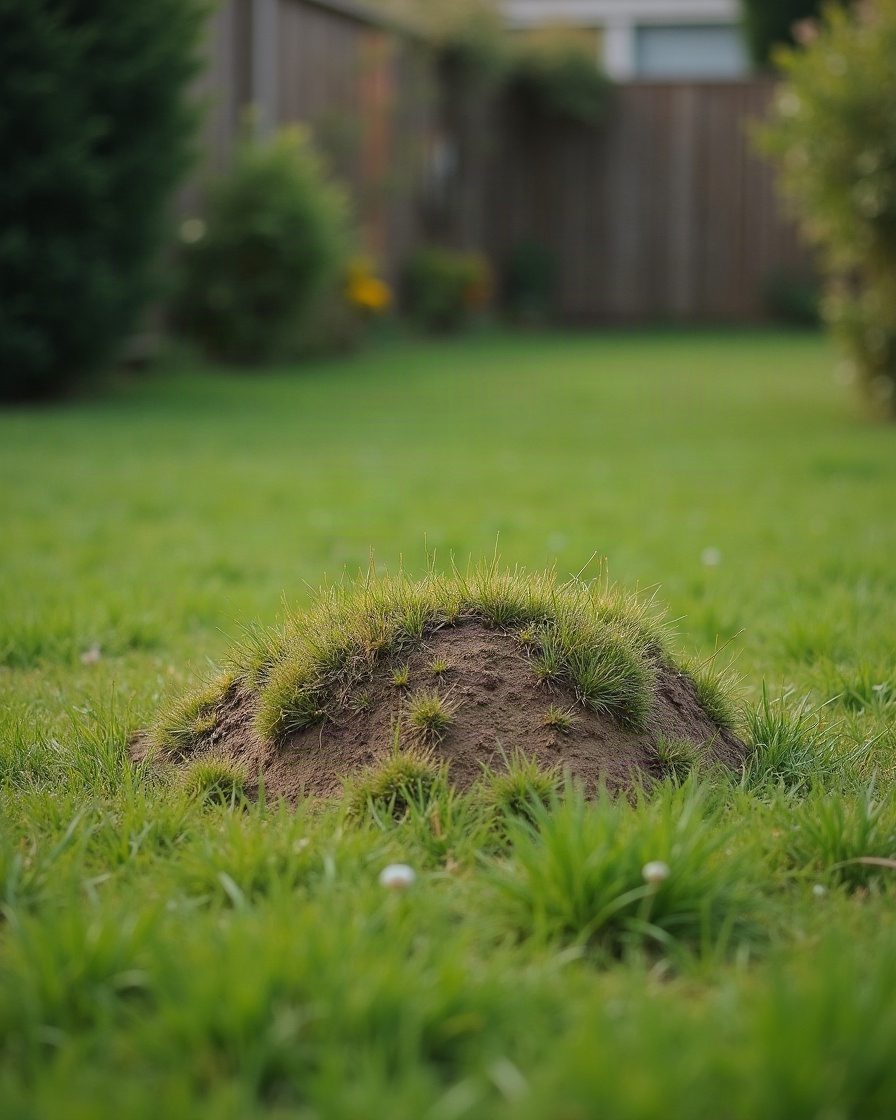
A small cone or crater of fine, loose soil around a hole is an ant nest entrance, and the fineness of the spoil is the signature: ants carry soil grain by grain. A large turfed dome built up over years is a long-established colony. A hole with no spoil heap at all is probably not an ant, and worth identifying before anything is poured into it, because ground-nesting wasps and bees use similar openings.
- Fine, evenly graded spoil means ants. Coarse or absent spoil means something else.
- Watch the hole for a minute. Ants walk; wasps and bees fly in and out.
- Most garden ant nests need nothing done, and disturbance is what causes relocation.

Soil workings in a lawn or between paving are one of the commonest garden findings and one of the least often worth acting on. The identification takes a minute of watching, and it matters mainly because a couple of the alternatives should definitely not be treated as ants.
Reading the spoil
Fine, loose, evenly graded soil in a low cone or crater. Ants. They excavate grain by grain and deposit the spoil at the entrance, which is why the texture is so uniform and so fine. Common between paving slabs, along path edges, at the base of walls, and in dry patches of lawn.
A broad, low, turfed dome, sometimes tens of centimetres across and grassed over. A long-established colony, built over several years. In meadows and unmanaged grassland these are a habitat in their own right and support specialised plants and insects.
A thatched heap of pine needles and plant fragments in woodland. Wood ants, which are protected in some countries and should be left alone entirely.
Coarse crumbly soil in a lawn, granular rather than fine. More likely worm casts, which are darker, coarser and appear after rain rather than in dry weather.
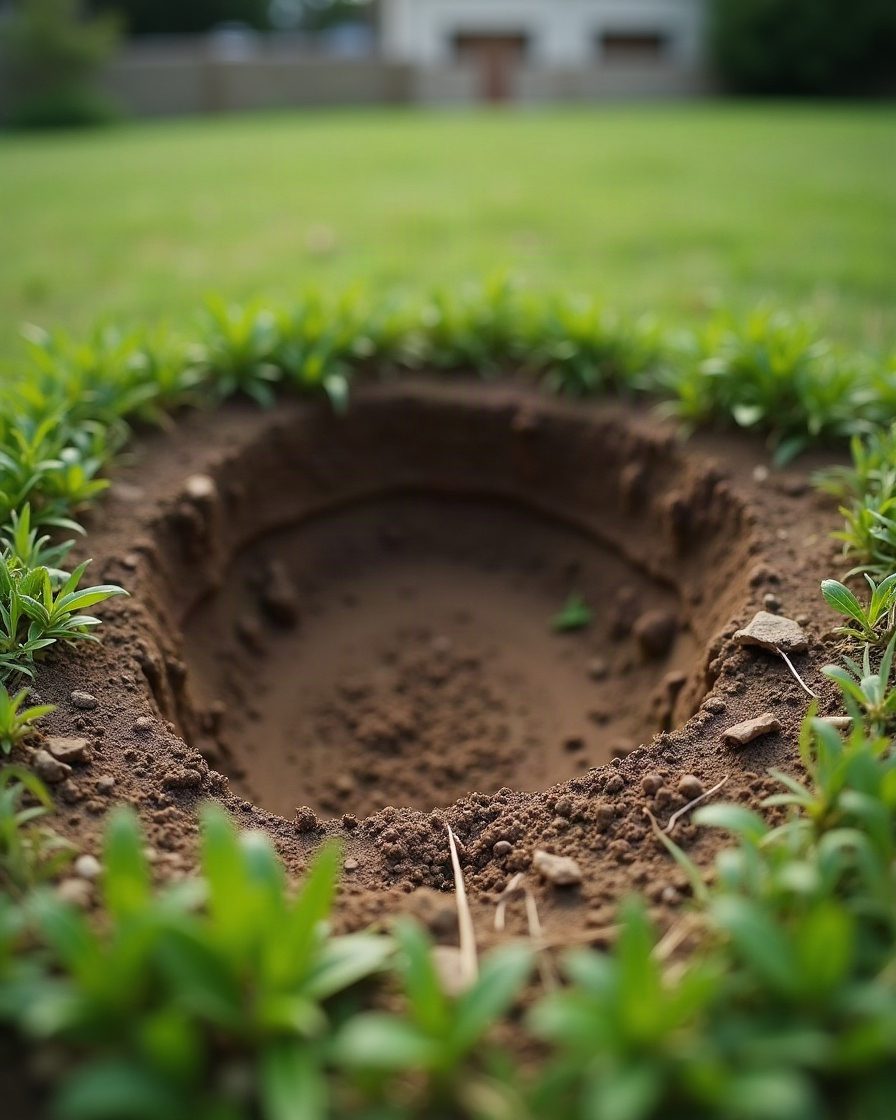
A hole with no spoil at all. Not an ant. Ground-nesting bees and wasps, and in some cases a small mammal. This is the one to check before doing anything, and the pest evidence chart covers the wider set of traces that turn up outdoors.
UC IPM’s guide to ants covers the species and their nesting habits.
Watch it for a minute
The fastest confirmation costs nothing.
Ants walk in and out, usually in a steady two-way stream along a defined route.
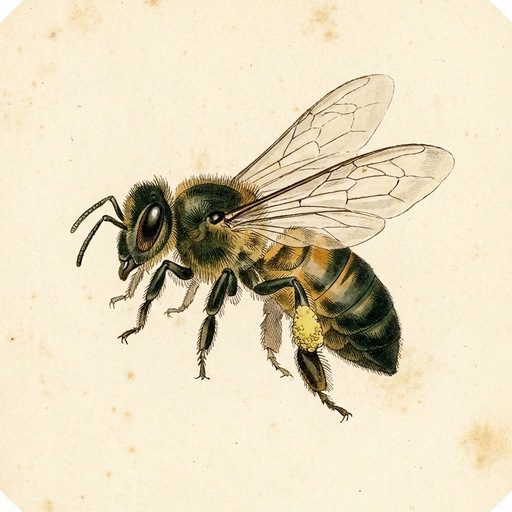
Ground-nesting bees fly directly in and out, often hovering near the entrance. Mining bees are solitary, entirely harmless, present for a few weeks in spring, and beneficial pollinators. Many small holes in a lawn in April with bees flying is a mining bee aggregation, and the correct response is to leave it.
Yellowjackets fly fast and low with a steady traffic, usually from a hole in a bank or an old rodent burrow, with a worn bare patch around the entrance. This is the one to take seriously, because ground nests are the commonest cause of multiple stings and are usually found with a mower. See paper wasp compared with hornet nests, and wasp nest identification by shape for the structures.
Pouring anything down a hole before identifying what uses it is how people get stung.
What the nest is doing to the garden
Less than it appears, in most cases.
Lawns. Ant hills are a mowing nuisance and can smother small patches of grass. They do not kill a lawn. Brushing the spoil out on a dry day levels it, and the grass recovers.
Paving. Ants excavating beneath slabs remove the fine material from the bedding layer, and over years this can cause slabs to rock. This is the one genuinely worth addressing, and the fix is jointing rather than insecticide: brushing in a proper polymeric or mortar joint removes both the entrance and the loose bedding.
Plants. Ants do not eat plants. They do farm aphids for honeydew and protect them from predators, so a heavy ant presence on a shrub usually means an aphid population underneath. Dealing with the aphids removes the ants’ reason to be there. UC IPM’s guide to aphids covers that, and our page on types of aphids covers the identification.
Indoors. A nest outside is not the reason ants are in a kitchen; a food source is. That is a different problem and is solved indoors.
Why disturbance usually backfires
Ant colonies relocate readily when a nest is disturbed, and they often relocate somewhere less convenient. Repeatedly digging out or flooding a nest tends to produce several nests where there was one.
Boiling water kills the ants it reaches and not the queen, so the colony rebuilds. Broad-spectrum soil drenches affect a great deal besides ants, including the ground beetles and predatory invertebrates that suppress other garden pests. The EPA’s point about whether a pesticide is needed at all is well made here, since the commonest complaint is cosmetic.
Where a colony genuinely has to go, a bait taken back to the nest is the only approach that reaches the queen, and it works slowly by design.
Fire ants, where they occur
In the southern United States and parts of Australia, imported fire ants build distinctive dome-shaped mounds of loose soil with no visible central opening, and they respond to disturbance by swarming out and stinging aggressively. That is a genuine exception to everything above, it is a public health and agricultural matter, and in areas with active eradication programmes new mounds should be reported rather than treated privately.
Common questions
Winged ants pouring out of the nest. A nuptial flight, which happens on a warm humid day and lasts hours. It is normal, harmless and self-limiting. Bugs that look like ants covers telling flying ants from termite swarmers, which matters a great deal more.
The mound reappears after I level it. Expected. The colony is below and unaffected by removing the spoil.
Holes all over the lawn in spring with small bees. Mining bees. Harmless, brief, and worth leaving.
Ants are climbing my fruit tree. Look for aphids or scale insects above them.
The bottom line
Fine, evenly graded spoil around a hole means ants, and in a garden that usually means nothing needs doing beyond brushing the hill flat on a dry day. Spend the minute watching what goes in and out before treating any hole in the ground, because the two alternatives are a harmless spring bee and a wasp colony that will change your afternoon.