
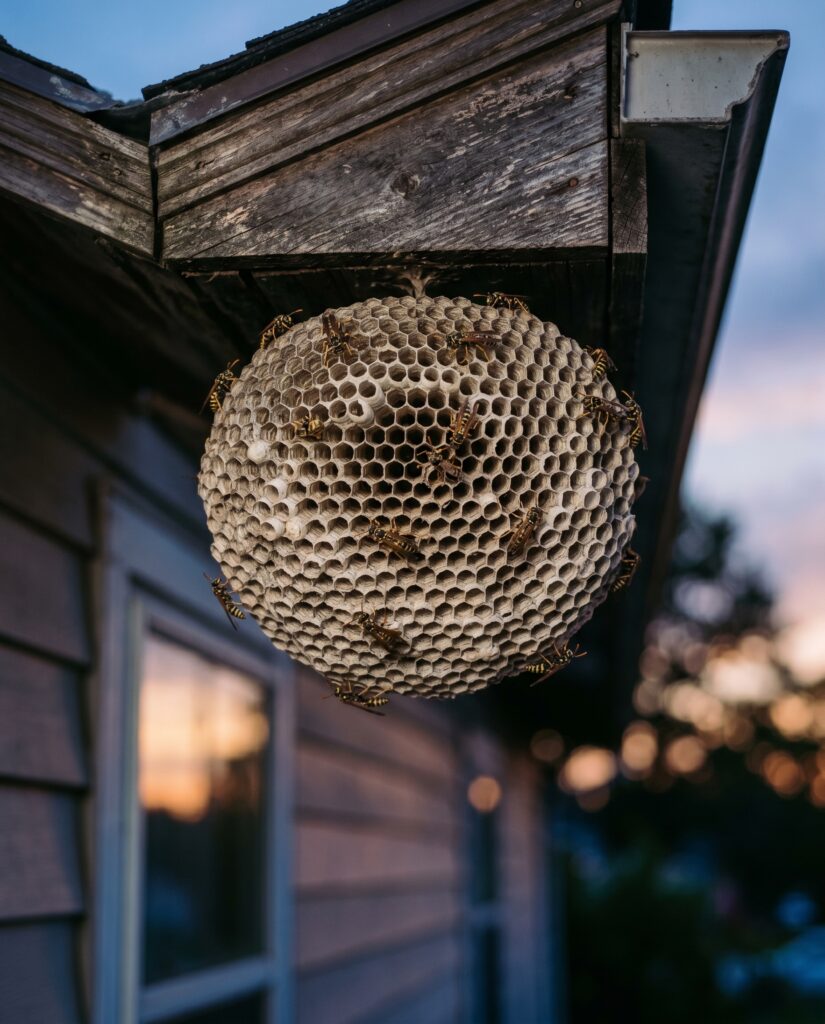
An open comb of hexagonal cells hanging from a short stalk, with no covering, is a paper wasp: a small colony, and the least aggressive of the group. An enclosed grey sphere or teardrop with a layered outer envelope is a yellowjacket or a hornet, and can hold thousands by late summer. Finger-length mud tubes are a solitary mud dauber, which does not defend a nest at all. Every social wasp nest is abandoned in autumn and never reused.
- Open comb visible from below: paper wasp. Enclosed envelope: yellowjacket or hornet.
- Mud, not paper: a solitary wasp, and it is harmless in practice.
- A nest well away from doors and paths can usually be left to die out in autumn.
Wasp nests are among the few pest findings where doing nothing is frequently the right answer, and the shape of the structure is what tells you whether that applies.
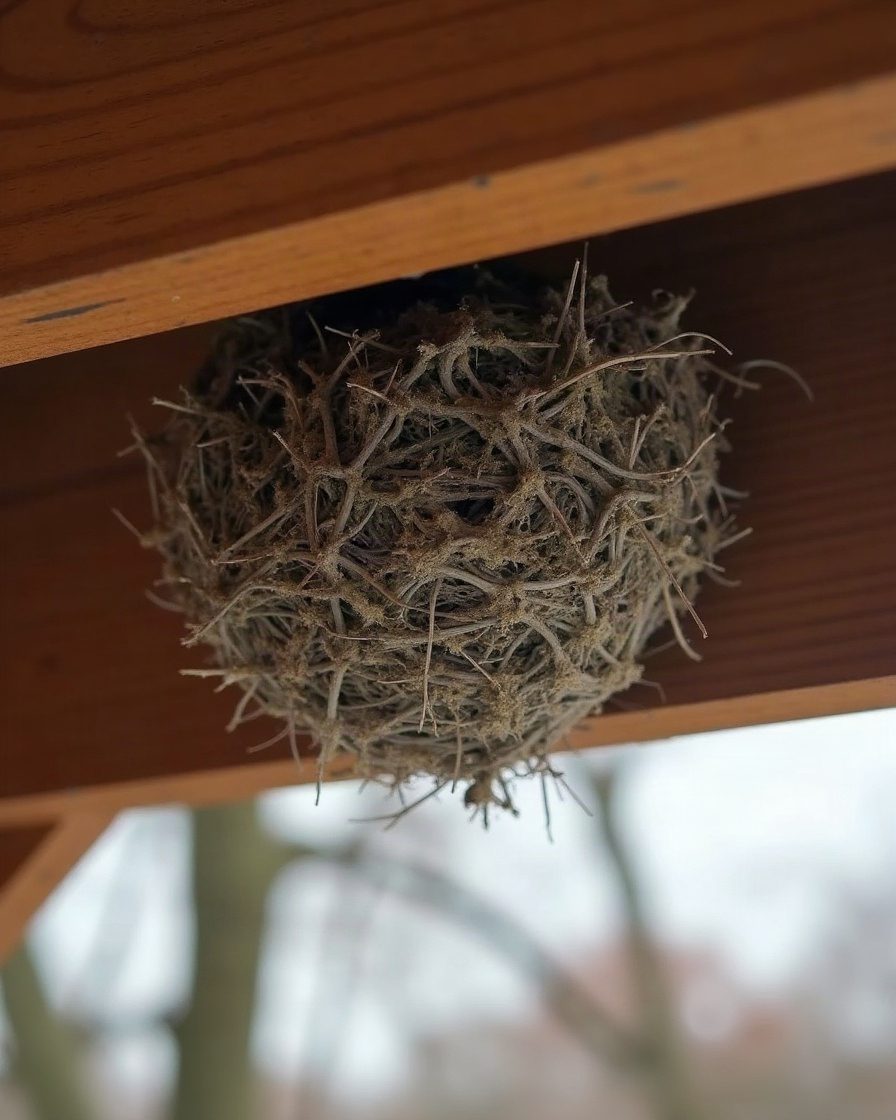
One point applies to all of them. Social wasps build paper by chewing weathered wood and mixing it with saliva, so the material is manufactured rather than gathered. That is why a wasp nest is uniform grey and layered, and why it never looks like the shredded mixture a rodent packs into a hollow. Shredded paper and nesting material covers that distinction.
The three shapes
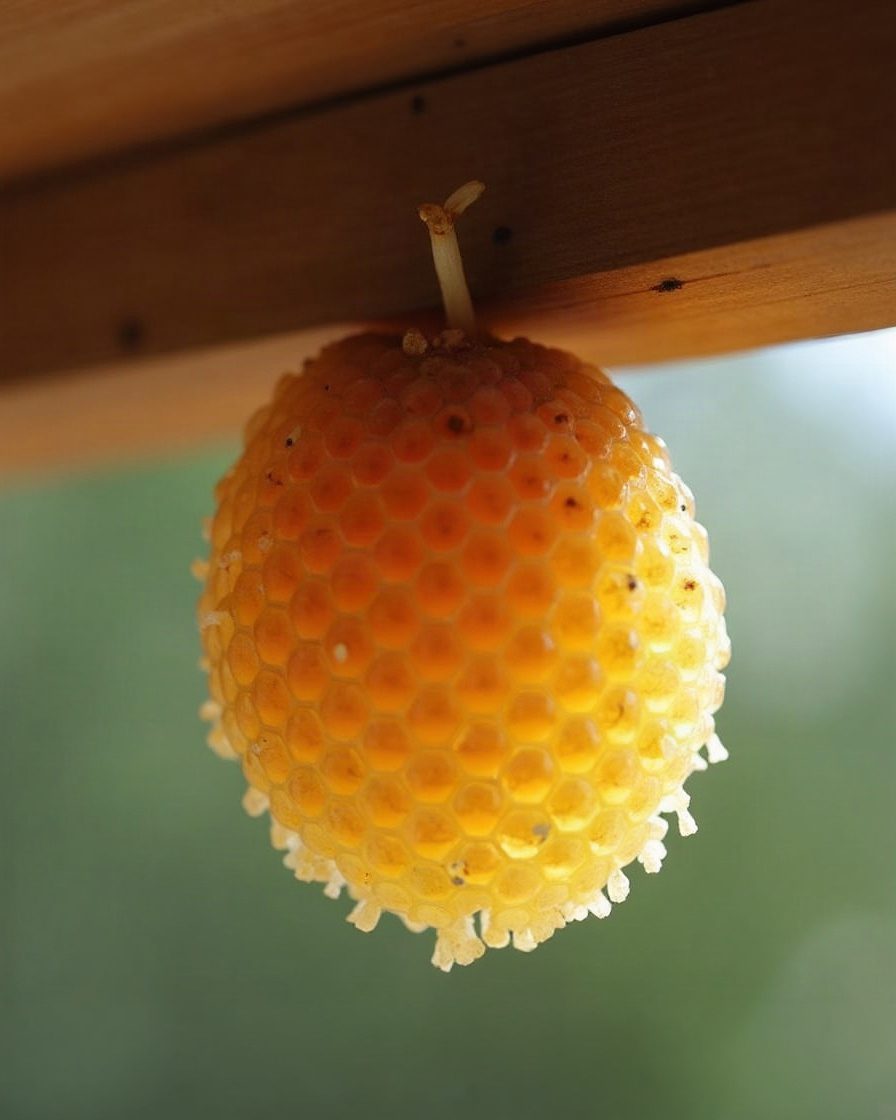
Open comb, no envelope. A single layer of hexagonal cells, attached by a narrow stalk, hanging with the cells facing downward so they are visible from below. Usually the size of a hand at most. This is a paper wasp, and the colony is small, typically tens rather than hundreds. They are the least defensive of the social wasps and will generally tolerate people passing at a couple of metres. Common under eaves, in porch roofs, in sheds and open outbuildings, and inside garden furniture.
Enclosed sphere or teardrop with a layered outer envelope. The comb is hidden inside, and the outside shows a swirled, papery, layered surface with a single small entrance near the bottom. This is a yellowjacket or a hornet. The colony grows through the season and can reach the size of a football or larger, holding thousands of workers by late summer. These defend the nest vigorously.
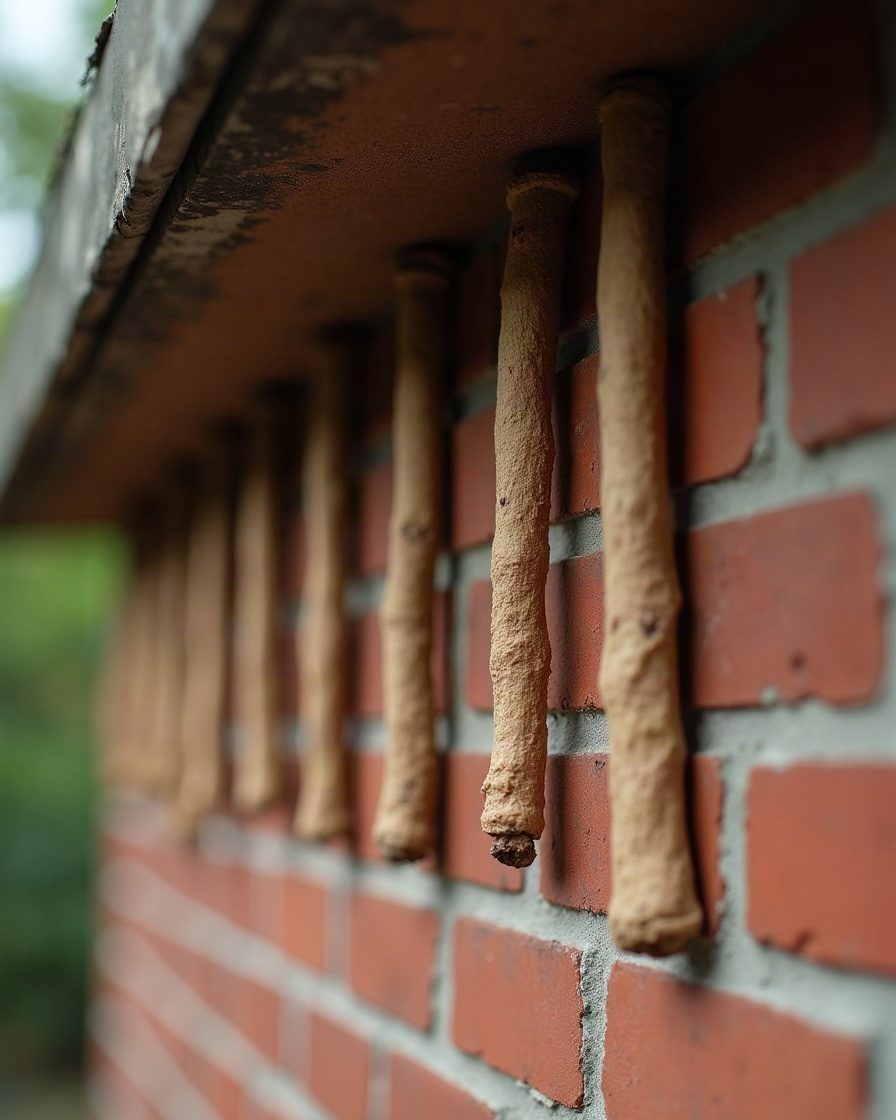
Finger-length tubes of dried mud, side by side on a sheltered wall. A mud dauber, which is a solitary wasp. There is no colony, no worker force and no nest defence. It hunts spiders to provision its cells. Covered on mud dauber nests on walls.
The University of Kentucky’s guide to controlling wasps, hornets and yellowjackets covers the species and the seasonal cycle.
Where it is tells you as much as the shape
Hanging in the open under an eave or a branch. Paper wasp if open, hornet if enclosed.
Inside a wall cavity, a loft, a bird box or a compost bin, with wasps streaming in and out of a small opening. Yellowjacket, and the nest is likely larger than the opening suggests.
In the ground, from a hole in a bank or a lawn. Yellowjacket. These are the nests most often disturbed by mowing, and the commonest cause of multiple stings.
On a sheltered wall or in a garage, made of mud. Mud dauber.
Nests in vents and soffits covers the cavity cases, where the identification matters because the same opening might hold a bird, a wasp colony or a rodent.
The season decides almost everything
A social wasp nest is an annual structure. A single overwintered queen starts it in spring at about the size of a golf ball. It grows through summer, peaks in late summer, produces new queens and males in autumn, and then dies completely. The old nest is never reused the following year.
That has three practical consequences.
A nest found in spring is at its smallest and least dangerous, and is the easiest point at which to deal with one that genuinely cannot stay.
A nest found in late summer is at its most populous and most defensive, and is also within weeks of dying on its own.
A nest found in winter is dead. It can be removed freely, and removing it prevents the same confusion next year.
When to leave it
This is worth stating plainly, because the default response is usually removal and usually unnecessary.
Wasps are effective predators of caterpillars, aphids and flies through the summer, and a colony well away from human traffic causes no harm. Leave it if it is high under an eave away from doors, in a shed corner that can be avoided, at the far end of a garden, or discovered in autumn when the colony is already declining.
Deal with it if it is beside a door or a window that gets opened, over a path, in a bin store, near where children play, inside a wall cavity with an internal opening, or if anyone in the household has a known sting allergy. UC IPM’s page on bee and wasp stings covers the reaction side, and our guide to sting allergy and an emergency plan covers what that means in practice.
How not to deal with it
Do not knock it down. A dislodged nest produces a defensive response from the whole colony at close range.
Do not block the entrance of a cavity nest. The wasps chew their way out, and in a wall they frequently chew inward into the room instead.
Do not use a consumer aerosol on a large enclosed nest. The spray reaches the outer envelope, not the colony, and the response is immediate.
Do not do any of it from a ladder. Being stung at height is how the injuries in this subject actually happen.
For a large or enclosed nest, or a ground nest, this is a job for someone equipped for it. Our page on removing a wasp nest safely covers the practical side.
Common questions
Is it a wasp or a bee nest? Honeybees build wax comb, which is pale yellow to brown and made of hexagonal wax cells, not grey paper. A honeybee colony in a structure is a job for a beekeeper rather than a pest controller. Bee, wasp and hornet compared covers the animals.
How many wasps are in there? A paper wasp comb, tens. A mature enclosed nest, hundreds to several thousand.
They keep coming back to the same spot each year. The nest is not reused, but a good site is a good site. Proof the opening in winter.
The nest looks abandoned. In autumn and winter it almost certainly is. In midsummer, watch the entrance for five minutes before assuming it.
The bottom line
Open comb means a small paper wasp colony, an enclosed grey envelope means a yellowjacket or hornet and a real one, and mud tubes mean a solitary wasp that is no threat at all. Then let position and season decide, because a nest away from traffic in August will be dead by November without anyone doing anything.
Pingback: Paper Wasp vs Hornet Nest: Telling Them Apart