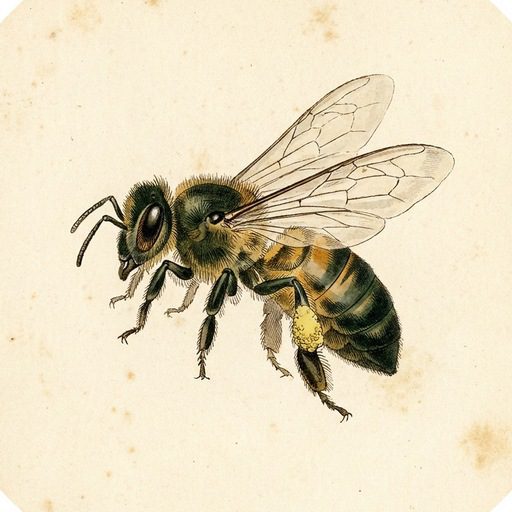
Mud daubers are solitary wasps. One female builds a small nest of mud cells, stocks each with paralysed spiders, lays an egg and leaves. There is no colony, no worker force and no nest defence, so these wasps are among the least likely of any stinging insect to sting a person. The nests are dry mud tubes, usually finger-length, laid side by side on a sheltered vertical surface. Removing them is a cosmetic decision, not a safety one.
- Solitary, not social. Nothing guards the nest, because there is no colony to guard it.
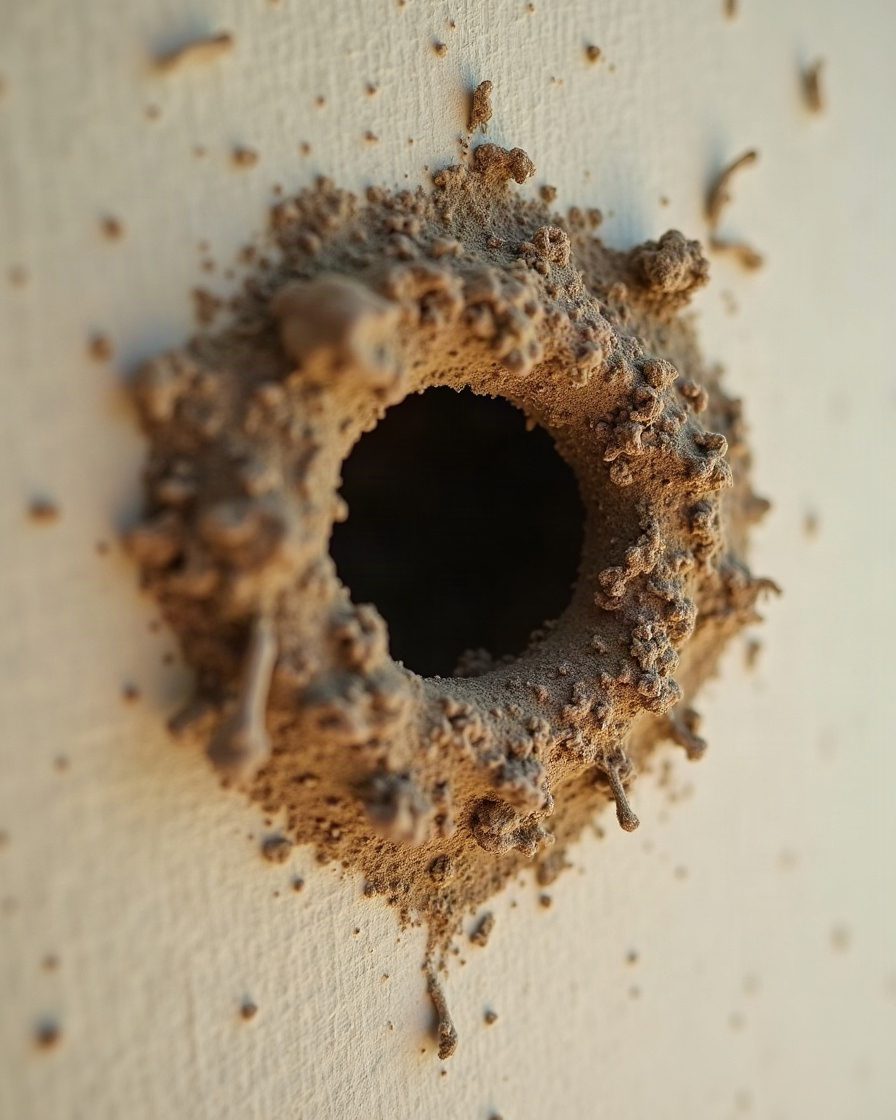
- A round hole in a cell means it is finished and the wasp has gone.
- They hunt spiders, which makes them a net benefit around a building.
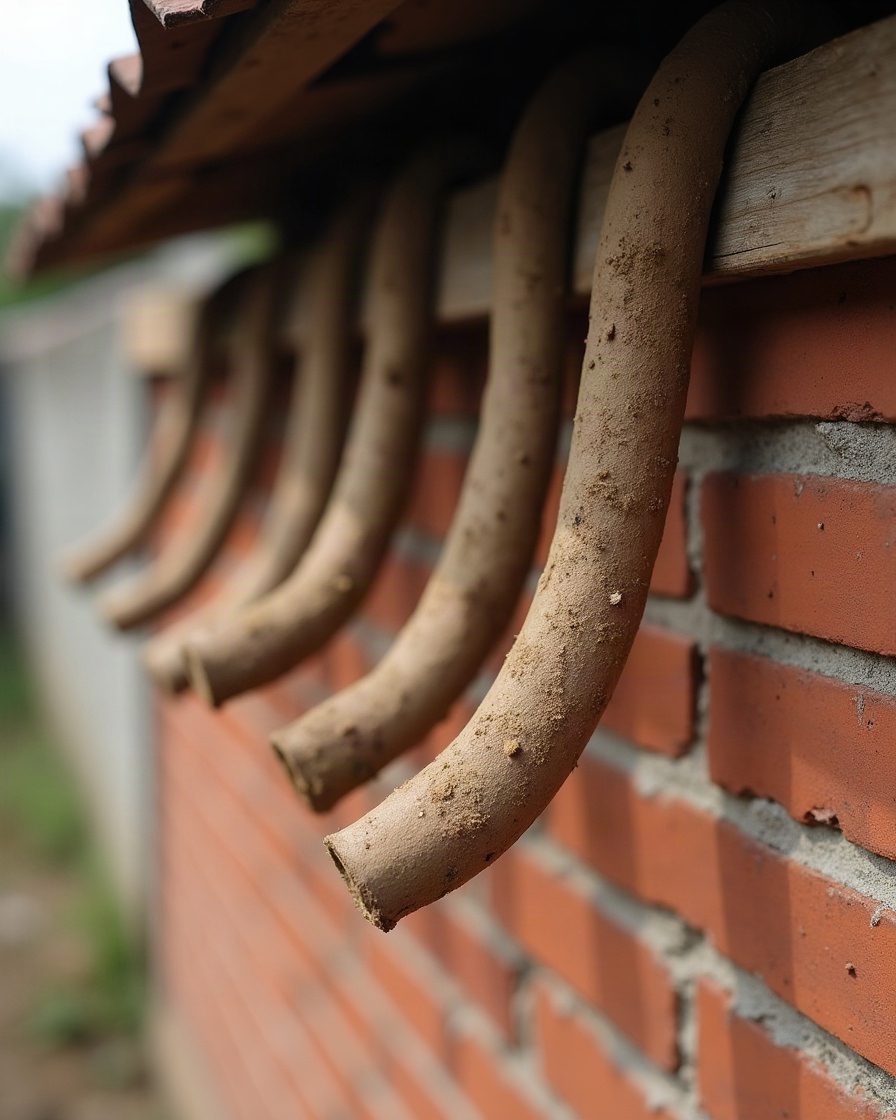
Mud dauber nests generate a lot of unnecessary alarm because they look like a wasp nest, and everything people know about wasp nests concerns social species. Mud daubers are not social, and almost none of it applies.
What they look like
Material. Dried mud, grey to tan depending on the local soil, hard and brittle.
Shape. Most commonly a series of tubes roughly the length and thickness of a finger, laid side by side and often plastered over into a single lump. Some species build a smooth rounded mass instead, and others make small urn-shaped pots.
Position. Vertical or overhung surfaces in dry, sheltered places: under eaves and porch roofs, on garage and shed walls, in outbuildings, under decking, in disused chimneys, and inside anything left open. They need to stay dry, which is why rain-exposed walls do not carry them.
Size. A whole nest is usually a few centimetres across. It does not grow into anything larger, because a single female makes it.
Why there is no danger
The distinction between solitary and social wasps is the whole of it, and it is worth stating clearly.
A social wasp colony has a queen, a worker force, and brood to protect, so it defends the nest collectively and vigorously. That is what makes a yellowjacket nest a genuine hazard, covered on paper wasp compared with hornet nests.
A solitary wasp has none of that. One female builds, provisions, seals and departs. There is no colony to alarm and no defensive behaviour associated with the nest. Mud daubers can sting, but they do so only if physically handled or trapped against skin, and stings are genuinely rare.
The University of Kentucky’s guide to wasps, hornets and yellowjackets covers the social species that do warrant caution.
What is inside
Each cell holds paralysed spiders and one wasp egg. The female hunts spiders, stings them into paralysis rather than killing them, packs several into a cell, lays an egg on them and seals it with mud. The larva feeds on the spiders, pupates, and emerges the following season by chewing out.
Two useful consequences.
They are effective spider predators, and several species specialise in orb weavers. A building with mud daubers has fewer spiders than it otherwise would. Our page on webs in corners and UC IPM’s guide to spiders cover the prey side.
A neat round hole in a cell means it is spent. The occupant has emerged. A nest where every cell is open is entirely historical, and removing it is purely tidying.
Telling it from things it is not
Subterranean termite mud tubes. These are the important distinction. Termite tubes are pencil-width runways running vertically up a foundation or across concrete, connecting soil to timber, and they are a serious structural finding. A mud dauber nest is a discrete lump of cells on a sheltered wall, usually well above ground, connected to nothing. See mud tubes on a foundation, which is the page to read if the mud is climbing a wall from the soil.
Paper wasp nests. Grey paper, hexagonal cells, not mud.
Bird nests in a vent, which include mud in some species but also twigs and grass. See nests in vents and soffits.
Wasp nest identification by shape sets all the structures side by side.
Whether to remove them
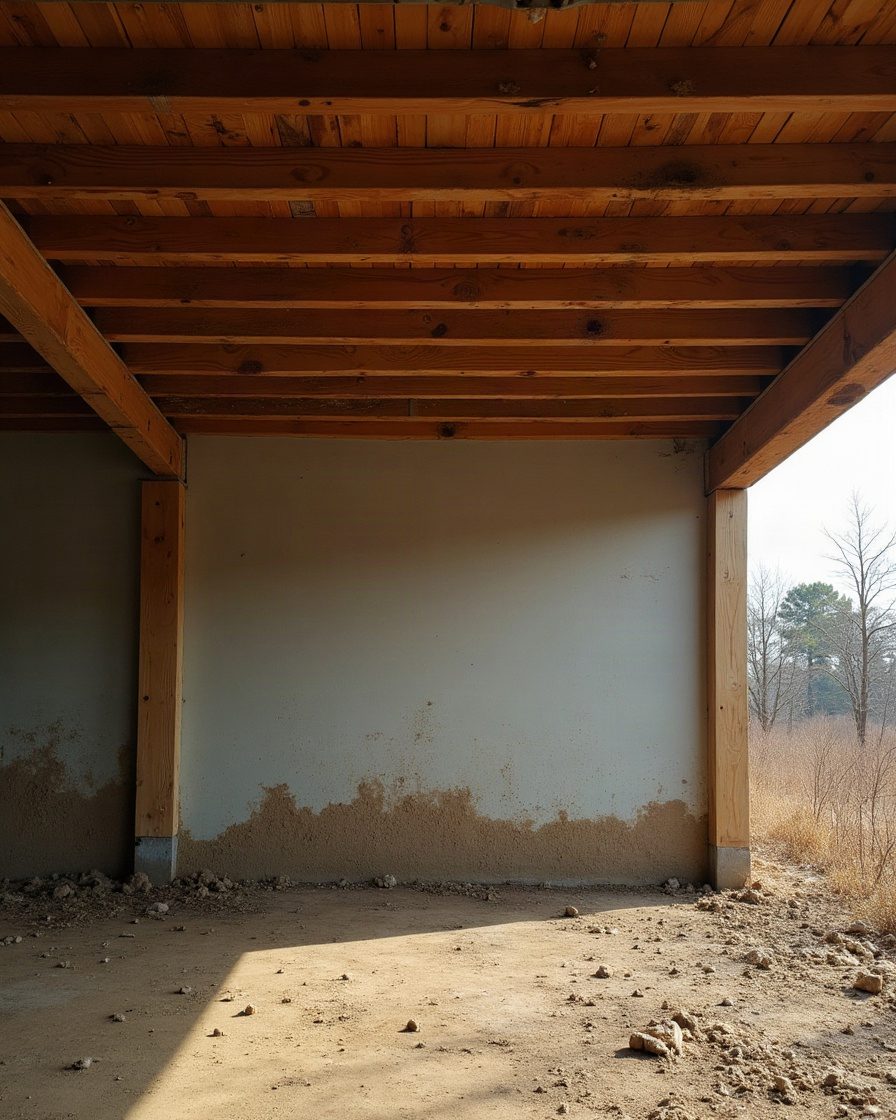
Leave them in most cases. They are harmless, they control spiders, and the nest is not reused indefinitely.
Remove them if they are on a surface where appearance matters, inside a building, or blocking something. Old nests can also attract secondary occupants: other solitary wasps and bees reuse the cells, and in some regions carpet beetles breed in the debris.
How. Wait until the cells show emergence holes, or do it in winter. Scrape them off with a putty knife, which usually takes them cleanly since the mud does not bond strongly to a painted surface, and wash down afterwards. A stiff brush and water works on brick.
No insecticide is warranted. There is nothing to control, the occupants are inside sealed mud, and a surface spray does not penetrate it.
Prevention, if they keep returning to the same porch: they choose dry, sheltered, rough vertical surfaces. Smooth paint is less attractive than bare masonry, and there is not a great deal more to be done, nor much reason to.
Common questions
One keeps flying into my garage. She is looking for a nest site or carrying a spider. She has no interest in you.
Are they aggressive if I paint near the nest? Essentially no. This is one of very few stinging insects where working alongside the nest is genuinely fine.
Something is emerging from an old nest. Either the wasps, in season, or a secondary occupant that took over an empty cell.
Is the mud damaging the wall? No. It is a surface deposit and comes off with a scraper.
The bottom line
Finger-length mud tubes on a sheltered wall are a solitary wasp that does not defend its nest, does not form a colony, and spends its summer removing spiders from your building. Unless appearance or position argues otherwise, the correct action is none. The one thing worth checking is that the mud is not climbing a foundation from the soil, because that is a completely different animal.