Coarse twigs, grass, moss and feathers means a bird. Grey layered paper means wasps. Finely shredded material packed into a hollow means a rodent. Wax comb or a mass of bees at a small hole means honeybees, and that needs a beekeeper rather than a pest controller. In every case the immediate cost is blocked airflow, and in most cases the timing of any work is constrained either by law or by the risk of sealing something alive inside.
- The material names the occupant without anyone going up a ladder.
- A blocked extract or boiler vent is a safety matter, not an aesthetic one.
- Never seal an opening before establishing it is empty.
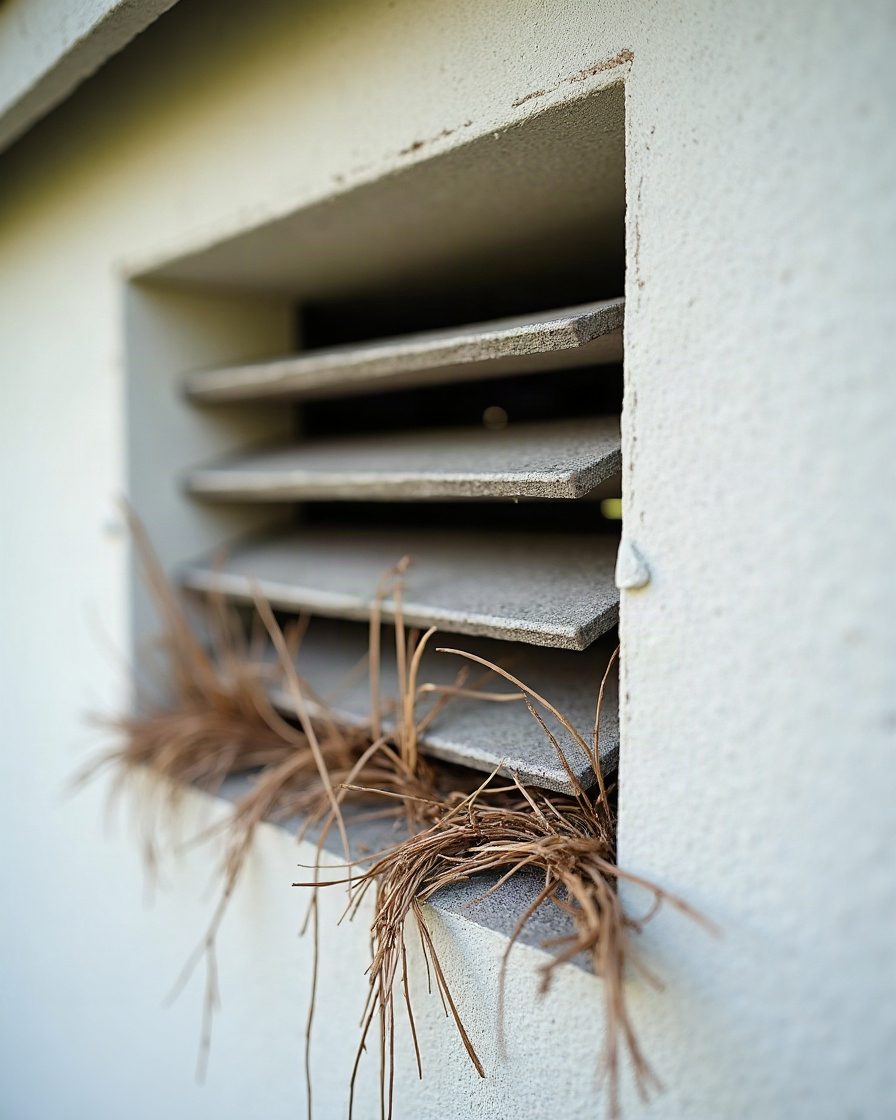
Vents, soffits, air bricks and the cavity beneath solar panels are the standard nesting opportunities on a modern house: sheltered, warm, elevated and almost never inspected. The identification is straightforward from the ground; the constraints on what you may then do are the part worth reading.
Reading the material
Coarse twigs, dry grass, moss, feathers, sometimes mud. A bird. Starlings, house sparrows and jackdaws are the usual occupants in domestic settings, and jackdaws in particular will fill a disused chimney with a remarkable volume of sticks. Look for droppings streaking the wall below and for feathers caught at the edge of the opening. See bird droppings and nest signs on buildings.
Uniform grey layered paper. Wasps. Wasps manufacture paper from chewed weathered wood, which is why the material is even and grey rather than a mixture. A cavity nest gives no clue to its size from outside, so a small entrance can front a very large nest by late summer. The University of Kentucky’s guide to wasps, hornets and yellowjackets covers it, and wasp nest identification by shape covers the structures.
Finely shredded paper, fabric and insulation, packed tight. A rodent. See shredded paper and nesting material. Squirrels produce a coarser, bulkier version and are active in daylight.
Bees coming and going from a small hole, with wax comb if visible. Honeybees, and this is a beekeeper’s job. A colony in a cavity should not be treated as a pest problem, and killing it leaves comb and honey in the structure, which then attracts everything else.
The cost that actually matters
Appearance is not the reason to deal with this. Three functional problems are.
Blocked extract ventilation. A bathroom or kitchen extract that cannot discharge causes condensation and mould inside the house, and the cause is frequently traced to the room rather than to the terminal.
Blocked combustion or flue ventilation. An air brick serving a boiler or an open flue, or a flue terminal itself, is a safety component. A nest in one is a genuine hazard rather than a nuisance, and it should be cleared and then properly guarded.
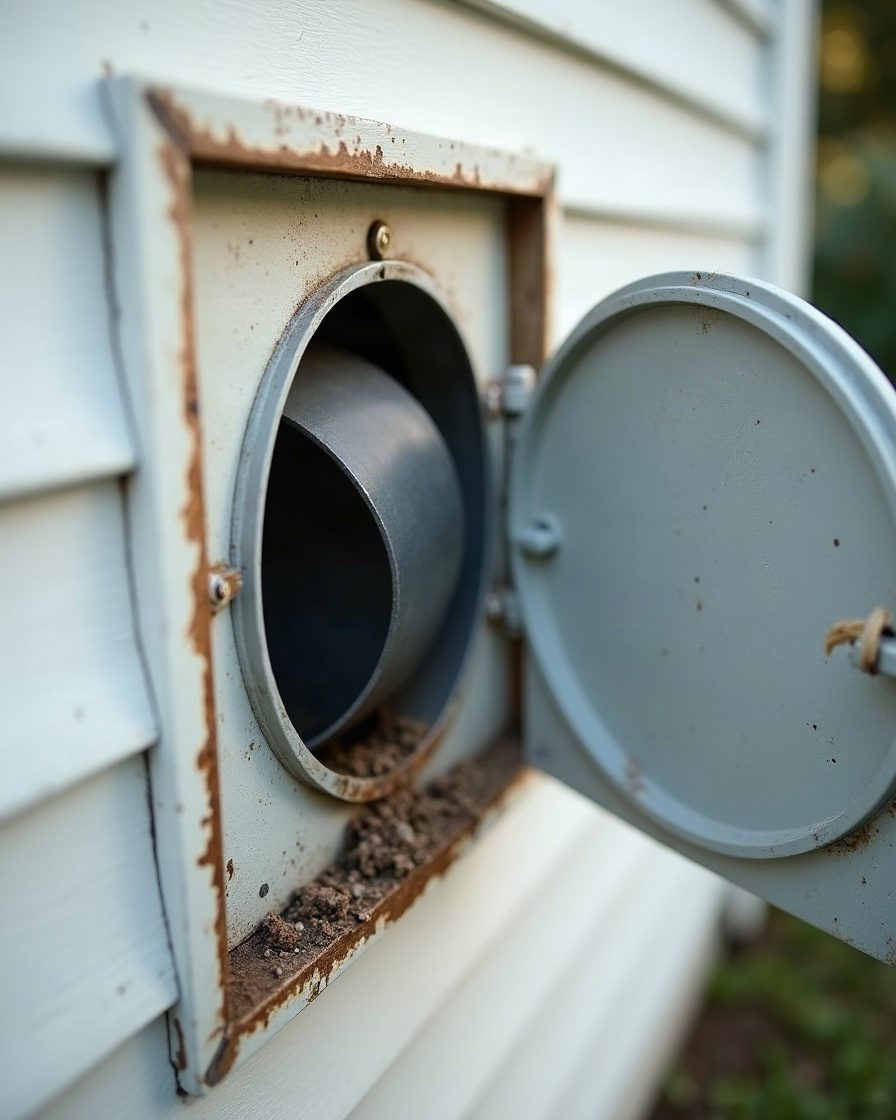
Blocked dryer venting. A restricted tumble dryer duct is both a fire risk and the reason the machine has stopped drying properly.
Beyond airflow: nesting material in a gutter or a soffit void holds water against timber, and an occupied nest is a habitat that produces its own secondary occupants. Bird mites leave a nest in numbers once the young fledge and come inward through gaps around light fittings and loft hatches, which is covered on bird mites in the house. Carpet beetles breed readily in nest debris, and a persistent carpet beetle problem in an upper room sometimes traces to the eaves rather than to anything in the room.
The timing constraints
This is the part that is not optional.
Birds. In the United Kingdom and the European Union all wild birds and their active nests are protected, and in the United States the Migratory Bird Treaty Act protects most native species. While a nest is in use, the work waits. Proofing is done outside the nesting season or after the young have fledged and the nest is confirmed empty.
Bats. If there is any possibility of bats, stop. Bats and their roosts are protected across the UK and EU and several US species are federally listed, and a roost is protected whether or not bats are present. Crushed dark pellets that glitter are the test, covered on bat guano identification. Get advice before touching the opening.
Rodents and squirrels. Not legally constrained in the same way, but sealing an entry with young inside leaves them to die in the structure and produces a determined and destructive effort to get back in. Establish the void is empty first.
Wasps. The colony dies in autumn and the nest is never reused, so a cavity nest discovered in August will resolve itself by November. Do not block the entrance of an active nest: wasps chew their way out and frequently chew inward into the room.
Doing it properly
Establish what is there. Watch the opening for twenty minutes at dawn or dusk. Traffic settles the species and the activity in one sitting, and it is safer than a ladder.
Wait for the right season.
Clear it with the right precautions. Nest material carries droppings and dust, and dry accumulations in enclosed spaces are where the histoplasmosis risk sits, as the CDC’s page on histoplasmosis sets out. Ventilate, wear gloves, dampen before disturbing, bag it, do not sweep dry.
Then guard the opening rather than block it. A vent needs to keep working, so the fix is a purpose-made mesh cowl or a louvred terminal with a guard, not filler. Air bricks get stainless mesh. Soffit and fascia gaps get closing pieces or comb filler. The cavity beneath solar panels has dedicated proofing mesh, and it is the newest and least inspected nesting site on domestic buildings.
Common questions
How do I know if it is still in use? Watch the entrance. Twenty minutes at dawn or dusk is conclusive, and calling from inside settles it faster.
Can I just push it out from inside the loft? Not while occupied, and not without dust precautions. Also worth remembering that the material usually extends further than the visible end.
They nest here every year. Sites are reused by new occupants even when nests are not. Winter proofing is what breaks the cycle.
Something died in there and it smells. That is a separate job. Dead mouse smell covers locating it and how long it lasts.
The bottom line
Read the material from the ground: twigs and feathers mean a bird, grey paper means wasps, shredded packing means a rodent, wax and bees mean a beekeeper. Then check whether the vent is doing a job that matters, and let the season and the law decide when to work. The fix at the end is a mesh guard that lets air through, never a plug.