
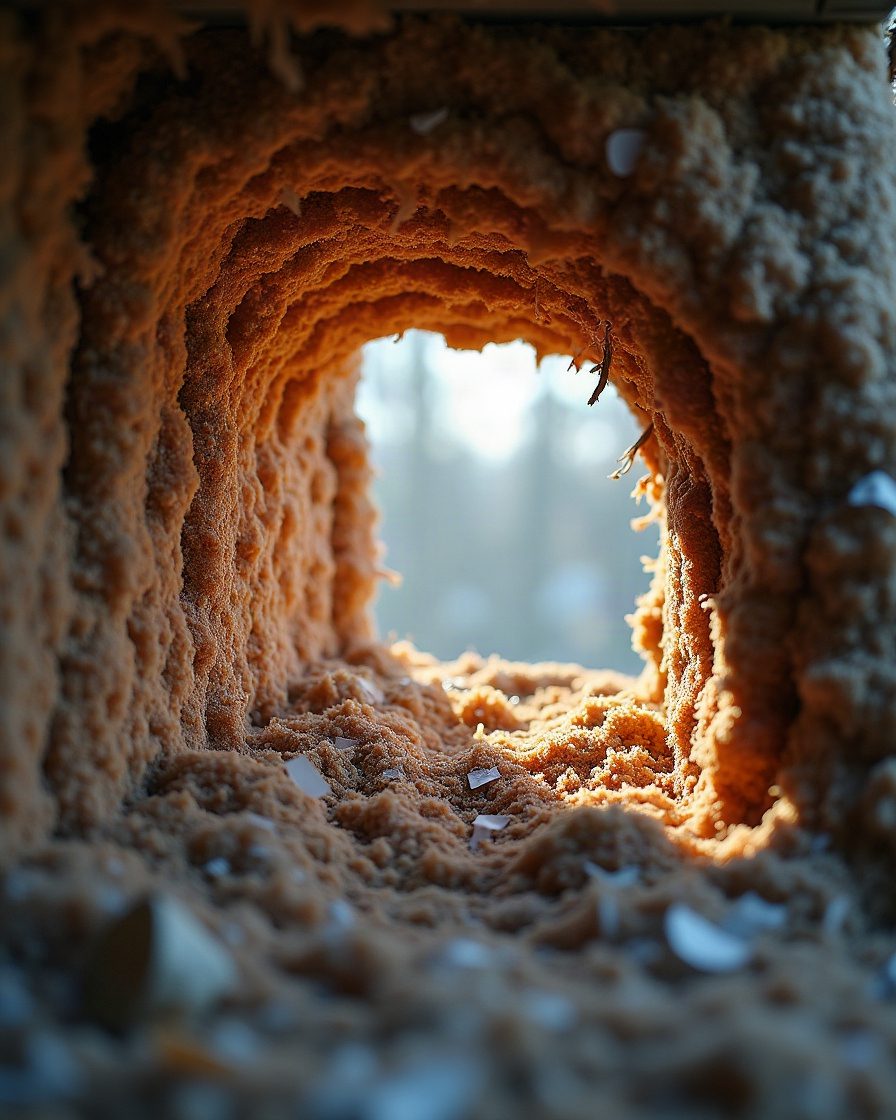
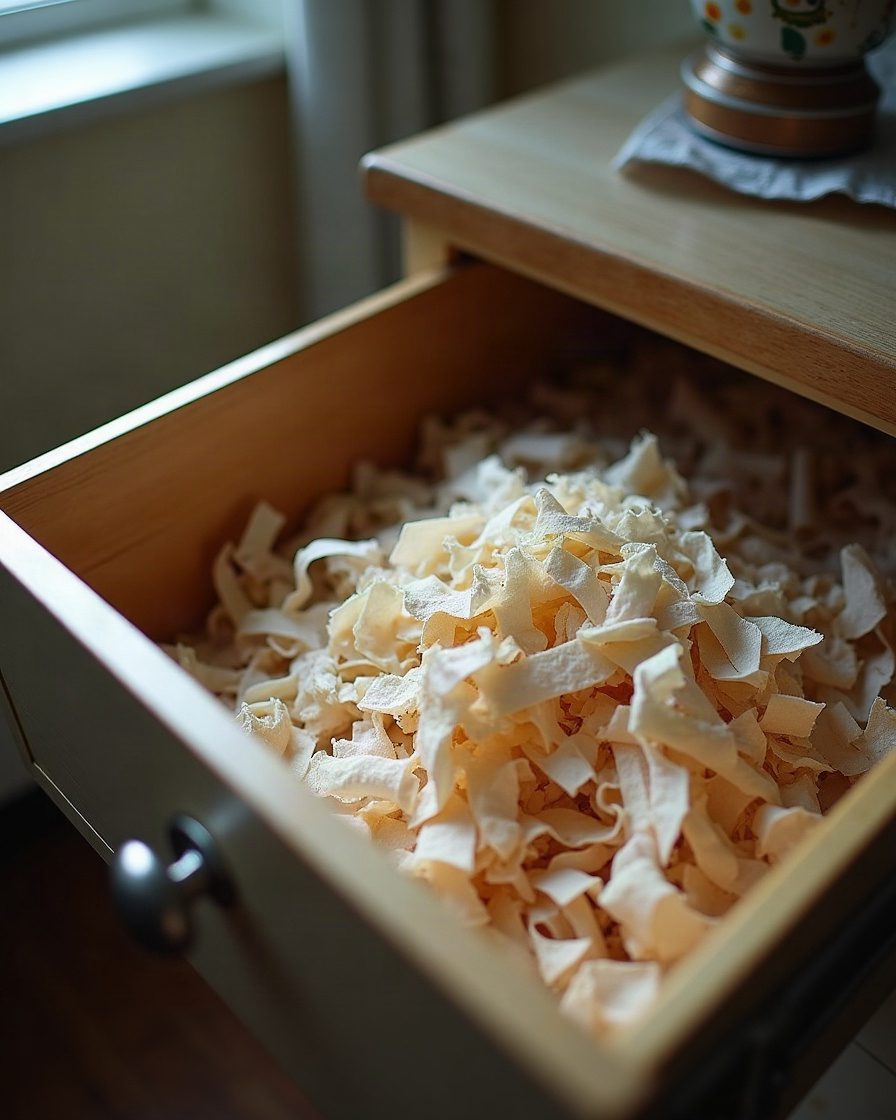
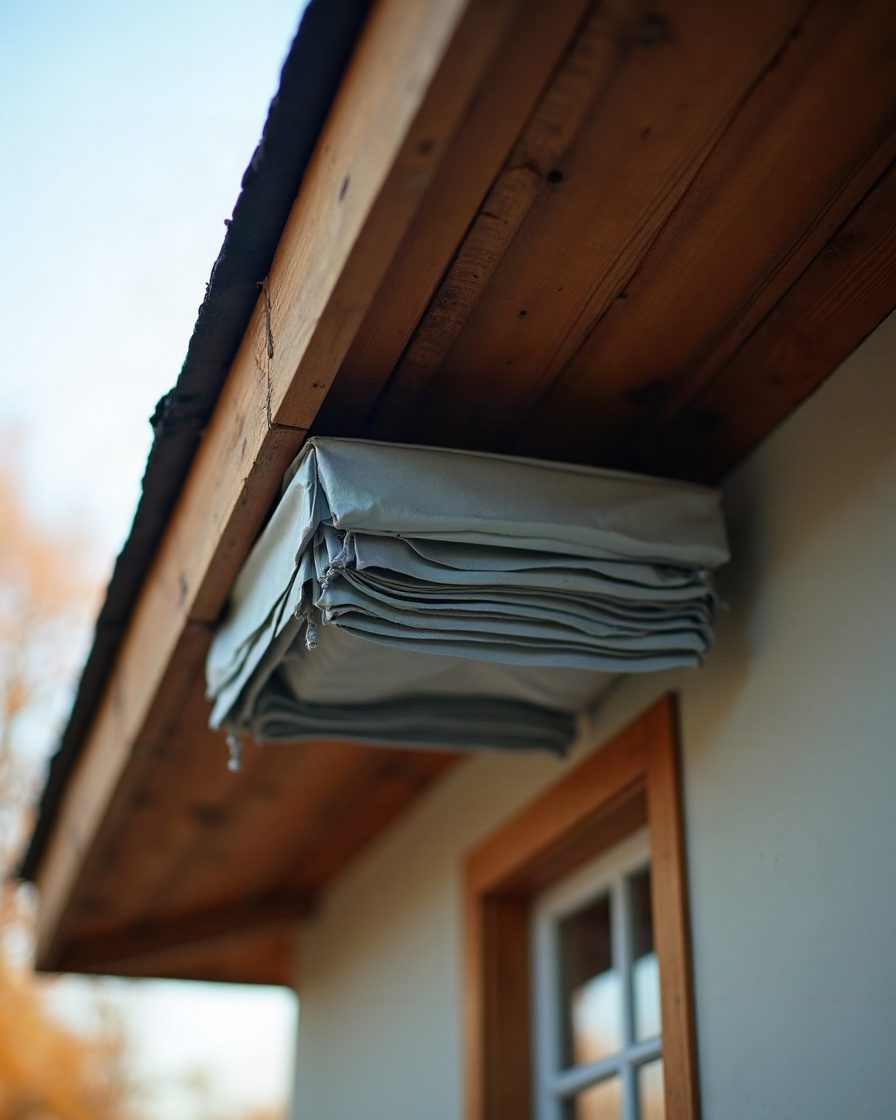
Finely shredded paper, fabric and insulation packed tightly into a hollow in a hidden place is a rodent nest, and the animal gathered the material rather than making it. A grey, layered, papery structure hanging in the open is a wasp nest, and the wasps made the paper themselves from chewed wood. Rodent nests sit in drawers, voids, insulation and behind appliances. Wasp nests hang in lofts, eaves and sheds.
- Hidden and packed means mammal. Exposed and layered means wasp.
- A rodent nest means young, and that changes the timing of what you do.
- Do not disturb a wasp nest in summer to find out which it is.
Two very different things get called a nest, and finding either in a loft prompts the same phone call from most people. They are easy to separate at a glance once you know what separates them, and the responses have almost nothing in common.
Rodent nests
What the material is. Whatever was available and soft: paper, cardboard, loft insulation, fabric, upholstery stuffing, string, plastic film, dried plant material. It has been shredded into fine strips and packed together.
The structure. A rough hollow ball or a cup, tightly compacted, roughly the size of a fist to a grapefruit. There is usually a distinct cavity in the middle.
Where. Dark, enclosed and undisturbed. In practice: within loft insulation, inside a disused drawer or box, behind and under kitchen appliances, in the void behind a kickboard, inside upholstered furniture, within a wall cavity, in a garage, and in a vehicle’s engine bay or cabin filter housing.
What comes with it. Droppings, gnawing on nearby material, greasy rub marks at pinch points, and a strong musky or ammoniacal smell if it has been occupied for any length of time.
UC IPM’s guide to the house mouse covers nesting behaviour. Our pages on identifying the droppings and reading gnaw marks will tell you which rodent, and squirrel droppings in the attic covers the loft-specific case, since squirrel nests are larger, coarser and often include twigs and leaves.
Wasp nests
What the material is. Wasps do not gather paper. They chew weathered wood and mix it with saliva to produce a genuine paper pulp, which is why a wasp nest is grey and uniform in a way that no gathered material ever is.
The structure. Layered, papery and built rather than packed. Paper wasps make an open comb like a small upturned umbrella. Social wasps and hornets build an enclosed sphere or teardrop with a visible layered outer envelope.
Where. Hanging in the open in a sheltered spot: loft spaces, under eaves and soffits, in sheds and garages, in a disused chimney, in a wall cavity with an external opening, and occasionally in the ground.
Size and season. A nest starts in spring as a golf-ball-sized structure made by a single queen and can reach the size of a football by late summer. It is abandoned in autumn and is never reused, so an old nest found in winter is inert.
The University of Kentucky’s guide to controlling wasps, hornets and yellowjackets covers the seasonal cycle, and our page on removing a wasp nest safely covers the practical side.
Telling them apart
| Rodent nest | Wasp nest | |
|---|---|---|
| Material | Gathered and shredded, mixed | Made pulp, uniform grey |
| Structure | Packed into a hollow | Built in layers, combs |
| Position | Hidden, enclosed | Hanging, in open air |
| Contents | Droppings, gnawed debris | Hexagonal cells |
| Smell | Musky, ammoniacal | None to speak of |
| Season | Any | Spring to autumn only |
A third possibility in a loft or a vent is a bird nest: coarse twigs, grass, moss, feathers and mud, layered rather than shredded, and often with droppings and feathers around the entry. Bird droppings and nest signs covers it, and the legal position there is different again.
What to do about a rodent nest
Do not simply remove it. A nest means breeding, and it means young. Removing the nest without addressing the population achieves very little, and removing it while young are present creates a worse problem in a wall cavity.
The order that works: establish which rodent from the droppings and the gnawing, find and seal the entry points, deal with the population, and then remove the nest and the contaminated insulation.
When you do remove it, treat it as you would any rodent-soiled material: ventilate first, gloves, dampen it thoroughly before touching it, bag it, and do not sweep or dry-vacuum. Contaminated insulation is generally easier to replace than to clean.
What to do about a wasp nest
In summer, leave it alone unless it is a genuine problem. A nest away from a doorway or a path, high in a loft or under an eave, causes no harm and the colony dies in autumn. Wasps are effective predators of garden pests through the summer.
Do not knock it down or spray a consumer aerosol at a large nest. That provokes a defensive response from a colony that can number in the thousands, and stings are the commonest injury associated with amateur removal.
Get it removed professionally if it is near a door, a window that gets opened, a bin store or a play area, or if anyone in the household has a known sting allergy.
In winter, an old nest is dead. It can be removed freely and will not be reused, though removing it prevents the confusion next year.
Common questions
Shredded paper in a drawer with no droppings. Possible for a very recent or abandoned nest. Check for gnawing on the drawer contents and around the runners.
The material is loft insulation, pulled apart. Rodent or squirrel. Squirrels pull insulation into much larger volumes and often incorporate twigs.
A small grey ball the size of a golf ball in spring. An early wasp nest with a single queen. It is at its least dangerous now and easiest to deal with, if it is somewhere it cannot stay.
Is the material itself a health risk? The nest is not, but the droppings and urine in and around a rodent nest are, which is why the wetting rule applies.
The bottom line
Look at where it is before you look at what it is made of. Packed into a hidden hollow means a mammal gathered it; hanging in open air in uniform grey layers means a wasp made it. Then let that decide the response, because one of them calls for exclusion work and the other, in most cases, calls for leaving it alone until autumn.
Pingback: Wasp Nest Identification by Shape