If you have found a wasp nest on the house, the safe play is not bravery, it is timing and a planned retreat. Treat the nest at dusk, when the colony is home and sluggish, wear covering clothes, and stand where you have a clear path to run before you do anything. Never seal a nest you have not killed and never try to burn one, because both turn a manageable job into a swarm or a fire. Know your limit too: a large, high, or inside-the-wall nest, and anyone with a sting allergy, should hand it to a professional. And if what you are actually looking at is a honeybee swarm, do not kill it; call a local beekeeper to come move it.
Treat a wasp nest at dusk when the colony is home and slow, wear covering clothes, keep a clear escape path, and never seal or burn a live nest. If the nest is large, high, or inside a wall, or anyone has a sting allergy, hire a pro instead.
- Do first (free): Identify the nest in daylight from a safe distance, confirm it is wasps and not honeybees, and clear your escape route.
- Best for the common case: A labeled long-range wasp spray applied at dusk from a distance, with a planned retreat, on a small low nest you can reach from the ground.
- Skip: Burning the nest, sealing a live entry, or knocking a nest down in daylight; each one gets people stung or starts a fire.
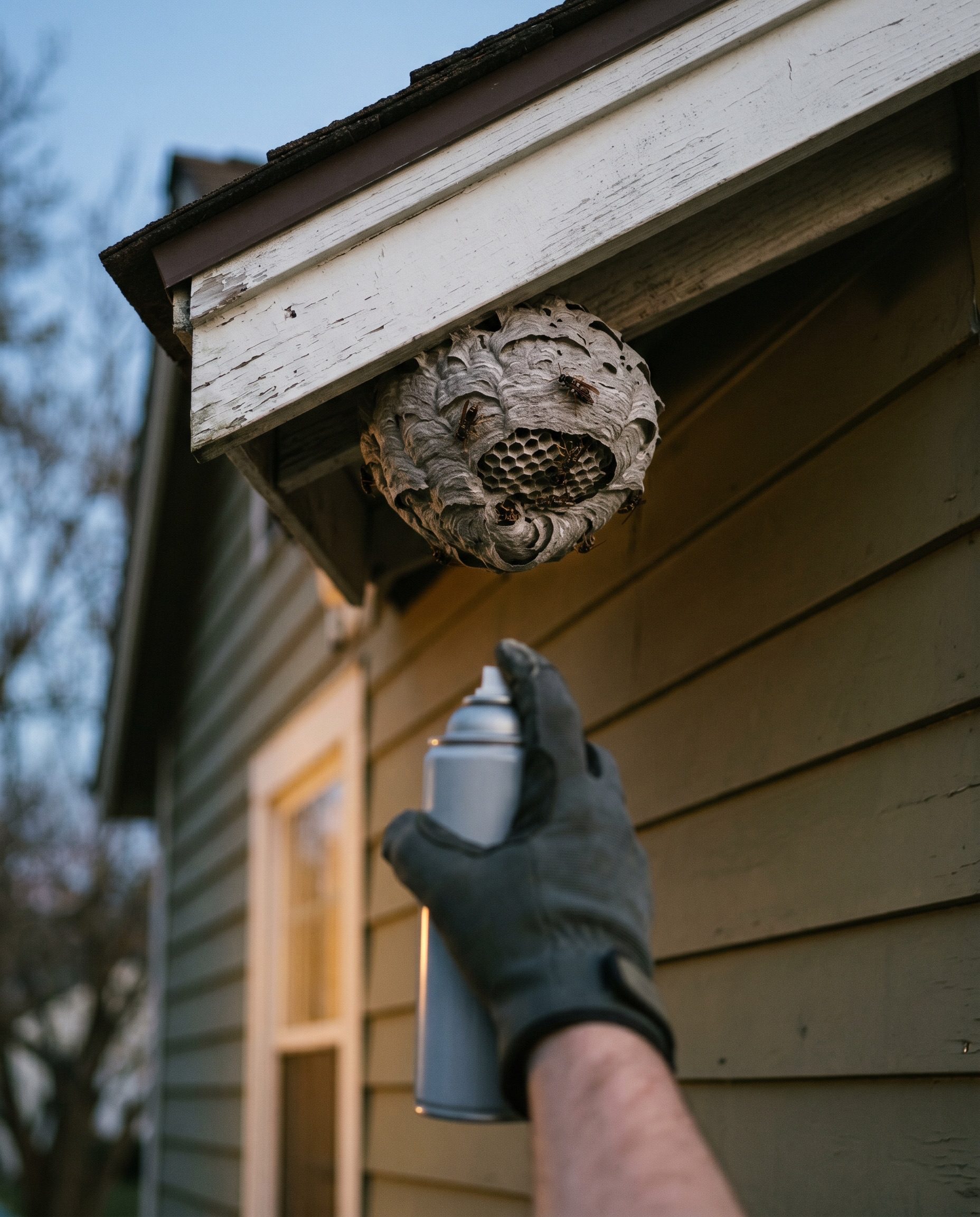
Why dusk and distance win
Wasps are at their worst when they think the colony is under attack, and the two things that decide whether you get stung are when you treat and where you stand. By dusk the foragers are back inside and the whole colony is cool and slow, so a treatment reaches the most wasps with the least flying defense. UC IPM’s guidance on treating social wasp nests at dusk is built around this window for exactly that reason, and it is the single biggest safety lever a homeowner has.
Distance is the other half. Treating from across the yard with a long-range product means you never put your face under the nest, and a clear path behind you means that if wasps do come out, you walk away instead of tripping over a hose. Do not treat in the heat of the day, do not climb an unsteady ladder to reach a nest, and never stand on a chair under one. If you cannot reach the nest with both feet on solid ground, that alone is a reason to call a professional instead.
Know what you are dealing with
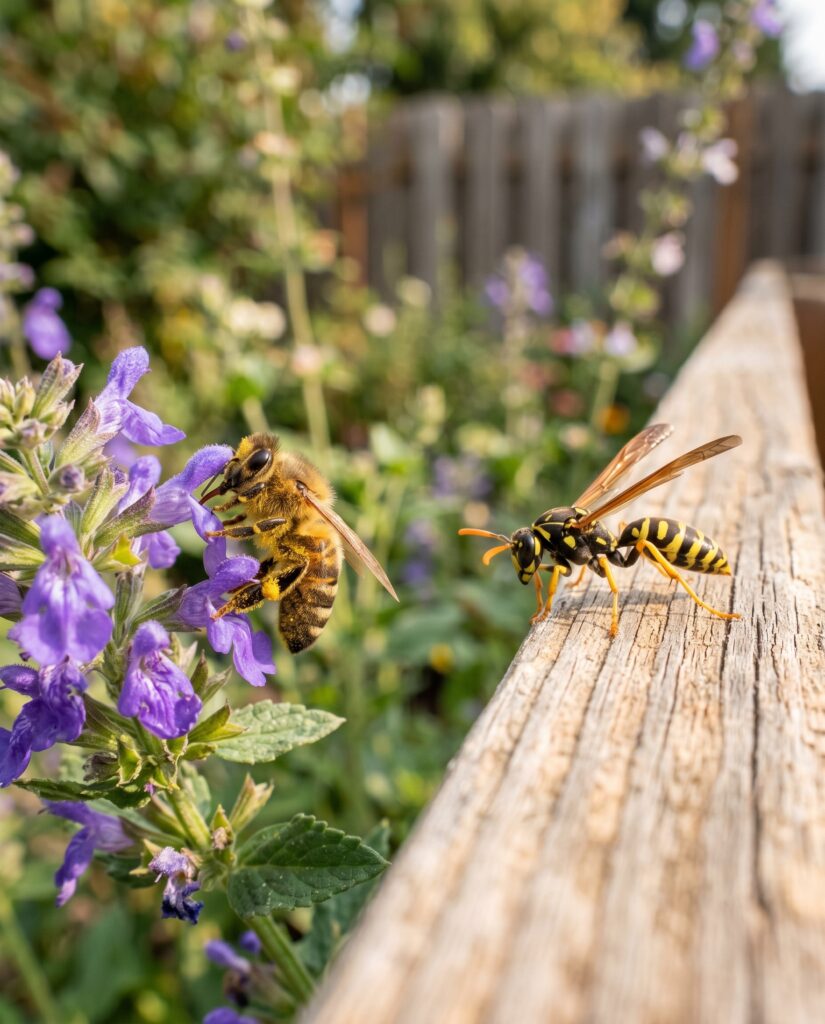
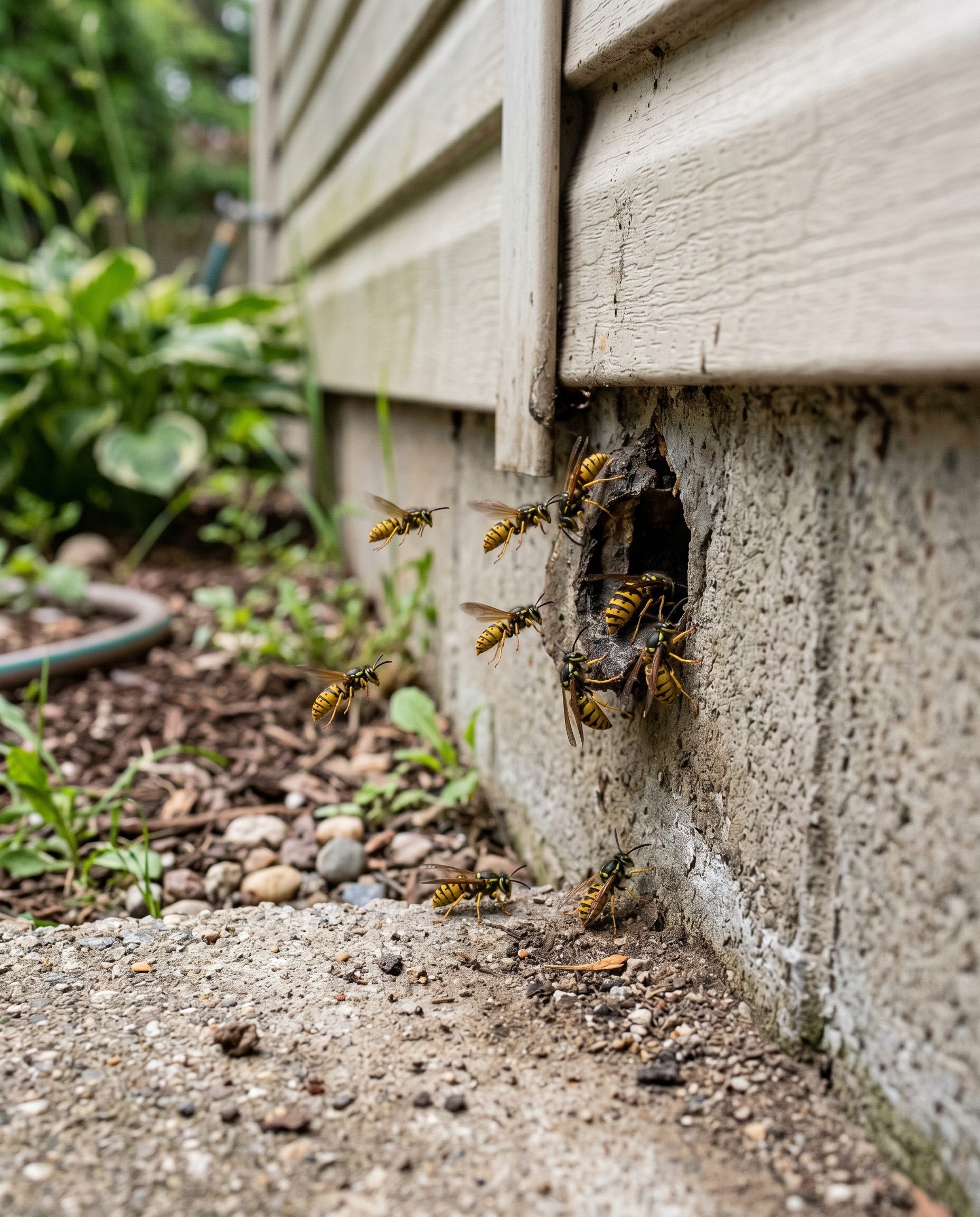
Treat the right thing the right way, and that starts with telling species apart. Paper wasps build the open, gray, umbrella-shaped comb you see hanging under eaves, railings, and play sets; their nests are usually small and the wasps are not very aggressive away from home. Yellowjackets are the ground-nesters and wall-void nesters, and they are the ones that turn dangerous, because a nest you cannot see is a nest you can step on. The tell a ground-nesting yellowjacket from an aerial paper wasp guidance from University of Kentucky walks the differences so you match the method to the nest.
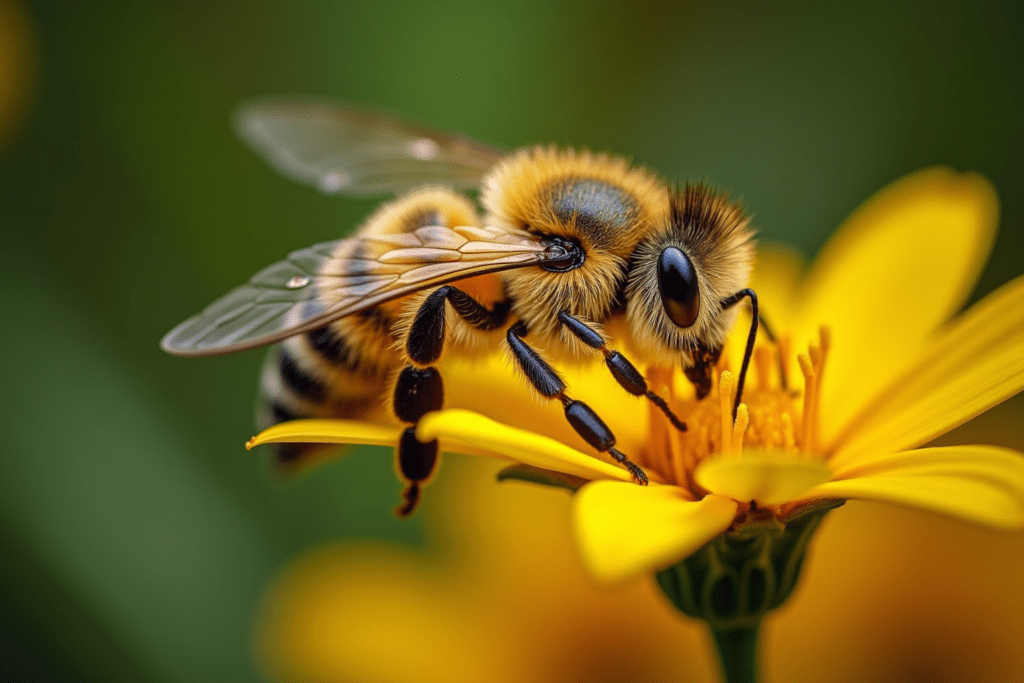
The other thing to rule out is a bee. Honeybees are fuzzy, golden-brown, and gather in a hanging cluster when they swarm; wasps are smooth, shiny, and brightly banded. This matters because honeybees are protected pollinators, not pests, and the move there is completely different. Do not spray a honeybee swarm or colony. Contact a local beekeeper, who will often relocate a swarm for free, and read our guide on how to prevent wasp nests on your property so you are not back here next season.
What to do before you spray
The free steps come first, and they decide whether spraying is even smart. Watch the nest from a safe distance in daylight to see how big it is and where the wasps come and go, because the entry is what you aim at after dark. Walk the path you will retreat along and clear it, then move kids, pets, and anything you would have to dodge well out of the way. Put on long sleeves, long pants, closed shoes, gloves, and a hat, and treat at dusk or just after dark, not at noon.
Have an exit and use it. The plan is to apply, then walk away immediately, not to stand and watch your work. Do not plug the hole on a wall-void nest, because a sealed colony does not die quietly, it chews a new exit, often into the living space, and pours out. And do not, under any circumstances, burn a nest. Fire near siding, eaves, and dry framing is how a wasp problem becomes a house fire, and the flame does not reliably kill the colony anyway. A small, low, exposed paper-wasp nest is the realistic DIY job; almost everything else points toward a pro.
Matching the method to the nest
The right approach changes with where the nest is and who is around, so use this as your quick decision map before you reach for anything.
| Where the nest is | Best approach | Watch out for |
|---|---|---|
| Small paper-wasp nest, low and exposed | Long-range wasp spray at dusk, then retreat | Clear escape path, no ladder |
| Yellowjacket nest in the ground | Treat the entry at night per the label, mark it first | Never seal or pour fuel in the hole |
| Nest inside a wall, soffit, or high up | Hire a licensed pest-control pro | Do not plug the entry or open the wall |
| Anyone present has a sting allergy | Stay clear and hire a pro | Have an epinephrine plan ready |
For the exposed paper-wasp nest you can reach from the ground, a labeled long-range wasp spray that shoots a stream several feet is the tool, and our roundup of the best wasp sprays for nests and long-range options sorts the genuinely long-reaching products from the short ones. Whatever you buy, read and follow the product’s EPA label, because under federal law the label is the law; it tells you the distance, the timing, and the protective gear, and you do not improvise around it. Aim for the nest entry, soak it, and leave; check the next evening and re-treat only if you still see traffic. Keep the spray off vegetable gardens and away from open blooms so you are not hitting bees, and keep children and pets off any treated surface until it has dried.
For a yellowjacket nest in the ground, mark the entrance in daylight with a stake set back a few feet, then treat the opening after dark following the label. The advice you will hear about pouring gasoline or bleach down the hole is both dangerous and illegal, so skip it. And when a nest is large, high, or inside a wall, hand it to a professional, because wall-void and elevated nests are where DIY goes wrong.
Keeping wasps from rebuilding
The durable win is making the spot unattractive next spring, when a lone queen scouts for a place to start. After a nest is dead and you have confirmed no activity for a day or two, knock the old paper down and scrape the attachment point, since a clean surface gives the next queen nothing to grip. Through the season, keep trash cans lidded and sweet drinks covered outdoors, because food and sugar are what draw foragers to a patio in the first place.
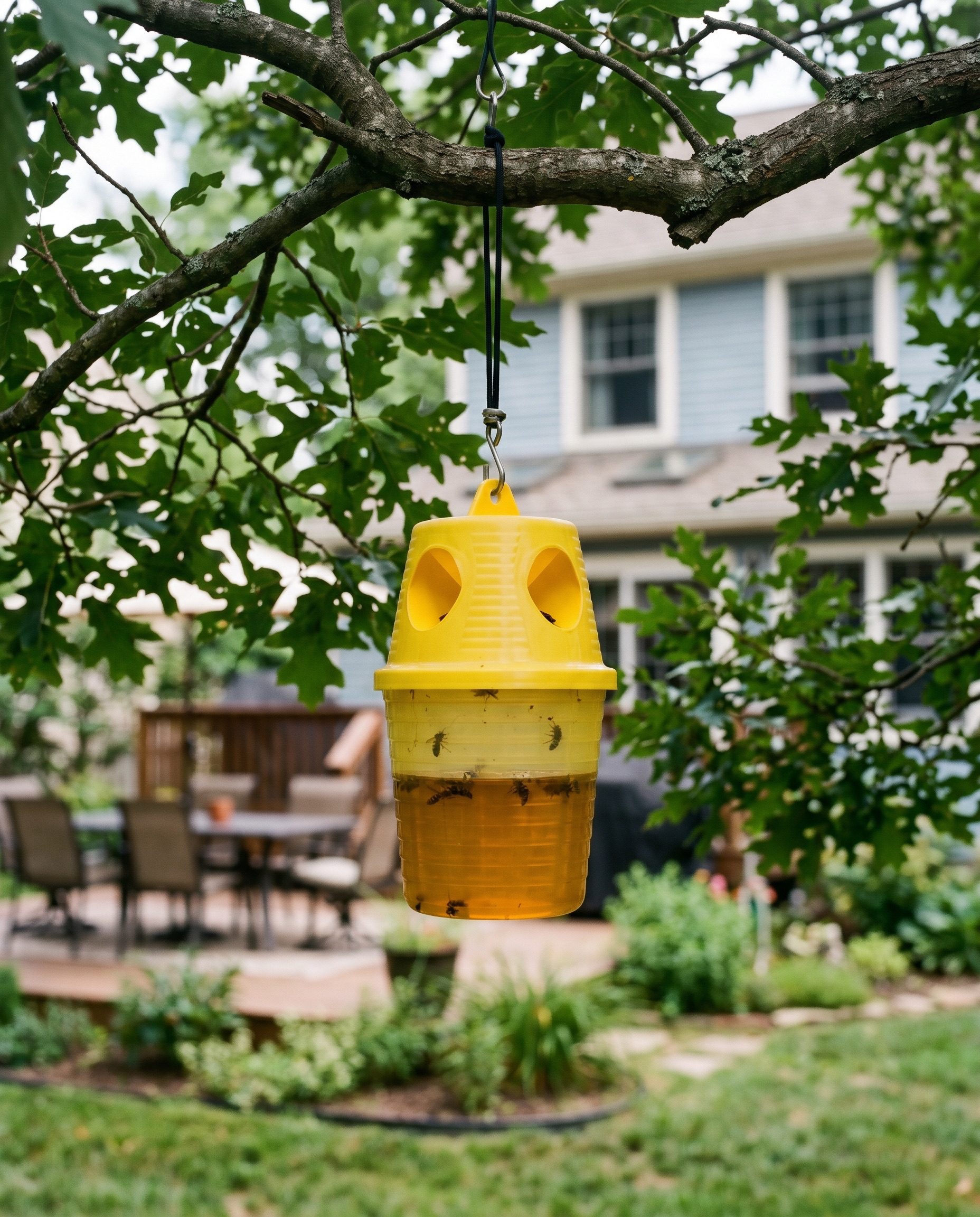
Seal the gaps wasps move through, but only after you are certain nothing is living behind them. Caulk cracks around eaves and trim, screen vents and weep holes, and patch torn soffit. A hanging trap set at the far edge of the yard, away from where you sit, can pull foragers off the patio without inviting them closer to the house. A note on look-alikes: carpenter bees drill round holes in fascia and trim, and carpenter bees are pollinators worth excluding rather than killing, so the answer there is to fill and paint the wood to redirect them, not to reach for spray first.
When to call a pro
Some nests are not a DIY job, and treating them anyway is how people end up in the emergency room. Hire a licensed pest-control professional for any nest inside a wall void, soffit, attic, or chimney, any nest too high to reach from the ground, any large or multiple nests, and any yellowjacket colony you cannot fully see. The same goes the moment a sting allergy is in the picture for anyone in the household, because the risk of a reaction outweighs the cost of the service call. This is not about nerve; it is about the right tools and the right protective gear, which a pro has and you do not.
Common questions
What is the safest way to kill a wasp nest myself?
Treat a small, low, exposed nest at dusk with a labeled long-range spray, wearing covering clothes and standing where you can walk straight back to safety. Apply to the entry, then leave right away rather than watching. Anything inside a wall, high up, or larger than your hand is a job for a professional, not a DIY spray.
Can I just burn the wasp nest or seal it shut?
No on both. Fire near eaves, siding, and dry wood is a real house-fire risk and does not reliably kill the colony. Sealing a live nest, especially in a wall, traps wasps that then chew a new opening, often into the room you are standing in. Kill the colony first, confirm it is dead, then close the gap.
What if it turns out to be bees, not wasps?
If the cluster is fuzzy and golden and hanging like a clump, it is likely a honeybee swarm, and those are beneficial pollinators you should not kill. Contact a local beekeeper, who will frequently come collect a swarm at no charge and relocate it. Smooth, shiny, brightly banded insects on a papery comb are wasps and can be managed.
What should I do if I get stung?
For an ordinary sting, move away from the nest, then clean the spot and use a cold compress to ease swelling; our bee and wasp sting first-aid guide covers the basics. The serious concern is an allergic reaction: trouble breathing, swelling of the throat or tongue, dizziness, or hives spreading fast mean you get emergency medical help right away. Because anaphylaxis is a medical emergency that needs epinephrine and emergency care, use an epinephrine auto-injector if one has been prescribed, and let a doctor or allergist guide treatment.
When is the best time of year to remove a nest?
Early in the season a nest is small and easier to handle, so dealing with it in late spring or early summer beats waiting until late summer when the colony is at full size and most defensive. Whatever the month, the safe window within a day is still dusk or after dark, when the wasps are home and slow.
Final verdict
Getting rid of a wasp nest safely comes down to timing, gear, and a way out, not courage. Identify the nest in daylight and make sure it is wasps and not protected honeybees, clear your escape path, and put on covering clothes. Treat a small, low, exposed nest at dusk with a labeled long-range spray, apply to the entry, and walk away immediately. Never seal a live nest and never burn one. Know the line: a large, high, or wall-void nest, or any sting allergy in the household, is a job for a licensed pro, and a honeybee swarm goes to a beekeeper, not a spray can.
Next steps:
– Pick a product that actually reaches with our best wasp sprays for nests and long-range options.
– Stop next year’s nest before it starts with our guide to preventing wasp nests on your property.
– Keep a sting plan handy with our bee and wasp sting first-aid guide.